BYD Song: Global Sales Phenomenon, US Availability Reality
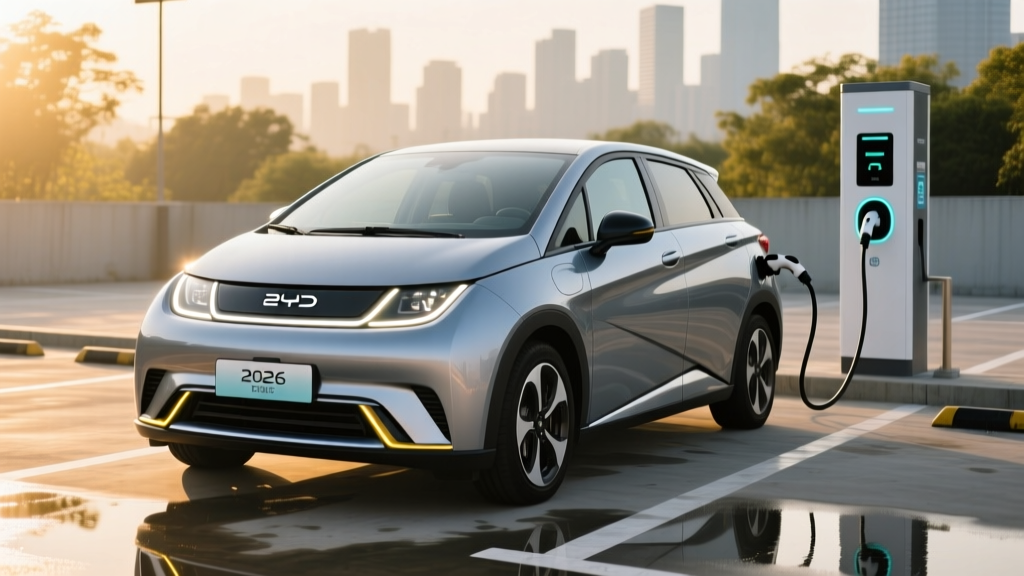
The BYD Song family — spanning the Song Plus EV, Song Pro EV, and Song Plus DM-i plug-in hybrid — became one of the world's best-selling electrified nameplates. In 2023, BYD reported combined Song-family sales exceeding 630,000 units globally, making the BYD Song 2023 sales units figure a benchmark for how dominant Chinese-market EVs have become. But if you're a US-based EV shopper in 2026, the critical question isn't how many sold in China — it's whether you can actually buy one, what the real specs look like, and how they compare to vehicles you can drive off an American lot today.
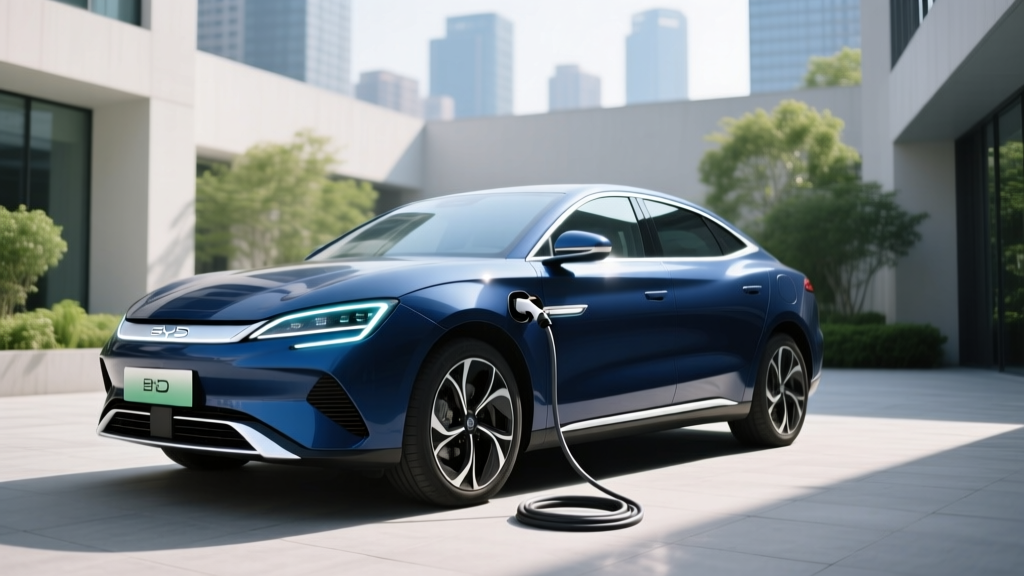
This review breaks down the BYD Song Plus EV (the battery-electric variant most relevant to global export markets) with exact range, charging, and pricing figures, while addressing the practical reality of US availability and the closest alternatives you can actually purchase stateside.
| Attribute | Specification |
|---|---|
| EPA-Estimated Range | Not EPA-rated (WLTP: ~315 mi / 505 km for 87 kWh variant) |
| Battery Capacity | 71.8 kWh or 87.0 kWh usable (BYD Blade, LFP) |
| Battery Chemistry | Lithium Iron Phosphate (LFP) — Blade cell format |
| Max DC Fast Charge | ~90 kW peak (71.8 kWh) / ~110 kW peak (87 kWh) |
| 10–80% DCFC Time | ~35–40 minutes (estimated) |
| Level 2 AC Charge Rate | 7 kW (single-phase) / 11 kW (three-phase, market-dependent) |
| Motor Output | 150 kW (201 hp) / 160 kW (215 hp) depending on variant |
| 0–60 mph | ~8.0 seconds (FWD, 150 kW variant) |
| Drivetrain | Front-wheel drive (single motor) |
| Length × Width × Height | 186.4 × 74.4 × 66.1 in (4,735 × 1,890 × 1,680 mm) |
| Cargo Volume | ~20.1 cu ft (rear seats up) / ~51 cu ft (rear seats folded) |
| Base MSRP (Global) | ~¥169,800 CNY / ~$23,500 USD equivalent (China market) |
| US MSRP | Not sold in the United States |
Range and Efficiency: WLTP vs. Real-World Expectations
The BYD Song Plus EV has never been submitted for EPA testing, so there is no official EPA range figure. In markets where it is sold, BYD quotes CLTC range (China's lighter testing cycle) at up to 505 km (~314 miles) for the 87 kWh Blade battery variant, and WLTP estimates land around 270–290 miles depending on wheel size and equipment.
WLTP estimate: ~280 miles (87 kWh variant).
Expected real-world highway (70 mph, moderate climate): ~230–250 miles.
Expected real-world cold-weather (below 32°F, highway): ~180–210 miles.
City/mixed driving in mild weather: ~260–280 miles.
LFP chemistry holds voltage flat through most of the discharge cycle, which helps usable range feel consistent — but LFP cells lose more capacity in extreme cold than NMC equivalents, so winter range loss of 25–35% is realistic.
Efficiency translates to roughly 30–33 kWh per 100 miles in mixed driving, which is competitive with the Hyundai Ioniq 5 (29–34 kWh/100mi) but trails the Tesla Model Y's class-leading ~28 kWh/100mi. The Song Plus EV's weight — approximately 4,400 lbs — and relatively conservative aerodynamic profile account for the slight efficiency gap versus sleeker crossovers.
Charging Speed: DC Fast Charging and Home Level 2
Charging is where the BYD Song Plus EV reveals its most significant limitation for Western-market expectations. The Blade LFP battery charges at relatively modest DC rates compared to the 800V architectures now common in competitors like the Hyundai Ioniq 5, Kia EV6, and Porsche Macan EV.
| Charging Level | Power | Speed (Miles Added/Hour) | Notes |
|---|---|---|---|
| Level 1 (120V household) | ~1.4 kW | ~4–5 mi/hr | Emergency/trickle only |
| Level 2 (240V, 32A) | 7 kW | ~22–25 mi/hr | Full charge in ~11–13 hours (87 kWh) |
| Level 2 (240V, 48A, 3-phase) | 11 kW | ~35–38 mi/hr | Requires 3-phase supply; uncommon in US homes |
| DC Fast Charge (peak) | 90–110 kW | ~150–180 mi/hr at peak | 10–80% in ~35–40 min; tapers significantly above 80% |
The DC fast-charging curve is the key detail: the Song Plus EV peaks around 90–110 kW (depending on battery size) but sustains that rate only between roughly 10–50% state of charge. Above 60%, the curve drops steeply, and the 80–100% top-off can add another 30+ minutes. For road-trip charging, plan for 35–45 minute stops to reach 80%, which is usable but noticeably slower than the 18-minute 10–80% times you'll find on 800V platforms.
At home on a standard US 240V/32A Level 2 circuit (the most common residential setup), expect roughly 22–25 miles of range per hour of charging. An overnight session of 8–10 hours will replenish most daily driving needs, but a full 0–100% charge on the 87 kWh battery takes 12+ hours.
Performance and Driving Dynamics
The Song Plus EV is tuned for comfort and efficiency rather than performance. The single front-mounted motor produces 150 kW (201 hp) in the standard variant or 160 kW (215 hp) in higher trims, delivering a 0–60 mph time of approximately 8.0 seconds. That's adequate for highway merging and daily commuting but won't challenge the dual-motor Tesla Model Y Long Range (4.8 seconds) or the Ford Mustang Mach-E Extended Range AWD (5.1 seconds).
Ride quality is a strength. The suspension absorbs bumps with a maturity that belies the vehicle's price point in export markets, and cabin noise isolation is competitive with vehicles costing twice as much. The steering is light and geared toward low-speed maneuverability — ideal for urban driving but less engaging on winding roads.
Regenerative braking offers multiple levels adjustable through the infotainment system, but the Song Plus EV does not offer true one-pedal driving with a complete stop. You'll still need the friction brakes for final stopping, which is a notable omission compared to most Western-market EVs.
Interior, Tech, and Cargo Practicality
The Song Plus EV's interior is where BYD's value proposition becomes most visible. A 12.8-inch rotating center touchscreen (landscape for navigation, portrait for social media and menus) runs BYD's DiLink infotainment system. The screen rotation is a genuine party trick, but the software experience varies by market — Chinese-spec units offer deep integration with local apps, while export versions can feel sparse by comparison.
Notable interior specs:
- Front headroom: ~39.4 in
- Rear legroom: ~37.8 in (generous for the segment)
- Cargo behind rear seats: ~20.1 cu ft
- Cargo with rear seats folded: ~51 cu ft
- No front trunk (frunk): The motor and electronics occupy the front compartment
Driver assistance features include adaptive cruise control, lane-keeping assist, automatic emergency braking, and a 360-degree camera system. These constitute SAE Level 2 driver assistance — the driver must remain engaged and hands on the wheel at all times. This is not autonomous driving, and BYD's ADAS calibration in export markets has drawn mixed reviews for sensitivity and lane-centering accuracy compared to systems like Tesla Autopilot or GM Super Cruise.
- BYD Blade LFP battery: excellent thermal stability, long cycle life (3,000+ cycles), no cobalt
- Competitive pricing in global markets (~$23,500–$30,000 USD equivalent)
- Spacious rear seat and cargo area for a compact crossover
- Comfortable ride quality and low cabin noise
- Rotating 12.8-inch display is visually distinctive
- Not available for purchase in the United States
- Modest DC fast-charging speed (~90–110 kW peak) vs. 800V competitors
- No one-pedal driving capability
- ADAS calibration inconsistent in export markets
- No frunk; front cargo space is zero
- LFP cold-weather range loss is significant (25–35%)
Pricing, Tax Credits, and the US Availability Question
Here is the essential fact for American buyers: the BYD Song Plus EV is not sold in the United States. BYD has no retail passenger-vehicle presence in the US market as of 2026, and 100% tariffs on Chinese-manufactured EVs (raised under 2024 trade policy and maintained through 2026) make importing one economically impossible even if you could navigate homologation requirements.
The BYD Song 2023 sales units 2023 milestone — over 630,000 Song-family vehicles sold globally — reflects dominance in China, Southeast Asia, Europe, Latin America, and Australia. But those sales figures don't translate to US showroom availability.
| Requirement | BYD Song Plus EV Status |
|---|---|
| Vehicle must be sold new in the US by a licensed dealer | ❌ Not available |
| MSRP cap: $80,000 (SUVs/trucks) or $55,000 (sedans) | N/A |
| Buyer income cap: $300K MFJ / $150K single | N/A |
| Battery critical minerals sourced from US or FTA partners | ❌ Chinese supply chain |
| Battery components manufactured in North America | ❌ Chinese manufacture |
| Final assembly in North America | ❌ Assembled in China |
Even if BYD entered the US market, the Song Plus EV would almost certainly fail to qualify for the IRS §30D federal tax credit due to battery sourcing and assembly requirements. The credit is currently up to $7,500 for qualifying vehicles, with point-of-sale transfer available at participating dealers — but none of this applies to vehicles you cannot buy in the US.
Closest US-Market Alternatives to the BYD Song Plus EV
If the Song Plus EV's combination of compact-crossover size, LFP battery, and value pricing appeals to you, here are the closest vehicles actually available in the US in 2026:
| Spec | BYD Song Plus EV (Global) | Tesla Model Y LR (US) | Hyundai Ioniq 5 SE (US) | Ford Mustang Mach-E Select (US) |
|---|---|---|---|---|
| Range (EPA / WLTP) | ~280 mi (WLTP est.) | 320 mi (EPA) | 303 mi (EPA) | 250 mi (EPA) |
| Battery | 87 kWh LFP | ~75 kWh NMC | 77.4 kWh NMC | 70 kWh NMC |
| DCFC Peak | ~110 kW | ~250 kW | ~238 kW | ~150 kW |
| 10–80% Time | ~38 min | ~20 min | ~18 min | ~30 min |
| 0–60 mph | ~8.0 sec | 4.8 sec | 7.4 sec | 6.3 sec |
| Base MSRP (US) | N/A | $44,990 | $42,600 | $39,995 |
| §30D Tax Credit Eligible | No | Partial (check sourcing) | Up to $7,500 | Up to $7,500 |
The Hyundai Ioniq 5 and Ford Mustang Mach-E offer the closest value proposition to what the Song Plus EV delivers globally, with faster charging, EPA-certified range, and potential federal tax credit eligibility. The Tesla Model Y commands a premium but delivers superior range, charging speed, and Supercharger network access.
Warranty and Long-Term Ownership
In markets where BYD sells the Song Plus EV, the standard warranty package typically includes:
- Vehicle warranty: 6 years / 150,000 km (~93,000 miles)
- Battery warranty: 8 years / 160,000 km (~100,000 miles) with a capacity retention threshold of 70%
The BYD Blade battery's LFP chemistry is one of the most durable in production today. Independent testing and fleet data suggest LFP Blade cells can exceed 3,000 full charge cycles before reaching 80% state of health — translating to well over 500,000 miles of theoretical use. In practice, calendar aging and real-world partial-cycle usage mean most owners will never approach the battery's cycle-life limit. This is a genuine long-term ownership advantage over NMC cells, which typically deliver 1,000–2,000 cycles to 80% SoH.
However, without US dealer presence, warranty service is a non-starter for American buyers. Even gray-market imports would have no authorized service network for battery or powertrain claims.
Who Should Consider the BYD Song Plus EV?
Choose the BYD Song Plus EV if: You live in a market where BYD sells it (Europe, Australia, Southeast Asia, Latin America), you want a comfortable compact EV crossover with excellent battery longevity at a competitive price, and you primarily drive in moderate climates where LFP cold-weather loss is less impactful.
Choose a US-market alternative (Ioniq 5, Mach-E, Model Y) if: You live in the United States. The Song Plus EV is simply not available, and US alternatives offer faster charging, EPA-certified range, federal tax credit eligibility, and full dealer/warranty support.
Frequently Asked Questions
What is the real-world range of the BYD Song Plus EV?
Without an EPA rating, the best estimate is ~230–250 miles in real-world highway driving in moderate temperatures for the 87 kWh variant. City driving in mild weather may yield 260–280 miles. Cold-weather highway driving (below freezing) can drop to 180–210 miles due to LFP chemistry sensitivity to low temperatures and cabin heating demands.
How fast does the BYD Song Plus EV charge?
DC fast charging peaks at approximately 90–110 kW depending on battery size, achieving a 10–80% charge in roughly 35–40 minutes. At home on a 240V Level 2 charger (32A), expect ~22–25 miles of range per hour, with a full charge taking 11–13 hours for the 87 kWh battery. This is notably slower than 800V competitors like the Ioniq 5, which hits 10–80% in ~18 minutes.
Does the BYD Song Plus EV qualify for the US federal EV tax credit?
No. The vehicle is not sold in the United States, and even if it were, its Chinese-manufactured battery and assembly would disqualify it under current IRS §30D requirements for battery component sourcing and critical mineral origin.
How many BYD Song units were sold in 2023?
BYD reported combined Song-family sales (including Song Plus EV, Song Plus DM-i PHEV, and Song Pro variants) exceeding 630,000 units globally in 2023. The pure battery-electric Song Plus EV accounted for a significant portion of this figure, making it one of the best-selling individual EV models worldwide. These BYD Song 2023 sales units 2023 numbers underscore BYD's scale but reflect markets outside the US.
Is the BYD Song Plus EV worth buying vs. key competitors?
In markets where it's sold, yes — it offers strong value, a durable LFP battery, and practical crossover space. In the US, the question is moot since you cannot buy one. The closest US alternatives — the Hyundai Ioniq 5, Ford Mustang Mach-E, and Tesla Model Y — all offer superior DC charging speeds, EPA-certified range, tax credit potential, and full dealer support. For the price-conscious buyer, the Mach-E Select at ~$39,995 before potential credits is the closest value match.
What is BYD's Blade battery and why does it matter?
The Blade battery is BYD's proprietary LFP cell format, arranged in long, thin prismatic cells that double as structural members within the pack. This design improves pack-level energy density (traditionally LFP's weakness) and provides exceptional thermal stability — Blade cells have passed nail penetration tests without thermal runaway. For owners, this translates to a battery that is extremely unlikely to catch fire and can last well beyond 3,000 charge cycles. The trade-off is heavier weight and worse cold-weather performance compared to NMC chemistry.
Will BYD ever sell cars in the United States?
As of 2026, BYD has announced no plans for US passenger vehicle sales. The 100% tariff on Chinese EVs, battery sourcing requirements for tax credits, and the need to build a dealer and service network make US entry extremely unlikely in the near term. BYD is instead expanding aggressively in Europe, Southeast Asia, Latin America, and Australia — markets with lower trade barriers.