Quick Verdict: The BYD Shark Pickup Truck at a Glance
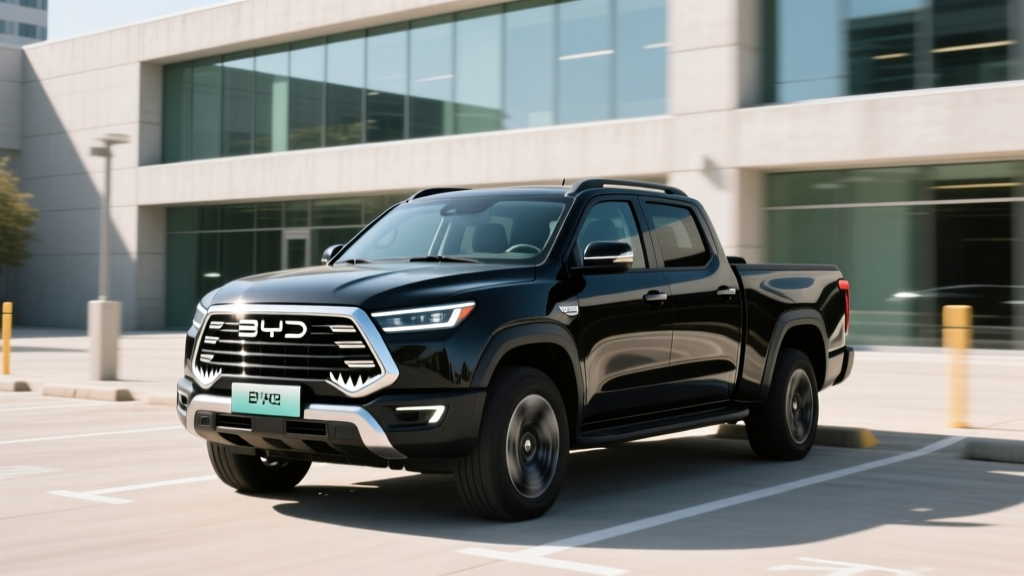
The BYD Shark 6 — the first plug-in hybrid pickup to challenge the midsize truck establishment from a Chinese OEM — is generating serious interest among US-based truck shoppers looking for electrified alternatives to the Ford Maverick Hybrid and Toyota Tacoma. With a dual-motor all-wheel-drive powertrain producing up to 430 hp (some markets list peak combined output near 671 hp in range-topping variants), a 29.58 kWh LFP Blade Battery, and an EPA-equivalent electric-only range hovering around 60 miles, the Shark occupies a unique niche: a body-on-frame PHEV truck that can handle daily commutes on electricity alone while retaining gas-engine range for towing and off-grid use.
But here's the critical caveat for US readers: as of early 2026, BYD has not announced plans to sell the Shark in the United States. The truck is currently on sale in Australia, Mexico, Brazil, and select other markets. This review covers confirmed international specifications, real-world performance data from those markets, and what US buyers should know if BYD ever enters the American truck segment.
| Spec | Value |
|---|---|
| Powertrain | PHEV (1.5L turbo I4 + dual electric motors, AWD) |
| Combined System Output | ~430 hp (320 kW) / peak up to 671 hp (variant-dependent) |
| Battery Capacity | 29.58 kWh (usable), LFP Blade Battery |
| Electric-Only Range (WLTP) | ~62 miles (100 km) |
| Estimated EPA-Equivalent EV Range | ~50–55 miles (projected) |
| Total System Range (EV + Gas) | ~620 miles (1,000 km) combined |
| DC Fast Charge (peak) | ~55 kW (30–80% in ~25 min) |
| Level 2 AC Charge | ~7 kW (~4.5 hours, 0–100%) |
| 0–100 km/h (0–62 mph) | 5.7 seconds |
| Towing Capacity (braked) | 2,500 kg (~5,510 lbs) |
| Payload | ~795 kg (~1,750 lbs) |
| Cargo Bed Length | ~1,520 mm (60 in) |
| Ground Clearance | ~230 mm (9.1 in) |
Battery, Electric Range, and Real-World Efficiency
The Shark's 29.58 kWh lithium iron phosphate (LFP) Blade Battery is the same cell architecture BYD uses across its passenger EV lineup. LFP chemistry trades some energy density for superior thermal stability, longer cycle life (typically 3,000+ full cycles before 80% capacity retention), and zero cobalt content — making it a pragmatic choice for a work truck that may see daily shallow cycling.
Range Reality Check
WLTP EV-only range: ~62 miles (100 km)
Estimated EPA-equivalent EV range: ~50–55 miles (US testing cycles are more conservative than WLTP)
Real-world expectation: Expect 40–48 miles of electric-only driving at sustained highway speeds (65–75 mph). In cold weather (below 40°F / 4°C), LFP batteries lose roughly 15–25% of usable capacity, which could drop EV-only range to 35–42 miles. City driving with frequent regenerative braking recovers more energy and will push you closer to the 55-mile mark.
Total range (gas + electric): The 1.5L turbo engine combined with a ~65-liter (17.2-gallon) fuel tank delivers a combined system range of roughly 620 miles. This is where the PHEV advantage shines — no range anxiety on long hauls, and the engine acts as a range extender once the battery is depleted.
Efficiency figures in PHEVs are notoriously tricky to compare with BEVs. In charge-depleting (EV) mode, the Shark consumes roughly 35–40 kWh/100 mi equivalent. In charge-sustaining (hybrid) mode with the gas engine running, expect fuel economy in the range of 25–30 MPG combined — competitive with the Ford Maverick Hybrid's 37 MPG combined but heavier due to the body-on-frame construction and AWD system. Once US EPA testing data is available (if BYD enters the market), these figures will be refined.
Charging Speed: DC Fast and Home Level 2
The Shark supports DC fast charging via CCS2 (international markets) at a peak rate of approximately 55 kW. While that's modest compared to the 200+ kW rates seen on dedicated BEVs like the Hyundai Ioniq 5 or Tesla Cybertruck, it's typical for PHEVs with smaller battery packs. Here's what that means in practice:
| Charging Method | Power | Time (Approx.) | Notes |
|---|---|---|---|
| Level 1 (120V household) | ~1.4 kW | ~22 hours (0–100%) | Emergency/trickle only |
| Level 2 (240V home/work) | ~7 kW | ~4.5 hours (0–100%) | Standard home wallbox |
| DC Fast Charge | ~55 kW peak | ~25 min (30–80%) | CCS2 connector; tapers above 80% |
Charging curve reality: The 55 kW peak is sustained from roughly 20–60% state of charge. Above 80%, charge speed drops significantly to protect the LFP cells — expect the final 20% to take an additional 15–20 minutes. For most PHEV owners, overnight Level 2 charging at home is the primary routine, and the 4.5-hour window easily covers a standard sleep cycle.
One practical note: the Shark does not currently support NACS (Tesla's connector standard). If BYD enters the US market, NACS adoption would be expected given the industry-wide shift, but this remains unconfirmed.
Performance, Drivetrain, and Towing Capability
The Shark's dual-motor AWD system pairs a front-mounted 1.5L turbocharged four-cylinder engine with electric motors on both axles. The result is instant electric torque at low speeds supplemented by the gas engine at higher loads — a configuration well-suited to truck duties like towing, hauling, and low-traction terrain.
- 0–100 km/h (0–62 mph): 5.7 seconds — quick for a midsize truck, roughly matching the Ford Ranger Raptor
- Combined output: ~430 hp (320 kW) in standard tune; some market variants list peak combined figures up to 671 hp
- Drivetrain: Electronic AWD with selectable terrain modes (Sand, Mud, Snow, Normal, Sport, Eco)
- Towing: 2,500 kg braked (~5,510 lbs) — adequate for a boat or small camper, but below the Ford F-150 PowerBoost's 12,700-lb rating
- Payload: ~795 kg (~1,750 lbs)
Regenerative braking is adjustable via steering-wheel paddles, allowing one-pedal-style driving in EV mode. The system recovers energy aggressively in city driving, which contributes to the strong real-world EV range in stop-and-go conditions.
Interior, Cargo, and Technology
The Shark's cabin follows BYD's current design language: a large 12.8-inch rotating central touchscreen (portrait or landscape orientation), a 10.25-inch digital instrument cluster, and a head-up display on higher trims. The infotainment system runs BYD's DiLink platform with wireless Apple CarPlay and Android Auto.
Cargo and passenger space:
- Bed dimensions: ~1,520 mm long × 1,500 mm wide (60 × 59 in) — shorter than a Ford Ranger's 72-inch bed
- Rear-seat legroom: ~940 mm (37 in) — adequate for adults on shorter trips
- Cab configuration: Four-door dual cab only (no extended cab or regular cab)
- Frunk: None — the engine bay is occupied by the 1.5L turbo and power electronics
Driver assistance (ADAS): The Shark comes equipped with BYD's ADAS suite including adaptive cruise control, lane-keeping assist, automatic emergency braking, blind-spot monitoring, and a 360-degree camera system. These are SAE Level 1–2 features — the driver must remain fully engaged at all times. This is not an autonomous system.
V2L (Vehicle-to-Load): The Shark supports V2L output, allowing you to power tools, camping equipment, or emergency appliances directly from the truck's battery via a standard outlet adapter. This is a standout feature for work-site and outdoor use cases.
Pricing, Tax Credits, and US Availability
In its current international markets, the BYD Shark 6 is priced as follows (converted to USD, approximate):
- Australia: AUD $57,900 (~$37,500 USD) — single well-equipped trim
- Mexico: ~MXN $899,000 (~$46,000 USD)
- Brazil: ~BRL 299,800 (~$52,000 USD)
Pricing varies significantly by market due to tariffs, taxes, and local incentives. For a hypothetical US launch, industry analysts estimate a base MSRP in the $40,000–$48,000 range would be necessary to compete with the Ford Maverick Hybrid (~$28,000 base) and the Toyota Tacoma i-FORCE MAX (~$40,000).
| Factor | Detail |
|---|---|
| Estimated US Base MSRP | $40,000–$48,000 (if launched) |
| Federal Tax Credit (§30D) | Up to $7,500 — subject to battery sourcing, critical minerals, MSRP cap ($80,000 for trucks), and buyer income limits |
| MSRP Cap (trucks/vans/SUVs) | $80,000 — Shark would qualify |
| Buyer Income Cap (trucks) | $150,000 single / $300,000 joint MAGI |
| Battery Sourcing Requirement | BYD's Chinese-manufactured LFP cells currently do NOT meet US critical-mineral or battery-component sourcing rules — likely ineligible for full credit |
| Point-of-Sale Transfer | Available for eligible vehicles under §30D (reduces purchase price at dealer) |
Tax credit reality: Under current IRS §30D rules, the battery must meet critical-mineral and battery-component sourcing requirements that effectively exclude Chinese-manufactured cells. BYD's vertically integrated supply chain — while impressive for cost and quality — makes the Shark unlikely to qualify for the $7,500 federal credit unless BYD establishes a US or FTA-partner battery plant. This is the same challenge facing all Chinese OEMs eyeing the US market. Always consult a tax professional for eligibility specifics.
Warranty and Long-Term Ownership
BYD offers the following warranty coverage in international markets (US terms would likely differ):
- Vehicle warranty: 6 years / 150,000 km (~93,000 miles)
- Battery warranty: 8 years / 160,000 km (~100,000 miles) with a capacity retention threshold of 70%
- Powertrain warranty: 8 years / 150,000 km (~93,000 miles)
The LFP Blade Battery's inherent longevity is an ownership advantage. LFP cells typically degrade more slowly than NMC cells, with laboratory data showing 80%+ capacity retention after 3,000 full charge cycles. For a PHEV with a 55-mile EV range, that translates to roughly 165,000 miles of pure electric driving before hitting the 80% threshold — well beyond the warranty period.
Pros and Cons: The Honest Assessment
Pros
- LFP Blade Battery offers excellent cycle life and thermal safety
- ~55 miles of real-world EV range covers most daily commutes
- Dual-motor AWD with strong 0–60 performance (5.7 sec)
- V2L capability for work-site and camping power
- Competitive international pricing (~$37,500 in Australia)
- Body-on-frame construction with genuine off-road capability
- 620+ mile total system range eliminates range anxiety
Cons
- Not available in the US — no confirmed launch timeline
- Likely ineligible for $7,500 federal tax credit due to battery sourcing
- 55 kW DC fast charging is slow compared to dedicated BEVs
- Shorter cargo bed (60 in) than US midsize truck competitors
- No NACS connector support (current international spec)
- BYD has no US dealer or service network
- Heavy curb weight impacts hybrid-mode fuel economy
Who Should Consider the BYD Shark (and Who Shouldn't)
Decision Framework
Choose the BYD Shark if: You're in a market where it's available (Australia, Mexico, Brazil), you need a PHEV truck for daily EV commuting plus weekend towing, you value LFP battery longevity, and you want V2L for work or recreation.
Look elsewhere if: You're a US buyer (it's not sold here), you need maximum towing capacity (Ford F-150 PowerBoost or Rivian R1T are better), you want pure electric operation with 300+ mile range, or you need a full-size 6.5-foot cargo bed.
For US-based truck shoppers watching from the sidelines, the closest current alternatives include:
- Ford Maverick Hybrid: FWD, 37 MPG combined, ~$28,000 base, no EV-only range — but available now and affordable
- Toyota Tacoma i-FORCE MAX: Mild hybrid, strong towing, ~$40,000+ — no plug-in capability
- Rivian R1T: Full BEV, 328–420 mile range, 11,000-lb towing, ~$70,000+ — premium pricing
- Ford F-150 PowerBoost: Full hybrid (not PHEV), 12,700-lb towing, ~$55,000+
Frequently Asked Questions
What is the real-world electric range of the BYD Shark pickup truck?
The WLTP-rated EV-only range is approximately 62 miles. In real-world US-equivalent driving, expect 50–55 miles in mixed city/highway use, dropping to 40–48 miles at sustained highway speeds, and 35–42 miles in cold weather below 40°F.
How fast does the BYD Shark charge at home and on DC fast chargers?
On a Level 2 home charger (240V, ~7 kW), a full charge takes about 4.5 hours. On a DC fast charger, the 55 kW peak rate charges the battery from 30–80% in approximately 25 minutes, with tapering above 80%.
Does the BYD Shark qualify for the US federal EV tax credit?
Almost certainly not under current IRS §30D rules. The battery sourcing and critical-mineral requirements effectively exclude Chinese-manufactured battery cells. Even if BYD launched the Shark in the US, the credit would be unlikely without a US or FTA-partner battery supply chain.
Is the BYD Shark available for purchase in the United States?
No. As of early 2026, BYD has not announced US sales plans for the Shark or any other vehicle. The truck is available in Australia, Mexico, Brazil, and other international markets. US tariffs on Chinese-manufactured vehicles (currently 100% as of 2024 policy) make near-term US entry economically challenging.
How does the BYD Shark compare to the Ford Maverick Hybrid?
The Maverick Hybrid offers better fuel economy (37 MPG combined vs. the Shark's estimated 25–30 MPG in hybrid mode), a lower starting price (~$28,000 vs. ~$37,500+ internationally), and full US availability. The Shark counters with AWD, EV-only driving capability (~55 miles), more power, and V2L — but it's not purchasable in the US.
What is the BYD Shark's towing capacity?
The Shark is rated to tow 2,500 kg (approximately 5,510 lbs) with a braked trailer. This covers most boat, utility, and small camper trailers but falls short of full-size hybrid trucks like the F-150 PowerBoost (12,700 lbs).
What battery chemistry does the BYD Shark use, and how long will it last?
The Shark uses a 29.58 kWh LFP (lithium iron phosphate) Blade Battery. LFP chemistry is known for excellent longevity — typically 3,000+ full charge cycles before reaching 80% capacity retention. The battery warranty covers 8 years / 100,000 miles (international spec) with a 70% capacity retention threshold.
Sources: BYD international press specifications, fueleconomy.gov (for US comparison data), IRS §30D clean vehicle credit guidance. All international specifications are subject to change; US availability and pricing are estimates based on current market analysis.