Quick Verdict: A Plug-In Hybrid Truck Built for Global Markets
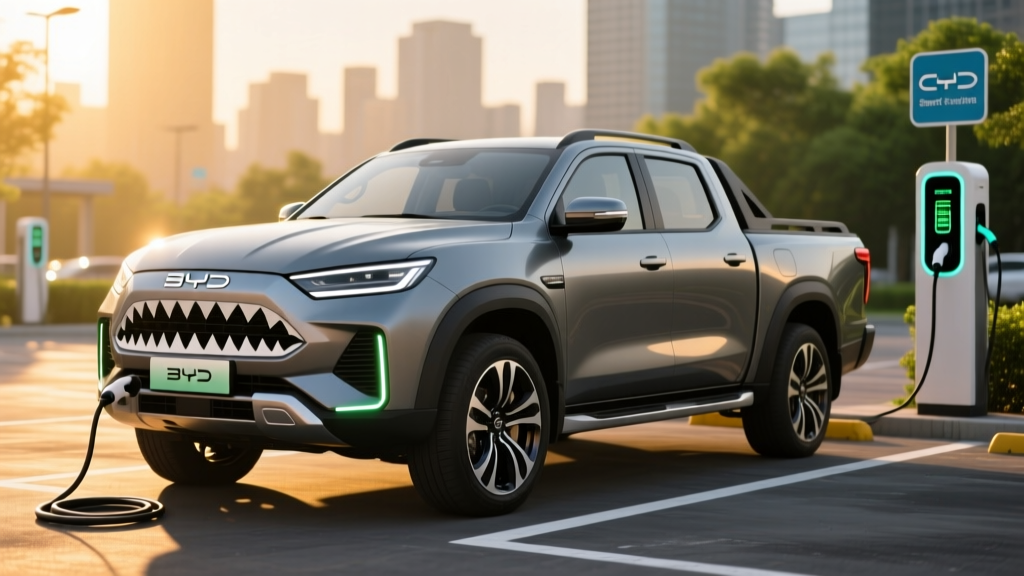
The BYD Shark 6 is a plug-in hybrid (PHEV) midsize pickup that pairs a turbocharged gasoline engine with BYD's dual-motor electric drivetrain. Launched internationally in 2024–2025 and rolling into more markets through 2026, the Shark targets buyers who want electric daily driving with gas-engine range for towing and remote trips. It is not a pure battery-electric vehicle, and it is not currently sold in the United States — a critical point for American shoppers researching the "BYD pickup" trend.
Where it is available (Australia, Mexico, Brazil, parts of Southeast Asia and the Middle East), the Shark 6 undercuts rivals like the Ford Ranger PHEV and Toyota Hilux on price while delivering class-leading electric-only range for a body-on-frame truck. This review covers the confirmed global-spec PHEV model with exact figures on battery capacity, charging, performance, and efficiency.
BYD Shark 6: Core Specifications at a Glance
| Attribute | Specification |
|---|---|
| Powertrain | 1.5L turbo I4 + dual electric motors (PHEV) |
| System Output | 430 hp (320 kW) combined |
| 0–100 km/h (0–62 mph) | 5.7 seconds |
| Drivetrain | AWD (electric rear axle, engine-driven front) |
| Battery Capacity | 29.58 kWh usable (LFP — BYD Blade) |
| EV-Only Range (WLTP) | 100 km (~62 miles) |
| Combined Range (EV + Gas) | ~800 km (~500 miles) |
| Max DC Fast Charge | ~55 kW (CCS2 in global markets) |
| DC 30–80% Time | ~22 minutes (claimed) |
| Level 2 AC Charge Rate | 7 kW onboard charger |
| Towing Capacity (braked) | 2,500 kg (~5,510 lbs) |
| Payload | ~760 kg (~1,675 lbs) |
| Cargo Bed Length | ~1,520 mm (~60 in) |
| Ground Clearance | ~230 mm (~9.1 in) |
| Base MSRP (Australia, drive-away) | AUD $57,900 (~USD $37,500) |
| Battery Warranty | 8 years / 160,000 km (~100,000 mi) |
Electric Range and Real-World Efficiency
The Shark 6 uses BYD's signature lithium iron phosphate (LFP) Blade battery with 29.58 kWh of usable capacity. On the WLTP test cycle used outside the US, it achieves 100 km (62 miles) of electric-only range. If this truck were EPA-rated for the US market, the figure would likely land closer to 50–55 miles, since EPA testing is more demanding than WLTP.
WLTP EV range: 100 km / 62 miles. In mixed suburban driving at moderate temperatures, expect roughly 50–55 miles on a full charge. Highway driving at 70+ mph reduces this to approximately 38–42 miles. In freezing weather (below 32°F / 0°C), LFP chemistry loses roughly 15–25% of range, dropping usable EV distance to around 35–45 miles. Once the battery depletes, the 1.5L turbo engine takes over, and the truck operates as a conventional hybrid with an estimated 7–8 L/100 km (roughly 29–34 MPG combined) depending on load and terrain.
For a midsize PHEV pickup, 62 miles of WLTP electric range is genuinely useful. Most daily commutes and errands fall well within that envelope, meaning owners with home charging can run the Shark almost entirely on electricity during the week and use gasoline only for longer hauls or towing.
The LFP chemistry is a deliberate choice by BYD. Compared to NMC (nickel manganese cobalt), LFP offers a longer cycle life (3,000+ full cycles before significant degradation), superior thermal stability, and no cobalt dependency. The trade-off is lower energy density, which means the battery pack is physically heavier for its capacity — a factor that slightly reduces payload compared to an equivalent NMC pack.
Charging Speed: DC Fast and Home Level 2
Charging speed matters for any plug-in vehicle, even a PHEV with a gas backup. The Shark 6 supports DC fast charging at up to approximately 55 kW via CCS2 (the standard in most global markets outside North America). BYD claims a 30–80% charge time of roughly 22 minutes.
| Charging Level | Power (kW) | Time / Rate |
|---|---|---|
| Level 1 (120V household) | ~1.4 kW | ~21 hours (0–100%) |
| Level 2 (240V home/public AC) | 7 kW (onboard max) | ~4.5 hours (0–100%) |
| DC Fast Charge (CCS2) | ~55 kW peak | ~22 min (30–80%) |
A few practical notes on these figures. First, 55 kW peak DC charging is modest by 2026 BEV standards (where 150–350 kW is common), but for a 29.58 kWh battery, the C-rate is reasonable. The smaller pack means you spend less time charging overall, even at lower peak power. Second, the charge curve tapers significantly above 80% State of Charge (SoC), as the battery management system protects the LFP cells. If you need a full 100%, plan for an additional 15–20 minutes beyond the 80% mark on DC.
At home on a 7 kW Level 2 charger (a standard 240V/32A wallbox), the Shark's battery replenishes fully in about 4.5 hours. Overnight charging easily tops up the pack for the next morning's electric commute. Preconditioning the battery — a feature that warms the pack to optimal temperature before charging — is available via the BYD app and helps sustain faster DC charge rates in cold weather.
Performance, Drivetrain, and Towing
The Shark 6 delivers 430 horsepower (320 kW) from its combined powertrain: a 1.5-liter turbocharged four-cylinder engine driving the front wheels, paired with electric motors on both axles. The result is a 5.7-second 0–100 km/h (0–62 mph) time — brisk for a body-on-frame midsize truck and quicker than most diesel competitors in this segment.
The AWD system is unconventional. The front axle can be driven by the engine, the front electric motor, or both. The rear axle is electric-only, with no mechanical connection to the engine. This means at low speeds and in EV mode, the truck is effectively rear-wheel-drive electric. Under hard acceleration or when traction is needed, the system engages all power sources for full AWD. There is no traditional transfer case or low-range gearing — the Shark uses brake-based traction control and the instant torque of its electric motors for off-road situations.
Towing capacity is rated at 2,500 kg (5,510 lbs) braked, which is competitive with the Ford Ranger and Toyota Hilux but falls short of the Toyota Tacoma's 6,800-lb rating in the US market. When towing near maximum capacity, expect the electric-only range to drop dramatically (likely to 15–20 miles) and fuel consumption to rise to 12–15 L/100 km (16–20 MPG). This is typical for PHEV trucks under load.
Interior, Technology, and Driver Assistance
Inside, the Shark 6 features a 12.8-inch rotating touchscreen (landscape or portrait orientation — a BYD signature) running the DiLink infotainment system. Wireless Apple CarPlay and Android Auto are standard. A 10.25-inch digital instrument cluster sits behind the steering wheel, and a head-up display is available on higher trims.
The cabin offers seating for five with a 60/40 split-folding rear bench. Rear legroom measures approximately 920 mm (36.2 in), adequate for adults on shorter trips. Behind the rear seats, in-cabin storage is limited — the under-seat area houses some of the hybrid system's power electronics.
Driver-assistance technology includes BYD's DiPilot suite:
- Adaptive cruise control with stop-and-go
- Lane-keeping assist and lane-departure warning
- Automatic emergency braking with pedestrian detection
- Blind-spot monitoring with rear cross-traffic alert
- 360-degree surround-view camera
- Traffic-sign recognition
The DiPilot system is a Level 1–2 driver-assistance suite under the SAE J3016 framework. It provides steering and speed support but requires the driver to remain fully engaged and hands-on at all times. This is not autonomous or self-driving technology.
Notable drawbacks include the absence of a front trunk (frunk) — the engine bay is fully occupied by the 1.5L turbo and power electronics — and a ride quality that leans firm when the bed is unloaded, a common body-on-frame characteristic. Road noise at highway speeds is more pronounced than in unibody competitors like the Rivian R1T or the Hyundai Santa Cruz.
Pricing, Trim Levels, and Tax Credit Eligibility
As of early 2026, the BYD Shark 6 is not sold in the United States. BYD has not announced a US launch date, and the current US tariff environment (including 100%+ duties on Chinese-origin vehicles) makes a near-term US introduction unlikely. Pricing below reflects confirmed international markets.
| Market | Trim | Local Price | Approx. USD |
|---|---|---|---|
| Australia | Shark 6 (single trim) | AUD $57,900 drive-away | ~$37,500 |
| Mexico | Shark PHEV | MXN $899,900 | ~$46,000 |
| Brazil | Shark PHEV | BRL ~289,000 | ~$50,000 |
Australia, where BYD has an established dealer network through partner EVDirect, currently offers the most competitive pricing. The single-trim strategy simplifies the purchase: the Shark 6 comes well-equipped with the full DiPilot safety suite, leather-trimmed seats, the 12.8-inch screen, LED headlights, and 18-inch alloy wheels as standard.
US Federal Tax Credit (§30D) — Not Applicable
Because the BYD Shark 6 is not available for sale in the United States, it does not qualify for the IRS §30D Clean Vehicle Credit. Even if it were sold stateside, several barriers would likely prevent credit eligibility:
- MSRP cap: PHEV trucks must have an MSRP at or below $80,000 to qualify. The Shark would likely meet this threshold.
- Buyer income cap: Adjusted gross income must not exceed $150,000 (single) or $300,000 (joint).
- Battery sourcing: Critical minerals and battery components must meet escalating US/free-trade-agreement sourcing percentages. BYD's vertically integrated Chinese supply chain would face significant hurdles under these requirements.
- Final assembly: The vehicle must undergo final assembly in North America. BYD currently has no US truck assembly plant.
For US-based buyers interested in a PHEV pickup, the Ford F-150 PowerBoost hybrid (non-plug-in) or the upcoming Ram Ramcharger (EREV) remain the closest domestic alternatives, though neither offers the Shark's electric-only range at a comparable price point globally.
Who the BYD Shark Pickup Suits Best
- You live in Australia, Mexico, Brazil, or another confirmed market
- Your daily commute is under 50 miles and you have home charging
- You need a truck bed for weekend projects but want EV-like running costs on weekdays
- You value the safety and longevity of LFP battery chemistry
- You want strong acceleration (5.7s to 100 km/h) without a diesel price premium
- You are in the United States (not available, no tax credit path)
- You need more than 5,500 lbs of towing capacity
- You want a pure battery-electric truck with zero gasoline use
- You regularly drive off-road in extreme conditions (no low-range transfer case)
- You prioritize a refined, quiet highway ride over utilitarian truck capability
Pros and Cons
- 62-mile WLTP EV range is best-in-class for a PHEV pickup
- LFP Blade battery offers excellent longevity and thermal safety
- 430 hp delivers genuinely quick acceleration for the segment
- Competitive pricing in international markets (~AUD $57,900)
- Comprehensive standard safety and tech suite
- 8-year / 160,000 km battery warranty
- Not available in the United States — no announced US launch
- 55 kW DC fast charging is slow by 2026 BEV standards
- No frunk — engine bay fully occupied
- Firm, noisy ride when bed is unloaded
- 2,500 kg towing limit trails some body-on-frame rivals
- No low-range gearing for serious off-road use
Frequently Asked Questions
What is the real-world EV range of the BYD Shark pickup?
The WLTP-rated EV range is 100 km (62 miles). In real-world mixed driving, expect 50–55 miles. Highway speeds and cold weather reduce this to 35–42 miles. Once the battery is depleted, the gasoline engine provides an additional ~440 miles of range.
How fast does the BYD Shark charge?
On DC fast charging, the Shark peaks at approximately 55 kW, reaching 30–80% in about 22 minutes. At home on a 7 kW Level 2 charger, a full charge takes roughly 4.5 hours. Level 1 (standard outlet) charging takes around 21 hours.
Is the BYD Shark a full electric vehicle?
No. The BYD Shark 6 is a plug-in hybrid electric vehicle (PHEV). It combines a 1.5L turbocharged gasoline engine with dual electric motors and a 29.58 kWh LFP battery. It can drive on electricity alone for approximately 62 miles (WLTP) before the engine engages.
Does the BYD Shark qualify for the US federal EV tax credit?
No. The BYD Shark is not sold in the United States as of 2026, so the IRS §30D tax credit does not apply. Even if it were available, BYD's Chinese battery supply chain and lack of North American assembly would likely prevent eligibility under current sourcing and assembly rules.
How does the BYD Shark compare to the Ford Ranger PHEV?
The Ford Ranger PHEV (available in Europe and Australia) offers a smaller battery (~12–15 kWh estimated) and less EV-only range than the Shark 6. However, the Ranger benefits from Ford's global dealer network, a more proven off-road pedigree, and potentially higher towing capacity. The Shark wins on electric range and value; the Ranger wins on brand familiarity and off-road hardware.
What is the BYD Shark's towing capacity?
The Shark 6 is rated to tow 2,500 kg (5,510 lbs) with a braked trailer. This is competitive for the midsize PHEV segment but lower than some US-market midsize trucks like the Toyota Tacoma (up to 6,800 lbs).