BYD Shark Lands in Mexico: A PHEV Pickup Worth the Buzz?
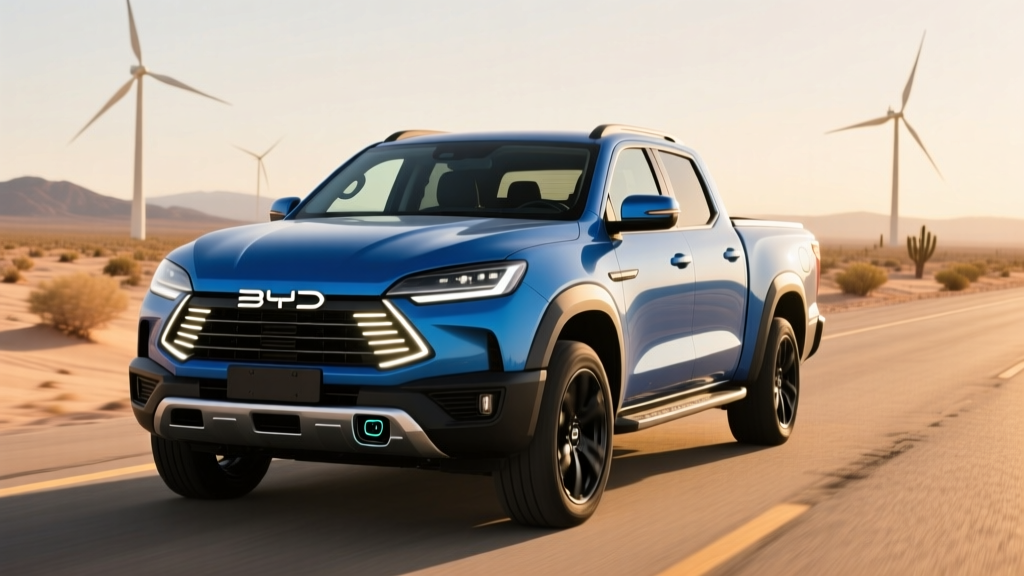
The BYD Shark (marketed as the BYD Shark 6 in some regions) is the Chinese automaker's first plug-in hybrid pickup truck, and its arrival in Mexico for the 2025–2026 model year marks one of the most significant electrified-vehicle launches in Latin America. While BYD has yet to confirm a U.S. launch timeline, the Shark's Mexican debut gives North American buyers the closest look yet at what this 430-plus-horsepower, dual-motor PHEV can do — and where it falls short.
This review covers the BYD Shark's specifications, real-world efficiency, charging behavior, pricing in the Mexican market, and what U.S. buyers should know if BYD eventually brings this truck stateside. We'll also address the federal tax credit question, since search interest in the BYD Shark Mexico keyword often comes from cross-border shoppers.
Powertrain, Battery, and Performance Specs
The Shark uses BYD's Dual Mode Off-Road (DMO) platform — a body-on-frame architecture shared with the Fang Cheng Bao 5 SUV sold in China. Two electric motors (one per axle) pair with a 1.5L turbo four-cylinder engine acting primarily as a generator and highway-range extender.
| Spec | Value |
|---|---|
| Powertrain | PHEV (series-parallel hybrid), dual-motor AWD |
| Engine | 1.5L turbocharged 4-cylinder |
| System Horsepower | ~430 hp (320 kW combined) |
| 0–60 mph (claimed) | 5.7 seconds |
| Battery Capacity | 29.58 kWh usable (LFP Blade) |
| Electric-Only Range (NEDC) | ~62 mi (100 km) |
| Estimated Real-World EV Range | ~45–50 mi mixed / 35–40 mi highway |
| Total Combined Range | ~620+ mi (1,000+ km) |
| Fuel Tank | ~75 L (19.8 gal) |
| Towing Capacity | ~5,500 lb (2,500 kg) |
| Payload | ~1,760 lb (800 kg) |
| Drivetrain | AWD (dual-motor, electronic locking diffs) |
The LFP (lithium iron phosphate) Blade battery is a BYD hallmark. LFP chemistry trades some energy density for superior thermal stability and longer cycle life compared to NMC (nickel manganese cobalt) cells. In practice, this means the Shark's pack should degrade more slowly over time — BYD warranties it for 8 years or 150,000 km (~93,000 miles), though U.S.-spec warranties (if it arrives) may differ.
Charging Speed: DC Fast and Home Level 2
Charging is where PHEV pickups differ most from full battery-electric trucks like the Ford F-150 Lightning or Rivian R1T. The Shark's 29.58 kWh battery is relatively small, which cuts both ways: it charges quickly, but you'll visit the plug more often if you want to maximize electric driving.
| Charging Level | Power | Time / Rate |
|---|---|---|
| Level 1 (120V household) | ~1.4 kW | ~21 hours (0–100%) |
| Level 2 (240V home/public) | ~6.6 kW | ~4.5 hours (0–100%) |
| DC Fast Charge | Up to ~55 kW peak | ~25–30 min (30–80%) |
DC fast charging on the Shark tops out around 55 kW. That's modest compared to BEV trucks pushing 200+ kW, but with a sub-30 kWh battery, you're only adding about 15 kWh during a 30–80% session — roughly 25 miles of electric range. The charge curve tapers noticeably above 80% SoC, as is standard for LFP cells. If you plan to rely heavily on electric-only commuting, a home Level 2 charger is essentially mandatory; Level 1 overnight charging will not fully replenish the pack in a single night.
The Shark sold in Mexico uses a CCS2 / GB/T charging port depending on the batch. U.S.-bound models would require CCS1 (or potentially NACS as the industry transitions). Confirm connector type before purchasing any charging equipment.
Interior, Cargo, and Technology
The Shark's cabin borrows heavily from BYD's passenger-car playbook. A 15.6-inch rotating center touchscreen (a BYD signature) dominates the dash, running a version of BYD's DiLink infotainment system. A 10.25-inch digital instrument cluster sits behind the steering wheel, and a head-up display is available on higher trims.
Dimensions and Space
- Bed length: ~5.0 ft (1,520 mm) — shorter than a typical midsize truck bed
- Rear legroom: ~37.5 inches — competitive with the Toyota Tacoma and Ford Ranger
- Cargo volume (bed): ~43 cu ft (1.22 m³)
- Seating: 5 passengers
The shorter bed is the trade-off for the Shark's crew-cab passenger space. If you regularly haul 4x8 sheets of plywood, the Shark won't accommodate them flat. For typical gear — camping equipment, home-improvement supplies, a few suitcases — the bed is adequate.
Driver Assistance and Safety
BYD equips the Shark with its ADAS suite including adaptive cruise control, lane-keeping assist, automatic emergency braking, and a 360-degree camera system. These are SAE Level 2 driver-assist features — the driver must remain fully engaged at all times. This is not autonomous driving, and BYD does not market it as such.
As of early 2026, neither NHTSA nor IIHS has crash-tested the BYD Shark. Mexican-market safety ratings from Latin NCAP are pending.
Pricing in Mexico and U.S. Tax Credit Eligibility
In Mexico, the BYD Shark launched with a starting price of approximately 899,900 MXN (~$45,000–$48,000 USD depending on exchange rate) for the single GL trim. A fully loaded model with all options pushes toward 990,000 MXN (~$52,000 USD).
| Trim | MSRP (MXN) | Approx. USD |
|---|---|---|
| GL (base) | ~899,900 | ~$45,000–$48,000 |
| Fully loaded | ~990,000 | ~$52,000 |
Does the BYD Shark Qualify for the U.S. Federal EV Tax Credit?
As of 2026, the BYD Shark is not sold in the United States, and it almost certainly would not qualify for the IRS §30D federal tax credit even if it were. Here's why:
- Final assembly requirement: §30D requires final assembly in North America. BYD manufactures the Shark in Thailand and China.
- Battery sourcing: Critical minerals and battery components must meet phased percentages from U.S. or FTA-partner sources. BYD's vertically integrated LFP supply chain is predominantly China-based.
- Foreign Entity of Concern (FEOC): Vehicles with battery components from a FEOC (which includes most Chinese-domiciled manufacturers) are disqualified from the credit entirely.
- MSRP cap: PHEV trucks must be under $80,000 MSRP — the Shark would clear this, but it's moot given the sourcing disqualifiers.
Bottom line: U.S. buyers cross-shopping based on Mexican pricing should not factor in a $7,500 credit. For authoritative rules, see the IRS §30D guidance.
Efficiency: MPGe and Real-World Fuel Economy
Because the Shark is not EPA-certified for U.S. sale, no official fueleconomy.gov MPGe rating exists. However, based on BYD's published WLTP/NEDC figures and independent testing from Mexican and Australian automotive media:
- Electric mode: ~2.0–2.3 kWh/mile (equivalent to roughly 85–95 MPGe)
- Hybrid mode (battery depleted): ~28–32 mpg combined (city/highway mix)
- Highway-only, battery depleted: ~24–27 mpg
These numbers are competitive with the Ford Maverick Hybrid (~42 mpg combined, but FWD-only and less powerful) and significantly better than a body-on-frame gas truck like the Toyota Tacoma (~20–22 mpg combined). The Shark's efficiency advantage narrows on long highway trips where the engine runs continuously and the battery provides no assist.
Who Should Buy the BYD Shark?
- You live in Mexico or a market where it's sold and want an electrified pickup without full BEV range anxiety
- You need AWD and moderate off-road capability with better fuel economy than a gas truck
- Your daily commute is under 45 miles and you can charge at home nightly
- You value the LFP battery's longevity and thermal safety profile
- You're a U.S. buyer hoping for a cheap PHEV truck — BYD has no confirmed U.S. timeline
- You need a full-size bed for construction or commercial work
- You want a pure-electric experience with 300+ miles of zero-emission range
- Tax credit eligibility is a dealbreaker for your purchase math
Pros and Cons
Pros
- 430+ hp with a 5.7-second 0–60 — genuinely quick for a midsize truck
- LFP Blade battery offers long cycle life and strong thermal safety
- ~45–50 mi real-world EV range covers most daily commutes
- 620+ mi total range eliminates range anxiety on road trips
- Competitive pricing in the Mexican market (~$45K USD)
- Rotating 15.6-inch infotainment screen with solid UI
- Standard AWD with electronic locking differentials
Cons
- Not available in the U.S.; no confirmed launch timeline
- Would not qualify for §30D tax credit due to China-based sourcing
- Short 5-foot bed limits utility for large cargo
- DC fast charging peaks at only ~55 kW
- No NHTSA or IIHS crash-test data available
- Level 1 overnight charging insufficient to fully replenish battery
- BYD's service/parts network outside China is still maturing
Frequently Asked Questions
What is the real-world electric range of the BYD Shark?
BYD claims ~62 miles on the generous NEDC cycle. In real-world mixed driving, expect 45–50 miles on a full charge. Sustained highway speeds or cold weather will reduce that to roughly 35–40 miles. The gasoline engine extends total range past 620 miles.
How fast does the BYD Shark charge?
On DC fast charge, the Shark peaks around 55 kW, reaching 30–80% in approximately 25–30 minutes. On a home Level 2 (240V, 6.6 kW) charger, a full 0–100% charge takes about 4.5 hours. Level 1 (120V) takes over 20 hours.
Can I buy the BYD Shark in the United States?
Not as of early 2026. BYD sells the Shark in Mexico, Australia, and select other markets. There is no confirmed U.S. launch date, and BYD faces significant tariff and regulatory hurdles for U.S. vehicle sales.
Does the BYD Shark qualify for the $7,500 federal EV tax credit?
No. Even if sold in the U.S., the Shark would fail §30D requirements due to final assembly outside North America, battery components sourced from a Foreign Entity of Concern (China), and critical-mineral sourcing rules. See IRS guidance for details.
How does the BYD Shark compare to the Ford Maverick Hybrid?
The Maverick Hybrid delivers ~42 mpg combined but is FWD-only, has ~190 hp, and is not a plug-in. The Shark offers AWD, 430+ hp, and ~45 miles of EV-only range, but costs more and isn't available in the U.S. They serve different use cases: the Maverick is an efficiency-first commuter truck; the Shark is a performance-oriented PHEV with off-road pretensions.
What is the BYD Shark's towing capacity?
BYD rates the Shark at approximately 5,500 lb (2,500 kg) — competitive with midsize trucks like the Toyota Tacoma and Ford Ranger. Towing will significantly reduce both EV-only range and hybrid fuel economy; expect 18–22 mpg while towing with a depleted battery.
What warranty covers the BYD Shark's battery?
In Mexico, BYD provides an 8-year / 150,000 km (~93,000 mile) warranty on the high-voltage battery and powertrain. Coverage terms may differ if and when the truck reaches other markets.