The Short Answer: BYD Passenger EVs Are Not Sold in the USA (Yet)
If you've been searching for whether BYD will sell in the USA, the answer as of early 2026 is straightforward: BYD does not currently sell passenger electric vehicles in the United States. The Chinese automaker — which has traded the title of world's largest EV manufacturer back and forth with Tesla — has no official dealership network, no EPA-certified models, and no announced timeline for a U.S. passenger car launch.
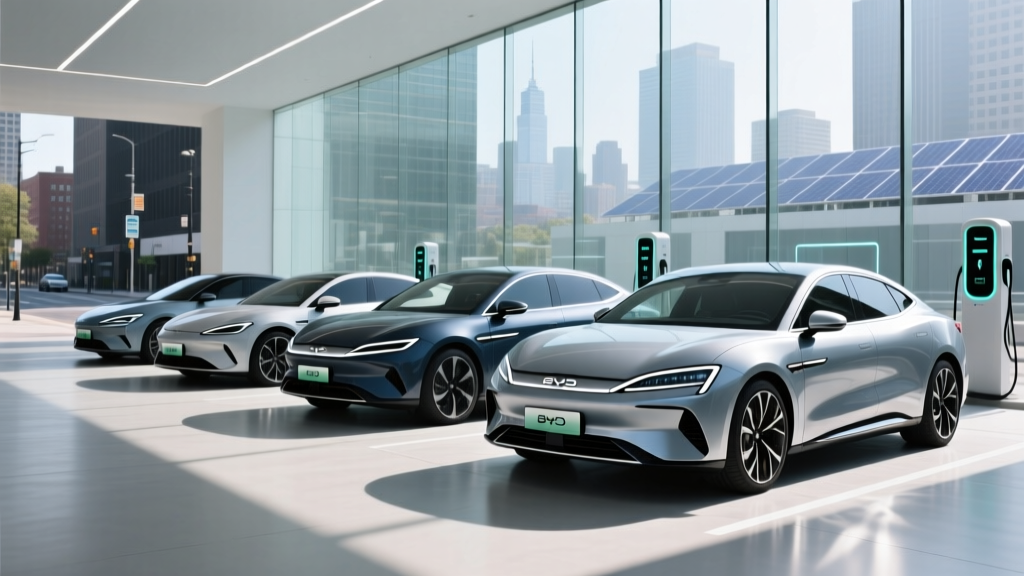
That hasn't stopped intense speculation. BYD's global expansion has been aggressive: the company now sells vehicles in over 70 countries across Europe, Southeast Asia, Australia, and Latin America. Models like the BYD Seal, Atto 3 (Yuan Plus), Dolphin, and Han EV have earned strong reviews abroad for their value, range, and Blade Battery technology. But the U.S. market remains conspicuously absent from BYD's map.
This article breaks down exactly why, what the current tariff and regulatory barriers look like, what BYD's global lineup would cost if it arrived stateside, and what American EV buyers should consider instead in 2026.
Why BYD Doesn't Sell Cars in the United States
Three primary barriers prevent BYD from entering the U.S. passenger vehicle market:
1. Federal Tariffs: 100% Duty on Chinese-Made EVs
In May 2024, the Biden administration announced a dramatic increase in Section 301 tariffs on Chinese-made electric vehicles, raising the duty from 25% to 100%. This tariff, which remains in effect through 2026, effectively doubles the price of any EV imported from China. A BYD Seal that retails for the equivalent of $38,000 in Europe would face a $38,000 tariff upon U.S. entry, rendering it completely uncompetitive against domestically produced alternatives like the Tesla Model 3, Hyundai Ioniq 6, or Chevrolet Equinox EV.
The tariff applies to vehicles manufactured in China regardless of brand. Even if BYD were to badge a vehicle differently or route it through a subsidiary, the country-of-origin manufacturing rule applies. The IRS §30D clean vehicle credit further restricts eligibility: vehicles with battery components or critical minerals from a "foreign entity of concern" (which includes Chinese companies) are disqualified from the $7,500 federal tax credit.
2. National Security and Data Privacy Concerns
U.S. regulators have increasingly scrutinized connected vehicles from Chinese manufacturers over data security. Modern EVs collect enormous amounts of telemetry, location, and driver-behavior data. The U.S. Department of Commerce has pursued rulemaking under the Information and Communications Technology and Services (ICTS) framework that could effectively ban Chinese-connected vehicles on national security grounds — a barrier that extends beyond tariffs into outright market prohibition.
3. Dealer Network and Homologation Costs
Even absent tariffs, entering the U.S. market requires billions in investment: establishing a dealer or direct-sales network, certifying every model to NHTSA and EPA standards, building a parts and service infrastructure, and adapting vehicles to U.S. crash-test requirements (which differ significantly from Euro NCAP and C-NCAP). Tesla spent over a decade building this infrastructure. BYD has prioritized markets with lower barriers and faster returns.
BYD's Global EV Lineup: Specs That Make the Brand Compelling
Understanding why American buyers are curious about BYD requires looking at what the company sells elsewhere. Below is a summary of BYD's key global models with their specifications. Note: these are WLTP figures (the European testing standard, which tends to be 10-15% more optimistic than EPA estimates) and pricing from international markets. None of these models are EPA-certified or available for U.S. purchase.
| Model | Battery (kWh) | Chemistry | WLTP Range | Est. EPA Range | Peak DC Charge | 0-60 mph | HP | Global Price (USD Equiv.) |
|---|---|---|---|---|---|---|---|---|
| BYD Dolphin | 60.4 kWh | LFP (Blade) | 265 mi | ~225 mi | 88 kW | 7.0s | 201 | ~$30,000 (EU) |
| BYD Atto 3 | 60.4 kWh | LFP (Blade) | 260 mi | ~220 mi | 88 kW | 7.3s | 201 | ~$38,000 (EU) |
| BYD Seal | 82.5 kWh | LFP (Blade) | 355 mi | ~300 mi | 150 kW | 5.9s (RWD) / 3.8s (AWD) | 313 (RWD) / 530 (AWD) | ~$47,000 (EU) |
| BYD Han EV | 85.4 kWh | LFP (Blade) | 320 mi | ~270 mi | 120 kW | 7.9s | 244 | ~$55,000 (EU) |
| BYD Seagull | 38.9 kWh | LFP (Blade) | 190 mi (CLTC) | ~140 mi | 40 kW | ~11.0s | 75 | ~$12,000 (China) |
Sources: BYD Europe spec sheets, BYD Global. EPA range estimates are author approximations based on typical WLTP-to-EPA conversion ratios and have not been verified by the EPA.
BYD Blade Battery Technology: What Makes It Different
BYD's most significant technological contribution to the EV industry is its Blade Battery, a proprietary form of lithium iron phosphate (LFP) cell packaged in a long, thin prismatic format that resembles a blade. Here's why it matters:
| Attribute | BYD LFP Blade Battery | Typical NMC (Nickel Manganese Cobalt) |
|---|---|---|
| Energy Density | Lower (~140 Wh/kg cell-level) | Higher (~200-260 Wh/kg cell-level) |
| Thermal Stability | Excellent — passes nail penetration test without fire | Good, but requires more robust thermal management |
| Cycle Life | 3,000+ cycles to 80% capacity | 1,000-2,000 cycles to 80% capacity |
| Cold-Weather Performance | Weaker — 20-30% range loss below freezing | Better — 15-25% range loss below freezing |
| Cost | Lower (no cobalt or nickel) | Higher (commodity-linked metals) |
| Cobalt/Nickel | None — fewer supply-chain/ethical concerns | Contains both — sourcing scrutiny |
The Blade Battery's safety reputation is genuine: BYD's nail penetration test — where a steel nail is driven through a fully charged cell — shows no thermal runaway, fire, or explosion. This is a meaningful advantage over many NMC cells. However, the energy-density penalty means BYD vehicles tend to need larger, heavier packs to achieve the same range as NMC-equipped competitors, which affects efficiency and weight distribution.
Charging Performance: Where BYD Lags the Competition
One of the more honest criticisms of BYD's global lineup is that DC fast-charging speeds trail the segment leaders significantly. While Hyundai/Kia's E-GMP platform peaks at 240+ kW and Tesla's V4 Superchargers deliver 250+ kW, most BYD models top out between 88 and 150 kW on DC fast chargers.
| Vehicle | Peak DC kW | 10-80% Time | Level 2 Rate (kW) | Connector |
|---|---|---|---|---|
| BYD Seal (AWD) | 150 kW | ~26 min | 11 kW | CCS2 (EU) / GB/T (China) |
| BYD Atto 3 | 88 kW | ~38 min | 7 kW | CCS2 (EU) / GB/T (China) |
| BYD Dolphin | 88 kW | ~36 min | 7 kW | CCS2 (EU) / GB/T (China) |
| Hyundai Ioniq 5 (U.S.) | 240 kW | ~18 min | 10.9 kW | NACS (2025+) |
| Tesla Model 3 (U.S.) | 250 kW | ~20 min | 11.5 kW | NACS |
| Chevy Equinox EV (U.S.) | 150 kW | ~30 min | 11.5 kW | NACS (2025+) |
For U.S. road-trippers accustomed to Tesla's Supercharger network or Hyundai's 800V architecture, BYD's charging speeds would feel noticeably slow. A 38-minute 10-80% session on the Atto 3 is functional for highway rest stops but adds meaningful trip time compared to the 18-minute sessions possible in an Ioniq 5. The BYD Seal's 150 kW peak is more competitive but still below the current state of the art.
Additionally, BYD vehicles sold in Europe use the CCS2 connector, and Chinese-market models use GB/T. Neither is compatible with the U.S. charging infrastructure, which has largely standardized on NACS (Tesla's connector, now adopted by Ford, GM, Hyundai, Rivian, and most major automakers for 2025+). Even if BYD entered the U.S. market, it would need to adopt NACS or provide adapters — another cost and complexity layer.
What Would BYD Models Cost in the USA (If They Could Be Sold)?
To illustrate the tariff problem, here's what BYD's most popular models would cost American buyers under current trade policy:
| Model | China MSRP (USD) | 100% Tariff | Estimated U.S. Price | Comparable U.S. EV | U.S. EV Price |
|---|---|---|---|---|---|
| BYD Seagull | ~$12,000 | +$12,000 | ~$24,000+ | N/A (no direct rival at this price) | — |
| BYD Dolphin | ~$18,000 | +$18,000 | ~$36,000+ | Chevy Equinox EV 3LT | $33,400 |
| BYD Seal | ~$28,000 | +$28,000 | ~$56,000+ | Tesla Model 3 Long Range AWD | $47,740 |
| BYD Han EV | ~$32,000 | +$32,000 | ~$64,000+ | Hyundai Ioniq 6 Limited | $52,600 |
As the table shows, the 100% tariff eliminates BYD's core competitive advantage — aggressive pricing. A tariff-inflated BYD Seal at $56,000+ is more expensive than a Tesla Model 3 Long Range AWD, which offers 341 miles of EPA range, 250 kW Supercharging, and access to the most reliable DC fast-charging network in North America. There is simply no economic case for BYD to enter under these conditions.
Federal Tax Credit Eligibility
Even if BYD could sell in the U.S., its vehicles would almost certainly fail to qualify for the §30D federal clean vehicle credit of up to $7,500. The credit requires:
- Battery sourcing: Battery components must not be manufactured by a "foreign entity of concern" (FEOC) — a category that explicitly includes Chinese companies, effective 2024.
- Critical minerals: Critical minerals must not be sourced from FEOC entities, effective 2025.
- Final assembly: Must occur in North America.
- MSRP caps: $55,000 for sedans, $80,000 for SUVs/trucks/vans.
- Buyer income caps: $150,000 single / $300,000 joint AGI.
BYD's vertically integrated supply chain — which sources LFP cathode materials, cells, and packs entirely within China — would disqualify every model from the credit on both battery-component and critical-mineral grounds.
Could BYD Enter the U.S. Through Mexico or Another Loophole?
BYD has announced plans to build a factory in Mexico, and industry watchers have speculated this could serve as a back door into the U.S. market. However, this pathway is effectively blocked:
- The USMCA trade agreement requires 75% regional value content for automotive goods, and a Chinese-owned factory assembling Chinese-sourced components in Mexico would likely not qualify for tariff-free entry.
- The 100% tariff on Chinese-origin EVs has been paired with additional scrutiny on transshipment — routing goods through third countries to evade duties.
- In 2024-2025, multiple U.S. lawmakers called for explicit closure of the "Mexico loophole" for Chinese EVs, and subsequent regulatory action has tightened these rules.
BYD's Mexico factory is more likely intended to serve the Latin American market directly, where tariffs are lower and demand for affordable EVs is growing rapidly.
What U.S. Buyers Should Consider Instead in 2026
If the appeal of BYD is its combination of value, LFP battery durability, and competitive range, several U.S.-available EVs deliver on similar promises:
If You Want Affordable LFP:
Tesla Model 3 RWD — $38,990 MSRP, 272 mi EPA range, LFP battery, 170 kW DC charging, NACS connector, qualifies for $7,500 credit for eligible buyers. The closest U.S. analog to BYD's value proposition.
If You Want Fast Charging + Range:
Hyundai Ioniq 5 — Starting at $42,600, up to 318 mi EPA range, 240 kW peak DC charging (10-80% in ~18 min), 800V architecture. Dramatically outpaces any BYD model on charging speed.
If You Want a Compact Crossover:
Chevrolet Equinox EV — Starting at $33,400, up to 319 mi EPA range, NACS connector, eligible for $7,500 credit. Competes directly with the BYD Atto 3 segment at a price the tariff-inflated Atto 3 couldn't match.
If You Want a Sport Sedan:
Tesla Model 3 Long Range AWD — $47,740 MSRP, 341 mi EPA, 3.8s 0-60, 250 kW charging. The BYD Seal AWD's most direct rival, and it wins on range, charging, and U.S. infrastructure support.
Frequently Asked Questions
Can I import a BYD vehicle to the United States personally?
Technically, you can attempt to import any vehicle, but it must comply with all NHTSA Federal Motor Vehicle Safety Standards (FMVSS) and EPA emissions certifications. BYD vehicles are not certified to U.S. standards, and the 100% tariff would apply at customs. The cost, legal complexity, and lack of warranty or service support make personal import impractical and economically irrational.
Does BYD sell any products in the U.S.?
Yes — BYD manufactures electric buses and heavy-duty commercial trucks at its Lancaster, California facility. These serve transit agencies, school districts, and fleet operators. BYD also supplies battery cells and energy storage products. But no consumer passenger vehicles are sold in the U.S.
Will BYD ever sell cars in America?
There is no announced timeline for BYD passenger vehicle sales in the United States. Given the 100% tariff, FEOC battery-sourcing restrictions, connected-vehicle security rulemaking, and the cost of building a U.S. dealer and service network, most industry analysts do not expect BYD to enter the U.S. passenger market before 2028 at the earliest — and only if trade policy shifts substantially. BYD's leadership has publicly stated they are "studying" the U.S. market but have prioritized Europe, Southeast Asia, and Latin America.
Is BYD's Blade Battery safer than batteries in U.S.-market EVs?
BYD's LFP Blade Battery has demonstrated excellent thermal stability in nail penetration and crush tests, with no fire or thermal runaway. LFP chemistry is inherently more thermally stable than NMC. However, U.S.-market EVs from Tesla, Ford, GM, and Hyundai also use LFP in certain trims (Tesla Model 3 RWD, Ford Mustang Mach-E Select) and employ robust battery management and thermal systems. The safety gap is narrower than marketing suggests — modern EV batteries across all chemistries have strong safety records as tracked by NHTSA.
What is the cheapest EV I can buy in the U.S. that's similar to a BYD?
The closest value proposition to BYD's global pricing is the Tesla Model 3 RWD at $38,990 (before the $7,500 federal credit, which brings the effective price to ~$31,490 for eligible buyers). The Chevrolet Equinox EV at $33,400 is also competitive. Neither matches BYD's China-market pricing, but both are significantly cheaper than a tariff-inflated BYD import would be.
Does BYD's LFP battery last longer than NMC?
LFP cells generally offer superior cycle life — BYD rates its Blade Battery at over 3,000 charge cycles to 80% capacity retention, compared to 1,000-2,000 cycles for typical NMC. At an average of 30 miles per cycle, 3,000 cycles equates to roughly 90,000 miles before reaching 80% State of Health. In practice, most EV batteries outlast their 8-year/100,000-mile warranties regardless of chemistry, but LFP's longevity advantage is real and measurable.