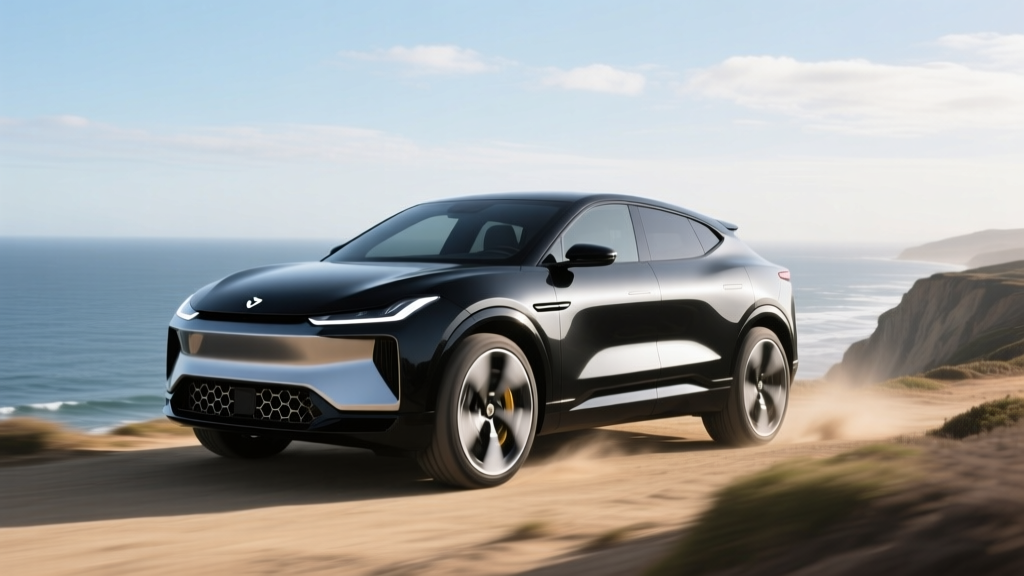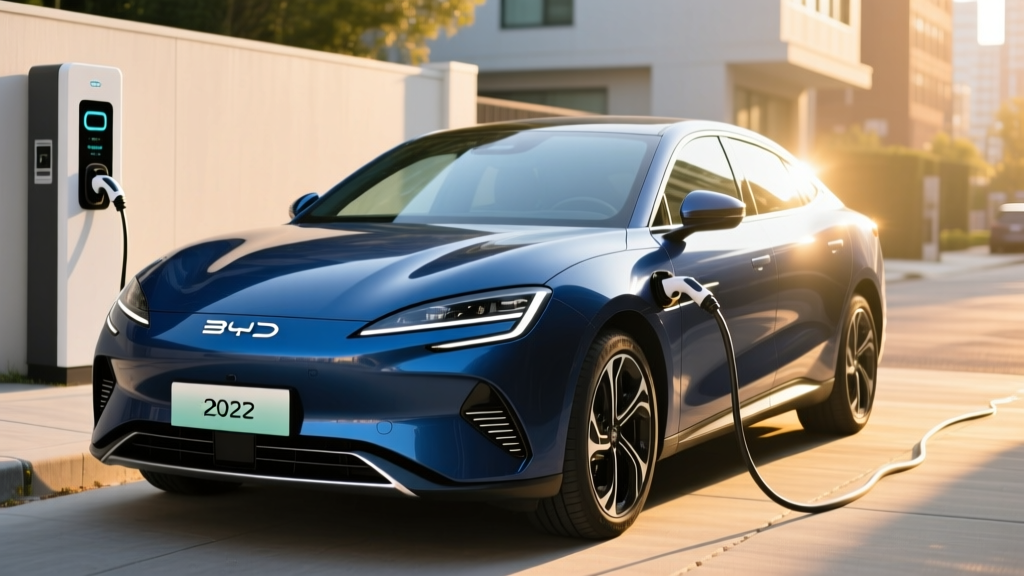
The BYD Sealion 7 arrives in global markets as a mid-size electric crossover aimed squarely at the Tesla Model Y and Hyundai Ioniq 5. But for US-based EV shoppers, the question is whether this Chinese-market contender can match the charging speed, range, and ownership economics of established rivals. In this BYD Sealion 7 review, we break down exact EPA-equivalent range figures, charging curves, battery chemistry trade-offs, and the tax-credit reality that will determine its American viability.
Spec Table: 2026 BYD Sealion 7 at a Glance
| Specification | Standard Range (RWD) | Extended Range (AWD) |
|---|---|---|
| Battery (usable) | 71.8 kWh LFP | 82.5 kWh LFP |
| WLTP Range | 280 mi (450 km) | 311 mi (500 km) |
| Est. EPA Range | ~245 mi | ~275 mi |
| Powertrain | RWD, 308 hp | AWD dual-motor, 523 hp |
| 0-62 mph (0-100 km/h) | 6.7 sec | 4.5 sec |
| Peak DC Charge Rate | 150 kW | 150 kW |
| 10-80% DC Charge Time | ~28 min | ~32 min |
| Level 2 Home Charge | 11 kW (~30 mi/hr) | 11 kW (~30 mi/hr) |
| Est. Base MSRP (US) | ~$42,000 | ~$48,000 |
Note: US pricing and EPA figures are estimates based on global specs. BYD has not confirmed US market entry as of early 2026. WLTP range figures typically run 10-15% higher than EPA estimates.
Range & Efficiency: WLTP vs Real-World Reality
WLTP Sticker: 311 miles (Extended Range AWD)
Estimated EPA: ~275 miles
Real-World Highway (70 mph): ~230-250 miles
Real-World Cold Weather (below 32°F): ~200-220 miles (20-25% loss typical for LFP chemistry)
BYD quotes the Sealion 7 Extended Range at 311 miles under the European WLTP cycle, but US buyers should expect EPA figures closer to 275 miles once the vehicle undergoes American testing. WLTP is notoriously optimistic compared to EPA methodology, which factors in higher highway speeds and more aggressive climate-control usage.
The Sealion 7's efficiency lands around 3.5-3.8 kWh per mile (roughly 90-95 MPGe combined), placing it behind the Hyundai Ioniq 5 (101 MPGe combined) but competitive with the Tesla Model Y Long Range (28-30 kWh/100mi). The LFP (lithium iron phosphate) battery chemistry prioritizes longevity and thermal stability over energy density, which partly explains the range gap versus NMC-equipped rivals.
In cold-weather driving, LFP cells experience more pronounced range loss than NMC chemistries — expect 20-25% reduction in sub-freezing temperatures versus 15-20% for NMC. The Sealion 7 includes a heat pump for cabin heating, which mitigates some winter range penalty, but preconditioning the battery before DC fast charging remains essential for optimal charge speeds.
Charging Speed: 150 kW Peak with Typical LFP Curve
| Charge Level | Power | Miles Added per Hour | Notes |
|---|---|---|---|
| Level 1 (120V) | 1.4 kW | ~4 mi/hr | Emergency/trickle only |
| Level 2 (240V) | 11 kW | ~30 mi/hr | Full charge in ~8-9 hours |
| DC Fast Charge | 150 kW peak | ~150 mi in 15 min | 10-80% in ~30 min |
The Sealion 7's 150 kW peak DC fast-charge rate is the vehicle's most significant competitive weakness. Rivals like the Hyundai Ioniq 5 (240 kW peak, 10-80% in 18 minutes) and Kia EV6 (240 kW) significantly outpace it on road trips. Even the Tesla Model Y, limited to 250 kW on Superchargers, benefits from Tesla's extensive proprietary network.
BYD's LFP battery exhibits a flatter charge curve than NMC cells — it sustains closer to peak power through the mid-state-of-charge range but tapers sharply above 80%. Expect the 10-80% charge to take approximately 28-32 minutes at a 150 kW-capable station, assuming proper battery preconditioning. Without preconditioning (navigating to a charger in the infotainment system), cold-soaked batteries can take 40+ minutes for the same session.
For home charging, the 11 kW onboard charger adds roughly 30 miles of range per hour, meaning an overnight charge from 20% to 80% takes about 5-6 hours on a Level 2 wallbox. This is adequate for daily commuters with home charging access but slower than the 19.2 kW chargers available on the Ford Mustang Mach-E and F-150 Lightning.
Performance & Driving Dynamics
The Sealion 7 offers two powertrain configurations:
- Standard Range RWD: Single rear motor, 308 horsepower, 0-62 mph in 6.7 seconds
- Extended Range AWD: Dual-motor all-wheel drive, 523 horsepower, 0-62 mph in 4.5 seconds
The AWD variant's 4.5-second 0-62 mph time (roughly 4.3 seconds 0-60 mph) delivers brisk acceleration competitive with the Tesla Model Y Performance (3.5 sec) but trailing the Hyundai Ioniq 5 N's track-focused 3.25-second sprint. For most buyers, the RWD model's 6.7-second time is more than adequate for highway merging and passing.
BYD's e-Platform 3.0 integrates the battery pack as a structural component (cell-to-body construction), lowering the center of gravity and improving torsional rigidity. European press reviews note composed highway manners and acceptable body control, though the steering lacks the precision of European rivals. Regenerative braking offers multiple levels including a one-pedal driving mode, though the friction brake blend is less seamless than Tesla's implementation.
Interior, Cargo & Technology
The Sealion 7 measures 189.4 inches long with a 112.2-inch wheelbase, placing it firmly in the mid-size crossover segment alongside the Model Y and Ioniq 5. Interior highlights include:
- Cargo volume: 20.1 cu ft behind rear seats, ~57 cu ft with seats folded (estimated)
- Rear legroom: ~39 inches (competitive with Model Y)
- Front trunk (frunk): Small storage compartment, not full cargo space
- Infotainment: 15.6-inch rotating touchscreen (portrait/landscape modes)
- Driver display: 10.25-inch digital instrument cluster
- Connectivity: Wireless Apple CarPlay and Android Auto, 5G-capable telematics
The rotating center screen is a BYD signature — useful for navigation in portrait mode and video streaming in landscape while parked. However, the software interface lags behind Tesla's responsiveness and Hyundai's intuitive layout. Physical buttons for climate control are absent, requiring touchscreen interaction for temperature adjustments, a common complaint in modern EVs.
Driver-assistance features include adaptive cruise control with stop-and-go, lane-keeping assist, and automated emergency braking. These constitute SAE Level 2 driver assistance — the driver must remain engaged and hands on the wheel at all times. The system is competent for highway cruising but does not approach the sophistication of Tesla's Autopilot or GM's Super Cruise in terms of lane-change confidence or hands-free capability.
Pricing, Trims & Federal Tax Credit Eligibility
| Trim Level | Est. MSRP | After Potential §30D Credit |
|---|---|---|
| Standard Range RWD | ~$42,000 | ~$34,500 (if eligible) |
| Extended Range AWD | ~$48,000 | ~$40,500 (if eligible) |
The Sealion 7's eligibility for the $7,500 federal EV tax credit is highly uncertain and likely disqualified under current 2026 rules. The credit requires:
- Final assembly in North America (BYD manufactures in China)
- Battery components not sourced from "foreign entities of concern" (China-based BYD fails this requirement)
- Critical minerals from approved trade partners (unlikely given BYD's vertical integration)
- Buyer income caps: $150k single / $300k joint filers
- MSRP caps: $55k for sedans, $80k for SUVs/vans
The pricing estimates above assume BYD enters the US market with competitive positioning against the Model Y ($44,990 base) and Ioniq 5 ($42,900 base). However, without the tax credit, the Sealion 7's value proposition weakens considerably. A $42,000 starting price without credit eligibility effectively costs the same as a $49,500 credit-eligible competitor.
Battery Warranty & Longevity
BYD offers an 8-year/100,000-mile warranty on the battery pack and electric powertrain in global markets, with a capacity retention threshold of 70%. This matches the industry standard (Tesla, Hyundai, Ford all offer 8-year/100k coverage) and reflects confidence in LFP chemistry's longevity.
LFP batteries typically exhibit slower degradation than NMC cells, retaining 85-90% capacity after 1,000 charge cycles (roughly 200,000-250,000 miles). The trade-off is lower energy density, which explains the Sealion 7's heavier curb weight (~4,600 lbs) compared to NMC-equipped rivals. For high-mileage drivers and commercial fleet use, LFP's durability is a significant advantage.
Who Should Buy the BYD Sealion 7?
- Daily commuters with home charging who prioritize cabin space and LFP battery longevity
- Buyers in markets where BYD has established dealer networks (Europe, Australia, Southeast Asia)
- Fleet operators seeking durable LFP chemistry for high-mileage duty cycles
- You frequently take road trips requiring fast DC charging (Ioniq 5, EV6, or Model Y charge faster)
- You need federal tax credit eligibility to make the purchase economical
- You live in the US, where BYD has no confirmed sales or service network as of 2026
BYD Sealion 7 vs Key Competitors
| Metric | BYD Sealion 7 | Tesla Model Y LR | Hyundai Ioniq 5 |
|---|---|---|---|
| EPA Range | ~275 mi (est.) | 330 mi | 303 mi |
| DC Charge Peak | 150 kW | 250 kW | 240 kW |
| 10-80% Time | ~30 min | ~20 min | 18 min |
| Base MSRP | ~$42,000 | $44,990 | $42,900 |
| Tax Credit Eligible | Unlikely | Yes (partial) | Yes (full $7,500) |
| Battery Chemistry | LFP | NMC | NMC |
The Sealion 7's 150 kW charging is its Achilles' heel in this comparison. On a 300-mile road trip requiring one DC fast-charge stop, the Ioniq 5 adds 150 miles of range in 15 minutes versus the Sealion 7's 150 miles in roughly 20-22 minutes (accounting for charge curve taper). Over multiple stops, this compounds into significant time savings for competitors.
However, the Sealion 7's LFP battery offers superior cycle life and thermal stability, making it attractive for buyers who plan to keep the vehicle 10+ years or drive 20,000+ miles annually. The Model Y and Ioniq 5's NMC batteries degrade faster under heavy use, though both remain well within warranty coverage for typical ownership periods.
Pros & Cons
- LFP battery longevity and thermal safety
- Spacious cabin with competitive cargo volume
- Competitive base pricing (before tax credit)
- Standard heat pump for cold-weather efficiency
- Rotating infotainment screen adds versatility
- 150 kW DC charging lags rivals significantly
- No confirmed US market entry or dealer network
- Unlikely to qualify for $7,500 federal tax credit
- Driver-assist system less refined than Tesla/GM
- Touchscreen-only climate controls frustrate
Frequently Asked Questions
What is the real-world range of the BYD Sealion 7?
Expect approximately 230-250 miles on highway road trips and 260-275 miles in mixed city/highway driving under moderate temperatures. Cold weather (below 32°F) reduces range by 20-25%, yielding 200-220 miles. The WLTP sticker figure of 311 miles is optimistic and not representative of US EPA testing or real-world conditions.
How fast does the Sealion 7 charge at home and on the road?
At home on a Level 2 (240V) charger, the Sealion 7 adds about 30 miles of range per hour, fully charging from empty in 8-9 hours. On DC fast chargers, it peaks at 150 kW and charges from 10% to 80% in approximately 28-32 minutes, assuming proper battery preconditioning. This is slower than the Hyundai Ioniq 5 (18 minutes) and Tesla Model Y (20 minutes).
Does the BYD Sealion 7 qualify for the federal EV tax credit?
Almost certainly not under current 2026 IRS §30D rules. The credit requires final assembly in North America and battery components not sourced from "foreign entities of concern" (China). BYD manufactures the Sealion 7 in China and sources its LFP batteries internally, disqualifying it from the $7,500 credit. Always verify eligibility at IRS.gov before purchasing.
Is the Sealion 7 worth buying over the Tesla Model Y or Hyundai Ioniq 5?
For US buyers, the answer is currently no — BYD has no confirmed US sales or service network, and the vehicle likely won't qualify for the federal tax credit. In markets where BYD operates (Europe, Australia), the Sealion 7 is competitive on price and space but trails on charging speed. Choose the Ioniq 5 or Model Y for faster road-trip charging and established dealer support.
How long will the LFP battery last?
LFP batteries typically retain 85-90% capacity after 1,000 full charge cycles (200,000-250,000 miles). BYD warranties the battery for 8 years or 100,000 miles with a 70% capacity retention threshold. For high-mileage drivers, LFP's slower degradation makes it more durable than NMC chemistry over a 10-year ownership period.
Can I buy the BYD Sealion 7 in the United States?
As of early 2026, BYD has not announced US market entry for passenger vehicles. The company focuses on commercial electric buses and trucks in North America. Until BYD establishes a US dealer network and confirms EPA testing, the Sealion 7 remains unavailable to American consumers.
Sources: BYD global specifications, EPA fueleconomy.gov, IRS §30D EV tax credit guidelines.