If you have spent any time on TikTok or Instagram Reels in the last year, you have likely seen a sleek, candy-colored electric sedan drifting through neon-lit streets of Shenzhen or Shanghai with the caption "Asian Candy Tesla." The viral nickname has become shorthand for a wave of Chinese-market EVs that combine striking aesthetics, aggressive pricing, and cutting-edge battery tech that often rivals or exceeds what Tesla, Hyundai, and BMW offer in the United States.
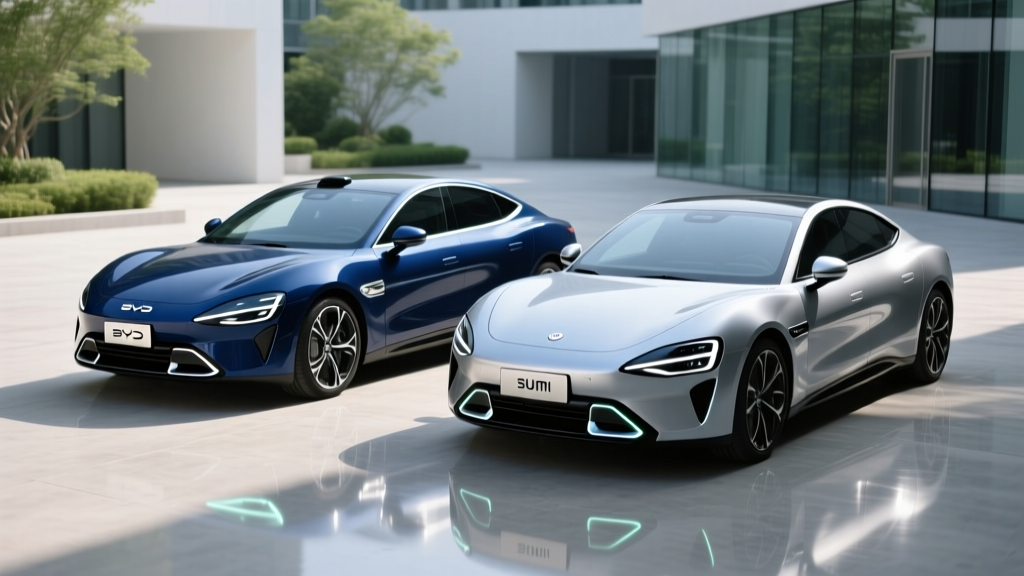
But what are these cars really? The two vehicles most frequently tagged with the "Asian Candy Tesla" moniker are the BYD Seal and the Xiaomi SU7. Both are real, both are impressive on paper, and both carry important caveats for US-based buyers. Below, we break down the specs, the real-world range, the charging reality, and the hard truth about whether you can actually buy one in America in 2026.
What Exactly Is the "Asian Candy Tesla"?
"Asian Candy Tesla" is not a brand or a model — it is an internet-born nickname applied to Chinese-market electric vehicles that feature eye-catching paint colors (think lavender, mint green, and pearlescent pink), fastback sedan silhouettes reminiscent of the Tesla Model 3, and tech-forward interiors dominated by massive screens. The two models that dominate the hashtag are:
- BYD Seal — A mid-size electric sedan from BYD, China's largest EV manufacturer, positioned directly against the Tesla Model 3.
- Xiaomi SU7 — A performance-oriented electric sedan from the smartphone and electronics giant Xiaomi, launched in 2024 and refreshed for 2026.
Both vehicles are sold primarily in China, with the BYD Seal also available in Europe, Australia, and Southeast Asia. As of 2026, neither vehicle is officially sold in the United States, which is the single most important fact for American shoppers to understand before falling for the social media hype.
BYD Seal: Range, Battery, and Efficiency
| Spec | RWD Standard | AWD Performance |
|---|---|---|
| Battery (usable) | 82.5 kWh (LFP Blade) | 82.5 kWh (LFP Blade) |
| WLTP Range | 354 mi (570 km) | 323 mi (520 km) |
| EPA-Est. Range (projected) | ~295 mi | ~270 mi |
| Efficiency | ~28 kWh/100 mi | ~30 kWh/100 mi |
| Power | 307 hp | 523 hp |
| 0-62 mph (0-100 km/h) | 5.9 sec | 3.8 sec |
| Drivetrain | RWD | AWD (Dual Motor) |
Xiaomi SU7: Performance Meets 800V Architecture
| Spec | SU7 Standard | SU7 Pro | SU7 Max |
|---|---|---|---|
| Battery (usable) | 73.6 kWh (LFP) | 94.3 kWh (NMC, CATL Qilin) | 101 kWh (NMC, CATL Qilin) |
| CLTC Range (China) | 700 km (~435 mi) | 830 km (~516 mi) | 800 km (~497 mi) |
| EPA-Est. Range (projected) | ~265 mi | ~340 mi | ~320 mi |
| Architecture | 400V | 800V | 800V |
| Power | 295 hp | 295 hp | 664 hp |
| 0-62 mph (0-100 km/h) | 5.3 sec | 5.7 sec | 2.78 sec |
| Drivetrain | RWD | RWD | AWD (Dual Motor) |
The Xiaomi SU7 Max is the variant that truly earns the "Tesla killer" social media hype. With 664 horsepower, a 2.78-second 0-100 km/h time, and an 800-volt electrical architecture, it competes directly with the Porsche Taycan and Tesla Model S Plaid on performance — at a fraction of the price in China (starting around ¥299,900, roughly $41,500 USD before any incentives).
The SU7 Pro's 94.3 kWh CATL Qilin NMC battery is the range champion, with a projected EPA-equivalent range of roughly 340 miles — competitive with the best long-range sedans on the US market. The 800V architecture on the Pro and Max trims enables significantly faster DC charging, which we detail below.
Charging Speed: DC Fast Charge and Home Level 2
| Metric | BYD Seal (RWD) | Xiaomi SU7 Pro/Max (800V) |
|---|---|---|
| Max DC Fast-Charge Rate | 150 kW peak | ~290 kW peak (800V) |
| 10–80% DCFC Time | ~30 minutes | ~19 minutes |
| Level 2 AC Charge Rate | 7 kW (single-phase) / 11 kW (3-phase) | 11 kW (3-phase) |
| Level 2 Miles per Hour | ~22–35 mi/hr | ~35 mi/hr |
| Charge Port | GB/T (China) / CCS2 (Europe/Aus) | GB/T (China) |
| Charge Curve Note | Peaks at 150 kW to ~55% SoC, then tapers to ~60 kW above 80% | 800V sustains ~250 kW through 60% SoC; tapers sharply above 85% |
US Availability and Import Reality in 2026
Here is where the "Asian Candy Tesla" dream meets regulatory reality. As of 2026:
- BYD has no US sales network. BYD sells passenger EVs in Europe, Australia, Southeast Asia, Latin America, and the Middle East, but has not entered the US passenger vehicle market. The company sells electric buses and commercial vehicles in the US, but not consumer cars.
- Xiaomi has no US automotive presence. Xiaomi's SU7 is sold exclusively in China as of 2026, with no announced plans for US or European export.
- US tariffs on Chinese EVs are 100%. Under the tariff escalation that began in 2024, Chinese-manufactured electric vehicles face a 100% import tariff as of 2026, effectively doubling the sticker price and eliminating any cost advantage. (White House Fact Sheet, May 2024)
- Grey-market import is impractical. Importing a non-US-spec vehicle requires EPA and DOT compliance modifications (crash testing, emissions software, lighting standards, charge port conversion from GB/T to NACS/CCS). The cost typically exceeds $20,000–$40,000 in modifications alone, and the vehicle will not qualify for the §30D federal tax credit.
- No federal tax credit. Even if imported, these vehicles would not meet IRS §30D requirements for battery sourcing, critical mineral content, or North American final assembly. (IRS §30D Guidelines)
What US Buyers Can Get Instead
If the "Asian Candy Tesla" aesthetic and spec sheet appeal to you, several vehicles available in the US in 2026 deliver comparable or better performance, with full warranty support, NACS/CCS charging compatibility, and tax credit eligibility:
| Vehicle | EPA Range | 0–60 mph | Max DCFC | 10–80% Time | Base MSRP | §30D Credit Eligible |
|---|---|---|---|---|---|---|
| Tesla Model 3 Long Range AWD | 341 mi | 4.2 sec | 250 kW | ~20 min | $47,740 | Yes (partial, varies by sourcing) |
| Hyundai IONIQ 6 SE Long Range | 361 mi | 5.1 sec | 233 kW (800V) | ~18 min | $42,715 | Yes (check current sourcing) |
| BMW i4 eDrive40 | 307 mi | 5.5 sec | 200 kW | ~31 min | $57,900 | No (MSRP cap / sourcing) |
| Polestar 2 Long Range DM | 320 mi | 4.3 sec | 205 kW | ~27 min | $51,300 | No (sourcing / assembly) |
The Hyundai IONIQ 6 is arguably the closest US-market equivalent to the "Asian Candy Tesla" concept: it is a sleek fastback sedan with an 800V architecture (enabling sub-20-minute 10–80% charging), strong range, and a starting price that undercuts the Tesla Model 3. It also remains eligible for at least a partial §30D credit depending on battery sourcing rules in effect at purchase. (fueleconomy.gov — Hyundai IONIQ 6)
Tax Credit and Pricing Context
For US buyers considering alternatives, understanding the IRS §30D Clean Vehicle Credit is essential. As of 2026, the credit provides up to $7,500 for new qualifying EVs, but eligibility depends on several factors:
- MSRP Cap: Sedans must have an MSRP of $55,000 or less; SUVs, trucks, and vans must be $80,000 or less.
- Buyer Income Cap: Adjusted gross income must not exceed $150,000 (single), $225,000 (head of household), or $300,000 (joint).
- Battery Sourcing: A percentage of critical minerals must be sourced from the US or FTA partners, and battery components must be manufactured or assembled in North America (percentages increase annually).
- Foreign Entity of Concern (FEOC): Vehicles with battery components or critical minerals from a FEOC (which includes most Chinese suppliers like CATL and BYD) are disqualified.
- Point-of-Sale Transfer: Eligible buyers can transfer the credit to the dealer at purchase, reducing the sale price directly.
These rules effectively exclude any vehicle with significant Chinese battery supply chain involvement — which includes both the BYD Seal and Xiaomi SU7, even if they were sold in the US.
The Verdict: Hype vs. Reality
The bottom line: The "Asian Candy Tesla" phenomenon is real in the sense that Chinese automakers like BYD and Xiaomi are producing genuinely impressive, attractively priced electric sedans with cutting-edge technology. The BYD Seal's Blade Battery is among the safest and longest-lasting LFP packs in production. The Xiaomi SU7 Max's 2.78-second 0–100 km/h time and 800V charging architecture are legitimately world-class.
However, for US-based buyers in 2026, these vehicles remain social media eye candy — not purchase options. The 100% tariff, lack of US sales infrastructure, GB/T charge port incompatibility, and §30D credit disqualification make ownership impractical. The good news is that US-market alternatives like the Hyundai IONIQ 6, Tesla Model 3, and upcoming models from Lucid and others deliver comparable range, charging speed, and technology with full domestic support and incentive eligibility.
Frequently Asked Questions
Can I buy the BYD Seal or Xiaomi SU7 in the United States in 2026?
No. Neither BYD nor Xiaomi sells passenger vehicles in the US market. Importing one privately would require expensive federalization modifications, a 100% tariff, and would result in a vehicle with no warranty support, no compatible charging infrastructure (GB/T port), and no tax credit eligibility.
What does "Asian Candy Tesla" actually mean?
It is a social media nickname — not a brand or model — applied to Chinese-market EVs with vibrant paint colors, Tesla-like fastback styling, and tech-heavy interiors. The BYD Seal and Xiaomi SU7 are the two vehicles most commonly tagged with the term.
Is BYD's Blade Battery better than Tesla's 4680 cells?
They optimize for different priorities. BYD's Blade Battery uses LFP chemistry, which offers superior thermal stability (virtually no fire risk in nail penetration tests), longer cycle life (3,000+ cycles to 80% capacity), and lower cost. Tesla's 4680 cells use NMC chemistry, which provides higher energy density (more range per kilogram) and better cold-weather performance. Neither is universally "better" — it depends on whether you prioritize longevity and safety (LFP) or maximum range and cold-weather capability (NMC).
Why is the Xiaomi SU7 Max so fast compared to its price?
The SU7 Max uses dual electric motors producing a combined 664 hp, paired with an 800V electrical architecture that allows the motors to draw more sustained power. Xiaomi benefits from its supply chain expertise in electronics (reducing component costs) and CATL's Qilin battery, which has exceptional power density. In China, the SU7 Max starts around ¥299,900 (~$41,500), but the 100% US tariff would push that to roughly $83,000 — eliminating the value proposition entirely.
What is the closest US-available car to the "Asian Candy Tesla"?
The Hyundai IONIQ 6 is the closest match: it is a sleek fastback sedan with an 800V architecture, up to 361 miles of EPA range, 10–80% DC fast charging in approximately 18 minutes, and a starting MSRP of $42,715 — before potential §30D tax credits. It is available in multiple colors and offers a similar design-forward, tech-heavy ethos.