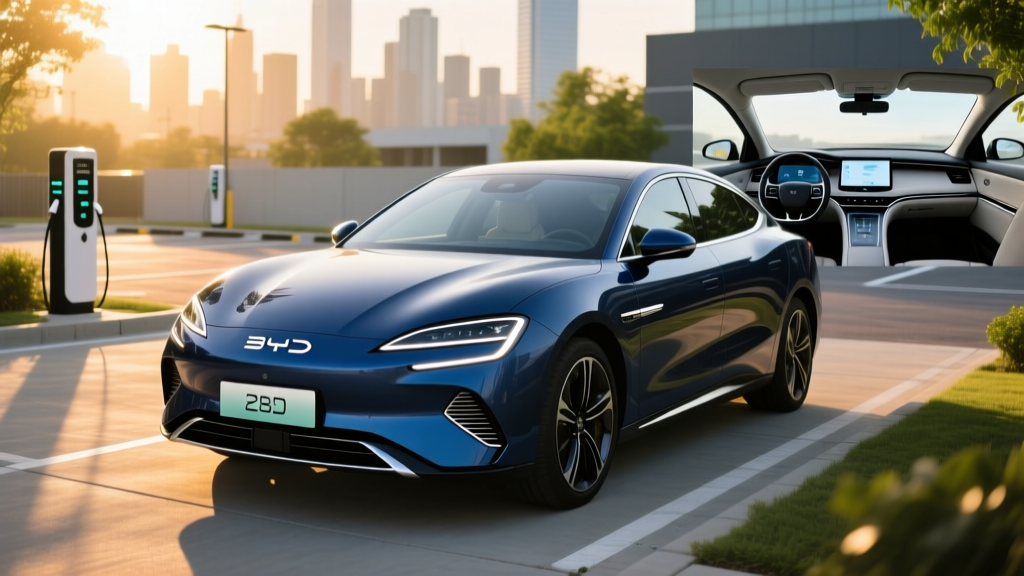
Searches for "BYD Seal precio" have surged as buyers in Latin America, Europe, and Asia discover this electric sedan's value proposition. But for US-based EV shoppers, the picture is more complicated. This review covers the 2026 BYD Seal's real-world range, charging speeds, battery chemistry, and pricing — and explains exactly what it would take to drive one on American roads.
BYD Seal Battery, Range, and Efficiency
The 2026 BYD Seal is built on the company's e-Platform 3.0 and uses BYD's proprietary Blade Battery — a lithium iron phosphate (LFP) cell-to-pack design. LFP chemistry trades some energy density for exceptional thermal stability, long cycle life, and zero cobalt content. For owners, this means the battery tolerates regular 100% charging better than NMC cells, and degradation over 8-10 years tends to be slower.
| Spec | Design (RWD) | Excellence (AWD) |
|---|---|---|
| Battery (usable) | 82.5 kWh LFP Blade | 82.5 kWh LFP Blade |
| WLTP Range | 570 km (354 mi) | 520 km (323 mi) |
| Est. EPA-Equiv. Range | ~310-330 mi | ~280-300 mi |
| Horsepower | 313 hp (230 kW) | 530 hp (390 kW) |
| 0-60 mph | ~5.9 sec | ~3.8 sec |
| Drivetrain | RWD single motor | AWD dual motor |
| Est. Efficiency | ~130 MPGe / 26 kWh/100mi | ~115 MPGe / 29 kWh/100mi |
Efficiency is competitive with the Tesla Model 3 and Hyundai Ioniq 6. The RWD Design trim should deliver roughly 130 MPGe combined, translating to about 26 kWh per 100 miles. That's solid for a 4,100-lb sedan, though the sleeker Ioniq 6 edges it out at 140 MPGe thanks to its 0.21 drag coefficient.
Charging Speed: DC Fast Charge and Home Level 2
The BYD Seal supports up to 150 kW peak DC fast charging on CCS-compatible stations (CCS2 in Europe/Asia; CCS1 in markets that use it). In practice, the Seal's LFP Blade battery sustains strong charge rates through the mid-SoC range.
| Level | Power / Rate | Speed |
|---|---|---|
| Level 1 (120V) | ~1.4 kW | ~4-5 mi/hr |
| Level 2 (240V, 32A) | 7 kW | ~22-25 mi/hr (~13 hr full) |
| Level 2 (240V, 48A) | 11 kW | ~35-38 mi/hr (~9 hr full) |
| DC Fast Charge | 150 kW peak | 10-80% in ~26 min |
The 10-80% DC fast charge takes approximately 26 minutes. That's respectable but trails the Hyundai Ioniq 5/6 (800V architecture, 10-80% in ~18 minutes at 250 kW) and the Tesla Model 3 Highland (~15 minutes at 250 kW on V3 Superchargers). The Seal's charge curve holds near peak through ~55% SoC before tapering, which is typical for LFP cells — they maintain a flatter voltage curve than NMC, keeping charge power steady longer but also requiring more time in the final 20%.
For home charging, BYD supplies a 7 kW onboard charger as standard, with an 11 kW option available in some markets. On a 48-amp Level 2 home charger (like a ChargePoint Home Flex or Tesla Wall Connector), an 11 kW-equipped Seal adds roughly 35 miles of range per hour — enough to fully replenish overnight.
Performance and Driving Dynamics
The RWD Design trim delivers 313 horsepower from a single rear motor, achieving 0-60 mph in about 5.9 seconds. That's quick enough for confident highway merging and passing, placing it between the Tesla Model 3 RWD (5.8 sec) and the base Hyundai Ioniq 6 (6.2 sec).
Step up to the AWD Excellence trim and you get 530 horsepower from dual motors, dropping the 0-60 time to approximately 3.8 seconds — firmly in sports-sedan territory and competitive with the Tesla Model 3 Performance (3.1 sec, though that car costs considerably more). The Seal's cell-to-body (CTB) integration lowers the center of gravity, and reviewers consistently note composed handling with minimal body roll through corners.
Regenerative braking offers two levels plus a cooperative mode that blends regen with friction brakes. Unlike some competitors, the Seal does not offer true one-pedal driving with a full stop — you'll still need the brake pedal for the final few mph. This is a common BYD calibration choice and may frustrate drivers accustomed to Nissan Leaf or Chevrolet Bolt one-pedal behavior.
Pricing: BYD Seal Precio in Global Markets
The "BYD Seal precio" question depends heavily on where you live. BYD does not currently sell vehicles in the United States, and there is no announced timeline for US market entry. High tariffs (currently 100% on Chinese-made EVs under Section 301) make direct import economically unviable. Here's what the Seal costs in markets where it's available:
| Market | Trim | Local Price | Approx. USD |
|---|---|---|---|
| Mexico | Design RWD | ~$899,900 MXN | ~$44,500 |
| Mexico | Excellence AWD | ~$999,900 MXN | ~$49,500 |
| Europe (Germany) | Design RWD | €44,990 | ~$48,500 |
| Australia | Dynamic RWD | A$49,888 | ~$32,000 |
| China (domestic) | 700 km Prestige | ¥189,800 | ~$26,200 |
For US readers researching the BYD Seal precio out of curiosity or cross-border shopping interest: there is no federal tax credit pathway under IRS §30D because the vehicle is not sold through a US dealer and does not meet North American final-assembly requirements. Even if imported individually, the 100% Section 301 tariff on Chinese-manufactured EVs would roughly double the cost.
Interior, Cargo, and Technology
The Seal measures 189.0 inches long on a 114.2-inch wheelbase, placing it squarely in the midsize sedan segment alongside the Tesla Model 3 and BMW i4. Interior materials punch above the price point: vegan leather with quilted stitching, a panoramic glass roof, and soft-touch surfaces throughout.
Passenger space: Front legroom is generous at 41.7 inches. Rear legroom measures approximately 37.4 inches — slightly tighter than the Model 3's 38.1 inches but adequate for adults on longer trips. The sloping roofline does cut into rear headroom for taller passengers.
Cargo: The trunk offers 14.1 cubic feet (400 liters) of space, with a 60/40 split-folding rear seat. There is also a small front trunk (frunk) providing an additional 1.8 cubic feet (53 liters) — enough for charging cables and a small bag. Total cargo capacity trails the Model 3's 23 cu ft combined, largely because the Seal uses a traditional sedan trunk rather than a hatchback/liftback design.
Infotainment: A 15.6-inch rotating center display (landscape or portrait orientation) anchors the dashboard, running BYD's DiLink system. Wireless Apple CarPlay and Android Auto are standard. The system is responsive but the UI layering can feel cluttered compared to Tesla's minimalist approach or Hyundai's intuitive layout. A 10.25-inch digital instrument cluster and a 12-speaker Dynaudio sound system (on Excellence trim) round out the tech.
Driver assistance: The Seal includes BYD's ADAS suite with adaptive cruise control, lane-keeping assist, automatic emergency braking, blind-spot monitoring, and rear cross-traffic alert. This is SAE Level 2 driver assistance — it does not drive itself, and the driver must remain engaged at all times. The system is competent for highway cruising but lacks the sophistication of Tesla's Autopilot or GM's Super Cruise in terms of lane-change confidence and hands-free operation.
Warranty Coverage
BYD provides competitive warranty terms that vary slightly by market:
- Battery: 8 years / 100,000 miles (160,000 km) — covering capacity below 70% state of health
- Powertrain (motors, inverter): 8 years / 100,000 miles
- Vehicle (bumper-to-bumper): 6 years / 93,000 miles (150,000 km)
- Roadside assistance: 6 years in most markets
The 70% SoH threshold for battery warranty is industry-standard, matching Tesla and Hyundai/Kia. The LFP Blade Battery's inherent longevity advantage means most owners should see well under 10% degradation over the warranty period based on BYD's published cell-cycle data showing 3,000+ charge cycles before reaching 80% capacity.
BYD Seal vs. Key Competitors
- LFP Blade Battery: excellent longevity, thermal safety, and 100% daily charging tolerance
- Strong value: undercuts Tesla Model 3 and BMW i4 in most markets by $5,000-$10,000
- Quick AWD performance: 3.8-sec 0-60 in Excellence trim
- Premium interior materials for the price point
- Competitive range: ~310+ miles EPA-equivalent (RWD)
- Not available in the US — no sales network, no §30D tax credit
- 150 kW DC fast charge trails competitors (Ioniq 6: 250 kW, Model 3: 250 kW)
- Sedan trunk limits cargo versatility vs hatchback rivals
- Infotainment UI can feel cluttered
- No true one-pedal driving mode
- Service/parts network unproven outside BYD's core markets
If you're in a market where the Seal is available, its closest rivals include:
- Tesla Model 3 Highland: Faster charging (250 kW), better Supercharger network access, more refined Autopilot, but higher price and polarizing minimalist interior.
- Hyundai Ioniq 6: Superior efficiency (140 MPGe), 800V ultra-fast charging (18-min 10-80%), but less rear-seat room and a design that divides opinion.
- BMW i4 eDrive40: Premium badge, excellent driving dynamics, but starts ~$15,000 higher than the Seal in most markets.
Who Should Buy the BYD Seal?
- You live in Mexico, Europe, Australia, Southeast Asia, or another market where BYD has an established dealer and service network
- You prioritize battery longevity and safety (LFP chemistry) over maximum charging speed
- You want a premium-feeling electric sedan without paying Tesla or BMW prices
- Your daily commute is under 100 miles round-trip and you can charge at home
- You're a US buyer — the Seal is not available and tariffs make import impractical
- You rely on DC fast charging for frequent road trips (150 kW peak is adequate but not class-leading)
- You need hatchback-level cargo versatility (consider the Ioniq 5 or Model Y)
- You want the most advanced driver-assistance tech available
Frequently Asked Questions
What is the real-world range of the BYD Seal?
The RWD Design trim achieves approximately 260-285 miles in real-world highway driving and up to 300+ miles in mixed city/highway use. Cold weather (below 32°F) can reduce range by 20-30%, bringing it down to roughly 220-250 miles. The LFP battery's flat discharge curve means range delivery feels consistent — you won't see sudden cliff-like drops as the battery depletes.
How fast does the BYD Seal charge?
On a DC fast charger, the Seal peaks at 150 kW and charges from 10-80% in approximately 26 minutes. At home on a 48-amp Level 2 charger (11 kW), it adds about 35 miles per hour, fully recharging overnight in roughly 9 hours. On a standard 32-amp Level 2 (7 kW), expect about 22-25 miles per hour and a 13-hour full charge.
Does the BYD Seal qualify for the US federal EV tax credit?
No. The BYD Seal is not sold in the United States and does not meet the IRS §30D requirements for the $7,500 federal tax credit. The credit requires final assembly in North America, MSRP caps ($55,000 for sedans), buyer income limits, and critical-mineral/battery-component sourcing rules. Even if you could import a Seal, the 100% Section 301 tariff on Chinese EVs would make it cost-prohibitive.
Is the BYD Seal worth buying vs. a Tesla Model 3?
In markets where both are available, the Seal offers better interior materials, a more traditional dashboard layout, and LFP battery longevity at a lower price. The Model 3 wins on charging speed (250 kW vs 150 kW), Supercharger network access, over-the-air updates, and driver-assist sophistication. If fast road-trip charging matters most, the Model 3 is the stronger pick. If value and daily-driver comfort are priorities, the Seal is compelling.
What is BYD's Blade Battery and why does it matter?
The Blade Battery is BYD's proprietary LFP (lithium iron phosphate) cell-to-pack design that arranges long, thin cells like blades in a pack. It eliminates the traditional module layer, improving volume utilization and structural rigidity. LFP chemistry is inherently more thermally stable than NMC — BYD's nail-penetration tests show the Blade Battery does not catch fire or emit significant gas when punctured. For owners, this translates to excellent long-term durability (3,000+ cycles) and the ability to charge to 100% regularly without accelerated degradation.
Will BYD sell cars in the US?
As of early 2026, BYD has not announced plans to sell passenger vehicles in the United States. The company has indicated it is monitoring the market but faces significant barriers including 100% Section 301 tariffs on Chinese-made EVs, potential national-security scrutiny, and the need to build a dealer and service network from scratch. BYD does sell electric buses and commercial vehicles in the US through separate channels.