BYD's Performance Sedan: What US Buyers Need to Know
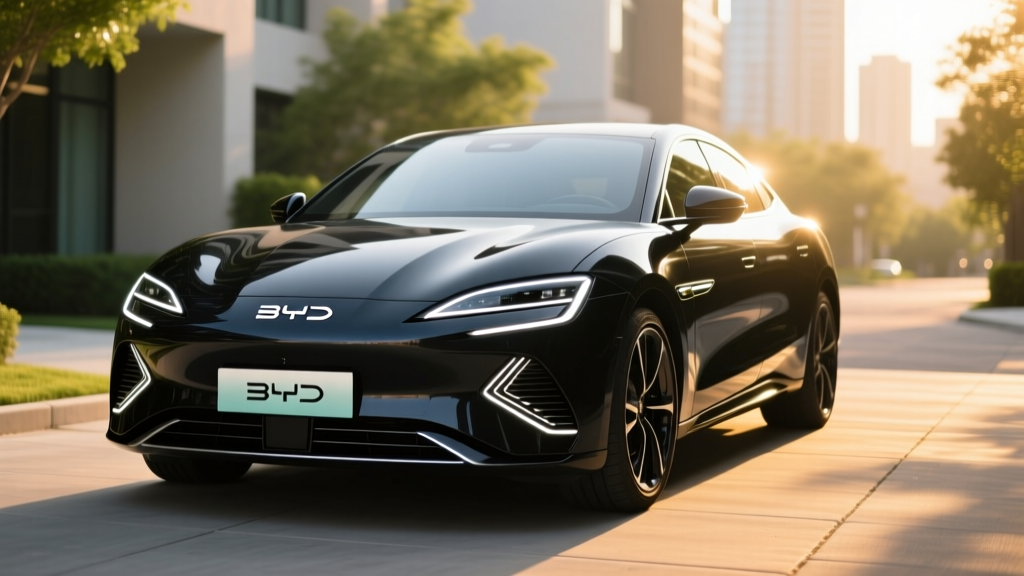
Search "byd fast car" and you'll find headlines about a Chinese automaker producing electric sedans that rival Tesla on acceleration and undercut it on price. The vehicle behind most of that buzz is the BYD Seal — a mid-size electric sport sedan built on BYD's e-Platform 3.0, featuring the company's proprietary Blade Battery (LFP chemistry) and available in a dual-motor AWD configuration that hits 0-62 mph in 3.8 seconds.
But here's the critical context for US-based readers: as of early 2026, BYD does not sell passenger vehicles in the United States. The Seal is available in China, Europe, Australia, Southeast Asia, and Latin America. BYD has signaled long-term interest in the US market, but tariffs, battery-sourcing regulations, and the lack of a North American dealer or service network mean this car remains a "watch list" vehicle rather than a showroom option for American buyers.
This review covers the Seal's verified specifications from markets where it's on sale, translates WLTP figures to EPA-equivalent estimates where applicable, and evaluates whether the Seal would be competitive if — or when — it arrives stateside.
Range, Battery, and Efficiency
The BYD Seal is offered with two battery configurations, both using BYD's signature Blade Battery — a lithium iron phosphate (LFP) cell arranged in a cell-to-body (CTB) structural pack. LFP chemistry trades some energy density for superior thermal stability, longer cycle life, and the ability to charge routinely to 100% without the degradation concerns that NMC batteries face at high state of charge.
| Variant | Battery (usable kWh) | Chemistry | WLTP Range | Est. EPA-Equivalent Range | Efficiency (WLTP) |
|---|---|---|---|---|---|
| Standard Range (RWD) | 61.4 kWh | LFP (Blade) | ~276 mi (445 km) | ~240–250 mi | ~26 kWh/100 mi |
| Long Range (RWD) | 82.5 kWh | LFP (Blade) | ~354 mi (570 km) | ~300–315 mi | ~25 kWh/100 mi |
| Performance AWD | 82.5 kWh | LFP (Blade) | ~323 mi (520 km) | ~275–290 mi | ~28 kWh/100 mi |
BYD does not publish official EPA figures since the Seal is not sold in the US. The estimates above are derived from WLTP-to-EPA conversion ratios observed in vehicles tested under both cycles, such as the Hyundai Ioniq 6 and Tesla Model 3.
Charging Speed: DC Fast and Home Level 2
Charging speed is where the Seal's LFP chemistry creates a mixed picture. LFP cells generally accept fast charging well at moderate states of charge but can be slower to precondition and may taper earlier than NMC packs.
| Charging Level | Power / Rate | Estimated Time | Notes |
|---|---|---|---|
| DC Fast Charge (Peak) | 150 kW max | 10–80% in ~26 min (82.5 kWh) | Peak rate sustained to ~55% SoC, then tapers; 61.4 kWh pack peaks ~110 kW |
| DC Fast Charge (Avg) | ~95 kW average (10–80%) | ~38 min (82.5 kWh) | Average rate matters more than peak for trip planning |
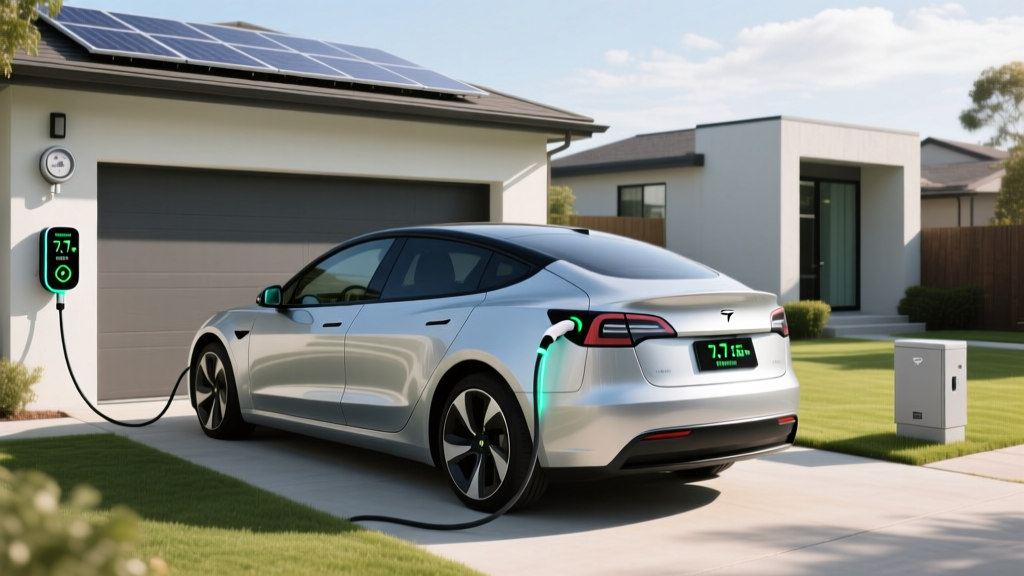
| Level 2 (AC Home) | 11 kW (3-phase) / 7 kW (1-phase) | ~8.5 hr (82.5 kWh, 11 kW) | US homes typically single-phase; expect 7 kW / ~30 mi/hr |
| Level 1 (120V) | ~1.4 kW | ~59 hr (82.5 kWh) | Emergency/trickle only; ~4 mi/hr |
The 150 kW peak DC rate is competitive but not class-leading — the Hyundai Ioniq 6 peaks at 240 kW and the Tesla Model 3 Highland at ~250 kW on V3 Superchargers. On a road trip, the Seal's 10–80% time of roughly 26 minutes means you'll spend 5–10 minutes longer at each stop compared to 800V-architecture rivals. The charging curve is relatively flat through the mid-range, which is a positive trait, but the absolute ceiling limits the advantage.
For US home charging, the Seal would likely ship with an 11 kW onboard charger capable of 7 kW on a standard single-phase 240V/32A circuit (the typical American residential setup), adding roughly 28–30 miles of range per hour of charging — sufficient for overnight replenishment.
Performance: The "Fast" in BYD Fast Car
The Seal Performance AWD is the variant that earns the "fast car" label. Here's the powertrain breakdown:
| Spec | Seal Performance AWD | Seal Long Range RWD | Seal Standard Range RWD |
|---|---|---|---|
| Drivetrain | Dual-motor AWD | Single-motor RWD | Single-motor RWD |
| Horsepower | 523 hp (390 kW) | 308 hp (230 kW) | 201 hp (150 kW) |
| Torque | 497 lb-ft | 265 lb-ft | 229 lb-ft |
| 0–62 mph (0–100 km/h) | 3.8 sec | 5.9 sec | 7.5 sec |
| Est. 0–60 mph | ~3.6 sec | ~5.6 sec | ~7.2 sec |
| Top Speed | 112 mph (180 km/h) | 112 mph (180 km/h) | 106 mph (170 km/h) |
The 3.8-second 0–62 mph time (roughly 3.6 seconds 0–60) puts the Seal Performance in the same acceleration bracket as the Tesla Model 3 Performance (3.1 sec 0–60) and the BMW i4 M50 (3.7 sec 0–60). It's legitimately quick. The dual-motor AWD system uses an induction motor up front and a permanent-magnet synchronous motor in the rear, allowing the front motor to freewheel during light-load cruising for efficiency gains.
BYD's iTAC (Intelligent Torque Adaptation Control) system can redistribute torque between axles in real time, which reviewers in European markets have noted provides confident launch grip and stable cornering behavior. That said, multiple independent reviews describe the Seal's ride as firm and its steering as somewhat numb compared to European sport sedans — it's quick in a straight line but not a driver's car in the way a BMW i4 or Porsche Taycan rewards engagement.
Interior, Cargo, and Technology
The Seal rides a 2,920 mm (114.9 in) wheelbase — comparable to the Tesla Model 3 (113.2 in) — and BYD uses that length to deliver competitive interior volume.
- Rear legroom: ~35.4 in (900 mm) — roughly 2 inches more than the Model 3
- Trunk cargo: 14.1 cu ft (400 L) — slightly less than the Model 3's 15.0 cu ft
- Frunk: 1.8 cu ft (53 L) — enough for a charging cable bag, not much more
- Seating: 5-passenger; synthetic leather standard, genuine leather on higher trims
The infotainment system centers on a 15.6-inch rotating touchscreen — a BYD signature that toggles between landscape and portrait orientation. It runs BYD's DiLink OS with wireless Apple CarPlay and Android Auto. A 10.25-inch digital instrument cluster and an available 12-inch head-up display round out the screen array.
Driver-assistance features include adaptive cruise control, lane-keeping assist, blind-spot monitoring, and a 360-degree camera system. These are SAE Level 2 driver-assist features — the driver must remain fully engaged at all times. BYD's ADAS suite is competent but has not been evaluated by the NHTSA or IIHS since the car is not sold in the US. Euro NCAP awarded the Seal a 5-star safety rating in 2023, with strong scores in adult occupant protection and safety assist.
Pricing, Tax Credits, and the US Availability Question
This is where the story gets complicated for American buyers.
| Market | Variant | Local Price | Approx. USD Equivalent |
|---|---|---|---|
| China | Standard Range RWD | ¥189,800 | ~$26,200 |
| China | Long Range RWD | ¥222,800 | ~$30,800 |
| China | Performance AWD | ¥279,800 | ~$38,700 |
| Europe (Germany) | Design (LR RWD) | €44,900 | ~$48,500 |
| Europe (Germany) | Excellence AWD | €48,900 | ~$52,800 |
| Australia | Dynamic (LR RWD) | A$49,888 | ~$32,400 |
| Australia | Premium AWD | A$68,888 | ~$44,800 |
The price spread between China and export markets is dramatic — reflecting shipping costs, homologation expenses, local taxes (EU VAT), and dealer margin structures. Even at European pricing, the Seal undercuts comparable Tesla Model 3 and BMW i4 variants by 10–20%.
The broader barrier is the 100% tariff on Chinese-built EVs enacted under Section 301 in 2024, which effectively doubles the import price of any vehicle manufactured in China. BYD would need to build a North American factory — a multi-billion-dollar, multi-year undertaking — to compete on price in the US market. As of 2026, BYD has announced plans for factories in Mexico, Brazil, Hungary, Thailand, and Indonesia, but no US production facility.
Warranty and Long-Term Ownership
In export markets, BYD offers the following warranty coverage for the Seal:
- Vehicle warranty: 6 years / 150,000 km (~93,000 miles) in Europe; varies by market
- Battery warranty: 8 years / 160,000 km (~100,000 miles), guaranteed to retain ≥70% capacity
- Blade Battery advantage: LFP chemistry typically demonstrates slower degradation than NMC — independent long-term data from Chinese fleet vehicles shows Blade Batteries retaining 80%+ capacity after 3,000 charge cycles, which translates to well over 500,000 miles of theoretical use
The 70% capacity retention threshold at 8 years/100,000 miles is standard for the industry (Tesla, Hyundai, and VW offer the same). However, LFP's inherent longevity means the Seal's battery is likely to outlast its warranty by a significant margin — a meaningful advantage for used-value retention and total cost of ownership.
How the BYD Seal Stacks Up Against Key Competitors
Since the Seal isn't available in the US, this comparison uses European pricing and specs to illustrate where the car would land competitively:
| Spec | BYD Seal Excellence AWD | Tesla Model 3 Performance | BMW i4 M50 | Hyundai Ioniq 6 AWD |
|---|---|---|---|---|
| Battery | 82.5 kWh LFP | ~79 kWh NMC | 81.5 kWh NMC | 77.4 kWh NMC |
| 0–60 mph | ~3.6 sec | ~3.1 sec | ~3.7 sec | ~4.5 sec |
| Range (WLTP) | 323 mi | 340 mi | 317 mi | 327 mi |
| DC Fast Peak | 150 kW | ~250 kW | 205 kW | 240 kW |
| 10–80% DC | ~26 min | ~18 min | ~31 min | ~18 min |
| EU Price (approx) | €48,900 | €54,990 | €66,900 | €54,900 |
The Seal's advantage is clearly price — it undercuts every competitor here by thousands of euros while matching or exceeding their range. Its disadvantage is charging speed: 150 kW peak is a generation behind the 800V platforms from Hyundai/Kia and Tesla's latest architecture. On a 600-mile road trip with two DC fast-charge stops, the Seal would add roughly 15–20 minutes of total charging time compared to an Ioniq 6 or Model 3.
Pros
- Strong acceleration (3.6 sec 0–60 AWD)
- LFP Blade Battery: excellent longevity, thermal safety, 100% SoC charging
- Competitive range (est. ~280–300 mi real-world LR RWD)
- Spacious rear seat for the class
- Significantly lower price than rivals in export markets
- Euro NCAP 5-star safety rating
- Rotating 15.6" screen is a unique touch
Cons
- Not available in the United States
- DC fast-charge speed (150 kW) lags 800V rivals
- No NHTSA/IIHS evaluation for US buyers
- Would not qualify for $7,500 federal tax credit due to China sourcing
- LFP battery loses more range in cold weather than NMC
- Steering feel and ride refinement trail European competitors
- Small frunk (1.8 cu ft)
- Unknown US service/parts network
Who Should Watch the BYD Seal?
- Watch the Seal if: You're tracking global EV competition, you live in a market where BYD sells (Europe, Australia, Latin America, Southeast Asia), or you're interested in how LFP battery tech is reshaping performance sedans at lower price points.
- Look elsewhere if: You're a US buyer ready to purchase now. The Tesla Model 3 Performance, Hyundai Ioniq 6, BMW i4, and upcoming next-gen EVs from GM and Ford offer comparable or superior performance with full US sales, service, and tax-credit eligibility.
- For US buyers wanting a "fast EV sedan" today: The Tesla Model 3 Performance ($52,990, 3.1 sec 0–60, ~315 mi EPA) and the Hyundai Ioniq 6 AWD (~$51,000, 240 kW charging) remain the top picks. The BMW i4 M50 suits buyers prioritizing ride refinement over value.
Frequently Asked Questions
What is the real-world range of the BYD Seal?
For the Long Range RWD variant with the 82.5 kWh Blade Battery, expect approximately 280–300 miles in mixed driving, 230–250 miles at sustained highway speeds, and 200–220 miles in freezing temperatures. The Performance AWD variant will deliver roughly 10–15% less across all conditions.
How fast does the BYD Seal charge?
The Seal peaks at 150 kW on DC fast chargers, completing a 10–80% charge in approximately 26 minutes for the 82.5 kWh pack. On a home Level 2 charger (240V, single-phase), it charges at up to 7 kW, adding roughly 28–30 miles of range per hour and fully replenishing overnight.
Can I buy the BYD Seal in the United States?
No. As of 2026, BYD does not sell passenger vehicles in the US. There is no US dealer network, no EPA certification, and no NHTSA compliance for the Seal. A 100% tariff on Chinese-built EVs further complicates any future launch. BYD has not announced a timeline for US market entry.
Does the BYD Seal qualify for the federal EV tax credit?
Even if sold in the US, the Seal would almost certainly not qualify for the §30D federal tax credit. The Blade Battery is manufactured in China with Chinese-sourced critical minerals, and BYD would likely be classified as a foreign entity of concern (FEOC) under current IRS rules — both of which disqualify a vehicle from the credit regardless of price or buyer income.
Is the BYD Seal worth buying vs. the Tesla Model 3?
In markets where both are sold (Europe, Australia), the Seal offers comparable range and strong performance at a lower price, making it a compelling value proposition. However, the Model 3 has faster DC charging, a more mature software ecosystem, broader Supercharger network access, and (in the US) tax credit eligibility. For US buyers, the Model 3 remains the default choice in this segment.
How does the LFP Blade Battery compare to NMC batteries?
LFP (lithium iron phosphate) batteries offer longer cycle life (3,000+ cycles vs. ~1,500–2,000 for NMC), superior thermal stability (lower fire risk), and the ability to charge to 100% routinely without accelerating degradation. The trade-offs are lower energy density (heavier pack for the same kWh) and greater range loss in cold weather. For daily commuting and long-term ownership, LFP is increasingly considered the more practical chemistry.