Vehicle Overview: A New Benchmark in the Mid-Size EV Segment
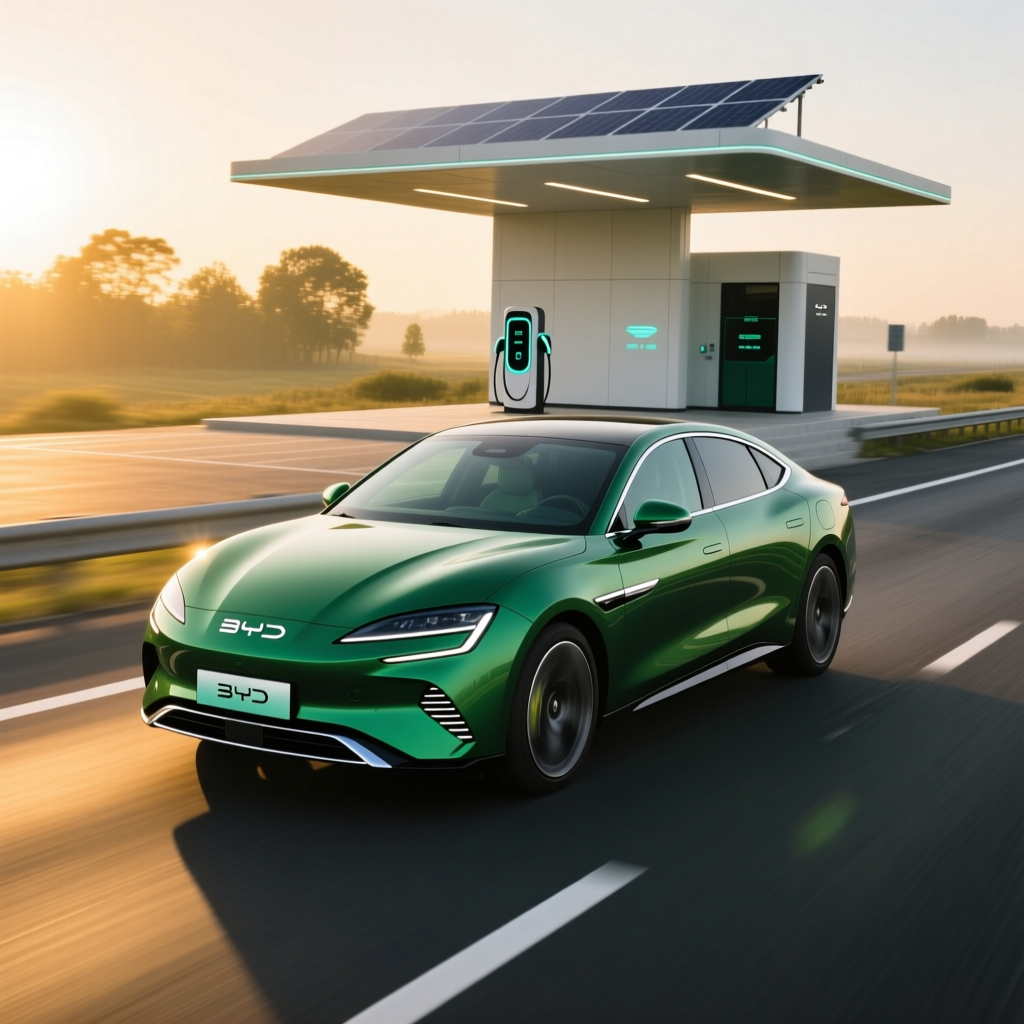
The mid-size electric sedan market has historically been dominated by a select few pioneers, but the competitive landscape is rapidly evolving. Enter the BYD Seal, a highly anticipated electric vehicle that leverages advanced battery chemistry and structural innovation to challenge the status quo. Built on the manufacturer's highly modular e-Platform 3.0, the Seal is not merely a commuter car; it is a comprehensive technological statement designed to appeal to driving enthusiasts and efficiency-minded commuters alike. In our best electric sedans lineup, the Seal consistently ranks near the top due to its striking 'Ocean Aesthetics' design language, premium cabin appointments, and highly competitive pricing structure.
Unlike traditional electric vehicles that simply place a battery pack beneath a modified chassis, the BYD Seal utilizes revolutionary Cell-to-Body (CTB) technology. This integration turns the battery cover, the battery tray, and the vehicle floor into a single, unified structural component. The result is a staggering increase in torsional rigidity, a significantly lower center of gravity, and enhanced volumetric efficiency that allows for a sleek, aerodynamic profile without compromising interior space. With a drag coefficient of just 0.219 Cd, the Seal slices through the air with minimal resistance, directly contributing to its impressive efficiency metrics. Whether you are cross-shopping against legacy automakers or looking at our Tesla Model 3 vs. BYD Seal comparison, the Seal proves to be a formidable, well-rounded contender that demands serious attention.
Real-World Range & Efficiency
When evaluating any electric vehicle, manufacturer claims must always be weighed against real-world testing conditions. The BYD Seal is primarily offered with two battery configurations, but the Extended Range model, equipped with an 82.5 kWh Lithium Iron Phosphate (LFP) Blade Battery, is the volume seller and the focus of our efficiency analysis. While global testing cycles like WLTP rate this configuration at up to 354 miles (570 km), real-world highway testing paints a slightly different, yet still highly impressive, picture.
In sustained highway driving at speeds of 70 mph (110 km/h) with the climate control set to a comfortable 70°F (21°C), the BYD Seal consistently delivers between 270 and 290 miles of range. This is largely thanks to the vehicle's standard heat pump, which efficiently manages cabin temperatures and battery conditioning without drawing excessive power from the main pack. In urban and suburban environments, where regenerative braking can be fully utilized, the efficiency metrics improve dramatically. Test drivers frequently report exceeding 320 miles of range in stop-and-go traffic, with energy consumption dipping as low as 240 Wh/mile (15 kWh/100km).
According to data cross-referenced with the EPA fuel economy database and independent testing facilities, the Seal's LFP chemistry provides a distinct advantage in longevity and consistent power delivery. Unlike Nickel Manganese Cobalt (NMC) batteries that may experience voltage sag at low states of charge, the Blade Battery maintains a remarkably flat discharge curve, ensuring that the final 10 percent of the battery provides the same responsive acceleration as the first 10 percent. For daily commuters and road-trippers alike, the real-world range of the BYD Seal easily eliminates range anxiety for the vast majority of driving scenarios.
Charging Speed & Infrastructure Compatibility
Charging dynamics are often the make-or-break factor for prospective EV buyers, and the BYD Seal approaches this with a focus on practicality and battery health over sheer peak numbers. The Extended Range model operates on a 400-volt architecture and supports a peak DC fast-charging rate of 150 kW. While this figure may appear conservative when placed next to 800-volt rivals capable of 350 kW peaks, the real-world charging curve tells a more nuanced story.
Because the Seal utilizes an LFP Blade Battery, its charging profile is exceptionally linear and stable. During independent DC fast-charging tests, the vehicle comfortably accepts over 100 kW well past the 60 percent state-of-charge mark, only tapering significantly as it approaches 90 percent. A 10 to 80 percent charge takes approximately 35 to 40 minutes at a suitably rated 150 kW+ charger. More importantly, LFP chemistry allows—and in fact encourages—owners to charge the battery to 100 percent on a regular basis without the severe degradation risks associated with NMC cells. This means the usable daily range of the Seal is effectively its total range, bridging the gap between it and higher-capacity NMC competitors.
For home charging, the Seal supports 11 kW AC charging, which will replenish the 82.5 kWh battery from empty to full in roughly nine hours. This aligns perfectly with overnight charging routines. We highly recommend reviewing our home charging setup guide to ensure your residential electrical panel is optimized for this draw. Additionally, the Seal features Vehicle-to-Load (V2L) capability. Using a specialized adapter, the vehicle can output up to 3.3 kW of power, effectively turning the sedan into a mobile power bank capable of running camping equipment, power tools, or even sustaining essential home appliances during a grid outage.
Interior Comfort, Space & Technology
Stepping inside the BYD Seal reveals a cabin that punches well above its weight class in terms of material quality and ergonomic design. The 'Ocean Aesthetics' theme continues inward, characterized by flowing lines, soft-touch vegan leather upholstery, and suede-like inserts on the dashboard and door panels. The front seats are heavily bolstered, offering excellent lateral support during spirited driving while remaining comfortable for long-distance touring. Both front seats are electrically adjustable, heated, and ventilated, ensuring comfort across all climate zones.
The centerpiece of the dashboard is the signature 15.6-inch rotating infotainment display. With a simple press of a button on the steering wheel or the screen itself, the display seamlessly transitions between landscape and portrait orientations. Landscape mode is ideal for media consumption and split-screen navigation, while portrait mode offers a commanding, map-centric view for complex routing. The software is highly responsive, featuring crisp graphics and intuitive menu structures, though some users may find the reliance on the touchscreen for climate and mirror adjustments to be a minor distraction while driving. Fortunately, the Seal includes a highly accurate Head-Up Display (HUD) and a 10.25-inch digital instrument cluster to keep essential driving data within the driver's natural line of sight.
Rear-seat passengers are treated to generous legroom, a direct benefit of the dedicated EV platform and the space-saving CTB battery integration. However, the sleek, sloping roofline does slightly compromise headroom for passengers over six feet tall. The panoramic glass roof floods the cabin with natural light, though it lacks a physical shade; instead, it relies on heavily tinted, UV-blocking glass to manage heat and glare. Overall, the interior of the Seal feels premium, quiet, and meticulously assembled, rivaling the cabin experience found in our Hyundai Ioniq 6 review and exceeding many legacy luxury brands.
Driving Dynamics & Performance
The true revelation of the BYD Seal is found behind the wheel. The aforementioned Cell-to-Body (CTB) technology yields a torsional rigidity of over 40,000 Nm/deg, a figure typically reserved for high-end sports cars. This immense structural stiffness allows the suspension engineers to tune the vehicle for both comfort and agility. The Seal is equipped with Frequency Selective Damping (FSD) shock absorbers, which mechanically adjust their damping force based on the frequency of road inputs. On smooth highways, the ride is composed and serene; when encountering broken pavement or sharp potholes, the dampers instantly soften to absorb the impact, preventing harshness from entering the cabin.
The rear-wheel-drive Extended Range model produces a robust 308 horsepower (230 kW) and 360 Nm of torque, sprinting from 0 to 60 mph in a brisk 5.9 seconds. Power delivery is linear and immediate, making overtaking and highway merging effortless. For those seeking supercar-rivaling acceleration, the all-wheel-drive Excellence variant delivers 523 horsepower and a blistering 3.8-second 0-60 mph time. Regardless of the drivetrain, the steering is well-weighted, offering a natural progression of resistance as speeds increase, though it lacks the ultimate communicative feedback of a dedicated sports sedan.
Braking dynamics are equally impressive. The integration of the regenerative braking system with the mechanical friction brakes is seamless. Drivers can select between Standard and High regenerative modes. While High mode provides significant deceleration upon lifting the throttle, it stops just short of true one-pedal driving, requiring the driver to use the brake pedal for a complete stop. This calibration is preferred by many driving enthusiasts who value the modulation and feel of a traditional brake pedal. Thanks to the heavy reliance on regeneration, the mechanical brake pads experience minimal wear, further reducing long-term maintenance costs.
Ownership Costs & Value Proposition
When calculating the total cost of ownership, the BYD Seal presents a compelling financial argument. The use of an LFP Blade Battery not only reduces the initial purchase price compared to NMC-equipped rivals but also promises exceptional long-term durability. Because LFP cells can be charged to 100 percent daily without accelerating degradation, owners do not need to artificially limit their charging habits, maximizing the vehicle's daily utility.
Maintenance costs are inherently lower than internal combustion vehicles, with no oil changes, spark plugs, or transmission fluid replacements required. The regenerative braking system significantly extends the life of the brake pads and rotors. Furthermore, BYD backs the Seal with a comprehensive warranty package, typically including an 8-year or 100,000-mile warranty on the high-voltage battery, ensuring peace of mind for second-hand buyers and original owners alike. Insurance premiums are generally in line with the segment average, though regional variations apply based on parts availability and repair network maturity. Ultimately, the Seal's blend of premium features, robust battery technology, and competitive pricing makes it one of the most value-dense EVs on the market.
BYD Seal Pros & Cons
Pros:
- Exceptional build quality and premium interior materials.
- Innovative Cell-to-Body (CTB) integration enhances rigidity and handling.
- LFP Blade Battery offers superior longevity and safe 100% daily charging.
- Standard heat pump and V2L (Vehicle-to-Load) capabilities.
- Highly competitive pricing relative to feature content and range.
Cons:
- Peak DC charging speed (150 kW) lags behind 800V competitors.
- Sloping roofline slightly reduces rear headroom for tall passengers.
- Infotainment system relies heavily on touchscreen menus for basic climate controls.
- Driver assistance systems can be overly sensitive and intrusive on winding roads.
Key Specifications & Competitor Comparison
To understand where the BYD Seal stands in the current market, it is essential to compare its core specifications against its primary rivals. The table below highlights the Extended Range rear-wheel-drive Seal against similarly priced and equipped versions of the Tesla Model 3 and the Hyundai Ioniq 6.
| Feature | BYD Seal (Extended Range RWD) | Tesla Model 3 (Long Range) | Hyundai Ioniq 6 (Long Range RWD) |
|---|---|---|---|
| Battery Capacity | 82.5 kWh (LFP) | 79.0 kWh (NMC) | 77.4 kWh (NMC) |
| Estimated Max Range | ~354 miles (WLTP) | ~363 miles (EPA) | ~361 miles (EPA) |
| Peak DC Charging | 150 kW | 250 kW | 350 kW (800V) |
| 0-60 mph (0-100 km/h) | 5.9 seconds | 4.2 seconds | 5.1 seconds |
| Drivetrain | Rear-Wheel Drive | All-Wheel Drive | Rear-Wheel Drive |
| V2L Capability | Standard | Not Available | Standard |
Frequently Asked Questions
How long does the BYD Seal Blade Battery last?
The BYD Seal utilizes a Lithium Iron Phosphate (LFP) Blade Battery, which is renowned for its exceptional longevity and thermal stability. Unlike traditional NMC batteries, LFP chemistry can comfortably handle regular charging to 100 percent without significant degradation. Independent testing and manufacturer data suggest the Blade Battery can endure over 3,000 to 5,000 full charge cycles before dropping to 80 percent of its original capacity. For the average driver, this translates to well over a million miles of potential battery life, effectively outlasting the chassis of the vehicle itself and ensuring excellent long-term resale value.
Is the BYD Seal better than the Tesla Model 3?
The answer depends entirely on your priorities as a driver. The BYD Seal offers a more traditional, premium interior layout, superior ride comfort thanks to its FSD suspension, and a highly durable LFP battery that encourages daily 100% charging. It also includes features like V2L and a rotating screen as standard. Conversely, the Tesla Model 3 offers a more extensive proprietary Supercharger network (though adapters are bridging this gap), slightly faster acceleration in dual-motor trims, and a minimalist software-centric approach. For those prioritizing ride quality and interior luxury, the Seal often edges out the Model 3.
Can I charge the BYD Seal at home?
Yes, the BYD Seal is fully compatible with standard home charging setups. It supports up to 11 kW AC charging via a Type 2 connector (or J1772/NACS depending on your regional market). Installing a dedicated Level 2 home wallbox is highly recommended to take advantage of the 11 kW capability, which will fully recharge the 82.5 kWh battery in about 9 hours. For a comprehensive guide on optimizing your residential electrical setup for EV ownership, be sure to read our detailed home charging installation guide.
What is the ground clearance of the BYD Seal?
The BYD Seal features a ground clearance of approximately 130 mm (5.1 inches). This is typical for a sporty, aerodynamic sedan designed to minimize drag and maximize highway stability. While the CTB battery integration provides excellent structural protection for the undercarriage, drivers should exercise caution when navigating steep driveways, deep potholes, or aggressive speed bumps to avoid scraping the front splitter or the battery skid plate.
Does the BYD Seal support V2L (Vehicle-to-Load)?
Yes, the BYD Seal comes equipped with Vehicle-to-Load (V2L) functionality. By plugging a specialized V2L adapter into the vehicle's charging port, the Seal can output up to 3.3 kW of continuous AC power. This is more than enough to power laptops, camping gear, electric grills, or even serve as an emergency backup power source for essential home appliances during a grid failure, adding a layer of versatility that many competitors lack.