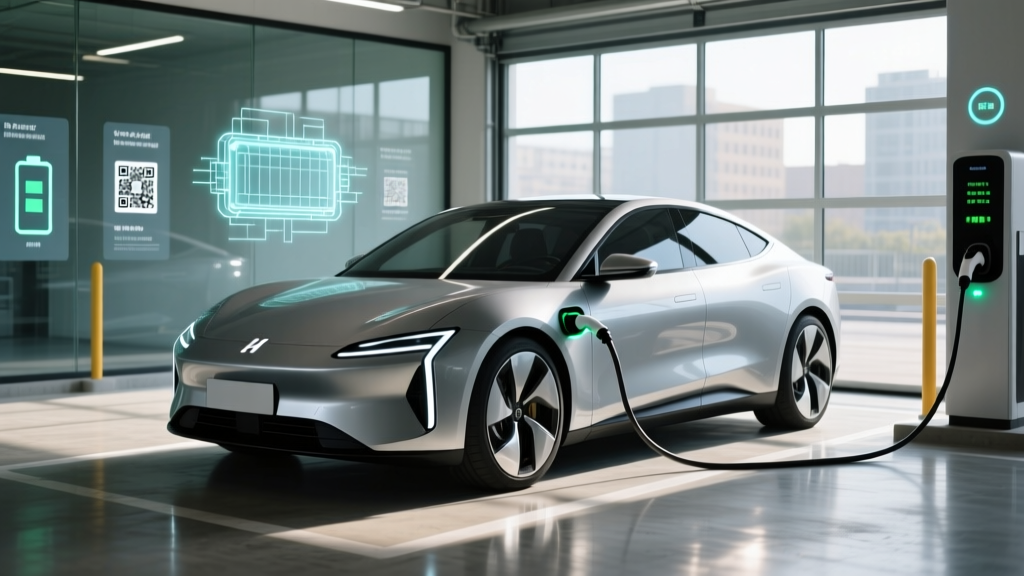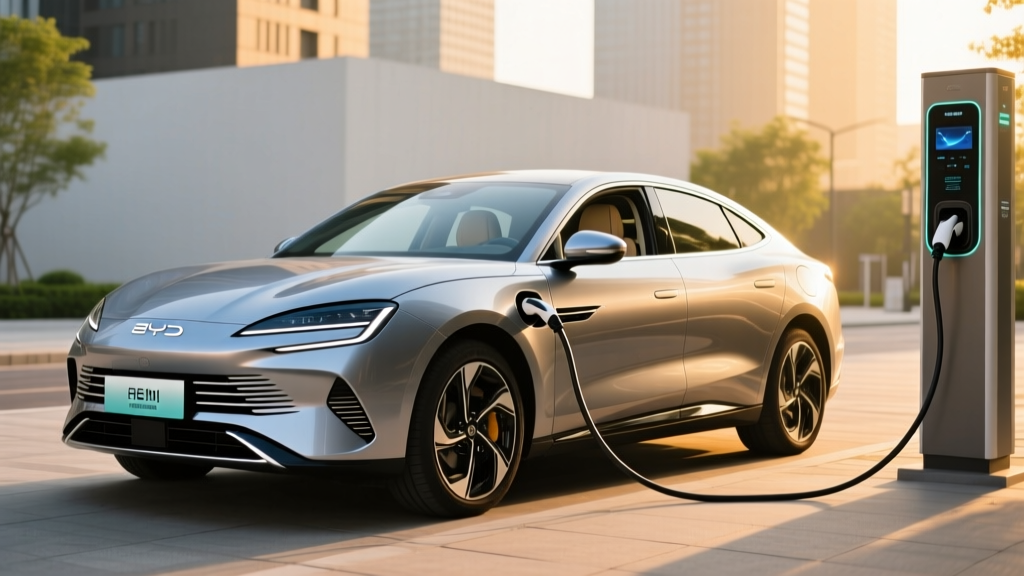
The BYD Seal 6 DM-i occupies a specific niche that US shoppers are only beginning to explore seriously: a plug-in hybrid SUV that prioritizes electric-only commuting efficiency over raw performance. Built on BYD's DM-i (Dual Mode intelligent) platform, the Seal 6 pairs a 1.5-liter naturally aspirated engine with a front-mounted electric motor and a Blade lithium iron phosphate (LFP) battery. The result is a PHEV that delivers a competitive all-electric range for daily driving while eliminating range anxiety on longer trips.
This review covers the Seal 6 DM-i's global-market specifications as of early 2026. Important availability note: As of this writing, BYD has not officially launched the Seal 6 DM-i in the United States. The figures below reflect international-market specs and WLTP testing cycles, which we've annotated with EPA-equivalent estimates where applicable. If BYD announces a US launch, expect some spec adjustments for North American compliance and tuning.
BYD Seal 6 DM-i: Core Specifications at a Glance
| Specification | Detail |
|---|---|
| Powertrain | 1.5L 4-cyl + front electric motor (FWD) |
| Combined System Output | ~215 hp (160 kW) |
| 0–62 mph (0–100 km/h) | ~8.3 seconds |
| Battery Capacity | 18.3 kWh usable (LFP Blade) |
| EV-Only Range (WLTP) | ~68 miles (110 km) |
| EV-Only Range (EPA est.) | ~56 miles |
| Max DC Fast Charge | ~40 kW (CCS/NACS dependent on market) |
| 10–80% DC Charge Time | ~26 minutes |
| Level 2 AC Charge Rate | 6.6 kW (~22 miles EV range per hour) |
| Fuel Tank | ~13.2 gallons (50 L) |
| Combined Fuel Economy (hybrid mode) | ~50 MPG (WLTP); ~44 MPG EPA est. |
| Total System Range (EV + gas) | ~620+ miles |
| Cargo Volume (rear seats up) | ~20.1 cu ft (570 L) |
| Cargo Volume (rear seats folded) | ~50.4 cu ft (1,430 L) |
| Base MSRP (Global) | ~$30,000 USD equivalent |
| Battery/Powertrain Warranty | 8 years / 100,000 miles (varies by market) |
Real-World Electric Range and Efficiency
Real-World Expectation: Expect 45–52 miles of electric-only driving in mixed city/highway use. In cold weather (below 40°F), LFP chemistry loses less capacity than NMC, but you should still budget 38–45 miles of usable EV range. City-heavy commuting with regen braking maximizes the electric envelope; sustained highway speeds above 70 mph will drain the battery faster and trigger the engine sooner.
The DM-i system is engineered around a fundamental philosophy: run on electricity whenever possible, and engage the gasoline engine primarily as a generator rather than a direct drive source. At low and moderate speeds, the Seal 6 DM-i operates as a series hybrid — the engine spins a generator to feed the electric motor, which drives the wheels. Only at sustained highway cruising speeds does the system clutch the engine directly to the drivetrain for efficiency.
This architecture means the 18.3 kWh LFP Blade battery does most of the work in daily driving. BYD's Blade cell format is known for thermal stability and longevity, with a cycle life rated well beyond 3,000 full charge-discharge cycles before reaching 80% state of health. For a PHEV with this battery size, that translates to hundreds of thousands of miles of daily cycling before meaningful degradation occurs.
Efficiency in hybrid mode — once the battery is depleted — sits around 4.5 L/100km on the WLTP cycle, which translates to roughly 52 MPG. In real-world mixed driving with some highway, expect closer to 44–48 MPG. This is competitive with the Toyota RAV4 Prime and notably better than many non-plug-in hybrid SUVs.
Charging Speed: DC Fast, Level 2, and Home Setup
| Charging Level | Power (kW) | EV Miles Added per Hour | 10–80% Time |
|---|---|---|---|
| Level 1 (120V household) | ~1.4 kW | ~5 miles/hr | ~11 hours |
| Level 2 (240V home/public) | 6.6 kW | ~22 miles/hr | ~2.5 hours |
| DC Fast Charge | ~40 kW peak | N/A | ~26 minutes |
The Seal 6 DM-i's DC fast-charging capability peaks at approximately 40 kW. This is modest compared to full BEVs that pull 150–250 kW, but it's typical for PHEVs with smaller battery packs. The physics make sense: charging an 18.3 kWh battery at 40 kW means a full charge in under 30 minutes, which is adequate for topping up during a lunch stop. The charge curve tapers noticeably above 80% state of charge to protect the LFP cells, so plan DC sessions for 10–80% to minimize time at the plug.
For daily use, Level 2 home charging is the practical backbone. At 6.6 kW, a full overnight charge takes roughly 2.5 hours — meaning even if you plug in at 10 PM, you'll wake up to a full battery by 1 AM. A standard 240V / 32A home circuit is sufficient. Installation costs for a Level 2 home charger typically range from $500–$1,500 depending on panel proximity and local permitting; consult a licensed electrician for your specific setup.
Level 1 charging from a standard 120V outlet adds about 5 miles of EV range per hour. For overnight charging of a PHEV with a 56-mile EV envelope, this actually works: 10–12 hours on Level 1 will replenish the battery fully, making it a viable option for buyers who cannot install a 240V circuit.
Performance and Drivetrain
The Seal 6 DM-i is not a performance SUV, and BYD doesn't position it as one. The combined system output of approximately 215 hp (160 kW) is routed through the front wheels via an E-CVT transmission. The 0–62 mph time of roughly 8.3 seconds is adequate for merging and passing but won't thrill anyone coming from a Tesla Model Y or even a Ford Mustang Mach-E.
Where the DM-i platform shines is in smoothness. Because the electric motor handles the vast majority of propulsion, the driving experience feels more like a BEV than a traditional hybrid. The engine engagement is subtle — you'll hear it spool up under hard acceleration or when the battery is low, but the transition is well-damped. Regenerative braking offers adjustable levels via the infotainment system, though it doesn't quite achieve true one-pedal driving in the way a full BEV does.
Ride quality is tuned toward comfort. The suspension absorbs urban bumps competently, and cabin noise levels are low in EV mode. At highway speeds with the engine running, there's more drone than you'd find in a Toyota RAV4 Prime, but it's within acceptable limits for the segment.
Interior, Cargo, and Technology
The Seal 6 DM-i's cabin follows BYD's recent design language: a large, rotating 15.6-inch central touchscreen dominates the dashboard, running BYD's DiLink infotainment system. Wireless Apple CarPlay and Android Auto are standard on most trims. A 10.25-inch digital instrument cluster provides driver information, and a head-up display is available on higher trims.
Passenger space is generous for a compact-to-midsize SUV. Rear legroom measures approximately 38 inches, sufficient for adults on longer trips. The flat floor (no transmission tunnel) improves middle-seat comfort compared to ICE competitors.
Cargo capacity stands at roughly 20.1 cubic feet behind the rear seats and 50.4 cubic feet with them folded. This is competitive with the RAV4 Prime (33.5 / 63.2 cu ft, though the RAV4 is larger overall) and adequate for family duty, grocery runs, and weekend luggage. Note that the PHEV battery is mounted under the floor, so there is no frunk (front trunk).
Driver-Assistance Technology: The Seal 6 DM-i comes equipped with BYD's ADAS suite, including adaptive cruise control, lane-keeping assist, automatic emergency braking, blind-spot monitoring, and a 360-degree camera system. This is an SAE Level 2 driver-assistance system — the driver must remain fully engaged with hands on the wheel and eyes on the road at all times. It is not autonomous or self-driving.
Pricing, Trims, and US Tax Credit Eligibility
On global markets, the BYD Seal 6 DM-i starts at approximately $30,000 USD equivalent, with higher trims reaching roughly $36,000 depending on options and market. US pricing, should BYD launch the model stateside, would likely land in the $32,000–$38,000 range after accounting for compliance modifications and dealer networks.
- Battery capacity: Must be ≥ 7 kWh (Seal 6 DM-i qualifies at 18.3 kWh)
- MSRP cap: SUVs must not exceed $80,000 (Seal 6 DM-i qualifies)
- Buyer income cap: AGI ≤ $150,000 single / $300,000 joint filers
- Battery sourcing: Critical minerals and battery components must meet phased percentage thresholds from US or FTA-partner countries — this is the primary barrier for BYD, as China-based supply chains may not satisfy current requirements
- Point-of-sale transfer: Eligible buyers can apply the credit at purchase to reduce the upfront price
Pros, Cons, and the Competition
Pros
- 56-mile EPA-est. EV range covers most daily commutes gas-free
- LFP Blade battery offers excellent longevity and thermal safety
- 44–48 MPG in hybrid mode after battery depletion
- Smooth, EV-like driving feel in city conditions
- Competitive global pricing (~$30K–$36K equivalent)
- Level 1 overnight charging is sufficient for the battery size
Cons
- Not currently available in the United States
- Modest 40 kW DC fast-charge rate limits road-trip top-ups
- ~8.3-second 0–62 mph is uninspiring
- No frunk; cargo space trails larger competitors like RAV4 Prime
- Unlikely to qualify for US federal tax credit due to battery sourcing
- BYD's US service/parts network does not yet exist
Key Competitors (US Market):
- Toyota RAV4 Prime: 42-mile EV range, 302 hp, ~$44,000 MSRP. More powerful, more cargo room, proven US dealer network, but significantly pricier.
- Ford Escape PHEV: 37-mile EV range, ~$39,000 MSRP. Less electric range than the Seal 6 DM-i but widely available with strong US support.
- Hyundai Tucson PHEV: 33-mile EV range, ~$38,000 MSRP. AWD standard, good tech, but shorter electric commute envelope.
The Seal 6 DM-i's advantage on paper is its longer EV range and lower price point. The disadvantage is everything surrounding the vehicle: no US availability, no dealer network, and no tax credit. Until BYD establishes a US presence, these competitors remain the practical choices for American PHEV buyers.
Who Should Consider the BYD Seal 6 DM-i?
- You live in a market where BYD sells and services the Seal 6 DM-i (Australia, Southeast Asia, parts of Europe, Latin America)
- Your daily commute is under 50 miles round-trip and you want gas-free weekday driving
- You want PHEV flexibility for weekend road trips without charging infrastructure dependence
- You value battery longevity (LFP chemistry) over peak performance
- Budget is a primary concern and you want a feature-rich PHEV under $35K
- You're a US-based buyer (the vehicle isn't sold here and likely won't qualify for credits)
- You need AWD for snow or mountain driving
- You want spirited acceleration or sporty handling
- Cargo space is a top priority (consider the RAV4 Prime instead)
Frequently Asked Questions
What is the real-world EV-only range of the BYD Seal 6 DM-i?
Under WLTP testing, BYD rates the Seal 6 DM-i at approximately 68 miles (110 km) of electric-only range. EPA-equivalent estimates bring that to roughly 56 miles. In real-world mixed driving, expect 45–52 miles. Cold weather (below 40°F) reduces this to approximately 38–45 miles due to cabin heating demands and reduced battery efficiency, though LFP chemistry handles cold somewhat better than NMC alternatives.
How fast does the Seal 6 DM-i charge at home and on DC fast chargers?
On a Level 2 (240V) home charger at 6.6 kW, the 18.3 kWh battery charges fully in about 2.5 hours. On a DC fast charger, peak rate is approximately 40 kW, reaching 10–80% in roughly 26 minutes. Level 1 (120V) charging takes about 11 hours for a full charge — still practical for overnight PHEV use.
Does the BYD Seal 6 DM-i qualify for the US federal EV tax credit?
Likely not. Even if BYD began selling the Seal 6 DM-i in the US, the IRS §30D credit requires battery components and critical minerals to be sourced from the US or free-trade-agreement partner countries. BYD's vertically integrated Chinese supply chain would likely fail this requirement. The MSRP and buyer income caps would not be barriers, but sourcing rules almost certainly would be. Always consult a tax professional for your specific situation.
Is the BYD Seal 6 DM-i available in the United States?
No. As of early 2026, BYD has not launched passenger vehicle sales in the US market. The company sells commercial vehicles and buses in limited US applications, but its consumer vehicle lineup — including the Seal 6 DM-i — is available in Australia, Europe, Southeast Asia, Latin America, and other markets. A US consumer launch has been rumored but not confirmed.
How does the Seal 6 DM-i compare to the Toyota RAV4 Prime?
The Seal 6 DM-i offers more electric-only range (~56 vs. 42 miles EPA) and a significantly lower starting price (~$30K vs. ~$44K globally). However, the RAV4 Prime delivers 302 hp with AWD, more cargo space (33.5 cu ft), a proven US dealer and service network, and better likelihood of qualifying for partial tax incentives. For US buyers, the RAV4 Prime remains the more practical and lower-risk choice despite the higher price.
What is the battery warranty on the BYD Seal 6 DM-i?
BYD typically offers an 8-year / 100,000-mile (or 160,000 km) warranty on the high-voltage battery pack and powertrain in most markets. Some regions receive more generous terms (e.g., 8 years / 125,000 miles). The LFP Blade battery is engineered for long cycle life — BYD claims over 3,000 charge cycles before the battery degrades to 80% state of health. Confirm exact warranty terms with your local BYD dealer.
Can the Seal 6 DM-i drive on electricity alone at highway speeds?
Yes, but with caveats. The DM-i system can sustain electric-only propulsion up to roughly 75–80 mph before the engine clutch engages for efficiency. At sustained highway speeds, the system will often run the engine as a generator to maintain battery charge, effectively operating as a series hybrid. You can force EV-only mode via a dashboard button, but the system will override this if the battery drops too low or if full power is demanded.