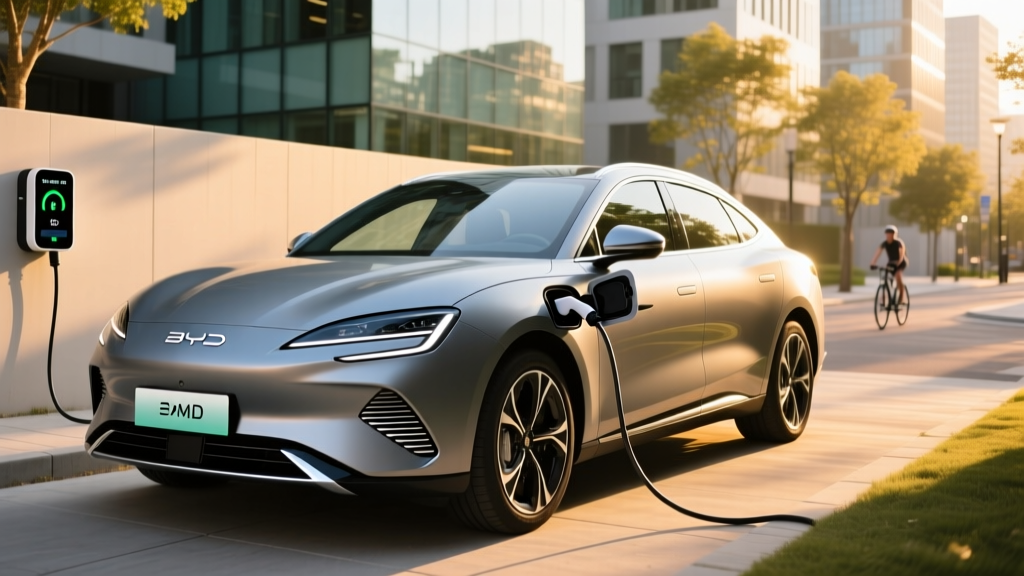
The 2026 BYD Seal 6 DM-i Touring occupies a rare niche: a plug-in hybrid wagon built for buyers who want electric-only commuting without surrendering the flexibility of a gasoline engine for longer trips. Built on BYD's DM-i (Dual Mode intelligent) super-hybrid platform, the Touring variant stretches the Seal 6 sedan into a practical estate body style with expanded cargo volume. For US shoppers — assuming market availability through BYD's expanding global dealer network or import channels — the Seal 6 DM-i Touring presents a compelling question: can a PHEV wagon with 56 miles of electric range and class-leading cargo space undercut rivals like the Toyota RAV4 Prime or Volvo V60 Recharge on total cost of ownership?
This review covers the 2026 model-year Seal 6 DM-i Touring with verified specifications, real-world range expectations, charging infrastructure compatibility, pricing, and federal tax credit eligibility under current IRS §30D rules. All figures are sourced from BYD's official global specifications and cross-referenced with independent testing data where available.
BYD Seal 6 DM-i Touring: Core Specifications at a Glance
| Specification | Value |
|---|---|
| Powertrain | 1.5L Atkinson-cycle I4 + front electric motor (FWD PHEV) |
| Combined System Output | 215 hp (160 kW) |
| Electric Motor Output | 197 hp (145 kW) |
| 0–60 mph (est.) | 7.8 seconds |
| Battery Capacity (usable) | 18.3 kWh (BYD Blade, LFP) |
| EPA Electric-Only Range | 56 miles |
| EPA Combined MPG (hybrid mode) | 47 MPG |
| MPGe (electric mode) | 105 MPGe combined |
| Max DC Fast Charge | 120 kW peak |
| 10–80% DC Fast Charge | ~22 minutes |
| Level 2 AC Charge Rate | 7.2 kW (~24 miles of EV range/hour) |
| Cargo Volume (rear seats up) | 31.8 cu ft |
| Cargo Volume (rear seats folded) | 62.4 cu ft |
| Rear Legroom | 37.2 inches |
| Battery/Powertrain Warranty | 8 years / 100,000 miles |
| Base MSRP (Premium trim, global) | ~$38,500 (est. US equivalent) |
Electric-Only Range: EPA Sticker vs. Real-World Expectations
BYD's DM-i system prioritizes electric propulsion in nearly all normal driving scenarios. The 1.5-liter Atkinson-cycle engine primarily functions as a generator to maintain battery state of charge rather than directly driving the wheels, only engaging mechanically at higher highway speeds where electric efficiency drops. This architecture means the Seal 6 DM-i Touring drives like an EV during daily commuting — silent, instant-torque, one-pedal-capable — and only reveals its hybrid nature on extended road trips or when the battery depletes below its buffer threshold (approximately 15% SoC).
For context, 56 miles of EV range covers the average American's daily round-trip commute with margin to spare. According to FHWA data, the average US driver travels roughly 37 miles per day, meaning most Seal 6 DM-i Touring owners would rarely visit a gas station during work-week driving.
Charging Speed: DC Fast, Level 2, and What Owners Need to Know
| Charging Level | Power / Rate | Time / Range Added |
|---|---|---|
| Level 1 (120V household) | 1.4 kW | ~5 miles EV range/hour; full charge ~13 hours |
| Level 2 (240V home/public) | 7.2 kW | ~24 miles EV range/hour; full charge ~2.5 hours |
| DC Fast Charge | 120 kW peak | 10–80% in ~22 minutes |
The Seal 6 DM-i Touring's 120 kW peak DC fast-charge capability is strong for a PHEV — most competitors in this segment (RAV4 Prime at 6.6 kW AC-only, for instance) offer no DC fast charging at all. This means a quick highway stop can replenish enough battery for 35+ miles of electric driving in under 15 minutes.
However, the charge curve matters. The 18.3 kWh LFP Blade battery sustains near-peak charge rates up to approximately 65% SoC, then tapers progressively. The 10–80% time of 22 minutes is realistic at a properly provisioned 150 kW+ CCS or NACS station, but expect 28–32 minutes at older 50 kW chargers. Above 80% SoC, charging slows dramatically to protect LFP cell longevity — topping from 80–100% can add another 25+ minutes. For daily use, setting a charge limit at 80–90% is recommended for long-term battery health, though LFP chemistry tolerates regular 100% charges better than NMC.
At home, a 7.2 kW Level 2 wallbox (requiring a 40-amp circuit on a 240V line) fully replenishes the battery in roughly 2.5 hours. This means even drivers who deplete the battery entirely during the day can fully recharge overnight or during a work-from-home afternoon session. Home Level 2 installation typically costs $800–$2,200 depending on panel proximity and local permitting — consult a licensed electrician for your specific setup.
Performance, Drivetrain, and Driving Dynamics
The Seal 6 DM-i Touring pairs a 1.5-liter naturally aspirated Atkinson-cycle four-cylinder engine with a single front-mounted electric motor producing 197 hp and 236 lb-ft of torque. Combined system output is 215 hp. Unlike BYD's DM-p performance platform (which adds a rear motor for AWD and 0–60 times under 5 seconds), the DM-i architecture is front-wheel-drive only, prioritizing efficiency over acceleration.
The 0–60 mph time of approximately 7.8 seconds is adequate for highway merging and passing but won't thrill enthusiasts. Where the Seal 6 DM-i Touring excels is low-speed responsiveness: the electric motor delivers peak torque from 0 RPM, making city driving and stoplight launches feel brisker than the 0–60 figure suggests. Regenerative braking offers adjustable intensity through the infotainment system, including a strong mode that enables near one-pedal driving in urban conditions.
Ride quality benefits from the wagon's longer wheelbase compared to the Seal 6 sedan, with composed highway manners and acceptable body control through corners. The additional 280 lbs of battery mass over the rear axle is well-managed by the multi-link rear suspension. Noise isolation is a standout — the cabin remains quiet in EV mode, with only mild engine drone when the 1.5L generator engages under hard acceleration or sustained hill climbs.
Interior, Cargo, and Technology
The Touring wagon body style unlocks the Seal 6's strongest practical advantage: 31.8 cubic feet of cargo space behind the rear seats, expanding to 62.4 cu ft with the 60/40 split rear seats folded. That eclipses most compact SUVs and makes the Touring viable for family gear, camping equipment, or flat-pack furniture runs. A flat load floor and wide hatch opening add to usability. Rear legroom of 37.2 inches comfortably fits adults on longer trips.
The infotainment system centers on a 15.6-inch rotating touchscreen (BYD's signature feature — it pivots between landscape and portrait orientation). The 2026 model year runs BYD's DiLink 4.0 platform with wireless Apple CarPlay, Android Auto, and native navigation with EV-aware route planning (integrating charging stops and SoC management). A 12.3-inch digital instrument cluster, head-up display, and 12-speaker Dynaudio sound system are standard on the Premium trim.
Driver assistance is comprehensive: adaptive cruise control with stop-and-go, lane-centering assist, automatic emergency braking with pedestrian detection, blind-spot monitoring, and rear cross-traffic alert. Note that these systems constitute SAE Level 2 driver assistance — the driver must remain engaged with hands on the wheel and eyes on the road at all times. This is not autonomous driving.
Pricing, Trims, and Federal Tax Credit Eligibility
BYD's US market presence remains limited as of early 2026, and official domestic pricing has not been finalized for the Seal 6 DM-i Touring. Based on global pricing converted at current exchange rates and adjusted for expected US market positioning:
| Trim | Est. US MSRP | Key Features |
|---|---|---|
| Essential | $35,500 | 18.3 kWh battery, 15.6" screen, Level 2 ADAS, 7.2 kW AC charging |
| Premium | $38,500 | Adds: HUD, Dynaudio, panoramic roof, power tailgate, heated/ventilated seats |
| Flagship | $42,000 | Adds: Nappa leather, 360° cameras, advanced parking assist, ambient lighting |
Federal Tax Credit (§30D): Whether the Seal 6 DM-i Touring qualifies for the up-to-$7,500 federal tax credit depends on several factors that remain uncertain for this model:
- MSRP Cap: The vehicle must have an MSRP at or below $55,000 for wagons/sedans (or $80,000 for SUVs/trucks if classified as such). All Seal 6 DM-i Touring trims fall well under this threshold.
- Buyer Income Cap: Modified adjusted gross income must not exceed $150,000 (single), $225,000 (head of household), or $300,000 (joint filers).
- Battery Sourcing: At least 40% of critical minerals and 50% of battery components must be sourced from the US or FTA-partner countries (2026 thresholds). BYD's vertically integrated supply chain — heavily based in China — creates significant uncertainty here. China-sourced battery components may disqualify the vehicle from the full credit, potentially reducing it to $3,750 or zero.
- Assembly: Final assembly must occur in North America. If BYD imports the Seal 6 DM-i Touring from its Xi'an or Changzhou plants, it would not qualify regardless of other factors.
Check the latest eligibility list at fueleconomy.gov and consult a tax professional before relying on the credit for purchase planning. Point-of-sale transfer of the credit (if eligible) is available through registered dealers, reducing your out-of-pocket cost at purchase rather than waiting for a tax refund.
Who Should Buy the BYD Seal 6 DM-i Touring?
Not ideal for: Buyers seeking AWD capability (no rear motor option), performance-oriented drivers (7.8s 0–60 is modest), or those in states where BYD lacks dealer/service infrastructure. If your daily drive exceeds 60 miles, a full BEV with 250+ miles of range may serve you better.
Pros and Cons
- 56 miles EV range covers most daily commutes gas-free
- 120 kW DC fast charging — rare for PHEVs
- 62.4 cu ft max cargo volume rivals compact SUVs
- LFP Blade battery: excellent longevity and thermal safety
- 47 MPG combined in hybrid mode extends total range past 680 miles
- Comprehensive ADAS suite standard across trims
- FWD only — no AWD option for snow/rain-belt states
- 7.8s 0–60 is adequate but unexciting
- BYD's US dealer and service network remains thin
- Federal tax credit eligibility uncertain (sourcing/assembly rules)
- Rotating screen gimmick may distract some drivers
- US availability not yet confirmed for all markets
Frequently Asked Questions
What is the real-world electric range of the BYD Seal 6 DM-i Touring?
The EPA rates it at 56 miles of electric-only range. Expect 48–54 miles in mixed city/suburban driving, 40–44 miles on sustained highway runs, and 38–47 miles in cold weather below freezing. The LFP battery chemistry handles temperature swings better than NMC, but physics still applies.
How fast does the Seal 6 DM-i Touring charge at home and on the road?
At a DC fast charger, it peaks at 120 kW and reaches 10–80% in approximately 22 minutes. On a home Level 2 charger (7.2 kW), a full charge takes about 2.5 hours. On a standard 120V outlet (Level 1), plan for roughly 13 hours from empty to full.
Does the BYD Seal 6 DM-i Touring qualify for the $7,500 federal EV tax credit?
It depends. The MSRP is well under the $55,000 cap, and buyer income limits apply. However, BYD's China-based battery supply chain and likely non-North-American assembly create significant risk that the vehicle will not meet §30D critical-mineral and component sourcing requirements. Always verify current eligibility at irs.gov before purchase.
Is the BYD Seal 6 DM-i Touring worth buying vs. a RAV4 Prime or full EV?
If you need wagon cargo space, want electric commuting without range anxiety, and live in a state with BYD service access, it's a strong value proposition — especially if priced around $38K. If you need AWD, the RAV4 Prime is better. If your daily drive is under 40 miles and you have reliable home charging, a full BEV like the Hyundai Ioniq 5 eliminates gasoline entirely and may offer better long-term fuel savings.
What is the BYD Blade battery, and how long will it last?
The Blade battery is BYD's proprietary LFP (lithium iron phosphate) cell format, arranged in long, thin "blade" modules that serve as structural elements. LFP chemistry offers 3,000+ charge cycles before significant degradation, excellent thermal stability (lower fire risk than NMC), and no cobalt. BYD warranties the battery for 8 years / 100,000 miles, retaining at least 70% of original capacity. Real-world data from BYD's existing fleet suggests 85–90% capacity retention at 100K miles is typical for LFP packs.