Quick Verdict: A Tech-Forward Flagship That's Still Waiting on the US
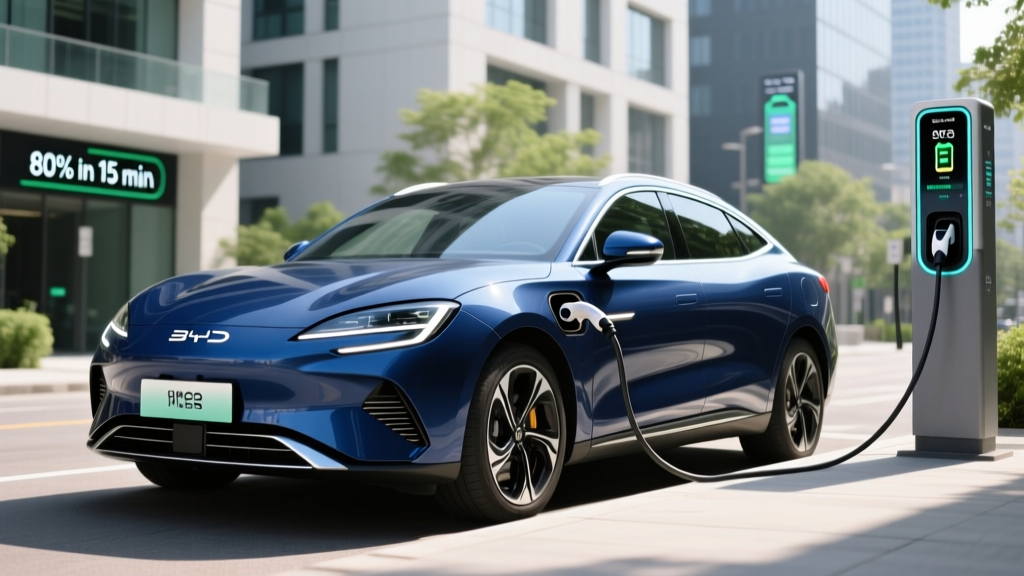
The BYD Seal 08 represents the Chinese automaker's bid to compete with premium midsize electric sedans like the Tesla Model 3, Hyundai Ioniq 6, and BMW i4. Launched in China in late 2024 and expanding into select European and Southeast Asian markets through 2025 and 2026, the Seal 08 showcases BYD's latest e-Platform 3.0 Evo architecture, blade battery technology, and a rotating center infotainment screen that's become a BYD signature.
But here's the critical context for US buyers: BYD does not currently sell passenger vehicles in the United States, and no confirmed US launch timeline exists for the Seal 08. This review covers the vehicle's specifications as sold in international markets, translating them to US-relevant metrics so you can benchmark BYD's engineering against the EVs you can actually buy stateside. If BYD's trade barriers shift — or if you're shopping in Europe, Australia, or Southeast Asia — this is your deep-dive reference.
BYD Seal 08 Core Specifications
| Attribute | Standard Range (RWD) | Long Range (RWD) | Performance (AWD) |
|---|---|---|---|
| Battery Capacity (usable) | 61.4 kWh | 82.5 kWh | 82.5 kWh |
| Battery Chemistry | LFP (Blade Battery) | LFP (Blade Battery) | LFP (Blade Battery) |
| CLTC Range | 550 km (342 mi) | 700 km (435 mi) | 650 km (404 mi) |
| Estimated EPA-Equivalent Range | ~270 mi | ~340 mi | ~315 mi |
| Power Output | 215 kW (288 hp) | 230 kW (308 hp) | 390 kW (523 hp) |
| 0-100 km/h (0-62 mph) | 7.5 sec | 7.0 sec | 3.8 sec |
| Drivetrain | RWD (single motor) | RWD (single motor) | AWD (dual motor) |
| Max DC Fast Charge | 150 kW | 150 kW | 150 kW |
| 10-80% DC Charge Time | ~26 min | ~30 min | ~30 min |
| AC Level 2 Charge Rate | 7 kW (single-phase) / 11 kW (three-phase) | 7 kW / 11 kW | 7 kW / 11 kW |
| Length / Width / Height | 4,830 mm / 1,875 mm / 1,495 mm (190.2" / 73.8" / 58.9") | ||
| Wheelbase | 2,920 mm (115.0") | ||
| Cargo Volume (trunk) | ~400 L (14.1 cu ft) + front trunk (frunk) ~53 L (1.9 cu ft) | ||
Note: CLTC (China Light-Duty Vehicle Test Cycle) range figures are notably optimistic compared to the US EPA test cycle. The EPA-equivalent estimates above apply a ~22% reduction based on observed CLTC-to-EPA conversion ratios for similar vehicles. These are estimates only — official EPA figures would require US-market certification.
Range and Efficiency: Real-World Expectations
CLTC Sticker: 700 km (435 mi) | Estimated EPA-Equivalent: ~340 mi
Real-World Highway (70 mph, moderate climate): ~285–310 mi
Real-World Cold Weather (30°F, highway): ~240–270 mi
Efficiency Estimate: ~120 MPGe combined / ~28 kWh/100 mi
The Seal 08 Long Range's 82.5 kWh LFP Blade Battery is the heart of this sedan's value proposition. BYD's blade-format cells use a cell-to-pack (CTP) design that eliminates intermediate modules, improving volumetric energy density and thermal stability. LFP (lithium iron phosphate) chemistry trades some energy density versus NMC (nickel manganese cobalt) for superior cycle life, thermal safety, and freedom from cobalt and nickel supply-chain concerns.
In practice, expect the Long Range RWD to deliver roughly 285 to 310 miles on a highway-heavy US-style drive cycle at moderate temperatures. That puts it squarely in competition with the Hyundai Ioniq 6 SE Long Range (EPA 361 mi) and the Tesla Model 3 Long Range (EPA 341 mi). The Seal 08 falls slightly short on paper, but its LFP battery offers a longevity advantage: LFP cells typically sustain 80% capacity after 3,000+ charge cycles versus ~1,000–2,000 for NMC, meaning meaningful degradation takes substantially longer.
Cold weather remains the equalizer for all EVs. LFP chemistry is somewhat more resistant to low-temperature capacity loss than NMC, but you should still budget a 20–30% range reduction when driving at highway speeds in sub-freezing conditions. BYD includes a standard heat pump on the Seal 08, which helps preserve cabin heating efficiency and reduces the range penalty compared to resistive heating systems.
Charging Speed: DC Fast Charging and Home Level 2
| Charge Method | Max Power | Time / Rate | Connector |
|---|---|---|---|
| DC Fast Charging | 150 kW peak | 10-80% in ~26–30 min | GB/T (China) / CCS2 (Europe/Aus) |
| AC Level 2 (single-phase) | 7 kW | ~22 mi/hr of range added | Type 2 (international) |
| AC Level 2 (three-phase) | 11 kW | ~34 mi/hr of range added | Type 2 (international) |
| AC Level 1 (120V household) | ~1.4 kW | ~4 mi/hr of range added | Standard plug |
The Seal 08's 150 kW peak DC fast-charge rate is its most notable limitation versus direct competitors. The Hyundai Ioniq 6 (with its 800V architecture) peaks at 239 kW and hits 10-80% in roughly 18 minutes. The Tesla Model 3 Long Range on V3 Superchargers peaks around 250 kW. At 150 kW, the Seal 08 is adequate for highway road trips — a 30-minute stop gets you from 10% to 80% — but it won't match the fastest-charging sedans on the market.
The charge curve matters as much as the peak number. BYD's LFP Blade Battery typically sustains near-peak charge rates up to approximately 55-60% state of charge (SoC), then tapers progressively. Expect the 50-80% portion of the charge to take noticeably longer than the 10-50% portion. This taper behavior is inherent to LFP chemistry at higher SoC and is managed by the battery management system (BMS) to protect long-term cell health.
For home charging, the 11 kW three-phase AC capability (available in markets with three-phase residential power, common in Europe and Australia) will fully replenish the 82.5 kWh battery in roughly 8.5 hours — easily overnight. US homes typically have single-phase 240V service, which limits AC charging to 7 kW, extending a full charge to approximately 12–13 hours. That's still practical for overnight top-ups but means you'd want to arrive home with some charge remaining rather than near-empty.
Performance and Driving Dynamics
The Seal 08 AWD Performance variant delivers 390 kW (523 hp) from its dual-motor setup, hitting 0-100 km/h (0-62 mph) in a claimed 3.8 seconds. That's firmly in sports-sedan territory — comparable to the Tesla Model 3 Performance (3.1 seconds to 60 mph) and quicker than the BMW i4 M50 (3.7 seconds to 60 mph). The RWD Long Range variant's 7.0-second 0-100 km/h time is more relaxed but entirely adequate for daily driving and highway merging.
BYD's e-Platform 3.0 Evo positions the battery pack low in the chassis, contributing to a low center of gravity and balanced weight distribution. The Seal 08 uses a multi-link rear suspension (rather than the torsion beam found in some budget EVs), which should translate to competent ride quality and cornering composure. Early international reviews note firm but well-damped ride characteristics, with steering that prioritizes precision over feel — typical of the electric-sedan segment.
Regenerative braking offers multiple levels, including a one-pedal driving mode that brings the car to a complete stop. BYD's system is tunable via the infotainment screen or steering-wheel paddles, letting drivers dial in their preferred regen intensity.
Interior, Technology, and Cargo Space
The Seal 08's cabin centers on a 15.6-inch rotating touchscreen — a BYD hallmark that pivots between landscape and portrait orientation depending on the app in use. The infotainment system runs BYD's DiLink platform with wireless Apple CarPlay and Android Auto (market-dependent), over-the-air (OTA) update capability, and integrated navigation with real-time charging station routing.
The driver faces a 10.25-inch digital instrument cluster and an available augmented-reality head-up display (AR-HUD) that projects navigation arrows and speed information onto the windshield. A 12-speaker Dynaudio sound system is available on higher trims.
Driver assistance features include adaptive cruise control with stop-and-go, lane-centering assist, automatic emergency braking with pedestrian detection, blind-spot monitoring, and a 360-degree surround-view camera. These constitute SAE Level 2 driver assistance — the driver must remain engaged and hands on or near the wheel at all times. This is not autonomous driving.
Cargo capacity is the Seal 08's most practical limitation. The trunk offers approximately 400 liters (14.1 cu ft), which trails the Tesla Model 3's 23 cu ft and the Hyundai Ioniq 6's 11.7 cu ft trunk plus a large rear under-floor area. The 53-liter (1.9 cu ft) frunk provides additional space for charging cables or a small bag. Rear-seat legroom is generous at the 2,920 mm wheelbase, with international reviewers citing ample knee and headroom for six-foot passengers.
Pricing, Trim Levels, and Tax Credit Eligibility
| Trim | China MSRP (CNY) | Estimated USD Equivalent | Key Features |
|---|---|---|---|
| Standard Range RWD | ~¥189,800 | ~$26,200 | 61.4 kWh, 288 hp, base ADAS suite |
| Long Range RWD | ~¥219,800 | ~$30,300 | 82.5 kWh, 308 hp, heat pump, upgraded audio |
| Performance AWD | ~¥259,800 | ~$35,800 | Dual motor, 523 hp, sport suspension, AR-HUD |
BYD's domestic Chinese pricing undercuts virtually every Western competitor by a wide margin. However, these prices do not translate directly to US or European markets due to tariffs, shipping costs, regulatory compliance modifications, and dealer infrastructure. In European markets where the Seal 08 has begun appearing, expect pricing in the €42,000–€55,000 range ($45,000–$59,000 USD) depending on trim and local VAT.
Because BYD does not sell passenger vehicles in the United States, the Seal 08 is not eligible for the IRS §30D Clean Vehicle Credit. Even if BYD entered the US market, the vehicle would need to meet all of the following requirements under current law:
- Final assembly in North America (BYD manufactures in China, Thailand, Brazil, and Hungary)
- MSRP at or below $55,000 for sedans
- Buyer adjusted gross income within IRS caps ($150K single / $300K joint)
- Battery critical minerals and components sourcing thresholds (which increase annually and specifically restrict Chinese-sourced materials)
Battery Longevity and Warranty
BYD's Blade Battery (LFP) is one of the most thoroughly validated battery packs in the EV industry. BYD publicly demonstrated its nail-penetration test — where a steel nail is driven through a fully charged cell — without thermal runaway, fire, or significant temperature increase. This thermal stability is inherent to LFP chemistry and the blade form factor's superior heat dissipation.
In international markets, BYD typically provides an 8-year/150,000 km (93,000 mi) battery and powertrain warranty, with some markets extending to 8 years/160,000 km. The warranty guarantees the battery will retain at least 70% of its original capacity during the warranty period. Given LFP's documented cycle-life advantages (3,000+ full cycles to 80% capacity in lab testing), real-world degradation should be minimal for typical ownership durations of 8–12 years.
For context, that warranty coverage is comparable to Tesla's 8-year/120,000-mile battery warranty on the Model 3, though Hyundai's 10-year/100,000-mile powertrain warranty on the Ioniq 6 offers longer time coverage (with fewer miles).
How the BYD Seal 08 Compares to Key Rivals
| Specification | BYD Seal 08 LR | Tesla Model 3 LR | Hyundai Ioniq 6 SEL | BMW i4 eDrive40 |
|---|---|---|---|---|
| Est. EPA Range | ~340 mi | 341 mi | 361 mi | 307 mi |
| Battery (kWh / Chemistry) | 82.5 / LFP | 75 / NMC | 77.4 / NMC | 81.5 / NMC |
| Peak DC Charge (kW) | 150 kW | 250 kW | 239 kW | 200 kW |
| 10-80% DC Time | ~30 min | ~25 min | ~18 min | ~31 min |
| 0-60 mph (est.) | 6.5 sec | 4.2 sec | 5.1 sec | 5.5 sec |
| US MSRP (approx.) | Not sold in US | $42,630 | $42,600 | $57,900 |
| Battery Warranty | 8 yr / 93K mi | 8 yr / 120K mi | 10 yr / 100K mi | 8 yr / 80K mi |
The Seal 08's competitive position is clearest on price: even with European markups, it undercuts the BMW i4 substantially and trades blows with the Model 3 and Ioniq 6. Its weaknesses versus those rivals are charging speed (the Ioniq 6's 800V system is dramatically faster) and US availability (the Model 3 benefits from Supercharger network access and §30D credit eligibility). Its strength is the LFP Blade Battery's safety profile and projected longevity.
Pros and Cons
- LFP Blade Battery: exceptional thermal safety, long cycle life, no cobalt
- Competitive estimated range (~340 mi EPA-equivalent for Long Range)
- Aggressive pricing in international markets
- Generous standard equipment (heat pump, ADAS suite, rotating display)
- Spacious rear seat thanks to long wheelbase
- Strong AWD Performance variant (3.8 sec 0-100 km/h)
- Not available in the United States; no confirmed US launch
- 150 kW peak DC charging trails key competitors (Ioniq 6: 239 kW)
- Trunk space (14.1 cu ft) is below segment average
- No US-spec EPA testing — range figures are CLTC-derived estimates
- Would likely not qualify for §30D tax credit even if sold in US
- BYD's service/parts network untested in Western markets
Who the BYD Seal 08 Is For
- You're buying in a market where BYD has an established dealer and service network (China, Southeast Asia, parts of Europe, Australia)
- Battery longevity and safety are your top priorities — LFP's cycle life and thermal stability are best-in-class
- You want a well-equipped midsize EV sedan without paying luxury-brand premiums
- Your daily commute is under 100 miles round-trip and you charge at home overnight
- You're a US buyer — the Seal 08 is not available and likely won't be soon
- You road-trip frequently and need the fastest possible DC charging (Ioniq 6 or Model 3 are substantially quicker)
- You need maximum cargo space for family hauling (consider an SUV like the Tesla Model Y or Hyundai Ioniq 5)
- Federal tax credit eligibility is essential to your purchase math
Frequently Asked Questions
What is the real-world range of the BYD Seal 08?
The Long Range RWD variant carries a CLTC rating of 700 km (435 mi), which translates to an estimated EPA-equivalent of approximately 340 miles. In real-world highway driving at 70 mph in moderate temperatures, expect 285–310 miles. In cold weather (below freezing), budget for 240–270 miles. The Standard Range RWD delivers roughly 270 miles EPA-equivalent, or about 220–240 miles in real-world highway use.
How fast does the BYD Seal 08 charge?
On a DC fast charger, the Seal 08 peaks at 150 kW, achieving a 10-80% charge in approximately 26–30 minutes depending on the battery variant. At home on a 240V Level 2 charger (single-phase, 7 kW), expect roughly 22 miles of range per hour of charging, or a full charge in 12–13 hours for the 82.5 kWh battery. Three-phase 11 kW charging (available outside the US) cuts that to about 8.5 hours.
Does the BYD Seal 08 qualify for the US federal EV tax credit?
No. BYD does not sell passenger vehicles in the United States, so the Seal 08 is ineligible for the IRS §30D Clean Vehicle Credit. Even if BYD entered the US market, the vehicle's Chinese battery sourcing would likely disqualify it under current critical-minerals and battery-component requirements, which specifically restrict Chinese-sourced materials with increasing stringency each year.
Is the BYD Seal 08 worth buying versus a Tesla Model 3 or Hyundai Ioniq 6?
In markets where all three are available, the Seal 08 offers compelling value — competitive range, a safer LFP battery, and strong standard equipment at a lower price point. However, the Model 3 has a decisive advantage in charging infrastructure (Tesla Supercharger network) and DC fast-charge speed. The Ioniq 6 leads on both range (361 mi EPA) and charging speed (18 minutes 10-80%). If those two factors matter for your driving patterns, the rivals are stronger choices. If battery longevity and value are paramount, the Seal 08 deserves serious consideration.
What battery chemistry does the BYD Seal 08 use?
All Seal 08 variants use BYD's Blade Battery with LFP (lithium iron phosphate) chemistry. LFP offers superior thermal stability (virtually eliminating thermal runaway risk), longer cycle life (3,000+ cycles to 80% capacity), and zero cobalt content. The trade-off versus NMC is lower energy density — meaning a heavier, physically larger pack for the same kWh — and slightly reduced range in cold weather, though BYD's heat pump system helps mitigate this.
Will BYD sell the Seal 08 in the United States?
As of 2026, BYD has not announced plans to sell passenger vehicles in the US market. The company faces significant headwinds including 100%+ US tariffs on Chinese-made EVs, battery-sourcing restrictions under the Inflation Reduction Act, and the need to establish a dealer and service network. BYD is expanding aggressively in Europe, Southeast Asia, Latin America, and Australia, where the Seal 08 is available or incoming. A US entry remains possible but is not on any confirmed timeline.