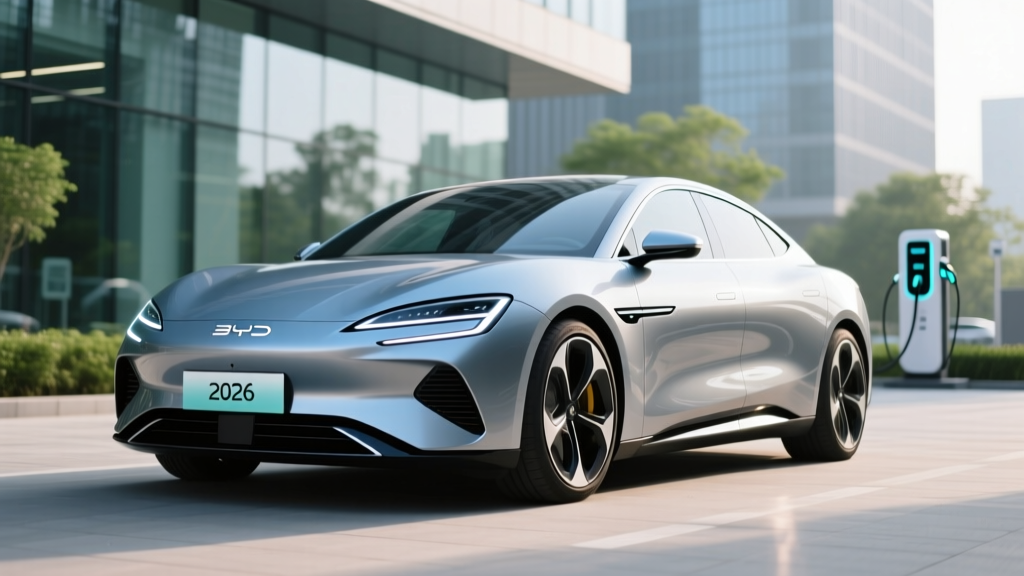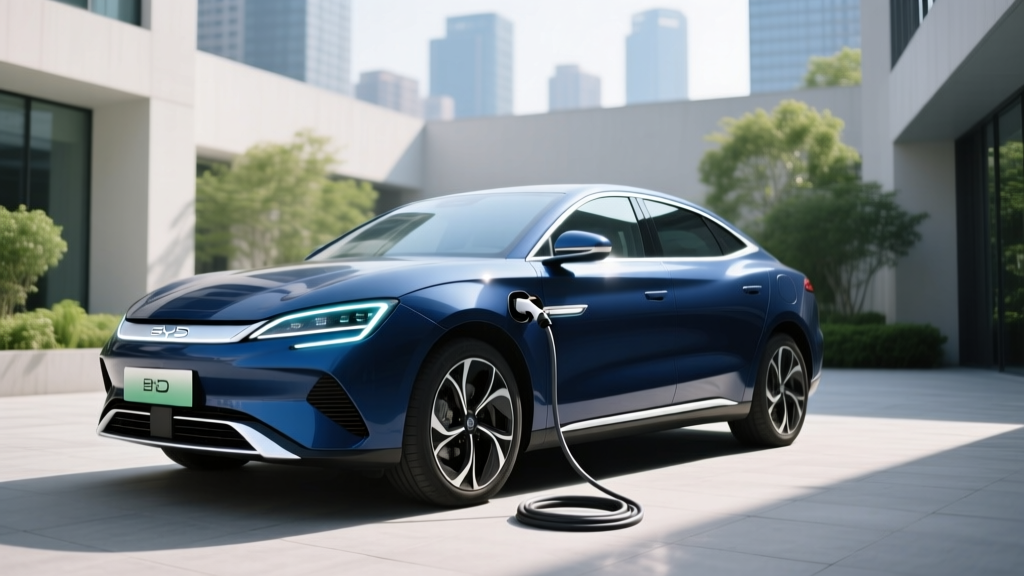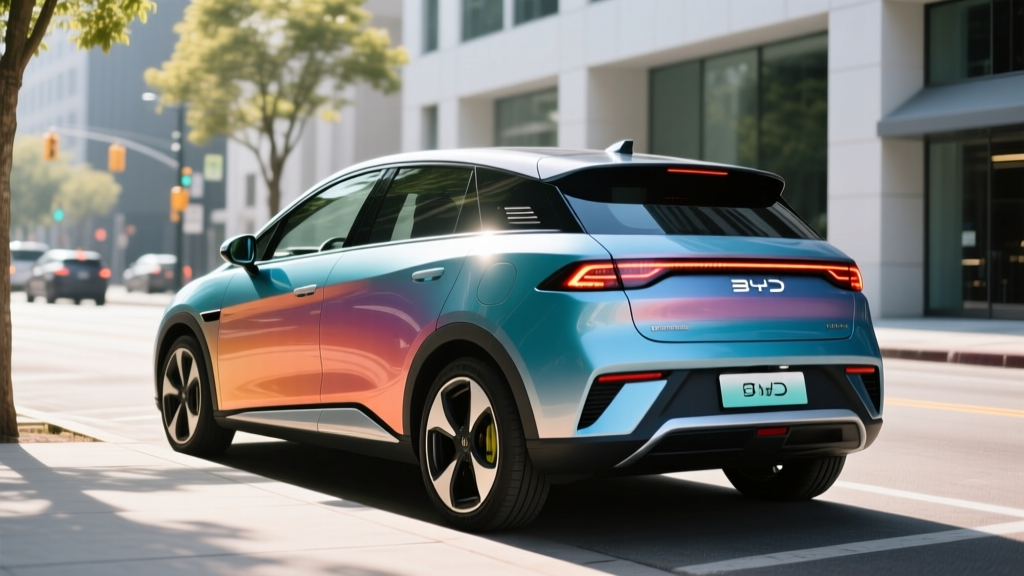
If you've followed EV news in 2025 and 2026, you've likely seen the BYD Seagull making headlines as one of the cheapest electric cars on the planet. With a starting price in China under $10,000 USD equivalent, this subcompact hatchback has prompted breathless coverage and inevitable questions from American shoppers: Can you actually buy one in the US? What would it cost here? And would it be any good on our roads?
This profile breaks down everything we know about the BYD Seagull — its real specifications, its pricing structure, and the hard truths about US availability. If you're researching the BYD Seagull price to decide whether to wait for it or look at alternatives available today, this is your data-driven guide.
BYD Seagull Price: Global Pricing vs. Projected US Cost
The BYD Seagull launched in China in 2023 and quickly became one of the best-selling EVs in the country. Here's what the pricing actually looks like:
| Market / Trim | Price (Local Currency) | Approx. USD Equivalent | Availability |
|---|---|---|---|
| China — Vitality Edition | ¥69,800 | ~$9,600 | On sale now |
| China — Freedom Edition | ¥75,800 | ~$10,400 | On sale now |
| China — Flying Edition | ¥85,800 | ~$11,800 | On sale now |
| Latin America (Mexico/Brazil) | Varies by market | ~$18,000–$22,000 | Selected markets |
| Europe (projected, if launched) | TBD | ~$20,000–$25,000 est. | Not confirmed |
| United States | N/A | N/A | Not available |
The gap between the Chinese domestic price and export-market pricing is significant. Tariffs, shipping, compliance modifications, dealer network costs, and market positioning all push the price higher outside China. Even in Latin American markets where BYD has established a presence, the Seagull typically sells for roughly double its Chinese sticker price.
Why the US Price Would Be Much Higher
Should BYD ever bring the Seagull to the United States, several factors would push the MSRP well above the Chinese figures:
- US safety and emissions homologation: The vehicle would need to meet NHTSA crash standards, FMVSS requirements, and EPA certification — requiring structural and software modifications.
- Section 301 tariffs: As of 2026, Chinese-made EVs face a 100% tariff under current US trade policy, effectively doubling the landed cost before any dealer markup.
- Dealer and service network: BYD has no passenger-vehicle dealer infrastructure in the US, which would require massive investment or a direct-to-consumer model.
- Software and connectivity: The infotainment system, navigation, and connected services would need a complete overhaul for English-language markets and US data regulations.
Industry analysts estimate that a US-spec BYD Seagull, if it ever arrived, would likely start between $25,000 and $30,000 before incentives — competitive with a Nissan LEAF or base Chevy Equinox EV, but far from the viral $10,000 headline.
US Availability: Can You Actually Buy a BYD Seagull in America?
BYD does operate in the US — but only in commercial vehicles (electric buses and trucks). The company's passenger-vehicle ambitions have focused on Europe, Southeast Asia, Latin America, Australia, and the Middle East. While BYD executives have occasionally hinted at long-term interest in the American market, no timeline, model, or partnership has been announced.
For American EV shoppers drawn to the Seagull's price point, the practical question is: what can you actually buy right now in the sub-$35,000 range? We address that in the competitor comparison below.
BYD Seagull Specs: Range, Battery, and Efficiency
For reference — and for readers in markets where the Seagull is sold — here are the confirmed specifications for the current-generation model:
| Specification | Vitality Edition (Base) | Flying Edition (Top) |
|---|---|---|
| Battery Chemistry | LFP (Lithium Iron Phosphate) — BYD Blade Battery | |
| Battery Capacity (usable) | 30.08 kWh | 38.88 kWh |
| CLTC Range (China) | 305 km (190 mi) | 405 km (252 mi) |
| Estimated EPA Range (if US-spec) | ~145–160 mi est. | ~195–215 mi est. |
| Motor Output | 55 kW (74 hp), 135 Nm torque | |
| 0–60 mph (estimated) | ~11.0 seconds | |
| Top Speed | 81 mph (130 km/h) | |
| Drivetrain | FWD, single-speed reduction gear | |
| Max DC Fast Charge | 30 kW | 40 kW |
| 30–80% DC Charge Time | ~30 minutes | |
| Level 2 AC Charge Rate | ~6.6 kW (estimated) | |
| Length × Width × Height | 146.9 × 67.7 × 60.8 in (3,780 × 1,715 × 1,540 mm) | |
| Wheelbase | 97.6 in (2,500 mm) | |
| Curb Weight (est.) | ~2,535 lb | ~2,690 lb |
| Cargo Volume (rear seats up) | ~8.5 cu ft (est.) | |
| Cargo Volume (rear seats folded) | ~23 cu ft (est.) | |
Battery Chemistry: LFP Blade Battery Explained
The Seagull uses BYD's proprietary Blade Battery, which is a lithium iron phosphate (LFP) cell arranged in a structural pack design. LFP chemistry offers several trade-offs compared to the nickel-manganese-cobalt (NMC) cells used in many long-range EVs:
- Advantages: Superior thermal stability (lower fire risk), longer cycle life (3,000+ charge cycles with minimal degradation), no cobalt (ethical sourcing advantage), lower cost per kWh.
- Disadvantages: Lower energy density (heavier pack for the same range), reduced cold-weather performance, slightly lower voltage per cell.
For a city-oriented commuter car like the Seagull, LFP is a rational choice — cost matters more than maximizing range, and the safety profile is excellent. But it's why the Seagull's range tops out well below vehicles with larger NMC packs.
Charging Speed: The Seagull's Biggest Limitation for US Buyers
| Charging Method | Power (kW) | Estimated Speed | Notes |
|---|---|---|---|
| Level 1 (120V household) | ~1.4 kW | ~5–6 miles per hour | Emergency/top-up only |
| Level 2 (240V home/public) | ~6.6 kW | ~22–25 miles per hour | Full charge in ~5–6 hours |
| DC Fast Charge (CCS) | 30–40 kW peak | 30–80% in ~30 min | Peak rate not sustained |
The Seagull's DC fast-charging capability is where US buyers would feel the most friction. A peak rate of 30–40 kW is far below the 150–250+ kW rates common on modern EVs sold in America. On a typical US road trip, charging stops would take considerably longer than with a Hyundai Ioniq 5 (peak 240 kW) or Tesla Model 3 (peak 250 kW).
The charge curve also matters. BYD's LFP Blade batteries tend to sustain their peak DC rate up to roughly 60–70% state of charge, then taper progressively. A 10–80% session would take approximately 35–45 minutes in practice — acceptable for urban top-ups but frustrating for highway travel.
For home charging, a Level 2 wallbox at 6.6 kW would fully replenish the smaller battery in about 5 hours and the larger pack in roughly 6 hours. That's standard for this class and perfectly adequate for overnight charging.
Tax Credit Eligibility: Would the Seagull Qualify?
This section is largely hypothetical, since the Seagull isn't sold in the US. But if it were, tax credit eligibility would face severe headwinds under current IRS §30D rules:
- Battery sourcing requirement: The §30D credit requires that a percentage of critical minerals and battery components be sourced from the US or free-trade-agreement partners. A China-manufactured BYD with a BYD Blade Battery would almost certainly fail both the critical-minerals and battery-component tests.
- Foreign entity of concern (FEOC) restriction: Vehicles with battery components from a FEOC (a designation that applies to many Chinese state-linked manufacturers) are explicitly excluded from the credit entirely.
- MSRP cap: Even if the Seagull passed sourcing tests, the vehicle would need to fall under the $55,000 (sedan/hatchback) MSRP cap — which it would.
- Buyer income cap: Buyers must have adjusted gross income below $150,000 (single) / $300,000 (joint) — standard across all §30D-eligible vehicles.
Bottom line: Even in the unlikely event BYD sold the Seagull in the US, it would almost certainly not qualify for the $7,500 federal EV tax credit due to battery-sourcing and FEOC restrictions. This would put it at a significant disadvantage against credit-eligible competitors.
BYD Seagull vs. US-Market Alternatives Under $35K
American shoppers drawn to the Seagull's affordability should consider these EVs currently available in the US market:
| Vehicle | Base MSRP | EPA Range | Battery (kWh) | Max DC kW | 10–80% Time | Tax Credit |
|---|---|---|---|---|---|---|
| BYD Seagull (not US-available) | N/A | ~150–215 mi est. | 30–39 (LFP) | 30–40 kW | ~35–45 min | Likely no |
| Nissan LEAF S (40 kWh) | ~$28,140 | 149 mi | 40 (NMC) | 50 kW | ~40 min | No (Japan-sourced battery) |
| Nissan LEAF SV PLUS | ~$36,190 | 212 mi | 60 (NMC) | 100 kW | ~35 min | No |
| Chevrolet Equinox EV LT | ~$33,600 | 319 mi | 85 (NMC) | 150 kW | ~30 min | Yes (up to $7,500) |
| Hyundai Kona Electric SE | ~$32,975 | 261 mi | 64.8 (NMC) | 100 kW | ~43 min | No (Korea-built) |
| Tesla Model 3 RWD | ~$38,990 | 272 mi | 60 (LFP) | 170 kW | ~25 min | Yes (up to $7,500) |
The data makes clear what the Seagull would be up against. Even if priced at $25,000–$30,000 in the US, it would offer less range, slower charging, and no tax credit compared to a Chevrolet Equinox EV that starts around $33,600 and qualifies for the full $7,500 credit — bringing its effective price to roughly $26,100 for 319 miles of EPA range and 150 kW DC fast charging.
✅ Pros
- Extremely low price in domestic Chinese market
- LFP Blade Battery — excellent safety and longevity
- Compact dimensions ideal for dense urban parking
- Surprisingly roomy interior for its footprint (97.6-in wheelbase)
- Standard 10.1-inch rotating touchscreen
- Low running costs for city commuting
❌ Cons
- Not available in the United States
- Modest EPA-equivalent range (~150–215 mi)
- Slow DC fast charging (30–40 kW peak)
- Limited power (74 hp) — struggles at highway speeds
- Top speed of 81 mph limits interstate usability
- No US dealer network, parts, or service infrastructure
- Would likely not qualify for $7,500 federal tax credit
Who Is the BYD Seagull Actually For?
In markets where it's sold, the Seagull fills a specific and valuable niche:
- Urban commuters who drive 30–60 miles per day, have access to home charging, and rarely take highway trips.
- Second-car households that need an affordable runabout for errands and school runs.
- Ride-hailing and fleet operators in emerging markets where low acquisition cost drives ROI.
- First-time EV buyers in price-sensitive markets who want to transition from a gas scooter or small ICE car.
For US buyers, the Seagull's use case overlaps almost entirely with the Nissan LEAF, Chevrolet Equinox EV, and Hyundai Kona Electric — all of which offer more range, faster charging, US service infrastructure, and (in some cases) tax credit eligibility. The Seagull's price advantage evaporates when tariffs, compliance costs, and the lost $7,500 credit are factored in.
Bottom Line: Should US Buyers Wait for the BYD Seagull?
Based on everything we know in 2026: no. There is no announced timeline for BYD passenger vehicles in the US market, the tariff environment is actively hostile to Chinese-made EVs, and the competitive landscape already offers compelling alternatives at effective price points that undercut a theoretical US-spec Seagull.
If you need an affordable EV today, the Chevrolet Equinox EV (319 mi range, ~$26,100 after tax credit) and the Tesla Model 3 RWD (272 mi range, ~$31,490 after credit) represent the best value propositions in the US market. Both are available now, fully supported, and eligible for the §30D credit at the point of sale.
The BYD Seagull remains a fascinating vehicle for global markets — proof that sub-$15,000 EVs are technically viable. But for American buyers, it's a spectator story, not a shopping option.
Frequently Asked Questions
What is the BYD Seagull's real-world range?
The larger 38.88 kWh battery delivers up to 405 km (252 mi) under China's CLTC cycle, but the US EPA standard is more stringent. A realistic EPA estimate would be approximately 200–215 miles for the top trim and 150–165 miles for the base model. Real-world highway driving at sustained speeds above 65 mph will reduce this by 15–20%, and cold weather (below freezing) can cut range by an additional 20–30% due to LFP chemistry limitations and cabin heating demands.
How fast does the BYD Seagull charge?
DC fast charging peaks at 30 kW (base) or 40 kW (top trim), achieving a 30–80% charge in approximately 30 minutes. A full Level 2 home charge at 6.6 kW takes about 5–6 hours. The Seagull's DC charge rate is significantly slower than most US-market EVs, which typically peak at 100–250 kW.
How much would the BYD Seagull cost in the US?
The Seagull is not sold in the US and has no announced US launch date. Industry analysts estimate a hypothetical US-spec version would start at $25,000–$30,000 after accounting for tariffs, compliance modifications, and distribution costs. It would almost certainly not qualify for the $7,500 federal EV tax credit due to battery-sourcing restrictions.
Does the BYD Seagull qualify for the federal EV tax credit?
No — and it almost certainly wouldn't even if sold in the US. The IRS §30D credit requires battery components and critical minerals to be sourced from the US or FTA partners, and excludes vehicles with components from foreign entities of concern (FEOC). A BYD-manufactured Blade Battery from China would fail both tests.
Is the BYD Seagull worth waiting for vs. buying a US-market EV?
No. There is no confirmed US launch timeline, and current US-market alternatives like the Chevrolet Equinox EV (~$26,100 after credit, 319 mi range) and Tesla Model 3 RWD (~$31,490 after credit, 272 mi range) offer more range, faster charging, full US service infrastructure, and tax credit eligibility today.
What are the biggest pros and cons of the BYD Seagull?
Pros: Extremely low price in China, excellent LFP Blade Battery safety, compact urban footprint, surprisingly spacious interior for its size. Cons: Not available in the US, modest range, slow DC charging (30–40 kW), limited highway performance (74 hp, 81 mph top speed), no US service network, unlikely to qualify for federal tax credits.