The short answer: The BYD Seagull is a subcompact electric hatchback priced from roughly $9,500–$14,000 in China with an estimated 187–252 miles of CLTC range (approximately 150–200 miles EPA-equivalent). As of early 2026, BYD has not announced US sales of the Seagull, and 100% tariffs on Chinese-built EVs make a near-term American launch economically unlikely. If you're a US buyer looking for the cheapest new EV available today, the closest alternatives are the Nissan Leaf (~$28,000) and the Chevrolet Equinox EV (~$33,000 before credits).
What Is the BYD Seagull and Why Does It Matter?
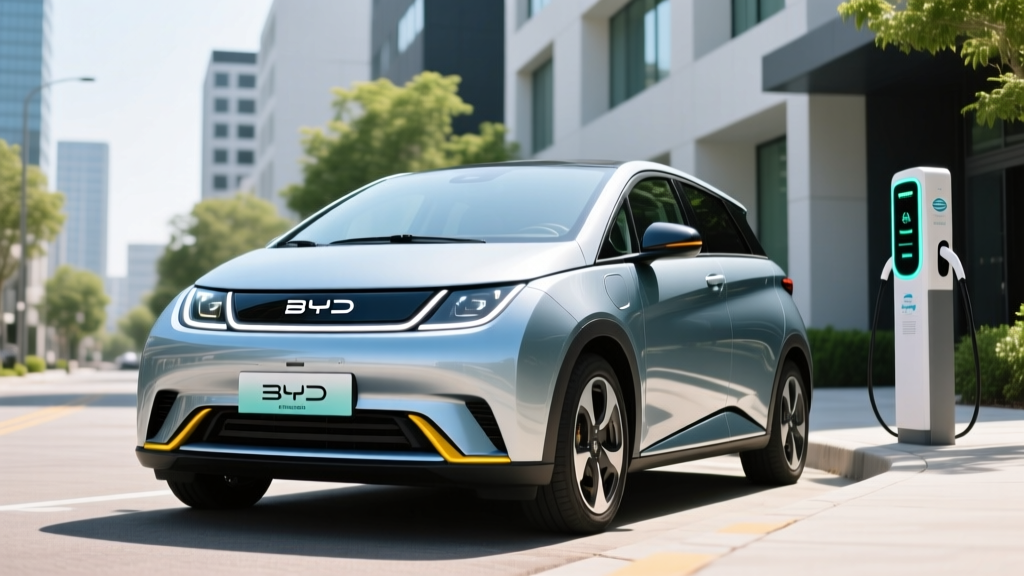
The BYD Seagull (sometimes called the BYD Dolphin Mini in select export markets) is a battery-electric five-door hatchback that debuted in China in April 2023. It immediately became one of the best-selling EVs in the world by unit volume, thanks to a price point that undercuts virtually every other four-seat electric car on the planet.
For context, the Seagull starts at roughly ¥69,800 (~$9,600 USD at early-2026 exchange rates) for the base Vitality trim and tops out around ¥85,800 (~$11,800) for the Freedom trim with the larger battery. A higher-spec Flying trim pushes closer to ¥100,000 (~$13,700). These prices are for the Chinese domestic market; export pricing in Latin America and Southeast Asia typically adds 40–70% due to shipping, homologation, and local taxes.
The Seagull matters because it demonstrates that a profitable, mass-market EV with 200+ miles of real-world range is technically achievable at a price point American buyers have long demanded. The question is whether geopolitical and tariff barriers will ever let it reach US shores.
Seagull EV Specs: Battery, Range, and Charging
| Specification | Vitality (Base) | Freedom (Mid) | Flying (Top) |
|---|---|---|---|
| Battery Capacity (usable) | 30.08 kWh | 38.88 kWh | 38.88 kWh |
| Battery Chemistry | LFP (Blade) | LFP (Blade) | LFP (Blade) |
| CLTC Range | 305 km (190 mi) | 405 km (252 mi) | 405 km (252 mi) |
| Est. EPA-Equivalent Range | ~150–160 mi | ~195–210 mi | ~195–210 mi |
| Motor Output | 55 kW (74 hp) | 55 kW (74 hp) | 55 kW (74 hp) |
| 0–50 km/h (est.) | ~4.9 sec | ~4.9 sec | ~4.9 sec |
| Top Speed | 130 km/h (81 mph) | 130 km/h (81 mph) | 130 km/h (81 mph) |
| DC Fast Charge (peak) | ~40 kW | ~40 kW | ~40 kW |
| 30–80% DC Charge Time | ~30 min | ~30 min | ~30 min |
| AC Level 2 Charge | ~6.6 kW | ~6.6 kW | ~6.6 kW |
| Length × Width × Height | 3,780 × 1,715 × 1,540 mm | ||
| Wheelbase | 2,500 mm | ||
| Curb Weight (est.) | ~1,160 kg | ~1,210 kg | ~1,210 kg |
Range reality check: The Seagull's CLTC ratings of 190 and 252 miles are measured under China's lighter-duty cycle, which tends to overstate range by 15–25% compared to the US EPA cycle. Expect a real-world EPA-equivalent range of roughly 150–160 miles for the base battery and 195–210 miles for the larger pack. In cold weather (below 32°F), LFP chemistry combined with the Seagull's modest thermal management means you should budget for 20–35% range loss, bringing the larger-battery model down to approximately 130–165 miles in winter conditions.
The Seagull uses BYD's proprietary Blade Battery, an LFP (lithium iron phosphate) cell in a cell-to-pack configuration. LFP chemistry offers several advantages here: it tolerates repeated 100% charging without accelerated degradation, has a longer cycle life (typically 3,000+ cycles before significant capacity loss), and is inherently more thermally stable than NMC. The trade-off is lower energy density — which is why the Seagull's 38.88 kWh pack is physically large for its capacity — and reduced performance in extreme cold compared to NMC cells.
DC fast charging tops out at roughly 40 kW, which is modest by 2026 standards. At a public DC charger, you'll add about 80–100 miles of range in 30 minutes. The charge curve tapers significantly above 80% SoC, as is typical for LFP packs. For daily driving, Level 2 AC charging at 6.6 kW will replenish the larger battery from empty to full in about 6 hours — easily achievable overnight on a home charger.
Will the BYD Seagull Come to the United States?
As of early 2026, the answer is effectively no — at least not in any form that would be price-competitive. Here's the tariff landscape blocking it:
- Section 301 tariffs: In May 2024, the US raised tariffs on Chinese-built EVs from 25% to 100%, effective August 2024. These tariffs remain in place in 2026.
- Additional duties: Chinese EVs also face the standard 2.5% import duty, plus potential countervailing duties.
- IRA battery sourcing: The §30D federal tax credit requires that battery components and critical minerals not be sourced from a "foreign entity of concern" (FEOC), which includes Chinese companies. A BYD-built battery automatically disqualifies the vehicle from the $7,500 credit.
Even if BYD absorbed the 100% tariff, a $10,000 Seagull would become a $20,000+ vehicle before dealer fees, compliance modifications (US-spec lighting, airbags, OBD-II, FMVSS certification), and the cost of establishing a dealer and service network. That puts it in the same territory as a used Tesla Model 3 or a new Nissan Leaf — eliminating its core advantage.
BYD has explored building vehicles in Mexico or Brazil for export, but US policy has anticipated this: the USMCA rules of origin require 75% regional value content for tariff-free auto imports, and any Chinese-owned factory in Mexico would face intense political and regulatory scrutiny. BYD CEO Wang Chuanfu stated in 2024 that the company has "no plans" to enter the US passenger vehicle market under current conditions.
Seagull vs. US-Market Budget EVs: What Can You Actually Buy?
| Vehicle | Base MSRP | EPA Range | Battery (kWh) | DC Fast Charge | 0–60 mph |
|---|---|---|---|---|---|
| BYD Seagull (Freedom, China) | ~$11,800 (CN) | ~200 mi (est. EPA) | 38.88 (LFP) | ~40 kW | N/A (est. ~11 sec) |
| 2026 Nissan Leaf S | $28,140 | 149 mi | 40 (NMC) | 50 kW (CHAdeMO) | ~7.9 sec |
| 2026 Chevy Equinox EV LT | $33,000 | 315 mi | 85 (NMC) | 150 kW (NACS) | ~8.5 sec |
| 2026 Hyundai Kona Electric SE | $32,975 | 261 mi | 65.4 (NMC) | 100+ kW (NACS) | ~7.9 sec |
| 2026 Tesla Model 3 RWD | $38,990 | 272 mi | 60 (LFP) | 170 kW (NACS) | 5.8 sec |
The gap is stark. The Seagull costs roughly a third of the cheapest US-market EV, but it's also smaller, slower, and less equipped. It lacks features American buyers expect as standard: adaptive cruise control, a heat pump (in most trims), Apple CarPlay/Android Auto, and a robust dealer service network.
If you're cross-shopping by price alone, a used Tesla Model 3 or Chevrolet Bolt EV from the 2021–2023 model years (often $14,000–$18,000 on the used market) delivers more range, faster charging, and actual US service infrastructure — though you trade new-car warranty coverage.
Cost of Ownership: Seagull (Hypothetical) vs. Gas Subcompact
To understand why the Seagull generates so much excitement, consider what ownership would look like if it were available in the US. We'll model a hypothetical US-spec Seagull Freedom at $18,000 (post-tariff, pre-credit) against a similarly sized gas car like the 2026 Mitsubishi Mirage (MSRP ~$18,000, 39 MPG combined).
| Cost Factor (5 Years / 75,000 mi) | Seagull (Hypothetical US) | Gas Subcompact (39 MPG) |
|---|---|---|
| Purchase Price | $18,000 | $18,000 |
| Federal Tax Credit (§30D) | $0 (FEOC battery) | $0 |
| Fuel / Electricity | $2,250 (home L2, $0.15/kWh, 3.5 mi/kWh) | $6,250 ($3.25/gal, 39 MPG) |
| Maintenance | $600 (cabin filter, wipers, tires) | $3,200 (oil, filters, brakes, belts) |
| Insurance (avg.) | $6,500 (est.) | $5,800 |
| Estimated Depreciation | $9,000 (50%) | $7,500 (42%) |
| 5-Year Total Cost | $27,350 | $33,250 |
| Cost Per Mile | $0.36 | $0.44 |
Even without the federal tax credit, the Seagull's energy and maintenance savings would deliver roughly $5,900 in savings over five years. The gap widens further if you have access to cheap overnight electricity (under $0.10/kWh in many regions with time-of-use plans) or if gas prices rise above $3.50/gallon.
However, insurance is the wildcard. EVs generally carry 15–25% higher premiums than equivalent gas cars due to repair costs and parts pricing. For a Chinese-market EV without an established US parts supply chain, insurers might price coverage even higher — or decline to write policies at all.
Real-World Ownership Considerations
Home Charging Access
The Seagull's modest 38.88 kWh battery is actually an advantage for home charging. A standard 120V outlet (Level 1) delivers roughly 1.4 kW, adding about 5 miles of range per hour — enough to fully recharge the Seagull overnight from a 50% state of charge. A Level 2 home charger (240V, 32A) at 6.6 kW refills the entire pack in under 6 hours. For comparison, a Chevy Equinox EV's 85 kWh battery needs 13+ hours on the same Level 2 circuit. Smaller battery = less home electrical infrastructure needed.
If you rent an apartment or lack off-street parking, the Seagull's range becomes a genuine constraint. At 150–210 real-world miles, you'd need to visit a public DC fast charger roughly once or twice a week for a 40-mile-per-day commute — and the Seagull's 40 kW peak charge rate means those sessions take 30–45 minutes each.
Cold Weather Performance
LFP batteries lose more capacity in freezing temperatures than NMC cells, and the Seagull's compact packaging limits the sophistication of its thermal management system. In testing of similar BYD LFP vehicles in sub-freezing conditions, range reductions of 25–40% have been documented. For the 210-mile Freedom trim, that means as little as 125–155 miles of usable range in winter. If you live in the northern US or Canada, this is a serious limitation for a vehicle that already has modest range.
Safety and Crash Testing
The Seagull has not been tested by the NHTSA or IIHS, and Chinese-market C-NCAP results (where available) use different protocols than US standards. The vehicle's small size and low curb weight (~2,650 lbs) put it at a physics disadvantage in collisions with larger vehicles — the same concern that applies to any subcompact car, gas or electric. BYD does include standard front and side airbags, stability control, and a tire-pressure monitoring system, but advanced driver-assistance features like automatic emergency braking and lane-keeping assist are limited to higher trims.
Common Misconceptions About the Seagull
| Myth | Fact |
|---|---|
| "The Seagull gets 250+ miles of range." | That's the CLTC rating for the larger battery. Expect ~195–210 miles EPA-equivalent, and ~130–165 in cold weather. |
| "I can import one myself from China." | US FMVSS compliance requires manufacturer certification. Individual grey-market imports of non-compliant vehicles are effectively prohibited for newer models. |
| "BYD will sell it here for $10,000." | 100% tariffs, compliance costs, shipping, and dealer markup would push the US price to $20,000+ minimum. |
| "LFP batteries don't degrade." | LFP degrades more slowly than NMC and tolerates 100% SoC better, but still loses ~5–10% capacity over 8–10 years of typical use. |
| "It qualifies for the $7,500 tax credit." | BYD is a Chinese FEOC. Its batteries and critical minerals are disqualified under §30D rules. No credit. |
Decision Framework: Should You Wait for the Seagull or Buy Now?
Choose a US-market budget EV now if:
- You need a vehicle within the next 6 months
- You want federal tax credit eligibility (up to $7,500 via §30D, subject to MSRP, income, and sourcing rules — see IRS §30D guidelines)
- You drive more than 200 miles regularly and need DC fast charging above 100 kW
- You want NHTSA crash-test ratings and a US dealer service network
- You live in a cold climate and need reliable winter range
Wait and watch the Seagull story if:
- You don't need a car urgently and want to see if BYD opens a non-China production path (e.g., a Mexico or Brazil plant with USMCA-compliant sourcing)
- You're interested in a second car for city commuting and short errands
- You're following BYD's global expansion and want to see how the Seagull performs in European or Latin American safety testing
Consider a used EV instead if:
- Your budget is under $20,000 and you need US availability today
- A 2021–2023 Chevrolet Bolt EV (from $14,000 used) or Tesla Model 3 (from $16,000 used) offers 220–260 miles of range, faster charging, and full US service infrastructure
- You qualify for the §25E used EV tax credit (up to $4,000, subject to income caps and vehicle price limits — details at IRS used EV credit page)
What the Seagull Teaches Us About the EV Market
The Seagull's existence at $10,000 in China proves that the primary barrier to affordable EVs is not battery cost or technology — it's policy, tariffs, and market structure. BYD's vertical integration (it manufactures its own batteries, semiconductors, and motors) allows margins that no Western automaker currently matches. BYD's Blade LFP cells cost an estimated $60–70 per kWh at the pack level in 2025, compared to $100–130 per kWh for most Western OEMs sourcing NMC from third-party suppliers.
For US buyers, the practical takeaway is that sub-$25,000 new EVs will arrive from companies that can manufacture within the USMCA zone or secure non-FEOC battery supply chains — not from direct Chinese imports. Vehicles like the next-generation Chevrolet Bolt, the Tesla Model 2 (if it materializes from a US or Mexico factory), and potential offerings from Hyundai/Kia's Georgia and Alabama plants are more realistic paths to the $20,000–$25,000 EV segment by 2027–2028.
Until then, the Seagull remains a fascinating benchmark — the car that proves what's possible, even if it can't cross the Pacific.
Frequently Asked Questions
What is the BYD Seagull's real-world range?
The larger 38.88 kWh battery model achieves a CLTC rating of 405 km (252 miles). In real-world driving on the EPA-equivalent cycle, expect approximately 195–210 miles in mild weather and 130–165 miles in freezing temperatures. The smaller 30.08 kWh model delivers roughly 150–160 miles in moderate conditions.
How fast does the BYD Seagull charge?
DC fast charging peaks at approximately 40 kW, achieving a 30–80% charge in roughly 30 minutes. Level 2 AC charging runs at 6.6 kW, fully replenishing the larger battery in about 6 hours. Level 1 (120V) charging at ~1.4 kW adds about 5 miles per hour.
Can I buy the BYD Seagull in the United States in 2026?
No. BYD has not announced US sales of the Seagull, and 100% Section 301 tariffs on Chinese-built EVs make importing economically unfeasible. Even with tariffs absorbed, compliance modifications and dealer network costs would push the price above $20,000.
Does the Seagull qualify for the US federal EV tax credit?
No. The §30D new clean vehicle credit requires battery components and critical minerals not sourced from Foreign Entities of Concern (FEOC). BYD is a Chinese company and is classified as a FEOC, making any vehicle with a BYD battery ineligible regardless of price or buyer income. See IRS guidance on §30D for current rules.
What battery chemistry does the Seagull use?
The Seagull uses BYD's Blade Battery, which is LFP (lithium iron phosphate) chemistry in a cell-to-pack configuration. LFP offers longer cycle life, better thermal stability, and tolerance for regular 100% charging, but has lower energy density and worse cold-weather performance than NMC chemistry.
What is the closest US-market alternative to the BYD Seagull?
The 2026 Nissan Leaf S ($28,140, 149 miles EPA) is the cheapest new EV in the US but offers less range. The 2026 Chevrolet Equinox EV LT ($33,000, 315 miles) is the best value-per-mile-of-range option. On the used market, a 2022–2023 Chevrolet Bolt EV ($14,000–$17,000) offers 259 miles of EPA range and may qualify for the $4,000 used EV tax credit.
Is the BYD Seagull safe?
The Seagull has not been crash-tested by NHTSA, IIHS, or Euro NCAP as of early 2026. It includes front and side airbags, stability control, and TPMS as standard. Higher trims add AEB and lane-keeping assist. Its subcompact size and ~2,650 lb curb weight put it at a disadvantage in collisions with larger vehicles.