Quick Verdict: The Ultra-Affordable EV America Can't (Easily) Buy
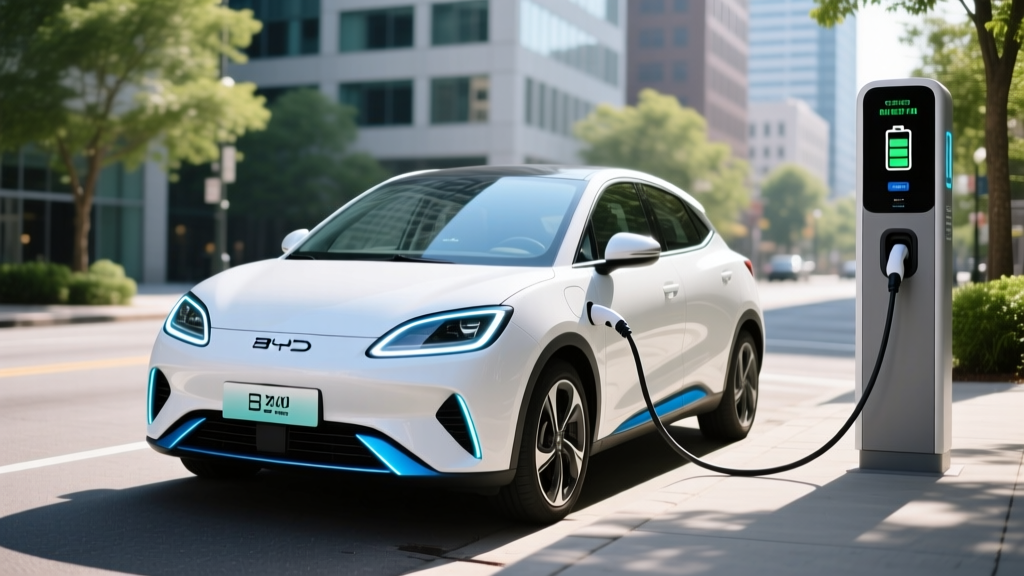
The BYD Seagull EV is the sub-$12,000 electric hatchback that has dominated Chinese and Latin American sales charts since its 2023 debut. For 2026, it remains one of the most compelling budget EVs globally — a 4-seat city hatch with up to 252 miles of CLTC range, a durable LFP Blade Battery, and DC fast-charging capability rare at this price point. But for U.S. buyers, the Seagull is more of a thought experiment than a showroom reality: 100% tariffs on Chinese-built EVs, plus the absence of BYD's U.S. passenger-car network, keep it off American roads. Here's the full technical breakdown — and what it means if you're watching the budget-EV space or shopping in a market where the Seagull is sold.
| Spec | Vitality Edition (Base) | Flying Edition (Top) |
|---|---|---|
| EPA-est. range | Not rated (no U.S. sale) | Not rated (no U.S. sale) |
| CLTC range | ~189 mi (305 km) | ~252 mi (405 km) |
| Battery (usable) | 30.08 kWh LFP | 38.88 kWh LFP |
| Motor / Drivetrain | 75 hp / FWD | 75 hp / FWD |
| 0–62 mph (0–100 km/h) | ~11.0 sec | ~11.0 sec |
| Top speed | 81 mph (130 km/h) | 81 mph (130 km/h) |
| DC fast charge (peak) | 30 kW | 40 kW |
| 30–80% DC time | ~30 min | ~30 min |
| AC Level 2 charge | ~6.6 kW | ~6.6 kW |
| Length / Wheelbase | 146.3 in / 96.5 in (3,715 / 2,450 mm) | |
| Cargo (rear seats up) | ~8.3 cu ft (234 L) | |
| Base MSRP (China) | ~¥69,800 (~$9,600 USD) | ~¥85,800 (~$11,800 USD) |
| U.S. landed price (est.) | Not sold; tariff-adjusted >$25,000 hypothetical | |
| U.S. §30D tax credit | Not eligible (Chinese assembly, no U.S. sale) | |
| Battery warranty (China) | 8 yr / 150,000 km (first owner, 8-yr unlimited on Blade pack) | |
Range and Efficiency: CLTC Sticker vs. Real-World Reality
The Seagull uses BYD's e-Platform 3.0 with a lithium iron phosphate (LFP) Blade Battery in two capacities: 30.08 kWh on the base Vitality Edition and 38.88 kWh on the higher trims. BYD quotes CLTC range of 305 km (189 mi) and 405 km (252 mi), respectively. CLTC is China's optimistic test cycle; the equivalent WLTP figure is typically 15–20% lower, and the U.S. EPA cycle tends to be another 5–10% below WLTP.
Real-world range expectation: Translating CLTC to a U.S.-style EPA estimate, expect roughly 165–175 miles for the 30 kWh pack and 210–220 miles for the 38.9 kWh pack under mixed city/highway driving at 65–75°F. On sustained 70 mph highway runs, subtract ~10–15%. In freezing weather (below 32°F), LFP packs typically lose 20–30% of range due to cabin heating and chemistry limits — putting the small-battery Seagull near 115–130 miles real-world in winter city driving. The Seagull lacks a heat pump on base trims, which amplifies cold-weather losses.
Efficiency works out to roughly 120–135 MPGe combined (about 25–28 kWh/100 mi) in mild conditions — competitive with the Nissan LEAF and Chevrolet Bolt EV, and impressive given the vehicle's sub-2,600 lb curb weight.
Charging: DC Fast and Home Level 2 Speeds
Charging is the Seagull's weakest spec by U.S. standards, but adequate for a city runabout. The Blade Battery's LFP chemistry favors longevity and safety over peak charge rate. DC fast charging tops out at 30 kW on the base model and 40 kW on the Flying Edition via a GB/T connector in China (CCS2 in export markets). BYD quotes a 30–80% DC time of about 30 minutes.
| Level | Power | Time / Miles Added | Notes |
|---|---|---|---|
| Level 1 (120V AC) | ~1.4 kW | ~5 mi/hr; 0–100% in ~24–28 hr | Emergency/trickle only |
| Level 2 (240V AC) | ~6.6 kW | ~24 mi/hr; 0–100% in ~5–6 hr | Overnight home charging |
| DC Fast (Vitality) | 30 kW peak | 30–80% in ~30 min | Plateaus above ~80% SoC |
| DC Fast (Flying) | 40 kW peak | 30–80% in ~30 min | Sustained curve better than base |
Peak kW is not sustained kW: expect the 40 kW rate only between roughly 10–50% state of charge, tapering to ~20 kW above 70%. For a small pack, 30-minute highway top-ups are workable, but this is not a road-trip EV — plan one DC stop per 120–150 miles on longer journeys.
Performance and Driving Dynamics
Every Seagull uses a single front-mounted permanent-magnet motor producing 75 hp (55 kW) and 100 lb-ft of torque, driving the front wheels. 0–62 mph takes roughly 11 seconds; 0–60 mph lands around 10.5 seconds. Top speed is electronically limited to 81 mph. These are city-car numbers, not highway-cruiser ones — the Seagull feels lively below 45 mph thanks to instant electric torque, but merging onto a 70 mph freeway demands planning.
Ride quality is tuned softly for urban potholes, and the short 96.5-inch wheelbase means a choppy feel over highway expansion joints. Steering is light and numb, appropriate for parking but not engaging. Regen braking is adjustable but doesn't enable true one-pedal driving at its strongest setting. NVH (noise/vibration/harshness) is acceptable around town but wind and tire noise become prominent above 55 mph.
Interior, Tech, and Cargo
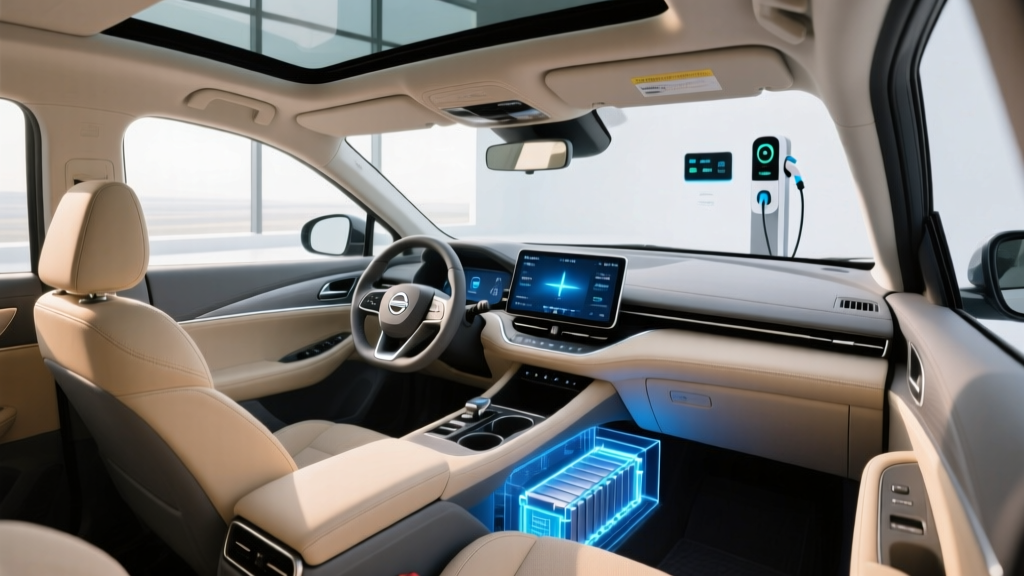
Inside, the Seagull punches above its price class. A 10.1-inch rotating touchscreen (BYD's signature DiLink infotainment) anchors the dash, with Apple CarPlay/Android Auto on export trims. A digital driver display, wireless phone charging pad, and NFC key-card start are available on mid and upper trims. Materials are hard plastics throughout, but fit and finish are tight.
Seating fits four adults, though rear legroom (~33 inches) is tight for passengers over 6 feet. Cargo volume is 8.3 cu ft (234 L) behind the rear seats — enough for a week of groceries but not luggage for a family trip. Folding the 60/40 rear seat opens up roughly 25 cu ft. There's no frunk (the motor and power electronics fill the nose).
Driver assists are basic: AEB (automatic emergency braking), lane-keep assist, and rear cross-traffic alert on upper trims. This is SAE Level 1 assistance — no adaptive cruise, no hands-off highway driving. BYD does not offer anything approaching Level 2 autonomy on the Seagull.
Pricing, Trims, and U.S. Tax-Credit Reality
In China, the 2026 Seagull starts at approximately ¥69,800 (~$9,600 USD) for the Vitality Edition and tops out near ¥85,800 (~$11,800) for the Flying Edition. In Latin American export markets (Mexico, Brazil, Colombia), landed pricing typically ranges $15,000–$22,000 USD depending on local tariffs and shipping.
For U.S. buyers, the math is a non-starter under current trade policy. The 100% tariff on Chinese-assembled EVs (raised in 2024 and maintained through 2026) would push a hypothetical U.S.-spec Seagull above $25,000 before dealer markup, compliance modifications, and the cost of building a U.S. service and parts network. BYD has not announced any U.S. passenger-vehicle entry, and CEO Wang Chuanfu has publicly stated the company is focusing on markets where it can compete without tariff headwinds.
| §30D Requirement | Rule (2026) | Seagull Status |
|---|---|---|
| Final assembly | Must be in North America | ❌ Assembled in Xi'an, China |
| MSRP cap | ≤$55,000 (sedans/hatchbacks) | ✅ Would pass |
| Buyer AGI cap | ≤$150k single / $300k joint | — N/A |
| Battery critical minerals | % from U.S./FTA partners, rising yearly | ❌ BYD supply chain China-sourced |
| Battery components | No FEOC (Chinese-entity) content | ❌ BYD is a FEOC |
| Result | Not eligible for any portion of the $7,500 credit | |
Per IRS §30D guidance, the Seagull fails multiple prongs — assembly location, battery-component sourcing, and Foreign Entity of Concern (FEOC) rules that disqualify Chinese-manufactured battery content entirely. Even if BYD built a U.S. plant, the battery-sourcing rules would be a significant hurdle.
Pros and Cons
Pros
- Best-in-class global pricing — under $12k in China
- LFP Blade Battery: excellent cycle life, thermal stability, no cobalt
- Surprisingly modern tech: 10.1" rotating screen, NFC key, OTA updates
- Tight 32-foot turning circle — ideal for urban parking
- Low operating cost: ~$0.04–0.06/mile on U.S. residential electricity
Cons
- Not available in the U.S. — 100% tariff + no dealer network
- Modest 30–40 kW DC charge rate; long road-trip stops
- Real-world range likely ~165–220 mi depending on pack and weather
- Limited ADAS — no adaptive cruise, no Level 2 highway assist
- Small cargo area (8.3 cu ft) and tight rear seat
- No heat pump on base trims; steep cold-weather range loss
Who the BYD Seagull EV Suits — and Who Should Look Elsewhere
Best for: Urban commuters in markets where it's sold (China, Southeast Asia, Latin America, parts of Europe) who need a second car or short-distance daily driver with rock-bottom running costs. Its LFP pack is rated for 3,000+ cycles, meaning 300,000+ miles of battery life before meaningful degradation — a genuine ownership advantage over NMC packs in this segment.
Not for: U.S. buyers (unavailable and tariff-barred), highway-heavy commuters, families needing cargo space, or anyone in a cold climate without access to Level 2 home charging. Americans seeking a similar value proposition should look at the used Chevrolet Bolt EV (eligible for the $4,000 used-EV credit under §25E), the base Nissan LEAF S, or wait for the next generation of affordable U.S.-assembled sub-$30k EVs from GM, Hyundai, and Stellantis.
BYD Seagull EV FAQ
What is the real-world range of the BYD Seagull EV?
Expect roughly 165–175 miles from the 30 kWh pack and 210–220 miles from the 38.9 kWh pack in mild weather, mixed driving. Highway and cold-weather figures drop 15–30% depending on conditions. BYD's CLTC sticker numbers (189 and 252 mi) are optimistic.
How fast does the BYD Seagull charge?
DC fast charging peaks at 30–40 kW, with a 30–80% session taking about 30 minutes. Home Level 2 charging runs at ~6.6 kW, replenishing the larger pack in 5–6 hours — fine for overnight use.
Does the BYD Seagull qualify for the U.S. federal EV tax credit?
No. The Seagull is assembled in China, uses a Chinese-sourced LFP battery, and BYD is classified as a Foreign Entity of Concern under §30D rules. It fails multiple eligibility requirements per IRS guidance.
Is the BYD Seagull worth buying vs. competitors?
In markets where it's sold, yes — it undercuts rivals like the Wuling Bingo and Ora Funky Cat on price while offering better battery durability (LFP Blade). For U.S. buyers, it's moot: consider a used Bolt EV, Nissan LEAF, or upcoming U.S.-built budget EVs instead.
Can I import a BYD Seagull to the U.S. myself?
Practically, no. Federal importation requires EPA and NHTSA compliance, which the Seagull lacks for the U.S. market. The 100% tariff on Chinese EVs also applies, and registering a non-homologated vehicle is prohibitively expensive for a sub-$12k car.
How long will the BYD Blade Battery last?
LFP chemistry is rated for 3,000+ full charge cycles to 80% state of health. At the Seagull's ~200-mile real-world range, that translates to well over 300,000 miles before significant degradation — typically outlasting the vehicle itself. BYD warranties the pack for 8 years in most markets.
Sources: BYD global specifications, fueleconomy.gov for EPA-cycle comparison methodology, IRS §30D clean-vehicle credit rules.