Quick Answer: Can You Buy the BYD Seagull Electric Vehicle in the U.S.?
No — as of 2026, the BYD Seagull electric vehicle is not sold in the United States. BYD has not established a U.S. passenger-vehicle sales network, and a 100% tariff on Chinese-made EVs (raised from 25% in mid-2024 under USTR Section 301 actions) effectively prices it out of the market even if imported. The Seagull remains available in China, Latin America, Southeast Asia, and select European markets. If you're a U.S. buyer researching affordable EVs, this guide breaks down what the Seagull offers abroad, how it compares to U.S.-available alternatives, and what your real options are in the sub-$30,000 electric segment.
What the BYD Seagull Electric Vehicle Actually Is
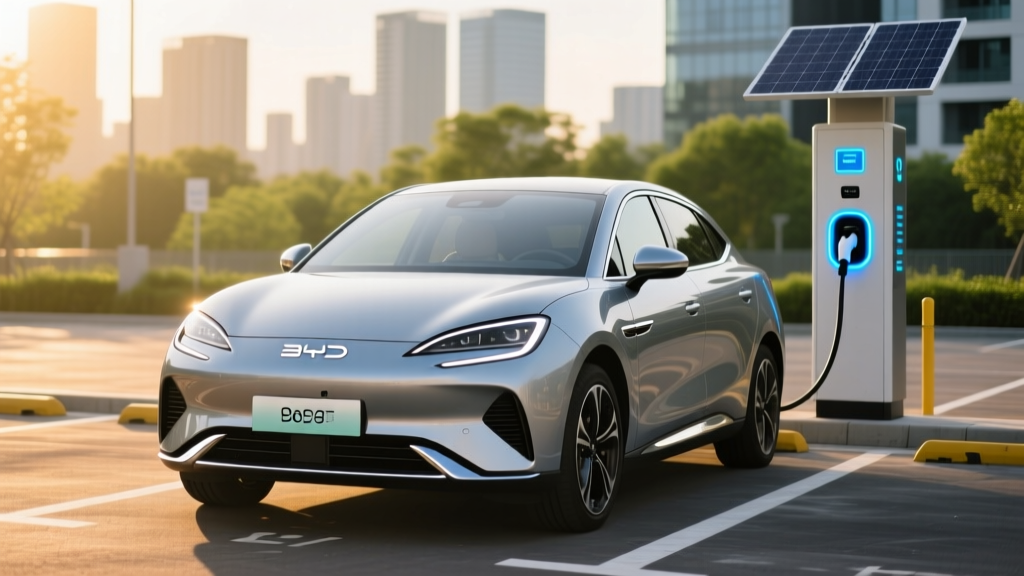
The BYD Seagull (sold as the BYD Dolphin Mini in some export markets) is a compact, five-door battery-electric hatchback built on BYD's e-Platform 3.0. It launched in China in April 2023 at a starting price of roughly ¥69,800 (about $9,700 USD at the time) and quickly became one of the world's best-selling EVs by volume. For the 2025–2026 model years, BYD has offered two battery configurations:
- 30.08 kWh LFP (Blade Battery) — CLTC range rated at 305 km (~190 miles CLTC)
- 38.88 kWh LFP (Blade Battery) — CLTC range rated at 405 km (~252 miles CLTC)
Both use BYD's proprietary lithium iron phosphate (LFP) Blade Battery, which trades some energy density for superior thermal stability and cycle life compared to NMC chemistries. The motor produces 55 kW (74 hp) and 135 Nm of torque, driving the front wheels. Top speed is electronically limited to 130 km/h (81 mph).
Key Specs at a Glance (2026 Model Year, Export Markets)
| Specification | 30 kWh Trim | 38.8 kWh Trim |
|---|---|---|
| Battery Chemistry | LFP (Blade) | LFP (Blade) |
| Usable Capacity | 30.08 kWh | 38.88 kWh |
| CLTC Range | 305 km / ~190 mi | 405 km / ~252 mi |
| Estimated EPA-Equivalent Range | ~145–160 mi | ~195–215 mi |
| Motor Output | 55 kW / 74 hp | 55 kW / 74 hp |
| DC Fast Charge (Peak) | ~40 kW | ~40 kW |
| 10–80% DC Charge Time | ~30 min (est.) | ~35 min (est.) |
| AC Level 2 Charge | 6.6 kW | 6.6 kW |
| 0–60 mph (est.) | ~11.0 sec | ~11.0 sec |
| Length / Wheelbase | 3,780 mm / 2,500 mm | |
| Curb Weight (est.) | ~1,160 kg | ~1,240 kg |
Important note on range figures: China's CLTC test cycle produces significantly more optimistic range numbers than the U.S. EPA cycle. Based on typical CLTC-to-EPA conversion ratios (roughly 0.75–0.80x), the 30 kWh Seagull would likely earn an EPA rating around 145–160 miles, while the 38.8 kWh version would land near 195–215 miles. Real-world highway driving at 70+ mph or cold-weather operation could shave another 15–30% off those figures.
Why the Seagull Isn't Coming to America (Yet)
Three structural barriers keep the BYD Seagull electric vehicle out of U.S. showrooms:
- 100% Tariff on Chinese-Made EVs: In May 2024, the Biden administration raised the Section 301 tariff on Chinese battery-electric vehicles from 25% to 100%, effective 2024. This tariff remains in place in 2026. A Seagull that costs BYD roughly $10,000–$12,000 to produce and ship would carry an additional $10,000–$12,000 in import duties before reaching a dealer lot — effectively doubling its price and destroying the value proposition.
- No U.S. Dealer or Service Network: BYD has not announced plans for a U.S. passenger-car dealership or service infrastructure. The company has stated publicly that it is evaluating markets but has prioritized Europe, Southeast Asia, and Latin America. Without a service network, selling a budget EV would create warranty and parts-support challenges.
- Federal Safety Compliance: Any vehicle sold in the U.S. must meet NHTSA's Federal Motor Vehicle Safety Standards (FMVSS), which differ substantially from Chinese GB standards and European ECE regulations. Adapting the Seagull's structure, airbags, lighting, and crash performance for FMVSS would require significant re-engineering — an investment hard to justify for a vehicle with razor-thin margins even before tariffs.
BYD executives have confirmed in multiple 2025 interviews that the U.S. passenger-vehicle market is "not a priority" under current trade conditions. This is unlikely to change before the next U.S. trade-policy review cycle.
How the Seagull Compares to U.S.-Available Affordable EVs
If the Seagull's appeal is rock-bottom pricing, U.S. buyers have limited but real alternatives in the affordable EV segment. Here's how it stacks up against models you can actually buy stateside in 2026:
| Spec | BYD Seagull (38.8 kWh) | 2026 Chevy Bolt EV | 2026 Nissan Leaf S | 2026 Hyundai Kona Electric SE |
|---|---|---|---|---|
| EPA Range | ~200 mi (est.) | 259 mi | 149 mi | 261 mi |
| Battery (kWh) | 38.88 LFP | 65 NMC | 40 NMC | 64.8 NMC |
| DC Fast Charge Peak | ~40 kW | 115 kW (CCS) | 50 kW (CHAdeMO) | 100+ kW (CCS) |
| 10–80% DC Time | ~35 min | ~30 min | ~40 min | ~43 min |
| Horsepower | 74 hp | 200 hp | 147 hp | 201 hp |
| U.S. MSRP (base) | N/A | ~$28,900 | ~$29,990 | ~$34,100 |
| Federal Tax Credit (§30D) | N/A | Up to $7,500* | Up to $7,500* | Up to $7,500* |
| After Max Credit | N/A | ~$21,400 | ~$22,490 | ~$26,600 |
* §30D credit eligibility depends on buyer income caps, vehicle MSRP caps, battery-critical-mineral sourcing, and point-of-sale transfer rules. Verify current eligibility at IRS.gov. Credit amounts and sourcing requirements are subject to change.
5-Year Ownership Cost Estimate: Bolt EV vs. Comparable Gas Hatchback
To ground the Seagull conversation in real U.S. buying decisions, here's how the closest domestic alternative — the 2026 Chevy Bolt EV — compares to a similarly priced gas hatchback (e.g., Honda Civic) over five years and 75,000 miles:
| Cost Category | 2026 Chevy Bolt EV (after $7,500 credit) | Gas Hatchback (~$24,000 MSRP) |
|---|---|---|
| Net Purchase Price | $21,400 | $24,000 |
| Fuel / Electricity (75k mi) | $2,625 (home charging, $0.14/kWh avg) | $7,500 (30 MPG avg, $3.00/gal) |
| Maintenance (5 yr) | ~$1,200 | ~$3,500 |
| Insurance (5 yr avg) | ~$9,500 | ~$8,200 |
| Estimated Depreciation | ~$8,500 | ~$9,600 |
| 5-Year Total | ~$43,225 | ~$52,800 |
| Cost Per Mile | $0.58 | $0.70 |
Assumptions: 15,000 mi/year, 80% home Level 2 charging at national avg residential rate (~$0.14/kWh per EIA data), gas at $3.00/gal national avg. Insurance is higher for EVs due to repair costs — get quotes before purchasing. Depreciation estimates based on historical EV resale trends. Your actual costs will vary by state, utility rate, and driving pattern.
Real-World Ownership Considerations for Budget EV Buyers
The Seagull's appeal is understandable: a sub-$15,000 EV with 200+ miles of range sounds like a category-defining product. But even if it were available in the U.S., several real-world factors would shape the ownership experience:
Home Charging Access
The Seagull's modest ~40 kW DC fast-charge peak means road-trip charging would be slow — roughly 35 minutes from 10–80% at best, with significant taper above 80%. This makes daily home charging essential. If you lack access to a garage, driveway, or workplace Level 2 charger, a small-battery EV with slow DC charging becomes a daily inconvenience. Budget EV buyers in apartments or street-parking situations should weigh this carefully before committing to any sub-45 kWh EV.
Cold-Weather Range Loss
LFP batteries — while excellent for longevity and safety — are more sensitive to cold temperatures than NMC chemistries. In sub-freezing conditions, expect 20–35% range reduction depending on cabin-heating demands. A Seagull rated at ~200 miles EPA-equivalent could deliver 130–160 real-world miles in a Midwest or Northeast winter. The Seagull does not appear to offer a heat pump in most trims, which exacerbates cold-weather losses compared to competitors that include one.
Highway Efficiency and Speed
With 74 hp and a top speed of 81 mph, the Seagull is optimized for urban and suburban driving. U.S. interstate travel at 70–80 mph would be both slow and range-punishing. If your commute involves freeway driving, the Bolt EV (200 hp), Kona Electric (201 hp), or even a used Tesla Model 3 would be substantially more capable.
Insurance Costs
EV insurance premiums in the U.S. run 15–25% higher than equivalent gas vehicles, driven by higher repair costs, specialized parts, and battery-replacement risk. A budget EV doesn't escape this dynamic. Always get insurance quotes before finalizing any EV purchase — the monthly premium difference can erase a significant portion of your fuel savings.
Common Misconceptions About the BYD Seagull
| Myth | Fact |
|---|---|
| "The Seagull gets 250 miles of range for under $10,000." | That's the CLTC figure for the larger battery, which is ~20–25% more optimistic than EPA. Real U.S. EPA-equivalent range would be closer to 195–215 miles, and the car isn't sold in the U.S. at any price. |
| "I can import one myself." | Importing a non-FMVSS-compliant vehicle for personal use is effectively prohibited. NHTSA allows very narrow exceptions (show/display, 25-year-old vehicles). A new Seagull does not qualify. |
| "BYD is coming to the U.S. soon." | BYD has explicitly deprioritized the U.S. passenger market under current tariff conditions. No timeline has been announced as of early 2026. |
| "LFP batteries are inferior." | LFP offers longer cycle life (3,000+ cycles vs. ~1,500–2,000 for NMC), better thermal stability, and no cobalt. The trade-off is lower energy density and worse cold-weather performance — but for daily commuting, LFP is often the better chemistry choice. |
| "A cheap EV means cheap build quality." | BYD's Seagull has received generally positive reviews in Chinese and European markets for interior quality relative to price. However, U.S. safety standards, crash-test expectations, and feature expectations (ADAS, infotainment) differ significantly. |
Decision Framework: What Should You Actually Buy?
If You Were Interested in the Seagull, Here's Your U.S. Path
Choose the Chevy Bolt EV if: You want the lowest net purchase price among U.S.-available EVs (as low as ~$21,400 after the federal credit), need 259 miles of EPA range, and primarily drive in urban/suburban settings. The Bolt's 115 kW CCS charging is adequate for occasional road trips, and its 8-year/100,000-mile battery warranty provides long-term peace of mind. Verify §30D eligibility at IRS.gov before purchasing.
Choose the Nissan Leaf if: You need the absolute lowest MSRP before incentives and primarily drive short urban routes. But be aware: the Leaf still uses the CHAdeMO connector, which is being phased out at most U.S. public charging networks in favor of NACS and CCS. Long-term charging access is a genuine concern.
Choose the Hyundai Kona Electric if: You want a more refined interior, stronger highway performance (201 hp), and competitive range (261 mi EPA) in a subcompact crossover form factor. It costs more upfront but offers better road-trip capability.
Consider a plug-in hybrid (PHEV) if: You lack reliable home charging access, frequently drive long distances, or live in a region with extreme cold. A PHEV like the Toyota Prius Prime (44 miles electric-only, 52 MPG combined on gas) eliminates range anxiety while still reducing fuel consumption. See fueleconomy.gov for side-by-side efficiency comparisons.
Wait for the Seagull only if: U.S. trade policy shifts dramatically (unlikely before 2028+), BYD establishes a U.S. presence, and the vehicle is re-engineered for FMVSS compliance. This is not a near-term scenario.
Federal Tax Credit: What Actually Applies to U.S. Budget EVs
The IRS §30D Clean Vehicle Credit can reduce the effective price of a qualifying new EV by up to $7,500 — and as of 2024, this credit can be transferred to the dealer at point of sale, reducing your out-of-pocket cost immediately rather than waiting for a tax refund. However, eligibility is not automatic. Key requirements for 2026 include:
- Buyer income caps: Modified AGI must not exceed $150,000 (single), $225,000 (head of household), or $300,000 (joint).
- Vehicle MSRP caps: $55,000 for sedans/hatchbacks; $80,000 for SUVs/pickups.
- Battery sourcing requirements: Increasingly strict percentages of critical minerals and battery components must be sourced from the U.S. or FTA-partner countries. Vehicles with battery components from a "foreign entity of concern" (including most Chinese manufacturers) are disqualified.
- North American final assembly: The vehicle must be assembled in North America to qualify.
Always confirm eligibility with your tax professional and check the latest requirements on IRS.gov before committing to a purchase. Rules have changed multiple times since 2023 and may shift again.
Frequently Asked Questions
Is the BYD Seagull available in the United States in 2026?
No. BYD does not sell passenger vehicles in the U.S., and a 100% tariff on Chinese-made EVs makes importing the Seagull economically unviable. There is no announced timeline for U.S. availability.
What is the real-world range of the BYD Seagull?
The larger 38.8 kWh battery variant is rated at 405 km (252 mi) under China's CLTC cycle. Converted to EPA-equivalent testing, expect roughly 195–215 miles in mild conditions, dropping to 130–160 miles in freezing weather or sustained highway driving.
How does the Seagull's LFP battery compare to NMC?
LFP (lithium iron phosphate) batteries offer longer cycle life, better thermal safety, and no cobalt dependency. They sacrifice energy density (heavier for the same kWh) and perform worse in cold weather. For a daily commuter charged at home, LFP is often the more durable choice.
What's the cheapest EV I can actually buy in the U.S. in 2026?
The 2026 Chevy Bolt EV starts around $28,900 and can drop to approximately $21,400 after the maximum $7,500 federal tax credit (if you and the vehicle qualify). It offers 259 miles of EPA range and remains the value leader among new U.S.-market EVs.
Can I import a BYD Seagull for personal use?
Effectively, no. NHTSA's import rules require FMVSS compliance for any vehicle less than 25 years old. The Seagull was not designed to meet U.S. crash, lighting, or safety standards, and no individual import exemption applies.
Should I wait for BYD to enter the U.S. market?
This is not advisable as a near-term strategy. BYD has deprioritized the U.S. under current trade conditions, and policy changes are unlikely before 2028 at the earliest. The U.S. affordable-EV market already offers competitive options with full warranty support, service networks, and tax-credit eligibility.