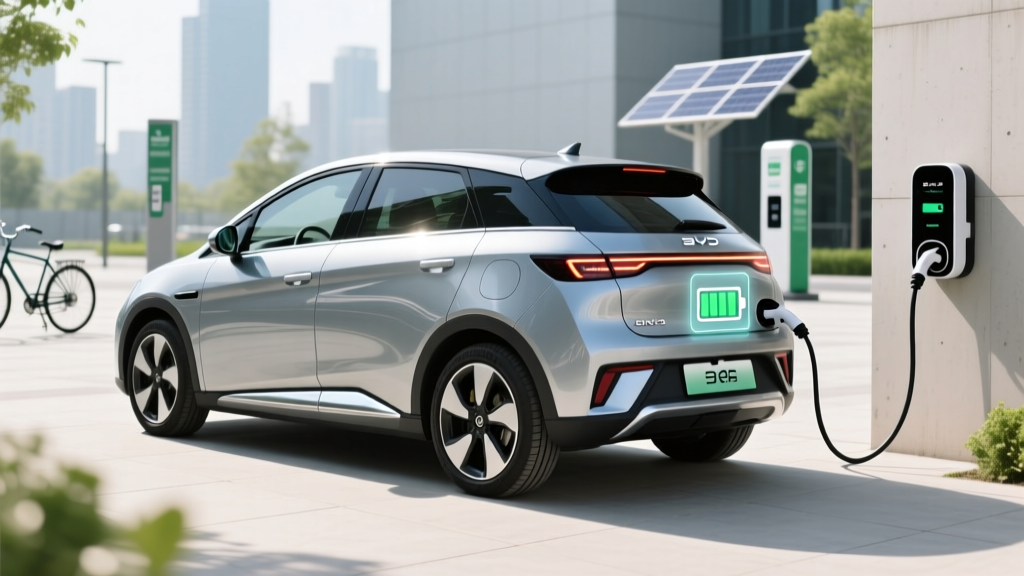
The BYD Seagull has generated enormous buzz as one of the cheapest electric cars in the world, with pricing in China starting under $10,000 USD. But for US buyers searching for the BYD Seagull electric car, the reality is more complicated: as of early 2026, BYD has not officially launched the Seagull in the United States, and steep tariffs on Chinese-made EVs make a near-term US debut unlikely. This profile covers the Seagull's global-market specs, real-world performance data from international reviews, and what it would take for this budget EV to reach American driveways.
BYD Seagull Specs at a Glance
| Spec | Value |
|---|---|
| EPA-Equivalent Range (CLTC/WLTP) | ~186 mi CLTC / ~155 mi WLTP |
| Battery Capacity | 30.08 kWh (Standard) / 38.88 kWh (Extended) — LFP Blade |
| Motor Output | 55 kW (74 hp) / 103 lb-ft torque |
| 0-60 mph (est.) | ~11.0 seconds |
| Drivetrain | FWD (single motor) |
| DC Fast Charge (peak) | 40 kW (30-80% in ~30 min) |
| Level 2 AC Charge | 6.6 kW (~7-8 hours 0-100%) |
| Efficiency (WLTP) | ~3.8 mi/kWh (~26 kWh/100mi) |
| Cargo Volume | ~8.1 cu ft (seats up) / ~28 cu ft (seats folded) |
| Length / Wheelbase | 147.2 in / 96.5 in |
| Global MSRP (China) | ~¥69,800–¥85,800 (~$9,600–$11,800 USD) |
| US MSRP | Not available — no US launch announced |
| Warranty (Global) | 6 yr / 93,000 mi vehicle; 8 yr / 99,000 mi battery |
Range and Efficiency: Real-World Expectations
BYD's Blade battery uses lithium iron phosphate (LFP) chemistry, which trades energy density for longevity and thermal stability. LFP cells tolerate frequent 100% charging better than NMC batteries, so owners can safely top off daily without accelerating degradation — a practical advantage for a city commuter.
Efficiency hovers around 26 kWh per 100 miles (WLTP). That's respectable for a subcompact but not class-leading; the Chevy Bolt EV achieves roughly 28 kWh/100mi with more interior space. The Seagull's light curb weight (~2,600 lbs) helps offset its modest powertrain efficiency.
Charging Speed: DC Fast and Home Level 2
| Level | Power | Time / Rate |
|---|---|---|
| Level 1 (120V AC) | ~1.4 kW | ~28-35 hours (0-100%) |
| Level 2 (240V AC) | 6.6 kW | ~6-7 hours (0-100%) |
| DC Fast Charge | 40 kW peak | 30-80% in ~30 minutes |
The Seagull's 40 kW peak DC charge rate is the most significant limitation for US buyers accustomed to 150-250 kW chargers. At 40 kW, a 30-80% session takes roughly 30 minutes — acceptable for planned stops but frustrating on longer trips. The small battery also means the charge curve tapers sharply above 80%, so the final 20% can add another 25-30 minutes.
For home charging, the 6.6 kW onboard charger is adequate. A full recharge from empty takes 6-7 hours on a Level 2 station, which most owners will do overnight. Note that the Seagull uses the GB/T connector in China; a US version would need CCS or NACS compatibility, adding engineering complexity to any future launch.
Performance and Driving Dynamics
The Seagull's single front-mounted motor produces 55 kW (74 horsepower) and 103 lb-ft of torque. That's enough for city driving but results in a leisurely 0-60 mph time of approximately 11 seconds. Highway merging requires planning, and the Seagull feels strained above 70 mph — a trade-off for its budget price.
Ride quality is surprisingly compliant for a subcompact, with soft damping that absorbs urban potholes well. Steering is light and vague, typical of the segment. Regenerative braking offers two levels but lacks true one-pedal driving; you'll still use the friction brakes regularly in stop-and-go traffic.
ADAS features are minimal compared to US-market EVs. The Seagull offers basic forward collision warning and automatic emergency braking, but no adaptive cruise control, lane-centering, or semi-autonomous features. This is a Level 0/1 vehicle in SAE terms — no hands-off or eyes-off capability.
Interior, Cargo, and Technology
The Seagull is a four-seat subcompact hatchback measuring 147.2 inches long — about 20 inches shorter than a Chevy Bolt. Interior materials are hard plastics throughout, though fit and finish are decent for the price. Front seats are reasonably comfortable; rear legroom is tight at roughly 30 inches, suitable for children or short trips.
Cargo space is limited to 8.1 cubic feet behind the rear seats and about 28 cubic feet with the 60/40 split folded. That's enough for groceries or a weekend bag, but not family-hauler territory. There's no frunk (front trunk).
The infotainment system centers on a 10.1-inch rotating touchscreen (a BYD signature) with wireless Apple CarPlay and Android Auto. The digital instrument cluster is small but legible. Climate controls are integrated into the touchscreen, which some drivers find distracting. No over-the-air updates are available on global-market models.
Pricing and US Availability Reality
| Market | Price (USD equiv.) | Notes |
|---|---|---|
| China (base) | ~$9,600 | Standard range, 30 kWh |
| China (extended) | ~$11,800 | 38.88 kWh, more features |
| Latin America (Mexico) | ~$18,000–$22,000 | With shipping/tariffs |
| Europe (if launched) | ~$22,000–$26,000 (est.) | Projected, with EU tariffs |
| United States | Not available | No launch announced; 100%+ tariffs likely |
In China, the Seagull starts at roughly $9,600 — a price point that seems impossible in the US. But even if BYD brought the Seagull stateside, several factors would inflate the price:
- Section 301 tariffs: The US currently imposes 100% tariffs on Chinese-made EVs (raised from 25% in 2024), effectively doubling the import cost.
- Compliance costs: Federal crash testing (NHTSA), emissions certification, and ADAS requirements would require engineering changes.
- Dealer/service network: BYD has no US retail presence for passenger vehicles.
Realistically, a US-spec Seagull would likely start around $25,000-$30,000 — still affordable, but no longer the bargain headline it appears to be. At that price, it would compete with the Chevy Bolt EV, Nissan Leaf, and used Tesla Model 3s.
Federal Tax Credit Eligibility (§30D)
If the Seagull were sold in the US, it would almost certainly not qualify for the $7,500 federal EV tax credit. The credit requires:
- Final assembly in North America
- Battery components and critical minerals sourced from US or FTA partners (not China)
- MSRP under $55,000 (cars) or $80,000 (SUVs/trucks)
- Buyer income under $150,000 (single) / $300,000 (joint)
BYD's battery and supply chain are predominantly China-based, failing the sourcing requirements. The Seagull would be ineligible regardless of price or income.
Pros, Cons, and Who Should Consider It
- Extremely low purchase price in China/LATAM
- LFP Blade battery offers excellent longevity and safety
- Compact size ideal for dense urban parking
- Rotating touchscreen is a nice tech touch
- Low operating costs for city commuting
- Not available in the US; no launch planned
- Slow 40 kW DC charging limits road-trip practicality
- Modest 74 hp struggles on highways
- Tight rear seat and cargo space
- No advanced driver assists (Level 0/1 only)
- Would not qualify for US federal tax credit
Who it suits (in markets where available): Urban commuters with short daily drives (under 60 miles), access to home charging, and a second vehicle for longer trips. The Seagull excels as a low-cost city runabout but lacks the range, charging speed, and highway refinement for primary-vehicle duty.
US buyers should consider: The Chevy Bolt EV (~$26,500, 259-mile range, eligible for used-EV credit), Nissan Leaf (~$28,000, 149-212 mile range), or a certified pre-owned Tesla Model 3. These offer better range, faster charging, full US support, and potential tax-credit eligibility.
FAQ: BYD Seagull Electric Car
Is the BYD Seagull available in the United States?
No. As of early 2026, BYD has not announced US sales of the Seagull. The 100% tariff on Chinese-made EVs makes a near-term launch economically unviable.
What is the real-world range of the BYD Seagull?
Expect 130-150 miles in mixed driving with the 38.88 kWh battery. Highway-only or cold-weather driving can reduce range to 100-120 miles. The 186-mile CLTC figure is optimistic.
How fast does the BYD Seagull charge?
DC fast charging peaks at 40 kW, taking about 30 minutes for a 30-80% charge. Home Level 2 charging (6.6 kW) takes 6-7 hours for a full charge.
Would the BYD Seagull qualify for the US federal EV tax credit?
No. The Seagull's China-based battery and supply chain fail the §30D critical-mineral and component-sourcing requirements, regardless of price or buyer income.
Is the BYD Seagull worth waiting for?
For US buyers, no. There's no indication of a US launch, and even if it arrived, tariffs and compliance costs would push the price to $25,000-$30,000 — where the Chevy Bolt EV and Nissan Leaf already compete with better range and charging.
What battery chemistry does the BYD Seagull use?
The Seagull uses BYD's proprietary LFP (lithium iron phosphate) Blade battery, which offers excellent thermal stability, long cycle life, and tolerance for frequent 100% charging.