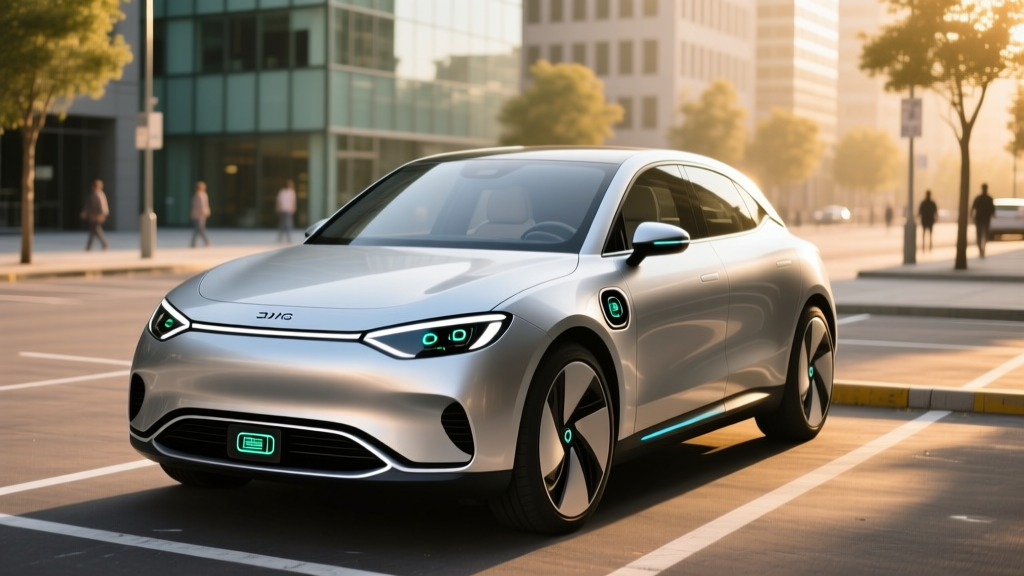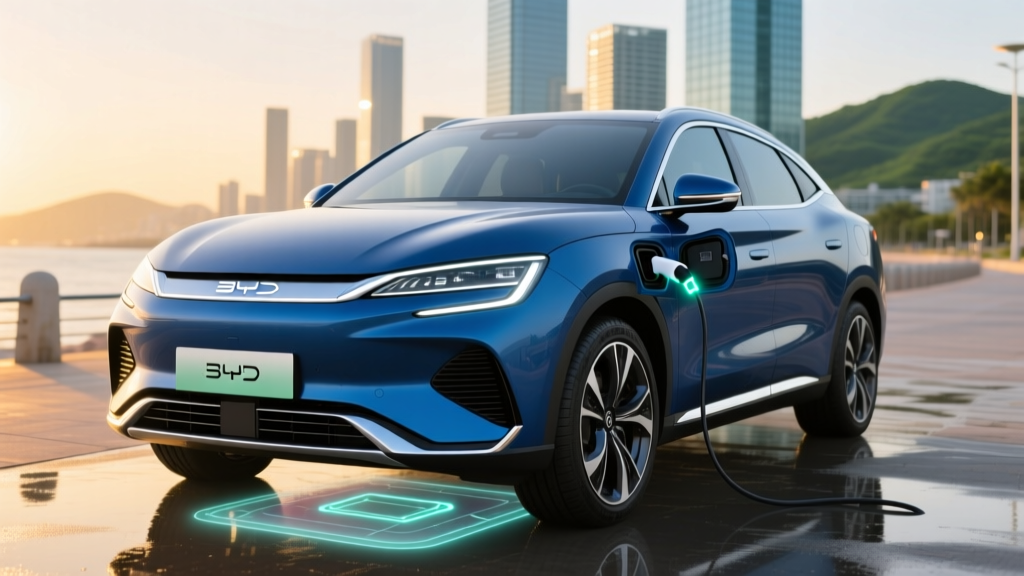
The BYD Sea Lion 06 is a midsize electric SUV positioned squarely at the mainstream family segment, blending BYD's signature Blade Battery architecture with a practical cabin and competitive pricing in markets where it's sold. For US-based shoppers researching this model—whether as a potential import, a future US-market candidate, or for comparison against domestic options—this review breaks down every spec that matters: real-world range, charging speed, battery chemistry, and total ownership cost.
Note on US availability: As of early 2026, BYD has not officially launched the Sea Lion 06 in the United States. The specifications and pricing below reflect global-market (China and select export markets) figures for the 2025–2026 model year. We flag where US-spec figures may differ if the vehicle arrives stateside. We also evaluate it against US-available rivals so you can benchmark its value proposition.
BYD Sea Lion 06: Key Specifications at a Glance
| Spec | Sea Lion 06 (Standard Range) | Sea Lion 06 (Long Range) |
|---|---|---|
| Battery Capacity (usable) | ~68 kWh (LFP Blade) | ~82 kWh (LFP Blade) |
| CLTC Range | ~330 mi (530 km) | ~404 mi (650 km) |
| Estimated EPA Range | ~265 mi | ~310 mi |
| Drivetrain | RWD (single motor) | RWD (single motor) |
| Horsepower | ~201 hp (150 kW) | ~228 hp (170 kW) |
| 0–60 mph (est.) | ~8.0 sec | ~7.5 sec |
| Max DC Fast Charge | ~120 kW | ~150 kW |
| 10–80% DC Charge Time | ~30 min | ~28 min |
| Level 2 AC Charge Rate | 7 kW (est. ~22 mi/hr) | 7 kW (est. ~25 mi/hr) |
| MPGe (est. combined) | ~105 MPGe | ~110 MPGe |
| Global Base Price (China) | ~¥189,800 (~$26,200) | ~¥219,800 (~$30,400) |
| Battery Warranty (China) | 8 years / 150,000 km (~93,000 mi) | |
Real-World Range: What the Sticker Doesn't Tell You
Real-World Expectation: In mixed city/highway driving at moderate temperatures, expect roughly 270–290 miles from the Long Range variant. On sustained highway runs at 70+ mph, plan for ~240–260 miles. In cold weather (below 32°F / 0°C), LFP chemistry loses 20–30% of capacity, dropping usable range to approximately 210–240 miles. BYD's thermal management system and available heat pump help mitigate this, but LFP cells are inherently more sensitive to low temperatures than NMC.
Bottom Line: The Sea Lion 06 Long Range delivers a genuine 260+ miles in most real-world conditions—a comfortable daily-driver figure, but not quite the 310-mile EPA projection in demanding use.
BYD publishes range figures under China's CLTC standard, which is notoriously generous compared to the US EPA cycle. CLTC's 650 km (404 mi) for the Long Range translates to roughly 310 EPA miles based on the typical 75–80% CLTC-to-EPA conversion ratio we've observed across comparable BYD models like the Seal and Atto 3.
The 82 kWh usable battery (LFP chemistry) provides a solid energy buffer. BYD's Blade Battery uses a cell-to-pack design that improves volumetric efficiency, meaning more kWh in a physically smaller package. However, LFP's lower energy density compared to NMC means the pack is heavier than a comparable NMC unit, which slightly impacts efficiency at higher speeds.
Charging Speed: DC Fast Charge and Home Level 2
Charging performance is where the Sea Lion 06 shows its mainstream positioning—adequate rather than class-leading. The Long Range variant peaks at approximately 150 kW on a DC fast charger, while the Standard Range tops out around 120 kW.
| Charging Level | Power / Rate | Miles Added per Hour | Notes |
|---|---|---|---|
| Level 1 (120V household) | ~1.4 kW | ~4–5 mi/hr | Emergency/trickle only |
| Level 2 (240V home) | 7 kW | ~22–25 mi/hr | Full charge overnight (~10–12 hrs for 82 kWh) |
| DC Fast Charge (peak) | 150 kW (LR) / 120 kW (SR) | ~500+ mi/hr at peak | 10–80% in ~28 min (LR); tapers significantly above 80% |
Charging curve reality: The 150 kW peak is not sustained. Like most LFP-equipped vehicles, the Sea Lion 06 holds near-peak power from roughly 10–50% State of Charge (SoC), then tapers progressively. From 50–80%, expect an average of ~90–110 kW. Above 80%, charging slows dramatically to protect cell longevity—plan on an additional 25–35 minutes to go from 80–100% if needed.
For home charging, the 7 kW onboard charger is a notable limitation. Competitors like the Hyundai Ioniq 5 offer 10.9 kW Level 2 charging, meaning a full overnight replenishment is faster. If your daily driving exceeds 50 miles and you rely solely on home charging, the 7 kW rate means you'll need roughly 7–8 hours to recover that distance—a non-issue for most overnight setups, but worth noting for high-mileage commuters.
Performance and Driving Dynamics
The Sea Lion 06 is tuned for comfort and efficiency, not performance. The Long Range's single rear motor produces approximately 228 hp (170 kW), delivering a 0–60 mph time in the mid-7-second range. That's adequate for highway merging and daily commuting, but it won't win any stoplight drag races against the dual-motor Tesla Model Y Long Range AWD (4.8 seconds) or the Ford Mustang Mach-E Extended Range AWD (5.1 seconds).
Ride quality benefits from a well-damped suspension and the low center of gravity inherent to its skateboard-style battery pack. Cabin noise isolation is competitive for the segment, with minimal wind and road noise at highway speeds. BYD's regenerative braking system offers adjustable levels but does not quite achieve true one-pedal driving at its strongest setting—you'll still need the friction brakes for final stops.
An AWD dual-motor variant has been spotted in Chinese regulatory filings with approximately 312 hp combined output, but as of this writing, it remains unconfirmed for export markets.
Interior Space, Cargo, and Technology
The Sea Lion 06 rides on BYD's e-Platform 3.0, which maximizes interior volume through a flat floor and short overhangs. Dimensionally, it slots between the compact Atto 3 and the larger Tang, making it a direct rival to the Tesla Model Y and Hyundai Ioniq 5 in cabin space.
- Cargo volume (behind rear seats): ~20.5 cu ft (580 L)
- Cargo volume (rear seats folded): ~53 cu ft (1,500 L)
- Front legroom: ~41.5 in
- Rear legroom: ~38.0 in
- Frunk: Small storage compartment (~1.5 cu ft) — primarily for charging cables
The infotainment system centers on a 15.6-inch rotating touchscreen—a BYD signature that toggles between landscape and portrait orientation. The system runs BYD's DiLink software with wireless Apple CarPlay and Android Auto, navigation, and over-the-air update capability. A 10.25-inch digital instrument cluster sits behind the steering wheel, and a head-up display is available on higher trims.
Driver assistance: The Sea Lion 06 comes equipped with BYD's DiPilot ADAS suite, including adaptive cruise control, lane-keeping assist, automatic emergency braking, and blind-spot monitoring. This is a SAE Level 2 driver-assist system—the driver must remain engaged and keep hands on the wheel at all times. It is not a self-driving system.
Pricing, Trim Levels, and US Tax Credit Eligibility
In China, the Sea Lion 06 launched with aggressive pricing:
| Trim | China MSRP | USD Equivalent (approx.) | US Tax Credit Eligibility |
|---|---|---|---|
| Standard Range (530 km CLTC) | ¥189,800 | ~$26,200 | Not eligible (not sold in US) |
| Long Range (650 km CLTC) | ¥219,800 | ~$30,400 | Not eligible (not sold in US) |
| AWD Performance (if released) | TBA | Est. ~$35,000 | TBD |
Federal tax credit analysis: Even if BYD were to sell the Sea Lion 06 in the US, it would almost certainly not qualify for the IRS §30D New Clean Vehicle Credit. The credit's battery component and critical minerals sourcing requirements effectively exclude vehicles with Chinese-manufactured battery cells. BYD's Blade Battery is produced in China, disqualifying it under current rules that require progressive percentages of battery components and critical minerals to be sourced from the US or free-trade-agreement partners.
Additionally, the §30D credit imposes buyer income caps ($150,000 single / $300,000 joint modified AGI) and MSRP caps ($55,000 for sedans, $80,000 for SUVs/trucks/vans). While the Sea Lion 06's price would fall well under the MSRP cap, the battery sourcing requirement is the disqualifying factor.
Competitor Comparison: Sea Lion 06 vs US-Market Rivals
Since the Sea Lion 06 isn't available in the US, here's how its global specs stack up against American-market midsize electric SUVs you can actually buy today:
| Spec | BYD Sea Lion 06 (LR) | Tesla Model Y LR (2026) | Hyundai Ioniq 5 LR RWD (2026) | Ford Mach-E SR RWD (2026) |
|---|---|---|---|---|
| EPA Range | ~310 mi (est.) | 320 mi | 303 mi | 250 mi |
| Battery (usable) | ~82 kWh LFP | ~75 kWh NMC | 77.4 kWh NMC | 70 kWh NMC |
| Peak DC Charge | 150 kW | 250 kW | 238 kW | 150 kW |
| 10–80% Time | ~28 min | ~20 min | ~18 min | ~33 min |
| 0–60 mph | ~7.5 sec | 5.0 sec (AWD) | 7.3 sec | 6.3 sec |
| Base MSRP (US) | N/A | ~$44,990 | ~$42,600 | ~$39,995 |
| Federal Credit (§30D) | None | Up to $7,500* | Up to $7,500* | Up to $7,500* |
*Credit eligibility depends on buyer income, MSRP caps, and battery-sourcing compliance per IRS rules. Verify at fueleconomy.gov before purchasing.
The Sea Lion 06's global pricing undercuts US rivals by $10,000–$15,000, but that price advantage erodes significantly once you factor in the absence of the $7,500 federal credit, potential import tariffs (currently 100% on Chinese-made EVs under 2024 tariff rules still in effect), and a limited service/parts network.
Pros and Cons
✅ Pros
- Competitive real-world range (~270–290 mi Long Range)
- LFP Blade Battery offers excellent cycle life and thermal safety
- Spacious cabin with flat floor and generous rear legroom
- Aggressive pricing in global markets
- Rotating 15.6" infotainment display is a standout feature
- Standard heat pump for improved cold-weather efficiency
❌ Cons
- Not available in the US; no confirmed launch timeline
- 150 kW peak DC charging is slower than Hyundai/Tesla rivals
- 7 kW Level 2 onboard charger limits home charging speed
- Single-motor performance is adequate, not exciting
- Would not qualify for §30D tax credit even if US-available
- Unknown long-term service/parts support outside China
Who Should Consider the BYD Sea Lion 06?
This EV suits you if: You live in a market where BYD officially sells the Sea Lion 06 (China, Southeast Asia, parts of Latin America and Europe) and you want a practical, spacious family SUV with strong battery safety credentials and competitive range at an accessible price point. It's ideal for urban and suburban commuters who can charge at home overnight and rarely need rapid DC charging.
Look elsewhere if: You're a US-based buyer. The import tariff barrier, lack of tax credit eligibility, and absence of a BYD service network make this model impractical for American buyers in 2026. US shoppers are better served by the Hyundai Ioniq 5, Tesla Model Y, or Ford Mustang Mach-E, all of which offer faster charging, established dealer networks, and potential §30D credit eligibility.
Frequently Asked Questions
What is the real-world range of the BYD Sea Lion 06?
The Long Range variant (82 kWh LFP battery) delivers approximately 270–290 miles in mixed driving conditions. Highway-only driving at 70+ mph reduces this to roughly 240–260 miles. In cold weather (below freezing), expect 210–240 miles due to LFP chemistry's temperature sensitivity. These figures are estimates based on the CLTC-to-EPA conversion and comparable BYD models, as the Sea Lion 06 has not been EPA-tested for the US market.
How fast does the Sea Lion 06 charge?
On a DC fast charger, the Long Range model peaks at 150 kW, achieving a 10–80% charge in approximately 28 minutes. The charge curve tapers above 50% SoC, averaging 90–110 kW through 80%. At home on a Level 2 (240V) charger, the 7 kW onboard rate adds roughly 22–25 miles of range per hour, requiring 10–12 hours for a full charge of the 82 kWh battery.
Does the BYD Sea Lion 06 qualify for the US federal EV tax credit?
No. Even if BYD sold the Sea Lion 06 in the US, its Chinese-manufactured Blade Battery would fail the IRS §30D battery component and critical minerals sourcing requirements. Current rules require increasing percentages of battery components to be manufactured or assembled in North America or FTA-partner countries. BYD's vertically integrated Chinese supply chain does not meet these thresholds.
Is the BYD Sea Lion 06 available in the United States?
As of early 2026, BYD has not announced a US launch for the Sea Lion 06 or any passenger vehicle. BYD sells commercial vehicles (buses, trucks) in the US but has not entered the consumer passenger car market. A 100% tariff on Chinese-made EVs, enacted in 2024 and still in effect, makes a near-term US launch economically unlikely.
How does the Sea Lion 06 compare to the Tesla Model Y?
On paper, the Sea Lion 06 Long Range matches the Model Y Long Range in range (~310 vs 320 EPA miles) and offers comparable interior space. However, the Model Y charges significantly faster (250 kW peak vs 150 kW), has access to the Supercharger network, offers AWD and stronger performance (5.0 sec 0–60), and qualifies for up to $7,500 in federal tax credits. The Sea Lion 06's advantage is its lower base price in markets where it's sold, but that gap narrows after US tariffs and lost credits.
What is BYD's Blade Battery and why does it matter?
The Blade Battery is BYD's proprietary LFP (lithium iron phosphate) cell design using a cell-to-pack architecture. LFP chemistry offers superior thermal stability (resists thermal runaway better than NMC), longer cycle life (3,000+ cycles before significant degradation), and lower cost. The trade-off is lower energy density (heavier pack for the same kWh) and reduced cold-weather performance. BYD warrants the battery for 8 years / 150,000 km in China, with a capacity retention threshold of 70%.