BYD Lancaster Electric Bus: California Fleet Review 2026
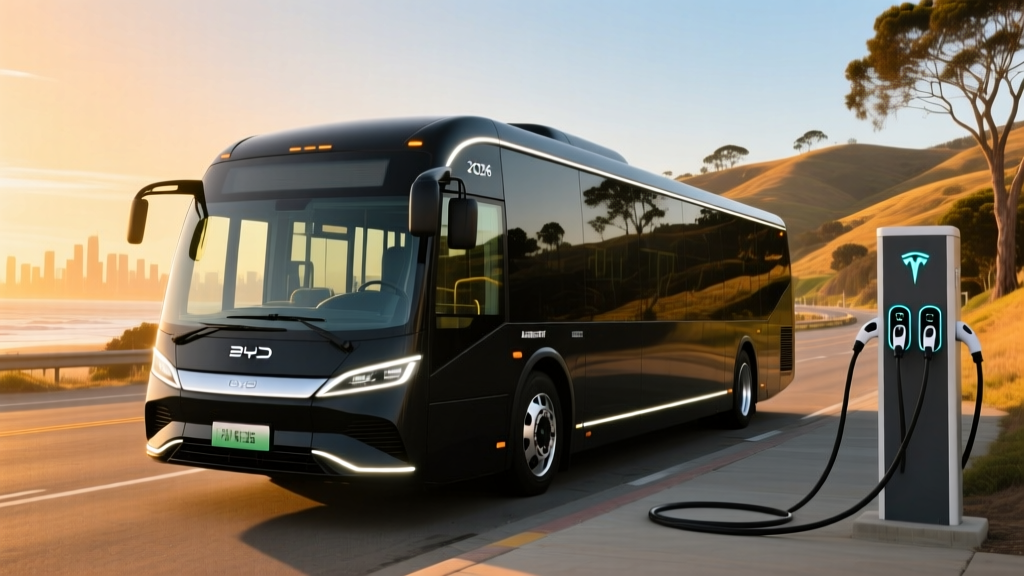
The BYD Lancaster represents the company's heavy-duty electric transit bus offering, targeting California's aggressive zero-emission fleet mandates. With the state's Innovative Clean Transit (ICT) regulation requiring all public transit agencies to transition to zero-emission buses by 2040, the Lancaster positions itself as a workhorse solution for municipal and private fleet operators.
Real-World Range Reality
EPA Estimated Range: 250 miles (standard route cycle)
Real-World Expectation: 200-220 miles in typical California transit duty with HVAC load, frequent stops, and passenger weight. Cold-weather mountain routes (Sierra Nevada service) may see 170-190 miles. Highway-speed intercity routes reduce range to ~180 miles due to aerodynamic drag at 65 mph.
Battery Capacity, Chemistry, and Longevity
The Lancaster uses BYD's proprietary Blade Battery technology—lithium iron phosphate (LFP) chemistry in a cell-to-pack configuration. This chemistry choice prioritizes safety and cycle life over energy density, critical for commercial vehicles operating 16+ hours daily.
| Specification | Value |
|---|---|
| Battery Capacity | 350 kWh (usable) |
| Chemistry | LFP (Lithium Iron Phosphate) Blade cells |
| Thermal Management | Liquid cooling with active heating |
| Warranty | 12 years / 500,000 miles (80% capacity retention) |
| Expected Cycle Life | 4,000+ cycles to 80% SoH |
LFP chemistry means operators can charge to 100% daily without accelerated degradation—unlike NMC batteries that benefit from 80% daily limits. For transit agencies running 24/7 service, this translates to simpler operations and predictable range.
Charging Speed: DC Fast and Depot Level 2
Transit buses charge differently than passenger cars. The Lancaster supports both opportunity charging (mid-route top-ups) and overnight depot charging.
| Charging Type | Power (kW) | Time/Rate | Use Case |
|---|---|---|---|
| DC Fast Charge (CCS1) | 200 kW peak | 10-80% in ~90 minutes | Mid-day opportunity charging |
| DC Fast Charge (sustained) | 150 kW average | 0-100% in ~2.5 hours | Full charge during layovers |
| Level 2 AC Depot | 19.2 kW (80A) | ~18 hours full charge | Overnight depot charging |
| Pantograph (optional) | 300 kW | 3-5 min for 20-mile boost | High-frequency route charging |
The 200 kW DC fast-charge capability requires 480V three-phase infrastructure at depot locations. Most California transit agencies installing electric bus fleets budget $50,000-$100,000 per charger for electrical upgrades, switchgear, and utility coordination. Southern California Edison and PG&E offer transit-specific rate structures to manage demand charges.
Performance and Drivetrain
Transit buses prioritize low-speed torque and hill-climbing ability over 0-60 times. The Lancaster uses dual rear-axle electric motors providing immediate torque for stop-and-go urban routes.
- Powertrain: Dual-motor rear-wheel drive
- Horsepower: 360 hp (combined)
- Torque: 2,400 lb-ft (wheel torque)
- Top Speed: 65 mph (governed)
- Gradeability: 20% grade at full load
- GVWR: 40,000 lbs
The instant torque delivery eliminates the lag and gear-hunting of diesel buses merging into traffic or climbing San Francisco's steeper grades. Regenerative braking captures energy during frequent stops, extending range in dense urban duty cycles.
Pricing and Federal Tax Credits
Commercial electric buses operate under different incentive structures than consumer vehicles. The Lancaster's pricing reflects heavy-duty commercial equipment, with significant federal and California state incentives available.
| Configuration | Base MSRP | After Incentives |
|---|---|---|
| 35-foot standard | $750,000 | $550,000-$600,000 |
| 40-foot standard | $850,000 | $620,000-$680,000 |
| 60-foot articulated | $1,100,000 | $800,000-$880,000 |
Federal Incentives: The Commercial Clean Vehicle Credit (IRC §45W) provides up to $40,000 for qualified commercial electric vehicles over 14,000 lbs GVWR. Unlike the consumer §30D credit, §45W has no MSRP caps or income limits but requires the vehicle be used in a trade or business. Transit agencies (often tax-exempt entities) can use direct pay provisions to receive the credit as a payment.
California Incentives: The Hybrid and Zero-Emission Truck and Bus Voucher Incentive Project (HVIP) provides point-of-sale vouchers ranging from $120,000-$260,000 per bus depending on fleet size and disadvantaged community criteria. CARB's Clean Truck and Bus Voucher program stacks with federal incentives, making the total cost of ownership competitive with diesel over a 12-year lifecycle.
Efficiency and Operating Costs
Electric buses measure efficiency in kWh per mile rather than MPGe. The Lancaster's efficiency varies significantly with route profile, passenger load, and climate control usage.
- Energy Consumption: 2.0-2.8 kWh/mile (route-dependent)
- Diesel Equivalent: ~2.2 MPGe (energy-equivalent basis)
- Electricity Cost: $0.15-$0.25/kWh (California commercial rates)
- Cost Per Mile: $0.30-$0.70 (electricity only)
- Diesel Comparison: $0.80-$1.20/mile (at $4.50/gallon, 4.5 mpg)
Transit agencies report 50-70% fuel cost savings after electrification, though upfront infrastructure investment and higher maintenance labor costs (high-voltage technician training) partially offset these savings in early years.
Cargo, Passenger Capacity, and Dimensions
| Specification | 35-foot | 40-foot | 60-foot artic |
|---|---|---|---|
| Length | 35 ft | 40 ft | 60 ft |
| Width | 102 in | 102 in | 102 in |
| Height | 130 in | 130 in | 130 in |
| Seated Passengers | 32 | 39 | 57 |
| Max Capacity (seated + standing) | 65 | 80 | 110 |
| Wheelchair Positions | 2 | 2 | 3 |
| Cargo Volume (luggage) | 120 cu ft | 150 cu ft | 180 cu ft |
The underfloor battery placement preserves interior passenger volume compared to diesel buses with engine compartments and fuel tanks. Low-floor design with kneeling capability meets ADA accessibility requirements without ramps or lifts at standard curb heights.
Tech Features and Drawbacks
Standout Technology
- BYD Fleet Management Platform: Real-time telemetry, predictive maintenance alerts, and route optimization based on remaining state of charge
- Driver Assistance: SAE Level 2 features including adaptive cruise, lane-keeping, and pedestrian detection (not autonomous—driver supervision required)
- Vehicle-to-Grid (V2G): Optional bidirectional charging allows buses to provide grid services during peak demand, generating revenue for operators
- Regenerative Braking Profiles: Driver-selectable regen levels optimized for flat urban routes vs. mountain grades
Notable Drawbacks
- Charging Infrastructure Cost: Depot electrification requires $500,000-$2M upfront investment for a 20-bus fleet, with 12-18 month utility interconnection timelines
- Range on Intercity Routes: 250-mile range insufficient for 300+ mile rural routes without mid-route charging, limiting deployment flexibility
- High-Voltage Training: Maintenance staff require specialized certification for 600V+ systems, increasing labor costs and limiting service locations
- Weight: Battery mass (8,000+ lbs) increases tire wear and reduces bridge weight compliance on some older infrastructure
Who Should Buy the BYD Lancaster?
Ideal For:
- California transit agencies with fixed routes under 200 miles daily
- Fleet operators in disadvantaged communities (priority HVIP funding)
- Agencies with depot space for overnight charging infrastructure
- Routes with predictable duty cycles and mid-day layover opportunities
Consider Alternatives If:
- Operating 300+ mile intercity routes without charging en route
- Fleet lacks depot ownership or electrical upgrade capacity
- Mountain routes with sustained 10%+ grades drain range faster than projected
- Procurement timeline under 18 months (infrastructure lead times)
FAQ: BYD Lancaster in California
What is the real-world range of the BYD Lancaster?
While rated at 250 miles on standard transit cycles, California operators should plan for 200-220 miles in typical service with HVAC, passenger load, and frequent stops. Mountain routes and high-speed intercity service reduce this to 170-190 miles.
How fast does the Lancaster charge?
DC fast charging peaks at 200 kW, achieving 10-80% in approximately 90 minutes. Overnight depot charging at 19.2 kW Level 2 requires 18 hours for a full charge. Optional 300 kW pantograph systems enable 3-5 minute opportunity charges for high-frequency routes.
Does the BYD Lancaster qualify for federal tax credits?
Yes, under the Commercial Clean Vehicle Credit (IRC §45W), qualified commercial vehicles over 14,000 lbs GVWR can receive up to $40,000. Tax-exempt transit agencies can use direct pay provisions. This stacks with California HVIP vouchers worth $120,000-$260,000 per bus.
How does it compare to competitors like New Flyer Xcelsior CHARGE or Proterra ZX5?
The Lancaster competes on LFP battery longevity (12-year warranty vs. typical 8-10 year NMC warranties) and integrated vertical manufacturing (BYD builds its own cells). New Flyer offers more North American service locations, while Proterra has deeper U.S. transit agency relationships. Range and charging speeds are comparable across the segment.
What are the biggest operational challenges?
Charging infrastructure cost and utility interconnection timelines (12-18 months) are the primary barriers. Agencies must also invest in high-voltage technician training and plan routes around the 200-220 mile real-world range rather than the 250-mile sticker figure.
For California transit agencies evaluating the BYD Lancaster, contact BYD's Lancaster, CA manufacturing facility for route-specific energy modeling and infrastructure planning. Federal incentive details available at IRS.gov. California HVIP voucher availability at CaliforniaHVIP.org.