BYD Great Tang: What U.S. Buyers Need to Know in 2026
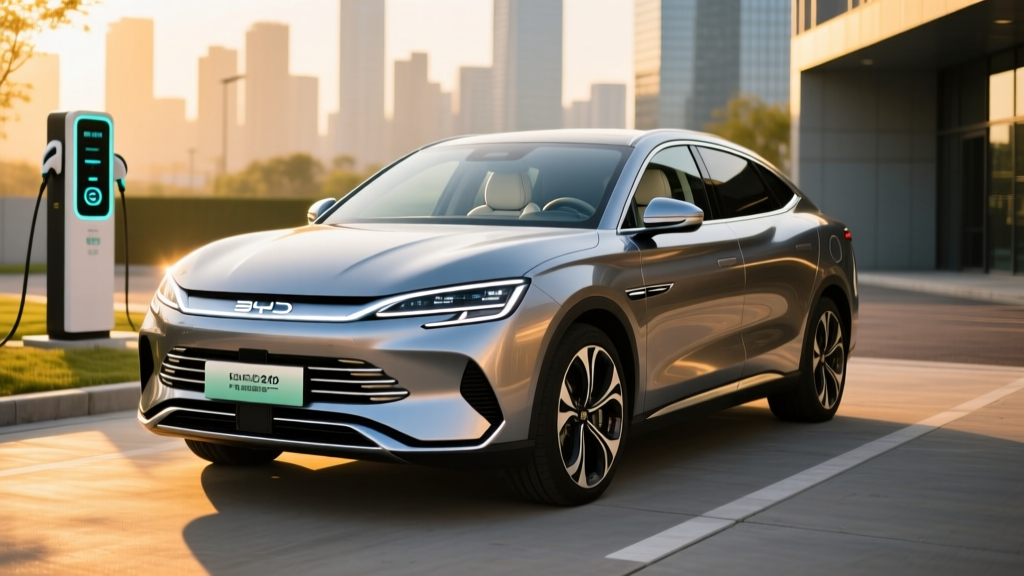
The BYD Great Tang is the Chinese automaker's flagship three-row electric SUV, positioned to compete directly with the Kia EV9, Tesla Model X, and Rivian R1S in the full-size family EV segment. First unveiled for international markets in late 2025, the Great Tang has drawn considerable attention from U.S. shoppers looking for a spacious, long-range electric family hauler. But there's a critical caveat: as of early 2026, BYD has not officially launched passenger vehicles in the United States, and the Great Tang is not available for purchase at any U.S. dealership.
This review covers everything we know from BYD's published international specifications and announced market launches in Europe, Australia, and Southeast Asia. Where figures are preliminary or based on non-EPA testing cycles (such as CLTC or WLTP), we flag them clearly and provide estimated U.S. equivalents. If and when BYD confirms a U.S. launch, we will update this profile with official EPA data and pricing.
Range, Battery, and Efficiency
The Great Tang is built on BYD's e-Platform 3.0, the same architecture underpinning the Atto 3, Seal, and Dolphin models sold globally. BYD has announced two battery configurations for the Great Tang:
- Standard Range: ~86.4 kWh usable capacity, BYD Blade LFP (lithium iron phosphate) chemistry
- Long Range: ~109.4 kWh usable capacity, BYD Blade LFP chemistry
BYD's Blade battery uses a cell-to-pack design with lithium iron phosphate (LFP) chemistry. LFP offers a meaningful advantage in cycle life and thermal stability compared to nickel-manganese-cobalt (NMC) packs, though at the cost of lower energy density — which is why the Long Range variant needs a physically larger and heavier pack to achieve its range target.
| Specification | Standard Range | Long Range |
|---|---|---|
| Battery Chemistry | LFP (Blade) | LFP (Blade) |
| Usable Capacity | ~86.4 kWh | ~109.4 kWh |
| CLTC Range (China) | ~373 mi (600 km) | ~435 mi (700 km) |
| WLTP Range (Europe) | ~310 mi (500 km) | ~373 mi (600 km) |
| Estimated EPA Range (U.S.) | ~280 mi | ~340 mi |
| Estimated Efficiency | ~3.0 kWh/mi (~95 MPGe) | ~3.1 kWh/mi (~92 MPGe) |
LFP batteries also have a flatter discharge curve than NMC, meaning the Great Tang should deliver relatively consistent power delivery as the state of charge drops. However, LFP chemistry makes state-of-charge estimation less precise — BYD recommends periodically charging to 100% to recalibrate the battery management system, unlike NMC packs where daily charging to 80% is preferred.
Charging Speed: DC Fast Charge and Home Level 2
Charging performance is where the Great Tang shows both strengths and limitations relative to its segment competitors.
| Charging Level | Specification | Details |
|---|---|---|
| DC Fast Charge (Peak) | ~170 kW (Long Range) / ~150 kW (Standard) | CCS2 internationally; NACS adapter expected for U.S. |
| 10–80% DC Fast Charge | ~30 minutes (Long Range) | Charge curve tapers significantly above 80% |
| Level 2 AC Charging | 11 kW (3-phase) / 7.2 kW (single-phase) | ~25–35 miles of range per hour at 11 kW |
| Level 1 (120V) Trickle | ~1.4 kW | ~4–5 miles of range per hour |
The 170 kW peak DC fast-charge rate is competitive but not class-leading. The Kia EV9, for example, peaks at 236 kW on its 800V architecture and can achieve a 10–80% charge in roughly 24 minutes. The Great Tang's 30-minute 10–80% time is adequate for road trips but means longer stops at charging stations compared to 800V rivals.
One practical note: LFP batteries tolerate frequent 100% charges better than NMC, so Great Tang owners won't need to baby the battery by limiting daily charge to 80%. This partially offsets the slower peak charge rate, since you can charge to full without long-term degradation concerns.
Performance and Drivetrain
The Great Tang offers single-motor rear-wheel drive (RWD) and dual-motor all-wheel drive (AWD) configurations:
| Metric | RWD Standard | RWD Long Range | AWD Long Range |
|---|---|---|---|
| Powertrain | Single motor, RWD | Single motor, RWD | Dual motor, AWD |
| Horsepower | ~228 hp (170 kW) | ~228 hp (170 kW) | ~510 hp (380 kW) |
| Torque (est.) | ~290 lb-ft | ~290 lb-ft | ~516 lb-ft |
| 0–60 mph (est.) | ~8.5 sec | ~8.9 sec | ~4.4 sec |
| Top Speed | ~112 mph (180 km/h) | ~112 mph | ~124 mph (200 km/h) |
The AWD performance variant delivers genuinely quick acceleration that puts it in the same ballpark as the Tesla Model X Dual Motor. The RWD variants are adequate for daily commuting and highway merging but won't win any stoplight races — a tradeoff for the efficiency gains of a single-motor setup on a vehicle this size.
The Great Tang rides on a multi-link rear suspension with an adaptive damping system on higher trims. BYD has tuned the ride for comfort over sportiness, which suits the three-row family-SUV mission. Towing capacity is rated at approximately 5,000 lbs (2,250 kg) for the AWD variant in international markets, though U.S. SAE J2807 testing may yield a different figure.
Interior Space, Cargo, and Technology
At approximately 205 inches in overall length with a 120-inch wheelbase, the Great Tang is a full-size three-row SUV comparable in footprint to the Kia EV9 and slightly smaller than the Tesla Model X.
| Dimension | Measurement |
|---|---|
| Seating Capacity | 6 (captain's chairs) or 7 (bench 2nd row) |
| Front Legroom | ~41.5 in |
| Second-Row Legroom | ~38.0 in |
| Third-Row Legroom | ~30.5 in |
| Cargo (behind 3rd row) | ~13.5 cu ft |
| Cargo (3rd row folded) | ~42 cu ft |
| Cargo (all rear rows folded) | ~82 cu ft |
| Front Trunk (Frunk) | ~2.5 cu ft (small storage compartment) |
Third-row space is best suited for children or occasional use — a pattern consistent across nearly every three-row SUV in this segment. The second row, especially in six-seat captain's-chair configuration, offers genuinely comfortable long-distance seating with available heating and ventilation.
Infotainment and Tech: The Great Tang features BYD's signature 15.6-inch rotating center touchscreen (landscape for navigation, portrait for media) running DiLink 100, BYD's latest connected-car platform. A 12.3-inch digital instrument cluster sits behind the steering wheel, and higher trims add a head-up display and a 12.8-inch rear entertainment screen.
Driver Assistance: BYD equips the Great Tang with its DiPilot ADAS suite, which includes adaptive cruise control, lane-centering assist, automatic emergency braking, blind-spot monitoring, and a 360-degree surround-view camera. This is an SAE Level 2 driver-assistance system — the driver must remain fully engaged and keep hands on the steering wheel. It is not a self-driving system and does not offer hands-free operation on par with GM's Super Cruise or Ford's BlueCruise.
Pricing, Trims, and U.S. Tax Credit Outlook
Because the Great Tang is not yet sold in the U.S., official MSRP figures do not exist. However, international pricing provides a strong signal of where a U.S. model would land:
| Trim (International Equivalent) | Est. U.S. MSRP | Key Features |
|---|---|---|
| Premium (RWD Standard Range) | ~$48,000–$52,000 | 86.4 kWh, RWD, 19" wheels, heated front seats |
| Flagship (RWD Long Range) | ~$55,000–$60,000 | 109.4 kWh, RWD, 21" wheels, panoramic roof, HUD |
| Performance (AWD Long Range) | ~$62,000–$68,000 | 109.4 kWh, AWD, adaptive suspension, Nappa leather |
These estimates would place the Great Tang squarely between the Kia EV9 (starting ~$55,000) and the Tesla Model X (starting ~$80,000) in the U.S. market — a competitive position if BYD can maintain its international pricing discipline.
- MSRP Cap: SUVs must have an MSRP at or below $80,000. All Great Tang trims would likely qualify.
- Buyer Income Cap: Adjusted gross income must not exceed $150,000 (single) / $300,000 (joint). Check with a tax professional.
- Battery Sourcing Requirements: The credit is split into two $3,750 halves — one for critical-mineral sourcing and one for battery-component manufacturing, both requiring North American or FTA-partner sourcing. BYD's vertically integrated Chinese supply chain would likely disqualify the Great Tang from the full $7,500 credit under current rules, potentially yielding $0 or a partial $3,750 credit depending on how BYD restructures supply for a U.S. launch.
- FEOC Restriction: Vehicles with battery components from a "foreign entity of concern" (which includes many Chinese state-linked manufacturers) are fully excluded from the credit as of 2024–2025 phase-in rules.
Warranty and Ownership Considerations
In international markets, BYD offers the following warranty coverage for the Great Tang:
- Vehicle Limited Warranty: 6 years / 150,000 km (~93,000 miles)
- Battery Pack Warranty: 8 years / 160,000 km (~100,000 miles), with a capacity retention threshold of 70% state of health (SoH)
- Drive Unit Warranty: 8 years / 160,000 km
For a U.S. launch, BYD would likely align with the industry-standard 8-year/100,000-mile battery and powertrain warranty required to meet EPA and CARB expectations. The 70% SoH threshold is typical — if the battery degrades below 70% of original capacity within the warranty period, BYD would repair or replace it.
LFP chemistry gives the Blade battery an inherent longevity advantage. Published cycle-life data suggests LFP cells can sustain 3,000+ full charge cycles before reaching 80% SoH — meaning the Great Tang's battery could theoretically last 300,000+ miles under normal use before meaningful degradation. This is one of the strongest arguments for BYD's platform.
How the Great Tang Compares to U.S. Rivals
Until BYD officially enters the U.S. passenger-vehicle market, American buyers must choose from currently available three-row EVs. Here's how the Great Tang's projected specs stack up against what you can actually buy today:
| Spec | BYD Great Tang (AWD LR, est.) | Kia EV9 (GT-Line AWD) | Tesla Model X (Dual Motor) | Rivian R1S (Dual-Motor Max) |
|---|---|---|---|---|
| Est. EPA Range | ~340 mi | 270 mi | 335 mi | 410 mi |
| Battery (kWh) | 109.4 (LFP) | 100.0 (NMC) | 100 (NMC) | 149 (NMC) |
| Peak DC Charge | ~170 kW | 236 kW | 250 kW | 220 kW |
| 10–80% Time | ~30 min | ~24 min | ~25 min | ~29 min |
| 0–60 mph | ~4.4 sec | 5.0 sec | 3.8 sec | 4.5 sec |
| Starting MSRP | ~$55,000 (est.) | $63,900 | $79,990 | $84,900 |
| Federal Tax Credit | Unlikely (sourcing) | $0 (Korea-built) | Up to $7,500 | Up to $7,500 |
The Great Tang's projected price advantage is significant, but it comes with major unknowns: no U.S. dealer network, uncertain tax-credit eligibility, and unproven long-term parts and service support in North America. The Kia EV9 and Rivian R1S offer established service infrastructure, while the Model X leverages Tesla's Supercharger network.
Pros
- LFP Blade battery offers exceptional cycle life and thermal safety
- Projected class-competitive range (~340 mi Long Range)
- Aggressive pricing undercuts U.S. rivals by $10,000–$25,000
- Comfortable, spacious three-row interior with available captain's chairs
- Strong AWD performance variant (510 hp, ~4.4 sec 0–60)
- 100% daily charging OK with LFP — no SoC management anxiety
Cons
- Not available in the United States as of 2026
- Federal tax credit unlikely due to Chinese battery sourcing (FEOC rules)
- DC fast-charge speed (170 kW peak) trails 800V competitors
- No established U.S. dealer or service network
- DiPilot ADAS is basic Level 2 — no hands-free highway driving
- Third-row space is tight for adults on longer trips
Who Should Consider the BYD Great Tang?
Wait for the Great Tang if: You want a three-row electric SUV under $60,000, prioritize battery longevity (LFP chemistry), and can afford to wait for a potential U.S. launch timeline that BYD has not yet confirmed.
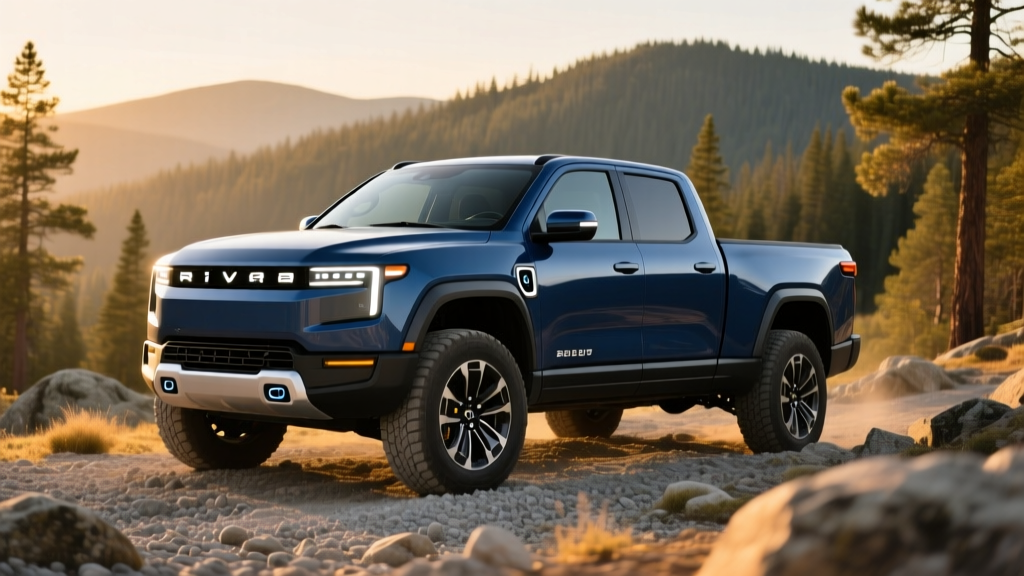
Buy now instead if: You need a three-row EV today, want access to the federal tax credit, value an established dealer/service network, or need fast DC charging for frequent road trips. The Kia EV9 is the closest value rival currently available; the Rivian R1S offers superior range and off-road capability at a higher price; and the Tesla Model X remains the performance benchmark with Supercharger access.
Frequently Asked Questions
What is the real-world range of the BYD Great Tang?
Based on international WLTP figures and typical EPA adjustment factors, the Long Range Great Tang should deliver roughly 330–350 miles on the EPA cycle. In real-world highway driving at 70–75 mph, expect 270–300 miles. In freezing temperatures, plan for 240–260 miles due to LFP cold-weather losses and cabin heating demand.
How fast does the Great Tang charge at home and on the road?
On a DC fast charger, the Long Range model peaks at approximately 170 kW, achieving a 10–80% charge in about 30 minutes. At home on a Level 2 charger (11 kW / 48A three-phase), you'll add roughly 30 miles of range per hour — enough to fully recharge overnight from any daily driving. On a standard U.S. 240V single-phase home circuit (7.2 kW), expect about 20 miles of range per hour.
Does the BYD Great Tang qualify for the $7,500 federal EV tax credit?
Almost certainly not under current rules. The IRS §30D credit requires battery components and critical minerals to be sourced from North America or FTA-partner countries. BYD's vertically integrated Chinese supply chain would trigger the FEOC (Foreign Entity of Concern) exclusion, disqualifying the vehicle from any credit. This could change if BYD establishes U.S. or partner-nation battery manufacturing, but no such plans have been announced for passenger vehicles.
Is the BYD Great Tang worth waiting for vs. buying a Kia EV9 or Tesla Model X?
If BYD launches in the U.S. at its projected international pricing (~$48,000–$68,000), the Great Tang would offer compelling value — particularly the LFP battery's longevity. However, without a dealer network, federal tax credit eligibility, or proven U.S. parts availability, the risk is substantial. Most buyers are better served by the Kia EV9 or Rivian R1S today, unless they can wait 1–2+ years for BYD's U.S. infrastructure to develop.
When will BYD sell cars in the United States?
As of early 2026, BYD has not announced an official timeline for U.S. passenger-vehicle sales. The company sells electric buses and commercial vehicles in the U.S., but its consumer-vehicle expansion has focused on Europe, Southeast Asia, Latin America, and Australia. Geopolitical factors including U.S.–China trade tariffs and the FEOC battery-sourcing rules create significant barriers. Monitor BYD's global newsroom for updates.