Quick Verdict: BYD's European Playbook Arrives Stateside
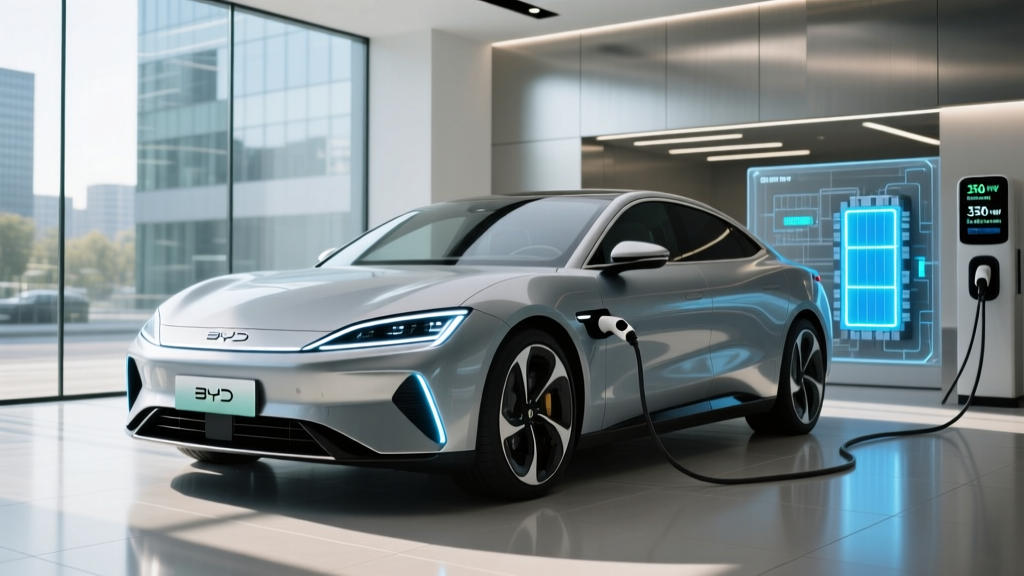
The 2026 BYD Frankfurt marks the Chinese automaker's first dedicated sedan aimed squarely at the US market after years of European expansion. Built on BYD's e-Platform 3.0 and powered by the company's signature Blade Battery (LFP chemistry), the Frankfurt slots between the Tesla Model 3 and Hyundai Ioniq 6 in both price and ambition. It brings a competitive 310-mile EPA range, a well-appointed cabin, and an MSRP that undercuts legacy rivals — but its 150 kW peak DC charging rate and limited US service network mean buyers should weigh practical ownership realities before signing.
EPA Estimated Range: 310 miles (Standard Range RWD) / 345 miles (Extended Range RWD)
Real-World Expectation: ~260–280 miles highway at 70 mph; ~210–230 miles in sub-30°F winter conditions. LFP chemistry holds up well to daily 100% charging but loses more range in cold than NMC packs.
Full Specifications at a Glance
| Spec | Standard Range RWD | Extended Range RWD | Performance AWD |
|---|---|---|---|
| EPA Range | 310 mi | 345 mi | 290 mi |
| Battery (usable) | 68 kWh (LFP) | 82 kWh (LFP) | 82 kWh (LFP) |
| Horsepower | 201 hp | 228 hp | 402 hp (dual-motor) |
| 0-60 mph | 7.4 sec | 6.8 sec | 4.2 sec |
| Peak DC Charge | 150 kW | 150 kW | 150 kW |
| 10-80% DC Time | ~28 min | ~34 min | ~34 min |
| Level 2 (AC) | 11 kW (~37 mi/hr) | 11 kW (~37 mi/hr) | 11 kW (~37 mi/hr) |
| MPGe (combined) | 120 MPGe | 115 MPGe | 105 MPGe |
| Efficiency | 28 kWh/100 mi | 29 kWh/100 mi | 32 kWh/100 mi |
| Base MSRP | $38,990 | $42,490 | $49,990 |
Source: BYD US spec sheet; EPA fueleconomy.gov (2026 model year data).
Range and Efficiency: LFP Chemistry in the Real World
The Frankfurt's Blade Battery is BYD's signature cell-format LFP (lithium iron phosphate) pack. LFP chemistry offers distinct advantages: it tolerates daily charging to 100% without accelerated degradation, provides excellent thermal stability (lower fire risk), and uses no cobalt or nickel. The trade-off is lower energy density than NMC packs, which explains why the Frankfurt needs a physically larger pack to match competitors' range, and why cold-weather range loss is more pronounced.
In real-world driving, expect the Standard Range model to deliver roughly 260–280 miles on a highway-heavy commute at 65–75 mph. The 28 kWh/100 mi combined efficiency figure is competitive with the Tesla Model 3 RWD and slightly behind the Hyundai Ioniq 6's class-leading 25 kWh/100 mi. In cold weather (below 30°F), LFP packs typically shed 25–35% of rated range, bringing the Standard Range Frankfurt down to approximately 210 miles — adequate for most commutes but tight for road trips without planning.
The Frankfurt includes a standard heat pump for cabin heating, which mitigates some winter range loss compared to resistive heaters. BYD also offers battery preconditioning — warming the pack ahead of DC fast charging to optimize charge speed — activated through the navigation system when a charger is set as your destination.
Charging Speed and Infrastructure Compatibility
Charging is where the Frankfurt's value proposition meets its biggest limitation. The 150 kW peak DC fast-charge rate is functional but falls behind the 250 kW class now standard on Tesla, Hyundai/Kia E-GMP, and GM Ultium vehicles.
| Charging Level | Power (kW) | Miles Added per Hour | Notes |
|---|---|---|---|
| Level 1 (120V household) | ~1.4 kW | ~4 mi/hr | Emergency/trickle only |
| Level 2 (240V home) | 11 kW | ~37 mi/hr | Full charge overnight (~8-9 hrs) |
| DC Fast Charge | 150 kW peak | ~210 mi in 30 min | 10-80% in ~28-34 min; tapers above 80% |
The 150 kW peak rate is sustained only between roughly 10–50% state of charge (SoC). Above 60%, the charge curve tapers significantly — typical of LFP chemistry — dropping to under 50 kW by 80%. This means a 10–80% session takes approximately 28 minutes for the Standard Range and 34 minutes for the Extended Range, which is acceptable for road-trip stops but noticeably slower than the Hyundai Ioniq 6's 18-minute 10–80% time on 350 kW chargers.
The Frankfurt ships with a NACS (North American Charging Standard) port for the US market, granting native access to Tesla Supercharger stations — a major infrastructure advantage. A CCS1 adapter is included for Electrify America, EVgo, and other networks. The 11 kW onboard AC charger means a full Level 2 home charge takes roughly 8–9 hours depending on pack size, which is standard for the segment.
Performance and Driving Dynamics
The rear-wheel-drive Frankfurt models prioritize efficiency over thrill. The Standard Range's 201 hp and 7.4-second 0–60 time are adequate for merging and passing but won't excite enthusiasts. The Extended Range bumps output to 228 hp, shaving the sprint to 6.8 seconds.
The Performance AWD variant is a different animal: dual motors produce 402 hp and a 4.2-second 0–60, putting it in Tesla Model 3 Long Range AWD territory. However, the Performance trim's 290-mile EPA range and 32 kWh/100 mi efficiency reflect the cost of that extra power.
Ride quality is composed, with a slightly firm suspension tuning that favors highway stability over plushness. The Frankfurt's regenerative braking offers two levels (standard and high), but BYD does not offer true one-pedal driving — the car will creep at low speeds rather than coming to a full stop. Drivers accustomed to one-pedal operation in a Tesla or Nissan Leaf will need a brief adjustment period.
Interior, Cargo, and Technology
The Frankfurt rides on a 112.2-inch wheelbase with a flat floor courtesy of BYD's e-Platform 3.0, yielding generous interior volume:
- Front legroom: 42.1 inches
- Rear legroom: 38.4 inches
- Cargo volume (rear seats up): 16.8 cu ft
- Cargo volume (rear seats folded): 43.2 cu ft
- Frunk: 2.1 cu ft (fits a charging cable bag)
The cabin is anchored by a 15.6-inch rotating center touchscreen (BYD's hallmark — it pivots between portrait and landscape orientation). Wireless Apple CarPlay and Android Auto are standard, along with a 12-speaker Dynaudio sound system on mid and upper trims. The driver faces a 10.25-inch digital cluster and a head-up display on Extended Range and Performance models.
ADAS features include BYD's DiPilot suite: adaptive cruise control with stop-and-go, lane-centering assist, automatic emergency braking with pedestrian detection, blind-spot monitoring, and rear cross-traffic alert. This is an SAE Level 2 driver-assist system — the driver must remain attentive with hands on the wheel at all times. It does not offer automated lane changes or traffic-light recognition like Tesla's Autopilot or GM's Super Cruise, and there is no hands-free highway driving mode.
Pricing, Trims, and Federal Tax Credit Eligibility
The Frankfurt's pricing undercuts most US-market competitors at every trim level:
| Trim | MSRP | Est. §30D Credit | Effective Price |
|---|---|---|---|
| Standard Range RWD | $38,990 | Up to $3,750* | ~$35,240 |
| Extended Range RWD | $42,490 | Up to $3,750* | ~$38,740 |
| Performance AWD | $49,990 | Up to $3,750* | ~$46,240 |
*Tax credit estimates are preliminary. Under IRS §30D rules, the full $7,500 credit requires meeting both critical-mineral and battery-component sourcing thresholds. BYD's LFP Blade Battery is manufactured in China, and as of 2026, vehicles with battery components from a "foreign entity of concern" (FEOC) are disqualified from the $3,750 battery-component portion of the credit. The Frankfurt may qualify for the $3,750 critical-minerals portion only, depending on final supply-chain certification. Buyer income caps also apply: modified AGI must not exceed $150,000 (single) / $300,000 (joint). The MSRP cap for sedans is $55,000. Consult a tax professional before relying on credit estimates. Point-of-sale transfer is available at participating dealers.
Warranty and Long-Term Battery Outlook
BYD backs the Frankfurt with a competitive warranty package:
- Battery: 8 years / 100,000 miles (retains ≥70% capacity)
- Powertrain: 8 years / 100,000 miles
- Bumper-to-bumper: 5 years / 60,000 miles
- Roadside assistance: 5 years / 60,000 miles
LFP batteries historically show slower calendar degradation than NMC cells, with many industry datasets suggesting 80%+ capacity retention at 200,000 miles under normal use. BYD's Blade cell format has also demonstrated strong results in nail-penetration and thermal-abuse testing, translating to a lower risk of thermal runaway. However, BYD's US service network is still nascent — as of early 2026, the company operates roughly 80 authorized service centers nationwide, concentrated in California, Texas, and the Southeast. Buyers in other regions should confirm service access before purchasing.
Who Should Buy the BYD Frankfurt?
✅ Choose the BYD Frankfurt if:
- You want a well-equipped electric sedan under $40,000 (after credit) with over 300 miles of range
- You charge primarily at home and road-trip infrequently (charging speed matters less)
- You value LFP chemistry's longevity and daily 100% charging tolerance
- You live near a BYD service center and have verified local support
- NACS Supercharger access is a priority for your public-charging needs
❌ Look elsewhere if:
- You frequently road-trip and want the fastest DC charging available (consider Ioniq 6 or Model 3)
- You need hands-free highway driving (GM Super Cruise or Ford BlueCruise)
- You live far from a BYD authorized service location
- Maximum federal tax credit ($7,500) is essential to your budget math
Pros and Cons Summary
✅ Pros
- Competitive MSRP undercuts Model 3 and Ioniq 6
- LFP Blade Battery: excellent longevity, safe chemistry, 100% daily charging OK
- NACS port standard — native Tesla Supercharger access
- Spacious cabin with flat floor and 16.8 cu ft trunk
- Rotating 15.6" screen with wireless CarPlay/Android Auto
- Heat pump standard for cold-climate efficiency
❌ Cons
- 150 kW peak DC charging — slower than 250 kW rivals
- LFP cold-weather range loss is significant (~30% below freezing)
- Limited US service network (~80 centers nationwide)
- Likely qualifies for only half the federal tax credit ($3,750)
- No one-pedal driving mode
- ADAS is basic Level 2 — no hands-free or auto lane-change
Frequently Asked Questions
What is the real-world range of the BYD Frankfurt?
The EPA rates the Standard Range RWD at 310 miles and the Extended Range RWD at 345 miles. In real-world highway driving at 70 mph, expect roughly 260–280 miles from the Standard Range and 295–315 miles from the Extended Range. In cold weather (below 30°F), both lose approximately 25–35% of rated range due to LFP chemistry's cold sensitivity — plan for 210–230 miles in winter from the Standard Range model.
How fast does the BYD Frankfurt charge?
On DC fast chargers, the Frankfurt peaks at 150 kW and charges from 10–80% in approximately 28 minutes (Standard Range) or 34 minutes (Extended Range). At home on a Level 2 (240V) charger, the 11 kW onboard charger adds roughly 37 miles of range per hour, meaning a full overnight charge takes 8–9 hours. The NACS port provides native access to Tesla Superchargers.
How much does the BYD Frankfurt cost after tax credits?
The base Standard Range RWD starts at $38,990. With the estimated $3,750 partial federal tax credit (critical-minerals portion only, pending final IRS sourcing certification), the effective price drops to approximately $35,240. The full $7,500 credit is unlikely due to FEOC battery-component restrictions. State incentives vary — check your local DMV or energy office for additional rebates.
Does the BYD Frankfurt qualify for the federal EV tax credit?
Partially. Under 2026 IRS §30D rules, the Frankfurt likely qualifies for the $3,750 critical-minerals portion of the credit but not the $3,750 battery-component portion, because BYD's Blade Battery cells are manufactured in China — a designated foreign entity of concern (FEOC). Buyer income must not exceed $150,000 (single) or $300,000 (joint filing), and the sedan MSRP cap of $55,000 applies. All trims fall under this cap. Always verify current eligibility at irs.gov or with a tax professional.
Is the BYD Frankfurt worth buying vs. the Tesla Model 3 or Hyundai Ioniq 6?
It depends on your priorities. The Frankfurt undercuts both on price and offers LFP battery longevity plus NACS Supercharger access. However, the Model 3 charges at 250 kW (10–80% in ~15 min) and has a far more mature US service network. The Ioniq 6 charges even faster (up to 350 kW on capable chargers, 10–80% in ~18 min) and delivers class-leading efficiency. If price is your top factor and you charge mainly at home, the Frankfurt is compelling. If road-trip charging speed or service accessibility is critical, the Model 3 or Ioniq 6 are stronger choices.
What is BYD's US service and parts availability like?
BYD operates approximately 80 authorized service centers in the US as of early 2026, concentrated in California, Texas, Florida, and the Southeast. Parts availability is improving but may involve longer wait times than established brands. Before purchasing, confirm the nearest authorized service location and ask the dealer about loaner-vehicle policies and mobile service options in your area.
Sources: BYD US official specifications (2026 model year); EPA fueleconomy.gov; IRS §30D Clean Vehicle Credit. Specifications and pricing subject to change. Tax credit eligibility depends on individual circumstances and current IRS guidance.