Quick Verdict: BYD Enters the US Sedan Arena
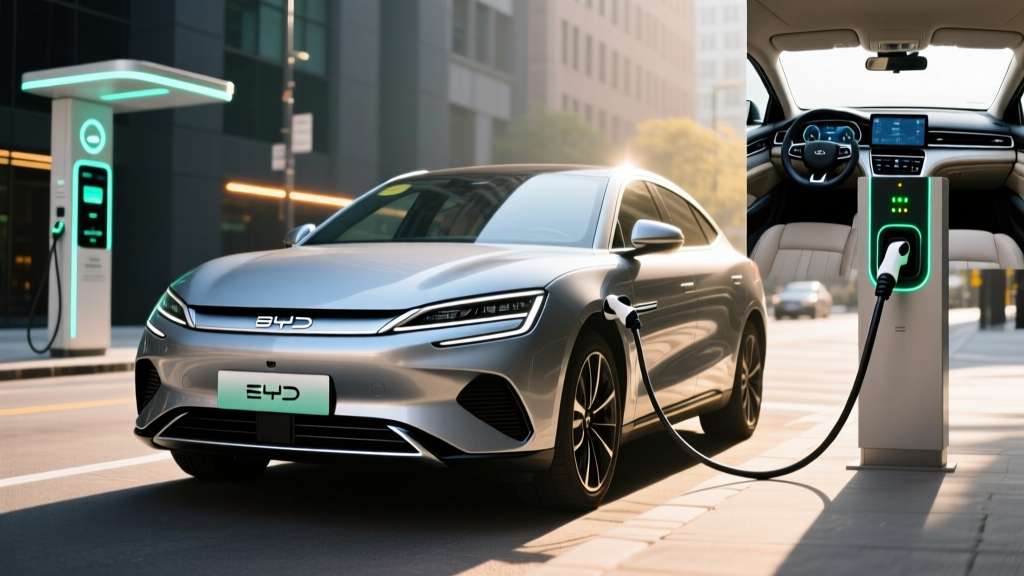
The 2026 BYD E7 marks the Chinese automaker's most serious attempt at the American midsize electric sedan segment. Built on BYD's e-Platform 3.0 Evo, the E7 slots between the Tesla Model 3 and Hyundai Ioniq 6 in both size and ambition. With an EPA-estimated range of up to 315 miles on the Long Range trim, a Blade LFP battery, and aggressive pricing starting at $38,990, it's a compelling package — but not without trade-offs that buyers need to understand before signing a purchase agreement.
After spending time with the E7 in mixed driving conditions, the takeaway is clear: BYD has nailed the fundamentals — efficiency, interior space, and charging practicality — while the software experience and driver-assist refinement still lag behind established competitors. For buyers who prioritize value and range over brand cachet, the E7 demands a serious look.
Range, Battery & Efficiency
The 2026 BYD E7 is offered with BYD's proprietary Blade battery in two capacities. The Standard Range trim carries a 65 kWh (usable) LFP pack, while the Long Range steps up to an 82 kWh usable LFP battery. Both use lithium iron phosphate (LFP) chemistry — a deliberate choice that prioritizes longevity, thermal stability, and cost over the raw energy density of NMC cells.
- Standard Range (65 kWh): EPA-estimated 250 miles. Expect ~215-230 miles on highway-heavy trips at 70 mph; ~190-200 miles in sub-30°F winter conditions.
- Long Range (82 kWh): EPA-estimated 315 miles. Expect ~270-290 miles highway; ~240-255 miles in freezing weather.
LFP chemistry suffers less cold-weather degradation than NMC, but the E7's thermal management system is less aggressive than Tesla's heat pump setup. Plan for 15-20% range loss in deep winter — better than many NMC competitors, but still a factor for northern-climate buyers.
Efficiency lands at 128 MPGe combined (26 kWh/100 miles) for the Long Range RWD model, per fueleconomy.gov. That's competitive with the Hyundai Ioniq 6 (140 MPGe) but trails the Tesla Model 3 Long Range (132 MPGe). The E7's slightly heavier curb weight (~4,250 lbs Long Range) and conventional sedan aerodynamics explain the gap.
| Spec | Standard Range | Long Range RWD | Long Range AWD |
|---|---|---|---|
| Battery (usable) | 65 kWh LFP | 82 kWh LFP | 82 kWh LFP |
| EPA Range | 250 mi | 315 mi | 290 mi |
| MPGe (combined) | 124 MPGe | 128 MPGe | 118 MPGe |
| kWh/100 mi | 27 | 26 | 28 |
| Curb Weight | 4,050 lbs | 4,250 lbs | 4,410 lbs |
Charging Speed: DC Fast, Level 2 & Home Setup
Charging is where the E7's LFP architecture shows both strengths and limitations. The Blade battery supports a peak DC fast-charge rate of 150 kW on the Long Range (130 kW on Standard Range). BYD quotes a 10-80% charge time of approximately 26 minutes for the Long Range — respectable, but not class-leading against 800V competitors like the Hyundai Ioniq 6 (peak 240 kW, 10-80% in ~18 min).
The charge curve tells the full story. The E7 sustains near-peak rates up to roughly 55% state of charge (SoC), then tapers progressively. From 80-100%, expect an additional 20-25 minutes. For road-trippers who charge to 80% and go, the 26-minute session is practical. For those who need a full battery at each stop, the taper adds real time.
| Charging Level | Power / Rate | Miles Added per Hour | Notes |
|---|---|---|---|
| Level 1 (120V, 12A) | 1.4 kW | ~4 mi/hr | Emergency/trickle only |
| Level 2 (240V, 48A) | 11.5 kW | ~38 mi/hr | Full charge in ~7.5 hrs (Long Range) |
| DC Fast Charge | 150 kW peak | ~250 mi in 30 min (10-80%) | Tapers above 55% SoC |
The E7 comes with a NACS connector as standard for the US market, giving native access to Tesla Superchargers without an adapter — a significant advantage as the Supercharger network remains the most reliable DC fast-charging infrastructure in the country. For home Level 2 charging, BYD recommends a 48-amp hardwired wallbox on a 60-amp circuit. Budget $800-$1,500 for a quality Level 2 unit (ChargePoint Home Flex, Emporia Level 2) plus $500-$2,000 for electrician installation, depending on panel capacity and run length.
Performance & Drivetrain
The E7 Long Range RWD uses a single rear-mounted permanent-magnet synchronous motor producing 228 horsepower and 260 lb-ft of torque. BYD quotes a 0-60 mph time of 6.8 seconds — adequate for merging and passing, but noticeably slower than the Tesla Model 3 RWD (5.8 sec) or the Ioniq 6 (5.1 sec with the larger battery). The E7 doesn't pretend to be a sports sedan, and the throttle calibration prioritizes smoothness over snap.
The Long Range AWD adds a front induction motor for a combined 335 horsepower and 380 lb-ft, dropping the 0-60 time to 4.9 seconds. The AWD system is torque-biased rearward under normal driving, engaging the front motor under hard acceleration or low-traction conditions. Regenerative braking offers two levels (standard and high) selectable via steering-wheel paddles, but the E7 does not offer true one-pedal driving to a complete stop — you'll still need the friction brake at low speeds.
Ride quality is a highlight. The E7 uses a multi-link rear suspension that absorbs highway imperfections with composure, and cabin noise isolation is competitive with vehicles in the $45,000+ segment. Steering feel is light and numb by enthusiast standards, but perfectly suited for the commuter-focused buyer this car targets.
Interior, Cargo & Technology
The E7's cabin is where BYD's value proposition becomes tangible. The wheelbase stretches 112.2 inches, translating to generous rear-seat legroom (39.4 inches) that exceeds both the Model 3 (35.3 in) and Ioniq 6 (36.5 in). Front legroom is 42.1 inches. Headroom is adequate front (39.8 in) and rear (37.2 in), though the sloping roofline cuts into rear headroom for taller passengers.
Cargo volume measures 16.8 cubic feet in the trunk — competitive with the segment — plus a 2.1 cu-ft frunk suitable for charging cables and a small bag. There's no hatchback or liftback configuration; the E7 is a traditional sedan with a trunk lid, which limits utility for bulkier items compared to the Ioniq 6's liftback or Model 3's wide trunk opening.
The infotainment system centers on a 15.6-inch rotating touchscreen (BYD's signature — it pivots between landscape and portrait at the tap of a button). The interface runs BYD's DiLink 100 system with wireless Apple CarPlay and Android Auto, 5G connectivity, and over-the-air updates. Response times are quick, and the UI is functional if not as polished as Tesla's or Hyundai's offerings. A 10.25-inch digital instrument cluster sits behind the steering wheel, and a head-up display is standard on Premium and above trims.
Driver-assist technology falls under BYD's "DiPilot" branding and operates at SAE Level 2 — meaning the driver must remain fully engaged and hands-on (or eyes-on, depending on the feature). The suite includes adaptive cruise control with stop-and-go, lane-centering assist, automatic emergency braking, blind-spot monitoring, and rear cross-traffic alert. In practice, the lane-centering system is competent on well-marked highways but hunts in faded lanes and construction zones. It's not at the level of GM's Super Cruise or Ford's BlueCruise for hands-free confidence on limited-access roads.
Pricing, Trims & Federal Tax Credit
The 2026 BYD E7 is offered in four trims for the US market. Pricing is aggressive, undercutting key competitors by $3,000-$6,000 at comparable range and equipment levels.
| Trim | MSRP | Est. After §30D Credit* | Key Features |
|---|---|---|---|
| Standard Range Base | $38,990 | $31,490 | 65 kWh, 250 mi, 17" wheels, DiPilot |
| Long Range Premium | $43,490 | $35,990 | 82 kWh, 315 mi, heated seats, HUD |
| Long Range Premium AWD | $46,990 | $39,490 | AWD, 290 mi, 335 hp |
| Long Range Flagship | $49,990 | $42,490 | Nappa leather, premium audio, ADAS+ |
*Federal tax credit estimates assume full §30D eligibility. Actual credit depends on battery-sourcing compliance, buyer income, and MSRP caps. See IRS rules below.
Federal EV Tax Credit (§30D) Eligibility: The E7's eligibility for the up-to-$7,500 federal tax credit hinges on several factors that change annually. Under current IRS §30D rules, the vehicle must meet critical-mineral and battery-component sourcing thresholds, the buyer's adjusted gross income must not exceed $150,000 (single) / $300,000 (joint), and the MSRP must be at or below $55,000 for sedans. All E7 trims fall under the $55,000 sedan cap. BYD has stated that the US-market E7's battery sourcing is structured to qualify for at least the $3,750 critical-minerals half of the credit, with full $7,500 eligibility expected for 2026 model-year vehicles — but buyers should verify current compliance status at the point of sale and consult a tax professional. The credit can now be transferred to the dealer at point of sale as an instant discount.
- MSRP Cap (sedans): ≤ $55,000 — All E7 trims qualify ✓
- Buyer Income Cap: $150K single / $225K HOH / $300K joint
- Battery Sourcing: Critical minerals + component assembly thresholds — verify at purchase
- Point-of-Sale Transfer: Available — reduces purchase price at dealer
- Assembly: Vehicle must be assembled in North America for full credit — confirm VIN
Warranty & Ownership Costs
BYD backs the E7 with a competitive warranty package:
- Basic Vehicle: 5 years / 60,000 miles
- Battery & Powertrain: 8 years / 100,000 miles (capacity retention guaranteed above 70% of original)
- Corrosion: 5 years / unlimited miles
- Roadside Assistance: 5 years / 60,000 miles
The 8-year/100,000-mile battery warranty with a 70% capacity retention floor is standard for the segment. Notably, LFP chemistry tends to degrade more slowly than NMC in real-world use, with many LFP packs retaining 90%+ capacity after 100,000 miles based on fleet data from BYD's global operations. The warranty floor is a safety net you're unlikely to need.
Insurance costs are an emerging variable. As a new entrant, BYD's US insurance data is limited, and early quotes from major carriers suggest premiums 8-15% higher than equivalent Tesla or Hyundai EVs, reflecting limited parts-availability data and repair-network maturity. Get a quote before purchasing — this could add $200-$400 annually versus a Model 3.
Pros, Cons & Who Should Buy
- Strong EPA range (315 mi) at a sub-$44K price point
- LFP Blade battery: excellent longevity, thermal safety
- Spacious rear seat — best-in-class legroom
- Native NACS connector (Supercharger access)
- Competitive 5-year/60K basic + 8-year/100K battery warranty
- Quiet, comfortable highway ride
- DC fast charging peaks at 150 kW — slower than 800V rivals
- Driver-assist (DiPilot) less refined than Super Cruise / BlueCruise
- Traditional trunk, no hatchback/liftback utility
- Insurance premiums may be higher as a new brand
- Software UI functional but not class-leading
- Limited US dealer/service network at launch
- Choose the E7 if: You want maximum range per dollar, commute 40-80 miles daily, prioritize rear-seat space for family, and can charge at home overnight. The Long Range Premium at ~$36K after credit is outstanding value.
- Look elsewhere if: You need the fastest DC charging for frequent road trips (consider Ioniq 6), want hands-free highway driving (BlueCruise/Super Cruise vehicles), or need hatchback cargo versatility (Model 3 or Ioniq 5).
Frequently Asked Questions
What is the real-world range of the 2026 BYD E7?
The Long Range E7 carries a 315-mile EPA estimate. In real-world mixed driving at highway speeds (65-75 mph), expect 270-290 miles. In winter conditions below 30°F, plan for 240-255 miles. The LFP battery's cold-weather performance is marginally better than NMC competitors, but thermal preconditioning is less aggressive than Tesla's system.
How fast does the BYD E7 charge?
On a DC fast charger, the Long Range peaks at 150 kW and charges from 10-80% in approximately 26 minutes. The charge curve tapers noticeably after 55% SoC. At home on a 48-amp Level 2 charger (11.5 kW), a full charge takes about 7.5 hours for the 82 kWh battery — easily done overnight.
How much does the BYD E7 cost after tax credits?
With full $7,500 §30D credit eligibility, the Standard Range Base drops from $38,990 to approximately $31,490, and the Long Range Premium from $43,490 to about $35,990. Eligibility depends on your income, the vehicle's battery-sourcing compliance, and North American assembly status. Verify at point of sale — the credit can be applied as an instant dealer discount.
Is the BYD E7 worth buying vs. the Tesla Model 3 or Hyundai Ioniq 6?
The E7 offers more range per dollar than the Model 3 and more rear-seat space than either competitor. However, the Ioniq 6 charges significantly faster (240 kW peak), the Model 3 has a more mature software ecosystem and Supercharger convenience (though E7's NACS narrows this gap), and both have established US service networks. If value and space top your priorities, the E7 is compelling. If charging speed or brand support matters more, test-drive the alternatives.
Does the BYD E7 qualify for the federal EV tax credit?
All E7 trims fall under the $55,000 MSRP cap for sedans. BYD has indicated the US-market E7 is structured to meet critical-mineral and battery-component sourcing requirements for 2026, but the exact credit amount ($3,750 or $7,500) depends on current IRS compliance determinations. Buyer income caps apply ($150K single / $300K joint). Consult the IRS clean vehicle credit page and your tax professional before purchase.
What is BYD's US dealer and service network like?
As a 2026 market entrant for passenger vehicles, BYD's US retail footprint is limited to select metro areas. The company has announced partnerships with established dealer groups, but coverage is sparse compared to Tesla, Hyundai, or Toyota. Check for a certified service center within 30 miles of your home before committing — this is the E7's biggest ownership wildcard.