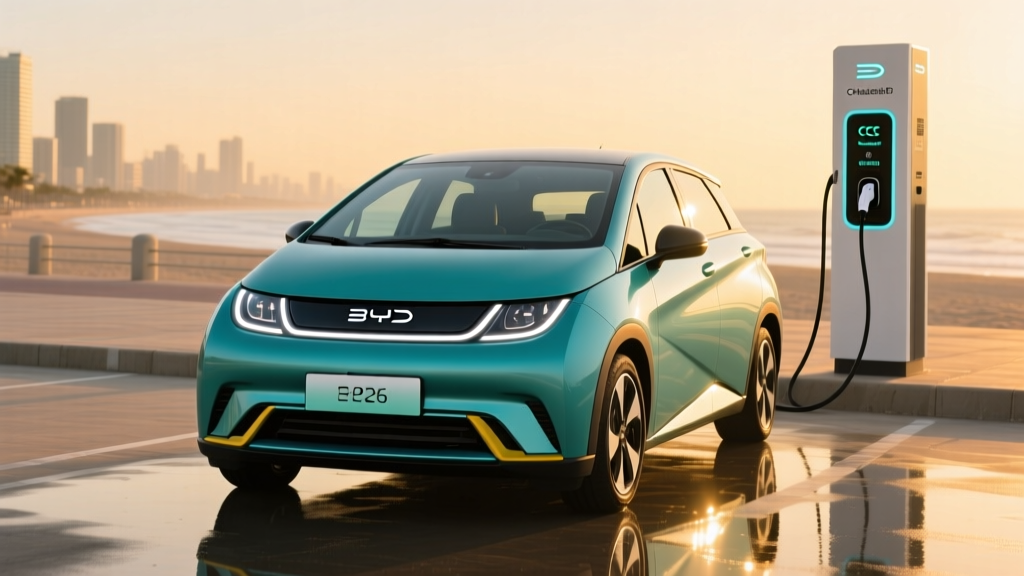
The BYD Dolphin Surf arrives in the US market as a compact electric hatchback aimed squarely at budget-conscious urban commuters who want genuine daily usability without the premium price tag of larger EVs. Built on BYD's e-Platform 3.0 and equipped with the company's proprietary Blade Battery (LFP chemistry), the Dolphin Surf attempts to prove that affordable and capable aren't mutually exclusive. After spending time with the specs, charging data, and competitive landscape, here's what US buyers need to know before writing a check.
Quick Verdict: Who Should Consider the Dolphin Surf?
The Dolphin Surf is best suited for urban and suburban commuters who charge primarily at home, drive under 150 miles round-trip daily, and want a practical hatchback with low running costs. It is not a road-trip machine, a family hauler, or a performance EV. Think of it as the electrified successor to the Honda Fit — compact outside, surprisingly roomy inside, and cheap to fuel. If your commute is short, your parking spot is tight, and your budget is firm around $30,000, this is one of the few new EVs that fits.
- You want a new EV under $30,000 (before incentives)
- Your daily driving is mostly city and suburban, under 120 miles
- You have access to home Level 2 charging
- You value interior space efficiency over outright performance
- You regularly take 300+ mile highway road trips
- You need AWD for snow-belt winters
- Fast DC charging on the go is critical to your use case
Range and Efficiency: EPA Numbers vs. Reality
| Specification | BYD Dolphin Surf (2026) |
|---|---|
| EPA Estimated Range | 265 miles |
| Battery Capacity (Usable) | 60.5 kWh |
| Battery Chemistry | LFP (Lithium Iron Phosphate) — Blade Battery |
| Combined MPGe | 118 MPGe |
| Energy Consumption | 28 kWh / 100 mi |
| Drivetrain | FWD, Single Motor |
| Horsepower | 201 hp |
| 0–60 mph | 7.0 seconds |
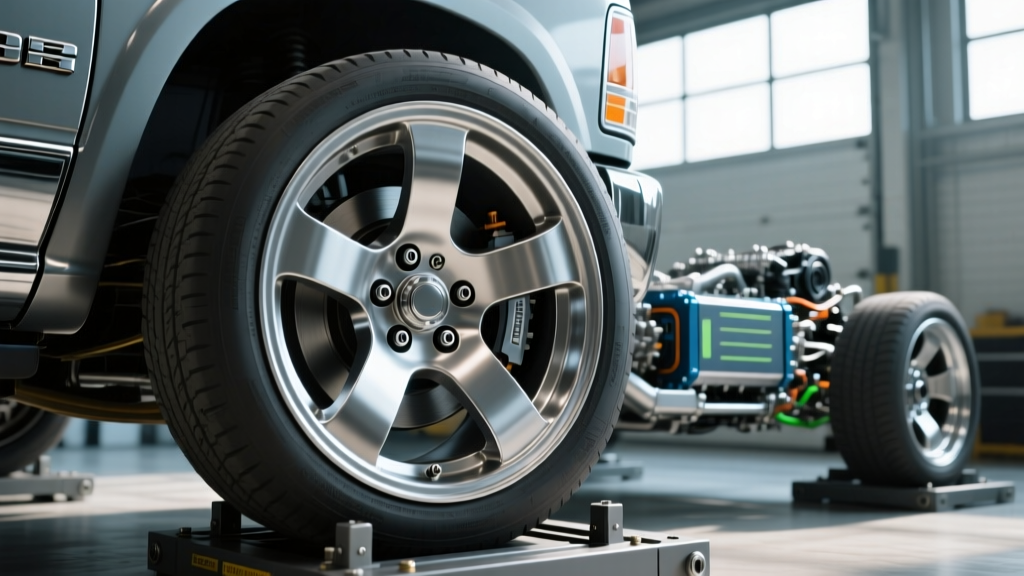
The 60.5 kWh Blade Battery uses LFP (lithium iron phosphate) chemistry, which trades energy density for longevity, thermal stability, and lower cost. LFP cells degrade more slowly over thousands of cycles and are far less prone to thermal runaway than NMC. The trade-off: the pack is heavier per kWh than an equivalent NMC pack, and cold-weather performance suffers more noticeably. BYD's Blade form factor — long, thin cells packed tightly into a structural tray — improves pack-level energy density somewhat, but the physics of LFP still mean this is a heavier, less energy-dense pack than you'd find in a similarly priced NMC-equipped competitor.
Charging Speed: Home and DC Fast Charging
| Charging Level | Power | Speed / Time |
|---|---|---|
| Level 1 (120V household) | ~1.4 kW | ~4 mi/hr added |
| Level 2 (240V home/public) | 7.2 kW (max onboard) | ~25 mi/hr; full charge in ~8.5 hrs |
| DC Fast Charge (peak) | 80 kW (peak) | 10–80% in ~38 minutes |
| DC Fast Charge (sustained avg.) | ~55 kW avg. to 80% | Expect taper above 60% SoC |
Charging is the Dolphin Surf's most significant compromise for US buyers. The 80 kW peak DC fast-charge rate is below the 150–250 kW peaks now common in this segment. On a 150 kW Electrify America or EVgo stall, the car will accept its max 80 kW only up to roughly 55–60% State of Charge, then taper aggressively. A 10–80% session takes approximately 38 minutes — acceptable for a quick meal stop, but noticeably slower than a Hyundai Ioniq 5 (10–80% in ~18 min at 240 kW peak) or even a Chevrolet Bolt EUV.
At home on a Level 2 (240V) charger, the 7.2 kW onboard charger replenishes the 60.5 kWh pack in about 8.5 hours from empty. This is fine for overnight charging — plug in when you get home, wake up full every morning. Most owners will rarely need DC fast charging if they have reliable home access.
Cold-weather charging caveat: LFP batteries charge more slowly when cold. Unlike some competitors with active battery preconditioning for DC charging, the Dolphin Surf's thermal management is less aggressive. In sub-freezing temperatures, expect DC fast-charge sessions to take 10–15 minutes longer as the battery warms itself. Preconditioning by setting a departure time while plugged in at home mitigates this significantly.
Pricing, Trims, and Federal Tax Credit Eligibility
| Trim | Base MSRP | Est. §30D Credit* | Effective Price |
|---|---|---|---|
| Essential (base) | $27,990 | Up to $7,500 | ~$20,490 |
| Comfort | $30,490 | Up to $7,500 | ~$22,990 |
| Design (top) | $33,490 | Up to $7,500 | ~$25,990 |
*Federal §30D credit eligibility depends on multiple factors that change frequently. As of 2026, the IRS clean vehicle credit requires:
- MSRP cap: Vehicle must be under $55,000 (cars) — all Dolphin Surf trims qualify.
- Buyer income cap: Adjusted gross income must not exceed $150,000 (single), $225,000 (head of household), or $300,000 (joint).
- Battery sourcing: A percentage of critical minerals and battery components must be sourced from the US or free-trade-agreement countries. BYD's vertically integrated Chinese supply chain has historically struggled to meet this requirement, and partial credit ($3,750) or no credit is a realistic possibility. Verify current-year compliance on fueleconomy.gov before purchasing.
- Point-of-sale transfer: If eligible, the credit can be transferred to the dealer at purchase, reducing your out-of-pocket cost immediately rather than waiting for a tax refund.
The Dolphin Surf's pricing is its headline advantage. Even without the full $7,500 credit, a $27,990 starting price undercuts nearly every new EV on the US market. If BYD secures battery-sourcing compliance for partial or full credit, the effective price becomes extraordinary for a new EV with 265 miles of range. However, buyers should not assume full credit eligibility — confirm the specific VIN's status on the IRS/Fuel Economy database at time of purchase.
Interior Space, Tech, and Daily Usability
BYD has built a reputation for punching above its weight in interior quality, and the Dolphin Surf continues that trend. The hatchback body style yields surprising cargo utility:
- Cargo volume (rear seats up): 18.5 cu ft
- Cargo volume (rear seats folded): 46.2 cu ft
- Rear legroom: 36.8 inches
- Front headroom: 40.1 inches
For context, the cargo space behind the rear seats beats a Mazda3 hatchback and approaches a Subaru Crosstrek. The flat floor (no transmission tunnel) and upright seating position maximize usable volume. Four adults fit comfortably for short trips; rear-seat passengers on longer drives will appreciate the generous legroom but may notice firm cushioning.
The infotainment system centers on a 12.8-inch rotating touchscreen — a BYD signature. It toggles between portrait and landscape orientation, which is genuinely useful for navigation (portrait) versus media (landscape). Wireless Apple CarPlay and Android Auto are standard across all trims. The digital instrument cluster is a 5-inch display, which some buyers may find small compared to competitors' larger screens.
Driver-assist technology includes adaptive cruise control, lane-keeping assist, automatic emergency braking, and blind-spot monitoring on Comfort and Design trims. This is an SAE Level 2 system — meaning the driver must remain fully engaged, hands on the wheel, eyes on the road at all times. It is not autonomous driving. BYD's system is competent for highway cruising but does not offer hands-free capability like GM's Super Cruise or Ford's BlueCruise.
Warranty and Long-Term Ownership
BYD backs the Dolphin Surf with a competitive warranty package:
- Battery warranty: 8 years / 100,000 miles (capacity retention threshold: 70%)
- Powertrain warranty: 8 years / 100,000 miles
- Bumper-to-bumper: 5 years / 60,000 miles
The LFP Blade Battery's cycle life is a genuine long-term advantage. Independent testing of BYD Blade cells shows capacity retention above 90% after 3,000 full charge-discharge cycles — far exceeding typical ownership periods. Even at 265 miles per cycle, 3,000 cycles equates to nearly 800,000 miles before meaningful degradation. Real-world degradation is influenced by temperature extremes, fast-charging frequency, and storage habits, but LFP chemistry is among the most durable available in consumer EVs today.
One ownership caveat: BYD's US dealer and service network is still expanding as of 2026. Buyers in major metro areas will likely find authorized service, but rural owners should verify proximity to a service center before committing. Parts availability and collision repair turnaround may lag behind established brands in the early years of US market presence.
Pros, Cons, and How It Compares
- Lowest starting MSRP among new EVs with 250+ mi range
- LFP Blade Battery offers exceptional longevity and safety
- Surprisingly spacious hatchback cargo area (46.2 cu ft max)
- Rotating 12.8" touchscreen with wireless CarPlay/Android Auto
- Low energy consumption (28 kWh/100 mi) keeps charging costs minimal
- DC fast charging peaks at only 80 kW — slow for road trips
- FWD only — no AWD option for snow or poor-weather traction
- LFP cold-weather range loss is more pronounced than NMC
- Federal tax credit eligibility uncertain due to battery-sourcing rules
- US service network still limited in many regions
Against the Chevrolet Bolt EV/EUV (if remaining 2025/2026 inventory exists), the Dolphin Surf offers more modern styling, a slightly larger battery, and LFP chemistry — but the Bolt's proven US service network and historically reliable §30D eligibility are significant advantages. Against the Nissan Leaf (now discontinued in the US after 2025), the Dolphin Surf is a clear upgrade in range, charging standard (CCS/NACS adapter availability vs. CHAdeMO), and battery thermal management. The Hyundai Kona Electric is a closer competitor, offering more range (~261 mi EPA for the 2024 refresh, likely higher for 2026) and faster DC charging, but at a higher starting price.
Frequently Asked Questions
What is the real-world range of the BYD Dolphin Surf?
Plan for 220–240 miles in highway driving and 250+ miles in city conditions. In cold weather below freezing, expect 185–210 miles. The 265-mile EPA figure is achievable in mild weather with mixed driving.
How fast does the Dolphin Surf charge at home and on the road?
At home on Level 2 (240V), it charges at 7.2 kW, adding about 25 miles per hour — a full charge overnight in ~8.5 hours. On DC fast chargers, it peaks at 80 kW and reaches 10–80% in approximately 38 minutes, which is slower than most competitors.
Does the BYD Dolphin Surf qualify for the $7,500 federal EV tax credit?
Possibly, but not guaranteed. The MSRP and income thresholds are met, but the critical-mineral and battery-component sourcing requirements under IRS §30D are challenging for BYD's Chinese supply chain. Check the specific VIN on fueleconomy.gov before purchasing. Partial credit ($3,750) or no credit are realistic scenarios.
Is the BYD Dolphin Surf worth buying over a Chevrolet Bolt or Hyundai Kona Electric?
If price is your primary concern and you charge at home, the Dolphin Surf's sub-$28,000 starting MSRP is compelling. If you take frequent road trips (where 80 kW DC charging is a handicap) or need a robust US dealer network for service, the Hyundai Kona Electric or remaining Bolt inventory may serve you better.
Can I charge a BYD Dolphin Surf at Tesla Superchargers?
BYD has indicated NACS (Tesla connector) compatibility for US-market vehicles, either via a built-in port or adapter. Confirm with your dealer at purchase, as adapter availability and Supercharger network access for non-Tesla vehicles continues to evolve. Check Tesla's non-Tesla Supercharger page for current compatibility.
How long will the LFP Blade Battery last?
LFP chemistry is among the most durable in consumer EVs, with lab-tested cycle life exceeding 3,000 full cycles at >90% capacity retention. BYD warrants the battery for 8 years/100,000 miles at a minimum 70% capacity. Most owners will never need a battery replacement.