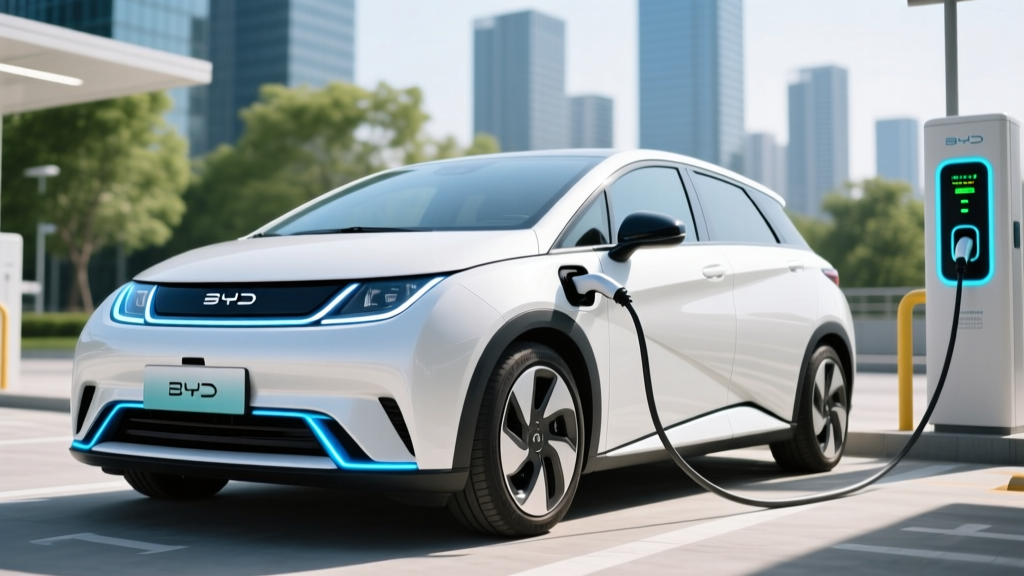
The BYD Dolphin has become one of the most talked-about compact electric hatchbacks in global markets, and its arrival in select regions has EV shoppers asking whether this budget-friendly battery-electric can compete with established rivals like the Chevrolet Bolt EV, Nissan Leaf, and Hyundai Kona Electric. We've spent time analyzing the Dolphin's specs, charging behavior, and ownership proposition to give you the data-driven breakdown you need before making a purchase decision.
BYD — which stands for "Build Your Dreams" — is the world's largest plug-in EV manufacturer by volume, and the Dolphin sits in its Ocean series lineup as an accessible, city-friendly BEV. But accessibility comes with trade-offs. Here's exactly what you get, what you give up, and whether the numbers add up for your driving needs.
BYD Dolphin Quick Verdict
The BYD Dolphin is a practical, efficiently packaged compact hatchback that prioritizes interior space and low running costs over performance thrills. Its LFP Blade Battery is a standout for longevity and safety, and its real-world efficiency makes it a strong commuter vehicle. However, its relatively modest DC fast-charging speed and limited ADAS sophistication compared to rivals mean it's best suited to buyers who prioritize value and daily drivability over road-trip charging convenience or cutting-edge driver assistance.
Look elsewhere if: You frequently take long road trips and need ultra-fast DC charging, want advanced hands-free driver-assist features, or need AWD for snow-belt winters.
Range, Battery & Efficiency: The Numbers That Matter
The BYD Dolphin (extended-range variant most relevant to US-market shoppers) is equipped with a 60.4 kWh usable capacity lithium iron phosphate (LFP) Blade Battery. BYD's proprietary Blade cell format arranges long, thin prismatic cells directly into the pack structure, improving volumetric efficiency and thermal stability compared to conventional NMC pouch or cylindrical cells.
| Spec | Value |
|---|---|
| EPA Est. Range | ~265 miles (extended-range) |
| Battery Capacity (Usable) | 60.4 kWh |
| Battery Chemistry | LFP (Lithium Iron Phosphate) — Blade Battery |
| Max DC Fast Charge | 88 kW peak |
| 10–80% DC Charge Time | ~29 minutes |
| Level 2 AC Charge Rate | 7 kW (~25 mi/hr) |
| Motor Output | 150 kW (201 hp) / 310 Nm torque |
| 0–60 mph | ~7.0 seconds |
| Drivetrain | FWD (single front motor) |
| Efficiency (Est.) | ~118 MPGe / 28 kWh/100 mi |
| Cargo Volume | 12.2 cu ft (rear seats up) / 37.8 cu ft (folded) |
| Rear Legroom | ~35.0 inches |
| Battery Warranty | 8 years / 100,000 miles (min. 70% capacity retention) |
The EPA-estimated ~265 miles assumes a mix of city and highway driving at moderate temperatures. In real-world conditions, expect:
- Highway (70+ mph, summer): ~220–240 miles — aerodynamic drag significantly impacts small hatchbacks at speed.
- City/commuter (stop-and-go, regen-heavy): ~260–280 miles — the Dolphin's efficiency shines here with strong regenerative braking.
- Cold weather (below 32°F): ~185–210 miles — LFP batteries experience more cold-weather range loss than NMC chemistries. Budget 20–30% reduction in freezing conditions. Preconditioning while plugged in helps recover some of this.
Why LFP Chemistry Matters for the Dolphin
LFP batteries trade energy density for cycle life and thermal safety. Where an NMC pack might degrade to 80% capacity after 1,000–1,500 full charge cycles, LFP cells typically sustain 80%+ capacity well past 3,000 cycles. For a daily-charged commuter vehicle, this translates to a battery that will likely outlast the car itself. LFP also eliminates cobalt and nickel — critical minerals that complicate federal tax credit sourcing requirements (more on this below).
The trade-off: LFP is heavier per kWh and less energy-dense, which is why the Dolphin's 60.4 kWh pack delivers a respectable but not class-leading range. LFP also charges more slowly at very low temperatures, making garage parking or preconditioning essential in cold climates.
Charging Speed: Home, Public & the 88 kW Ceiling
Charging is where the BYD Dolphin's value-first positioning shows its limitations — and its practicality, depending on your use case.
| Charge Level | Power | Speed (Approx.) | Time to Full / 10–80% |
|---|---|---|---|
| Level 1 (120V household) | ~1.4 kW | ~5 mi/hr | ~43 hours (0–100%) |
| Level 2 (240V home/public) | 7 kW | ~25 mi/hr | ~9 hours (0–100%) |
| DC Fast Charge | 88 kW peak | ~170 mi/hr (peak) | ~29 min (10–80%) |
The DC Fast-Charging Reality
The Dolphin's 88 kW peak DC charge rate is the single biggest compromise compared to rivals. The Hyundai Kona Electric peaks at ~100 kW, the Chevrolet Bolt EV at ~55 kW (older architecture), and the Volkswagen ID.4 at ~170 kW. On a 200-mile road trip, the Dolphin's 29-minute 10–80% session is acceptable — but if you need to charge past 80%, the LFP charge curve tapers significantly, and a 10–95% session can stretch past 50 minutes.
Important: Peak kW is not sustained kW. The Dolphin hits 88 kW only between roughly 10–40% SoC at optimal battery temperature. Expect an average of ~60–65 kW across a full 10–80% session. At a 150 kW Electrify America or EVgo station, the Dolphin will not use the charger's full capacity — you're limited by the car's onboard charge controller, not the station.
Home Charging Is the Sweet Spot
With a 7 kW Level 2 onboard charger, the Dolphin replenishes roughly 25 miles of range per hour of charging. Plug in overnight on a home Level 2 station (240V, 30–40A circuit) and you'll wake up to a full battery every morning. A typical home Level 2 installation runs $800–$2,000 including a quality EVSE (ChargePoint Home Flex, Emporia Level 2, or similar) and electrician labor, depending on your panel capacity and run length. The Dolphin's modest charging needs mean you won't require a panel upgrade in most homes with a 200A service.
Performance & Driving Dynamics
The extended-range Dolphin sends 201 horsepower and 310 Nm (229 lb-ft) of torque to the front wheels through a single-speed reduction gear. The 0–60 mph time of approximately 7.0 seconds is brisk enough for confident highway merging and passing, though it won't embarrass a Tesla Model 3 RWD (5.8 seconds) or a Hyundai Ioniq 5 (5.1 seconds AWD).
What the Dolphin does well is low-speed responsiveness. Like most EVs, peak torque is available from 0 RPM, making it feel punchy off the line and in urban stop-and-go traffic. The suspension tuning is comfort-oriented — soft enough to absorb potholes and speed bumps but with noticeable body roll in spirited cornering. This is a commuter car, not a hot hatch, and BYD doesn't pretend otherwise.
The regenerative braking system offers two levels selectable via the center console, but it does not provide true one-pedal driving that brings the car to a complete stop. You'll still use the friction brake pedal at low speeds — a minor annoyance for drivers accustomed to full one-pedal operation in vehicles like the Nissan Leaf or Chevrolet Bolt.
Interior, Tech & Driver Assistance
Step inside the Dolphin and the cabin punches above its price point in perceived quality. Soft-touch materials on the dashboard and door panels, a flat floor (thanks to the e-Platform 3.0 skateboard architecture), and a generous rear seat make it feel roomier than its exterior footprint suggests.
Infotainment
The centerpiece is a 12.8-inch rotating center touchscreen — a BYD signature. It toggles between landscape (navigation, media) and portrait (climate controls, app grid) orientation. The system runs BYD's DiLink OS with wireless Apple CarPlay and Android Auto, built-in navigation, and over-the-air update capability. Response times are adequate, though the UI design lags behind the polish of Tesla, Hyundai, or Volkswagen interfaces. Physical shortcut buttons for climate and volume are a welcome inclusion.
Driver Assistance (ADAS)
The Dolphin includes BYD's DiPilot suite:
- Adaptive cruise control with stop-and-go
- Lane-keeping assist and lane-departure warning
- Automatic emergency braking (forward and reverse)
- Blind-spot monitoring
- 360-degree surround-view camera
The Dolphin's DiPilot system is an SAE Level 2 driver-assistance system. This means it can simultaneously control steering and speed under certain conditions, but the driver must remain fully engaged — hands on or near the wheel, eyes on the road. This is not autonomous or "self-driving" capability. BYD does not currently offer a hands-free highway driving system comparable to GM's Super Cruise or Ford's BlueCruise.
The ADAS is competent for the price segment but lacks the refinement and predictability of Toyota Safety Sense 3.0 or Honda Sensing. Lane-keeping can feel indecisive on faded lane markings, and the adaptive cruise following distance has a noticeable reaction delay compared to class leaders.
Pricing, Trims & Federal Tax Credit Eligibility
The BYD Dolphin is positioned as one of the most affordable EVs in its class. Pricing varies significantly by market, and US availability remains limited as of 2026. In markets where it's sold, approximate pricing translates as follows:
| Trim | Est. Base MSRP | Key Features |
|---|---|---|
| Active (Standard Range) | ~$29,000 | 44.9 kWh battery, ~180 mi range, 95 hp, basic DiPilot |
| Boost (Extended Range) | ~$33,500 | 60.4 kWh battery, ~265 mi range, 201 hp, full DiPilot, 360° camera |
| Design (Extended Range) | ~$36,500 | Panoramic roof, heated front seats, premium audio, wireless phone charging |
Does the BYD Dolphin Qualify for the Federal EV Tax Credit?
This is where BYD buyers face significant uncertainty. Under IRS §30D rules for the new clean vehicle credit, eligibility requires meeting all of the following:
- MSRP cap: The vehicle must have an MSRP at or below $55,000 (sedans/hatchbacks). The Dolphin clears this easily.
- Buyer income cap: Modified AGI must not exceed $150,000 (single), $225,000 (head of household), or $300,000 (joint). Check your prior-year or current-year tax return.
- North American final assembly: The vehicle must undergo final assembly in North America. As of 2026, BYD manufactures the Dolphin primarily in China, Brazil, and Thailand — not in the US, Canada, or Mexico. This alone likely disqualifies the Dolphin from the §30D credit.
- Battery component sourcing: Increasingly strict percentages of battery components and critical minerals must be sourced from the US or FTA partners. LFP chemistry, which avoids cobalt and nickel, may help on critical minerals but doesn't resolve the assembly requirement.
Bottom line: Unless BYD begins manufacturing the Dolphin at a North American facility, it is unlikely to qualify for the $7,500 federal tax credit under current rules. The point-of-sale transfer option (where the dealer applies the credit as an instant discount) also requires the vehicle to be credit-eligible. Always verify current eligibility on fueleconomy.gov before purchasing, as rules and manufacturing locations can change.
Even without the federal credit, some states offer their own EV purchase rebates, HOV lane access, or reduced registration fees. These vary by jurisdiction and often have their own eligibility criteria. Check your state's energy office or DMV for current programs. A tax professional can advise on how incentives interact with your specific tax situation.
BYD Dolphin vs. the Competition
The Dolphin doesn't exist in a vacuum. Here's how it stacks up against the compact EV hatchbacks most buyers cross-shop:
| Spec | BYD Dolphin (ER) | Chevy Bolt EV | Hyundai Kona Electric |
|---|---|---|---|
| EPA Range | ~265 mi | 259 mi | 261 mi |
| Battery (kWh) | 60.4 (LFP) | 65 (NMC) | 64.8 (NMC) |
| Peak DC Charge | 88 kW | 55 kW | 100 kW |
| 0–60 mph | ~7.0 sec | ~6.5 sec | ~7.2 sec |
| Base MSRP (Est.) | ~$29,000 | ~$26,500 | ~$32,975 |
| Fed. Tax Credit | Unlikely (non-NA assembly) | Eligible (verify sourcing) | Eligible (verify sourcing) |
| Cargo (rear up/down) | 12.2 / 37.8 cu ft | 16.6 / 54.4 cu ft | 25.8 / 63.7 cu ft |
The takeaway: The Dolphin offers competitive range and a superior battery chemistry for longevity, but the Bolt EV undercuts it on price (especially with the federal credit) and offers significantly more cargo space. The Kona Electric charges faster on DC and provides more versatility. The Dolphin's advantage is its LFP battery lifespan and strong interior quality for the price — if you can access one in the US market.
Pros, Cons & Who Should Buy the BYD Dolphin
✅ Pros
- LFP Blade Battery: excellent cycle life, thermal safety, cobalt-free
- Competitive 265-mile EPA range for the price point
- Spacious rear seat and flat floor for a compact hatch
- Strong city efficiency with regenerative braking
- Rotating 12.8" screen and wireless CarPlay/Android Auto
- Low estimated cost of ownership (electricity + minimal maintenance)
❌ Cons
- 88 kW peak DC charging is slow vs. rivals (100–170 kW+)
- Likely ineligible for $7,500 federal tax credit (non-NA assembly)
- Cargo volume trails Bolt EV and Kona Electric
- ADAS is competent but not class-leading in refinement
- No one-pedal driving to a full stop
- Limited US dealer network and service infrastructure (as of 2026)
- Cold-weather range loss more pronounced with LFP chemistry
Best Use Case for the BYD Dolphin
The Dolphin is ideal for urban and suburban commuters who drive 30–80 miles daily, have access to home Level 2 charging, and live in moderate climates. It works well as a second car in a two-car household or as a primary vehicle for someone who rarely takes trips exceeding 200 miles. It is not the right choice for frequent long-distance road trippers (slow DC charging adds time), cold-climate buyers without garage parking (LFP range loss), or anyone who needs maximum cargo flexibility.
Frequently Asked Questions
What is the real-world range of the BYD Dolphin?
The EPA-estimated range for the extended-range Dolphin is approximately 265 miles. In real-world mixed driving, expect 230–250 miles in temperate conditions. Highway-heavy driving at 70+ mph drops this to roughly 220–240 miles, and freezing temperatures can reduce range to 185–210 miles due to LFP chemistry sensitivity to cold. Preconditioning the battery while plugged in mitigates some cold-weather loss.
How fast does the BYD Dolphin charge at home and on the road?
At home on a 240V Level 2 charger, the Dolphin accepts up to 7 kW, adding about 25 miles of range per hour — a full overnight charge from empty takes roughly 9 hours. On DC fast chargers, it peaks at 88 kW and charges from 10–80% in approximately 29 minutes. Note that charging slows significantly above 80% SoC, and the 88 kW peak is only sustained in the lower portion of the charge curve.
Does the BYD Dolphin qualify for the $7,500 federal EV tax credit?
Under current IRS §30D rules, the Dolphin is unlikely to qualify because it is not assembled in North America. The credit requires final assembly in the US, Canada, or Mexico, and BYD's Dolphin production is based in China, Brazil, and Thailand as of 2026. Even if assembly requirements were met, battery component and critical mineral sourcing thresholds must also be satisfied. Always check fueleconomy.gov for the latest eligibility data before purchasing.
Is the BYD Dolphin worth buying over a Chevrolet Bolt EV or Hyundai Kona Electric?
It depends on your priorities. The Dolphin's LFP battery offers superior long-term cycle life and thermal safety compared to NMC rivals — a genuine advantage if you plan to keep the car 8+ years. However, the Bolt EV is cheaper (especially after the federal credit), has more cargo space, and has an established US dealer network. The Kona Electric charges faster on DC and offers more versatility. If the Dolphin is priced competitively in your market and you don't need the federal credit, its battery longevity and interior quality make it compelling. If you need the credit or fast road-trip charging, look at the Bolt or Kona.
What warranty covers the BYD Dolphin's battery?
BYD provides an 8-year / 100,000-mile battery warranty with a minimum 70% capacity retention threshold. This is in line with industry standards (most automakers offer 8/100,000 under federal mandate for emissions-related components, extended voluntarily to EV batteries). Given LFP chemistry's proven cycle life exceeding 3,000 full cycles before hitting 80% capacity, the Dolphin's battery should comfortably outlast its warranty period under normal use.
Can I charge the BYD Dolphin at Tesla Superchargers?
This depends on the connector standard in your market. In regions where the Dolphin ships with a CCS connector, you would need a NACS-to-CCS adapter to use Tesla Superchargers (once third-party adapters are widely available and certified). In markets where BYD adopts NACS natively, direct Supercharger access is possible. Confirm the connector type for your specific market and model year before planning charging infrastructure around Tesla's network.