Quick Verdict: The BYD Dolphin in 2026
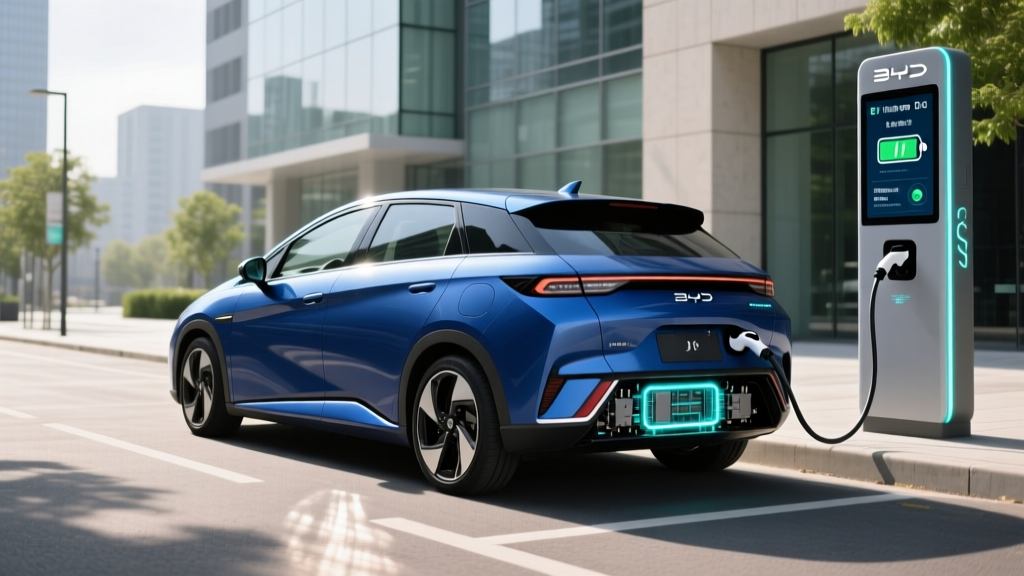
The BYD Dolphin has carved out a distinct niche as one of the most affordable compact electric hatchbacks on the global stage. For 2026, the Dolphin continues to leverage BYD's in-house Blade Battery (LFP chemistry) to offer a compelling package: an EPA-estimated 265 miles of range, a spacious interior that punches well above its footprint, and a starting MSRP that undercuts most rivals. However, U.S. availability remains the elephant in the room — as of early 2026, BYD has not launched passenger vehicles in the United States, making this review relevant for international buyers and those tracking BYD's potential North American entry.
For shoppers in Europe, Australia, Southeast Asia, and Latin America where the Dolphin is actively sold, it represents a practical, no-nonsense commuter EV with genuine daily usability. Let's break down the exact numbers that matter.
Range, Battery & Efficiency
Real-World Expectation: ~220–240 miles in mixed driving; ~180–200 miles at sustained highway speeds (70+ mph); expect 15–25% range loss in freezing temperatures due to LFP chemistry's cold-weather sensitivity and limited heat-pump availability on base trims.
The 2026 BYD Dolphin is equipped with BYD's proprietary Blade Battery, a lithium iron phosphate (LFP) pack with a usable capacity of 60.4 kWh. LFP chemistry offers several ownership advantages: longer cycle life (typically 3,000+ full cycles before significant degradation), no cobalt or nickel (simpler supply chain), and excellent thermal stability. The trade-off is lower energy density compared to NMC chemistries, which is why the Dolphin's battery is physically larger for its range class, and cold-weather performance suffers more than NMC-equipped rivals.
| Specification | Value |
|---|---|
| Battery Chemistry | LFP (Lithium Iron Phosphate) — BYD Blade |
| Usable Battery Capacity | 60.4 kWh |
| EPA-Equivalent Range (WLTP) | 265 miles (427 km) |
| Efficiency | ~3.8 mi/kWh (~12.0 kWh/100 km) |
| MPGe (Combined, est.) | ~128 MPGe |
| Heat Pump | Optional (standard on higher trims in select markets) |
Efficiency is a strong suit. At roughly 12.0 kWh/100 km (or about 3.8 miles per kWh), the Dolphin is competitive with the Chevrolet Bolt EUV and Nissan Leaf in energy consumption. On a 120-volt Level 1 trickle, that translates to about 3–4 miles of range per hour of charging — enough for overnight top-ups if your daily commute is under 30 miles.
Charging Speed: DC Fast & Home Level 2
Charging capability is where budget EVs often reveal their cost-cutting, and the Dolphin is no exception — though it's far from deficient.
| Charging Level | Power / Rate | Time / Speed |
|---|---|---|
| Level 1 (120V AC) | ~1.4 kW | ~3–4 miles of range per hour |
| Level 2 (240V AC, home/public) | 7 kW (single-phase) / 11 kW (three-phase, select markets) | ~24 mi/hr (7 kW); full charge in ~9–10 hours |
| DC Fast Charging (CCS2 / GB/T) | Peak 80 kW | 10–80% in approximately 36 minutes |
The Dolphin's 80 kW peak DC fast-charge rate is its most notable limitation for road-trippers. On a 350 kW Electrify America or Ionity station, the Dolphin will peak at 80 kW and taper gradually — you won't see the 15–18 minute 10-80% sprints that 800V architectures (Hyundai Ioniq 5, Kia EV6) deliver. Plan for roughly 36 minutes from 10% to 80%, which is acceptable for meal-break stops but noticeably slower than the segment's best.
The charge curve is relatively flat for LFP: the Dolphin holds close to 65–70 kW through the 40–70% SoC window before tapering to ~40 kW above 80%. This is typical of LFP packs, which tolerate regular 100% charging better than NMC (BYD recommends periodic full charges for LFP calibration).
Performance & Drivetrain
The 2026 Dolphin is a front-wheel-drive, single-motor hatchback. BYD offers two output levels depending on market:
- Standard Range / Active trim: 70 kW (94 hp) — 0–60 mph in ~12.3 seconds
- Extended Range / Design trim: 150 kW (201 hp) — 0–60 mph in ~7.0 seconds
The 150 kW variant is the one to have. The 7.0-second sprint to 60 mph is genuinely quick for a compact hatch and makes highway merging effortless. The 94 hp base motor, by contrast, feels adequate around town but strained at highway speeds with passengers and cargo.
Ride quality is tuned for comfort — soft damping absorbs urban imperfections well, though body roll is noticeable in spirited cornering. Regenerative braking offers two levels (standard and high) but does not provide true one-pedal driving to a complete stop, which some EV veterans may miss.
Interior, Cargo & Technology
The Dolphin rides on BYD's e-Platform 3.0, which pushes wheels to the corners and creates a surprisingly roomy cabin for a vehicle measuring just 163 inches long.
| Dimension | Measurement |
|---|---|
| Wheelbase | 104.3 in (2,700 mm) |
| Rear Legroom | ~33.5 in (850 mm) |
| Cargo Volume (rear seats up) | 12.2 cu ft (345 L) |
| Cargo Volume (rear seats folded) | 46.6 cu ft (1,320 L) |
| Frunk | None |
The 12.2 cu ft trunk is modest — the Chevrolet Bolt EUV offers 16.3 cu ft — but the 46.6 cu ft with seats folded is practical for weekend gear. There is no frunk (front trunk), a missed opportunity given the e-Platform's packaging advantages.
Infotainment: A 12.8-inch rotating touchscreen (landscape or portrait) dominates the dash, running BYD's DiLink system. It supports wireless Apple CarPlay and Android Auto, over-the-air updates, and voice control. The screen rotation is a party trick, but portrait mode is genuinely useful for navigation. Response times are adequate but not iPad-fast.
Driver Assistance (ADAS): The Dolphin includes a Level 2 driver-assist suite branded as BYD DiPilot:
- Adaptive cruise control with stop-and-go
- Lane-keeping assist and lane-centering
- Automatic emergency braking (AEB) with pedestrian detection
- Blind-spot monitoring (higher trims)
- 360-degree surround-view camera (higher trims)
Pricing, Trims & Tax Credit Eligibility
Pricing varies significantly by market since the Dolphin is not sold in the United States as of 2026. Below are approximate figures for key markets:
| Market | Trim | MSRP (Local) | MSRP (USD equiv.) |
|---|---|---|---|
| Europe | Active (94 hp) | ~€29,990 | ~$32,500 |
| Europe | Design (201 hp) | ~€33,990 | ~$36,900 |
| Australia | Dynamic | ~AUD $39,990 | ~$25,800 |
| Australia | Premium | ~AUD $44,990 | ~$29,000 |
| United Kingdom | Design | ~£29,995 | ~$37,800 |
U.S. Federal Tax Credit (§30D): Because BYD does not currently sell passenger vehicles in the United States, the Dolphin is not eligible for the IRS §30D Clean Vehicle Credit. Even if BYD entered the U.S. market, the Dolphin's battery is manufactured in China, which would likely disqualify it under the current critical mineral and battery-component sourcing requirements that mandate North American or free-trade-agreement-partner sourcing for the full $7,500 credit. Additionally, §30D imposes buyer income caps ($150,000 single / $300,000 joint) and MSRP caps ($55,000 for sedans/hatchbacks) — the Dolphin would clear the MSRP cap but the battery-sourcing hurdle is the primary barrier.
Warranty & Battery Longevity
BYD provides competitive warranty coverage in most markets:
- Battery Warranty: 8 years / 100,000 miles (160,000 km), guaranteeing ≥70% capacity retention
- Vehicle Warranty: 6 years / 93,000 miles (150,000 km) in most markets
- Roadside Assistance: 6 years in select markets
The LFP Blade Battery's longevity is a genuine selling point. Independent testing and BYD's own data suggest the Blade cell can endure 3,000+ charge cycles before dropping to 80% State of Health (SoH). At 265 miles per cycle, that equates to roughly 795,000 miles of theoretical use before hitting the warranty threshold — far exceeding any realistic ownership period. LFP cells also tolerate regular 100% charging without the accelerated degradation that NMC cells experience at high SoC, meaning daily full-charge commuters need not worry about babying the battery.
Pros & Cons
Pros
- Exceptional value — among the cheapest 265-mile EVs globally
- LFP Blade Battery: long cycle life, safe chemistry, 100% SoC tolerant
- Spacious rear seat and solid cargo capacity for the footprint
- Rotating 12.8" screen with wireless CarPlay/Android Auto
- Low running costs: ~$0.04–$0.06 per mile on home electricity
- 8-year/100,000-mile battery warranty
Cons
- 80 kW DC fast charging is slow vs. 150+ kW rivals
- No U.S. availability as of 2026
- Base 94 hp motor is underwhelming for highway driving
- Cold-weather range loss is significant without optional heat pump
- No frunk; modest 12.2 cu ft trunk
- No U.S. federal tax credit eligibility (battery sourcing)
- Regen braking doesn't achieve full one-pedal stop
Who Should Buy the BYD Dolphin?
The 2026 BYD Dolphin is ideal for:
- Urban and suburban commuters driving 30–80 miles daily who can charge at home overnight
- Cost-conscious EV buyers in Europe, Australia, and emerging markets seeking sub-$35,000 pricing
- Second-car households needing an efficient runabout for errands and school runs
- Rideshare drivers in markets where it's available — low per-mile cost and LFP durability make it a strong fleet candidate
It is not ideal for frequent road-trippers (the 80 kW charge rate adds time), buyers in cold climates without the heat-pump option, or U.S. shoppers awaiting BYD's potential market entry.
How It Compares to Key Rivals
In global markets, the Dolphin competes against several established compact EVs:
| Spec | BYD Dolphin | MG4 EV | Renault Megane E-Tech | Chevrolet Bolt EUV* |
|---|---|---|---|---|
| Range (EPA-equiv.) | 265 mi | 281 mi | 260 mi | 247 mi |
| Battery | 60.4 kWh LFP | 64 kWh NMC | 60 kWh NMC | 65 kWh NMC |
| DC Fast Charge | 80 kW | 135 kW | 130 kW | 55 kW |
| 10–80% Time | ~36 min | ~26 min | ~30 min | ~55 min |
| 0–60 mph | 7.0s (201 hp) | 6.5s (204 hp) | 7.4s (217 hp) | 7.0s (200 hp) |
| Starting Price (USD equiv.) | ~$25,800 | ~$27,000 | ~$38,000 | ~$27,800 (discontinued) |
*Chevrolet Bolt EUV was discontinued after 2023; included for reference as a common cross-shop benchmark.
The Dolphin undercuts most rivals on price while offering competitive range. Its main weakness is DC charging speed — the MG4's 135 kW capability shaves roughly 10 minutes off a 10–80% stop, which compounds on long trips. The Megane E-Tech is more refined but significantly pricier.
Frequently Asked Questions
What is the real-world range of the BYD Dolphin?
Expect approximately 220–240 miles in mixed city/highway driving at moderate temperatures. Sustained highway driving at 70+ mph reduces that to roughly 180–200 miles. In freezing conditions (below 32°F / 0°C), plan for 15–25% range loss, bringing real-world range to approximately 165–200 miles depending on heat-pump availability and driving style.
How fast does the BYD Dolphin charge at home and on DC fast chargers?
On a 7 kW Level 2 home charger, the Dolphin adds about 24 miles of range per hour, with a full charge taking roughly 9 hours. On DC fast charging, it peaks at 80 kW and reaches 10–80% in approximately 36 minutes. Three-phase 11 kW AC charging is available in select markets, reducing home charge time to about 6 hours.
Does the BYD Dolphin qualify for the U.S. federal EV tax credit?
No. As of 2026, BYD does not sell passenger vehicles in the United States, so the Dolphin is not available for purchase and cannot qualify for the IRS §30D Clean Vehicle Credit. Even if it were available, the China-manufactured battery would likely fail the critical-mineral and battery-component sourcing requirements for the full $7,500 credit. Always consult a tax professional and the IRS for current eligibility rules, as regulations evolve.
Is the BYD Dolphin worth buying over the MG4 or Renault Megane E-Tech?
If price is your primary concern, the Dolphin is the value leader — it offers 265 miles of range at a lower entry point than both rivals. However, if you take regular road trips, the MG4's 135 kW DC charging (vs. the Dolphin's 80 kW) is a meaningful advantage. The Megane E-Tech offers a more premium interior and stronger European dealer network but at a significant price premium. For pure urban commuting on a budget, the Dolphin is the strongest pick.
What are the biggest pros and cons of the BYD Dolphin?
Pros: exceptional affordability, durable LFP Blade Battery with long cycle life, spacious cabin for its size, low running costs, and an 8-year/100,000-mile battery warranty. Cons: slow 80 kW DC charging, no U.S. availability, weak base motor, notable cold-weather range loss without a heat pump, and no frunk.
How long will the BYD Dolphin's LFP battery last?
BYD's Blade LFP cells are rated for 3,000+ full charge cycles before reaching 80% State of Health. At the Dolphin's 265-mile range, that translates to approximately 795,000 miles of theoretical use. In real-world ownership, the battery is very likely to outlast the vehicle itself. The 8-year/100,000-mile warranty (70% capacity retention) provides a solid backstop, though actual degradation is expected to be well within that threshold under normal use.