The BYD Dolphin Mini Precio: What You Need to Know Before You Buy
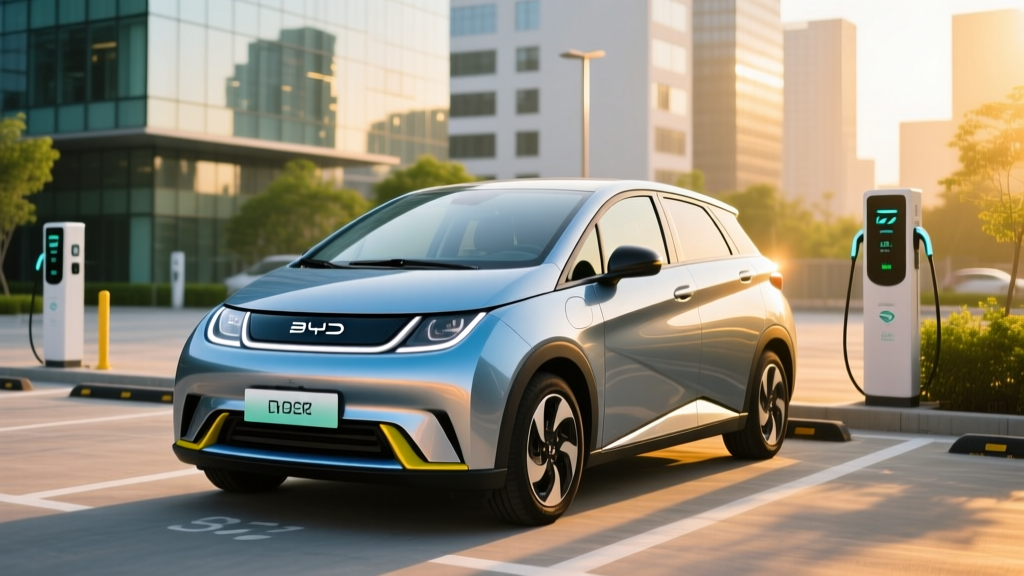
If you've been searching for an affordable entry into electric mobility, the BYD Dolphin Mini has likely crossed your radar. This compact EV, also known as the BYD Seagull in its home Chinese market, has generated significant buzz with its aggressive pricing strategy. But what does the BYD Dolphin Mini precio actually translate to for US buyers, and does this budget electric car deliver where it counts?
After analyzing BYD's specifications, real-world testing data, and current market conditions, we can give you a clear picture of what to expect from this subcompact EV in 2026. The short answer: it's compelling on paper, but US availability remains limited, and the real-world range story is more nuanced than the marketing suggests.
Range and Efficiency: EPA Estimates vs Real-World Reality
Claimed Range (CLTC): 252 miles (405 km) for the 44.9 kWh variant
Real-World Expectation: 180-211 miles depending on conditions
Highway (70 mph): ~165-185 miles
Cold Weather (32°F): ~140-160 miles
The BYD Dolphin Mini comes in two battery configurations: a 30.1 kWh pack offering around 190 miles (CLTC) and a larger 44.9 kWh LFP (lithium iron phosphate) battery claiming up to 252 miles under China's optimistic CLTC testing cycle. However, CLTC figures consistently overestimate range compared to the more stringent EPA methodology used in the United States.
Based on efficiency data from international reviews and similar LFP-equipped vehicles, expect the 44.9 kWh variant to achieve roughly 200-211 miles in mixed driving under EPA-equivalent conditions. Highway driving at sustained speeds will drop that to approximately 165-185 miles, while cold weather can reduce range by 20-30%, bringing winter figures down to 140-160 miles.
The LFP chemistry choice is strategic here. While LFP batteries have lower energy density than NMC (nickel manganese cobalt) cells, they offer superior longevity, better thermal stability, and can be charged to 100% regularly without degradation concerns. For a budget commuter car, this is the right trade-off.
Charging Speed: DC Fast Charging and Home Setup
| Charging Method | Power/Rate | Time/Miles Added |
|---|---|---|
| DC Fast Charge (Peak) | 45 kW max | 30-80% in ~30 minutes |
| DC Fast Charge (Sustained) | 30-35 kW average | 10-80% in ~55 minutes |
| Level 2 Home (240V) | 6.6 kW | ~25 miles per hour |
| Level 1 (120V) | 1.4 kW | ~5 miles per hour |
The Dolphin Mini's 45 kW peak DC fast-charging capability is its most significant limitation for road-trip use. While BYD advertises 30-80% in 30 minutes, that's only if you maintain peak charging speed—which rarely happens in practice. Real-world 10-80% charging takes closer to 55 minutes when accounting for the charge curve taper above 80%.
For context, competitors like the Chevrolet Bolt EV (now discontinued) and the 2026 Nissan Leaf support 50-100 kW charging, making them noticeably faster on long trips. The Dolphin Mini's charging speed is adequate for its intended use case—daily commuting with overnight home charging—but will test your patience on highway journeys exceeding 150 miles.
Home charging on a Level 2 (240V) connection at 6.6 kW adds roughly 25 miles of range per hour, meaning a full charge from 20% takes about 6-7 hours. This is perfectly reasonable for overnight charging and aligns with most budget EVs in this segment.
Performance: Adequate for City, Modest on Highway
| Specification | Value |
|---|---|
| Horsepower | 75 hp (55 kW) |
| Torque | 100 lb-ft (135 Nm) |
| 0-60 mph | ~11.0 seconds |
| Top Speed | 81 mph (electronically limited) |
| Drivetrain | Front-wheel drive (single motor) |
With 75 horsepower and an 11-second 0-60 time, the Dolphin Mini is not quick by any measure. However, electric motors deliver instant torque, making the car feel peppy in city driving up to 40 mph. The limitation becomes apparent during highway merging and passing maneuvers, where you'll need to plan ahead.
The 81 mph top speed limiter also restricts its usefulness on faster highways. This is a car designed for urban and suburban environments, not cross-country road trips. If your commute involves sustained 75+ mph driving, you'll want to consider more powerful alternatives.
Precio and Pricing: The BYD Dolphin Mini Cost Breakdown
Here's where the BYD Dolphin Mini makes its strongest case—at least in markets where it's available. In Latin American and Asian markets, the Dolphin Mini precio starts around $17,000-$19,000 USD equivalent for the base 30.1 kWh model, with the larger 44.9 kWh variant priced at $21,000-$23,000.
| Trim | Battery | Approx. Price (USD) |
|---|---|---|
| Base | 30.1 kWh | $17,000-$19,000 |
| Extended Range | 44.9 kWh | $21,000-$23,000 |
However, US buyers face a significant hurdle: as of 2026, BYD does not officially sell passenger vehicles in the United States due to ongoing trade tensions and 100% tariffs on Chinese-made EVs. This means the Dolphin Mini is not currently available through official US dealerships, and importing one privately would be cost-prohibitive and legally complex.
Federal Tax Credit Eligibility
Even if the Dolphin Mini were available in the US, it would almost certainly not qualify for the IRS §30D federal tax credit of up to $7,500. The credit requires vehicles to meet strict battery component and critical mineral sourcing requirements that effectively exclude Chinese-manufactured batteries. Additionally, the vehicle must have final assembly in North America to qualify.
This means US buyers looking at budget EVs should focus on models that do qualify for federal incentives, such as the Chevrolet Equinox EV, Nissan Leaf (with North American assembly), or the Tesla Model 3 Rear-Wheel Drive (depending on current sourcing compliance).
Interior Space and Practicality
Despite its compact footprint, the Dolphin Mini offers surprisingly usable interior space thanks to its dedicated EV platform:
- Cargo Volume: 10.2 cu ft (rear seats up), 34.8 cu ft (rear seats folded)
- Rear Legroom: 33.5 inches
- Front Legroom: 41.2 inches
- Seating Capacity: 5 passengers (tight for three adults in rear)
The cargo space is modest but sufficient for groceries, gym bags, or a couple of carry-on suitcases. The 60/40 split rear seats expand utility when needed, though the 34.8 cu ft maximum falls short of larger hatchbacks like the Chevrolet Bolt EUV (54 cu ft).
Interior materials reflect the price point—hard plastics dominate, but the design is modern and the 10.1-inch rotating touchscreen infotainment system (standard on most trims) provides a premium touch. Apple CarPlay and Android Auto are typically included, though US-spec features would depend on eventual market entry.
Warranty and Long-Term Ownership
BYD offers competitive warranty coverage in international markets:
- Basic Warranty: 6 years / 93,000 miles (150,000 km)
- Battery Warranty: 8 years / 124,000 miles (200,000 km) with minimum 70% capacity retention
- Powertrain Warranty: 8 years / 124,000 miles
The LFP battery chemistry should provide excellent longevity, with most LFP packs retaining 90%+ capacity after 1,000 charge cycles (roughly 200,000 miles). BYD's 8-year battery warranty is in line with industry standards, though some competitors like Hyundai and Kia offer 10-year coverage.
Long-term ownership costs should be favorable given the simple powertrain and LFP battery's resistance to degradation. However, parts availability and service network access would be major concerns for US buyers if the vehicle were imported.
Pros and Cons: The Honest Assessment
Pros
- Exceptionally low precio in international markets ($17k-$23k)
- LFP battery offers longevity and 100% charging capability
- Modern interior with rotating touchscreen
- Adequate range for city commuting (180-211 miles real-world)
- Low operating costs (electricity vs. gas)
Cons
- Not available in US market (2026)
- Slow DC fast charging (45 kW peak, ~55 min 10-80%)
- Modest performance (11-second 0-60, 81 mph top speed)
- Would not qualify for US federal tax credit
- Limited highway range (165-185 miles at 70 mph)
- Cold weather significantly impacts range
Who Should Consider the BYD Dolphin Mini?
The BYD Dolphin Mini is best suited for:
- Urban commuters with home charging and daily drives under 80 miles
- Budget-conscious buyers in markets where it's available without tariff penalties
- Second-car households needing an efficient city runabout
- Drivers who prioritize low purchase price over performance and fast charging
It is not ideal for:
- US buyers (unavailable and no tax credit eligibility)
- Frequent road-trippers who need fast charging
- Highway-heavy commuters with sustained 75+ mph driving
- Cold-climate drivers who need reliable winter range
- Those requiring more than 5-passenger seating or significant cargo space
Competitor Comparison: Better Alternatives for US Buyers
Since the BYD Dolphin Mini isn't a realistic option for US buyers in 2026, here's how it compares to available alternatives:
| Model | EPA Range | DC Fast Charge | Base MSRP | Tax Credit Eligible |
|---|---|---|---|---|
| BYD Dolphin Mini (44.9 kWh) | ~211 mi (est.) | 45 kW | ~$22,000 (intl) | No |
| Chevrolet Equinox EV LT | 319 mi | 150 kW | $33,600 | Yes (up to $7,500) |
| Nissan Leaf S | 149 mi | 50 kW | $28,140 | Partial |
| Tesla Model 3 RWD | 272 mi | 170 kW | $38,990 | Yes (up to $7,500) |
After applying the federal tax credit, the Chevrolet Equinox EV can drop to around $26,100—still more than the Dolphin Mini's international precio, but with significantly more range, faster charging, and full US warranty support. For US buyers, the value proposition strongly favors domestically available models with tax credit eligibility.
FAQ: BYD Dolphin Mini Questions Answered
What is the real-world range of the BYD Dolphin Mini?
Expect 180-211 miles in mixed driving for the 44.9 kWh variant under EPA-equivalent conditions. Highway driving at 70 mph reduces this to 165-185 miles, while cold weather (32°F) can drop range to 140-160 miles. The smaller 30.1 kWh battery delivers roughly 140-160 miles real-world.
How fast does the BYD Dolphin Mini charge?
DC fast charging peaks at 45 kW, achieving 30-80% in about 30 minutes under ideal conditions. Real-world 10-80% charging takes approximately 55 minutes due to charge curve taper. Home Level 2 charging at 6.6 kW adds about 25 miles per hour, with a full 20-100% charge taking 6-7 hours.
Can I buy the BYD Dolphin Mini in the United States?
No, as of 2026, BYD does not sell passenger vehicles in the US market due to trade restrictions and 100% tariffs on Chinese-made EVs. Private import would be legally complex and cost-prohibitive.
Does the BYD Dolphin Mini qualify for the federal EV tax credit?
Even if available in the US, the Dolphin Mini would not qualify for the IRS §30D tax credit of up to $7,500. The credit requires North American assembly and battery sourcing requirements that exclude Chinese-manufactured vehicles.
Is the BYD Dolphin Mini worth buying vs competitors?
For US buyers, no—availability and tax credit issues make it impractical. In international markets where it's sold at $17k-$23k, it offers compelling value for urban commuters who don't need fast charging or highway performance. However, the slow 45 kW charging and limited highway range are significant compromises.
What battery does the BYD Dolphin Mini use?
The Dolphin Mini uses BYD's Blade Battery in LFP (lithium iron phosphate) chemistry, available in 30.1 kWh and 44.9 kWh capacities. LFP offers excellent longevity, thermal stability, and can be charged to 100% regularly without degradation concerns.
How long will the BYD Dolphin Mini battery last?
LFP batteries typically retain 90%+ capacity after 1,000 charge cycles (roughly 200,000 miles). BYD warrants the battery for 8 years / 124,000 miles with minimum 70% capacity retention, though real-world degradation should be significantly better.