Quick Verdict: The Budget EV the US Market Still Can't Buy
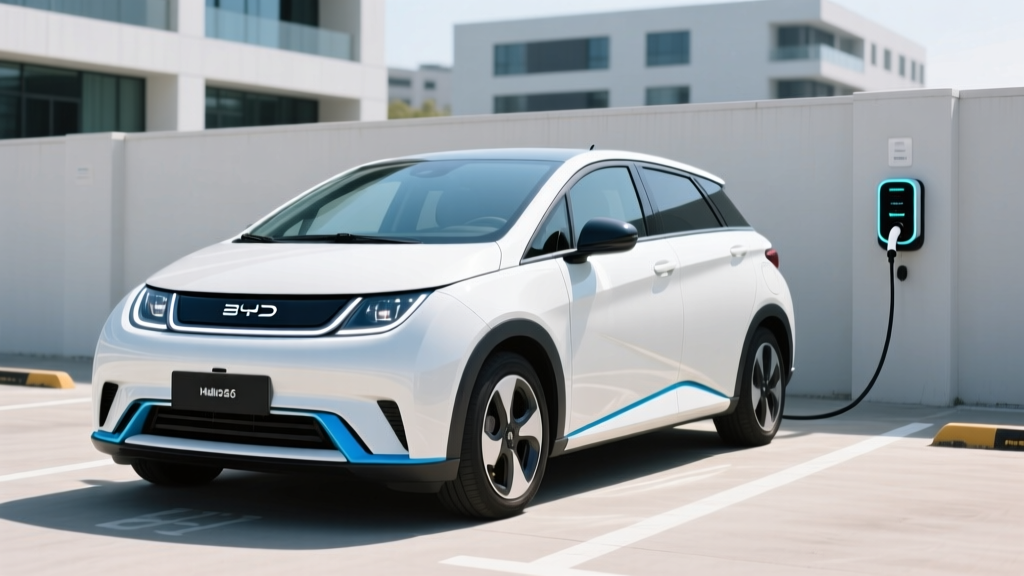
The BYD Dolphin hatchback is one of the best-selling electric vehicles on the planet — just not in the United States. As of 2026, BYD has not entered the US passenger-vehicle market, meaning American buyers cannot purchase this compact EV new from a dealership, nor can they claim the federal §30D tax credit on one. That said, the Dolphin's global success is instructive: it proves that a sub-$30,000 EV with an LFP battery, reasonable range, and practical packaging can sell in massive volumes.
This review examines the 2026 BYD Dolphin hatchback using the latest global-spec data, translated into US-relevant metrics. If you're researching the Dolphin as a potential import, tracking BYD's eventual US plans, or benchmarking it against domestic competitors like the Chevrolet Bolt EV, Nissan Leaf, and Hyundai Kona Electric, this is your data-driven reference.
Range, Battery, and Efficiency: LFP Chemistry by the Numbers
The 2026 BYD Dolphin hatchback rides on BYD's e-Platform 3.0 and is equipped with the company's proprietary Blade Battery — a lithium iron phosphate (LFP) cell design that prioritizes safety, longevity, and cost over raw energy density. Two battery sizes are offered globally:
- Standard Range: 44.9 kWh (usable), paired with a 70 kW (94 hp) motor
- Extended Range: 60.48 kWh (usable), paired with a 150 kW (201 hp) motor
EPA-Equivalent Range (WLTP-to-EPA Conversion)
The Extended Range Dolphin carries a WLTP rating of 427 km (~265 miles). Based on typical WLTP-to-EPA conversion factors of 10-15%, expect an EPA-equivalent range of approximately 225–240 miles for the Extended Range model. The Standard Range variant's WLTP figure of 340 km (~211 miles) translates to roughly 180–190 miles EPA-equivalent.
Real-world caveat: In highway-dominant driving at 70+ mph, expect to lose 15–20% from the EPA-equivalent figure, yielding around 180–200 miles in the Extended Range model. In cold weather (below 32°F), LFP batteries experience more pronounced range loss than NMC chemistries — plan for 25–35% reduction, bringing usable range down to roughly 155–175 miles on the Extended Range variant. The Dolphin does offer a standard heat pump in many markets, which mitigates cold-weather cabin-heating draw.
Efficiency for the Extended Range model sits around 15.8 kWh/100 km (WLTP), which converts to approximately 25.4 kWh/100 miles — competitive with the Hyundai Kona Electric but slightly less efficient than the Chevrolet Bolt EV's ~28 kWh/100 mi on the highway thanks to the Bolt's smaller frontal area and lighter weight.
| Spec | Standard Range | Extended Range |
|---|---|---|
| Battery (usable) | 44.9 kWh LFP | 60.48 kWh LFP |
| WLTP Range | 340 km (211 mi) | 427 km (265 mi) |
| EPA-Equiv. Range (est.) | 180–190 mi | 225–240 mi |
| Motor Power | 70 kW (94 hp) | 150 kW (201 hp) |
| Torque | 180 Nm (133 lb-ft) | 310 Nm (229 lb-ft) |
| 0–100 km/h (0–62 mph) | 12.3 sec | 7.0 sec |
| Drivetrain | FWD | FWD |
| Efficiency (WLTP) | ~16.0 kWh/100 km | ~15.8 kWh/100 km |
Charging Speeds: DC Fast Charging and Home Level 2
Charging is where the Dolphin's budget positioning becomes most apparent. The Extended Range model supports a peak DC fast-charge rate of 80 kW, while the Standard Range caps at 60 kW. Neither figure is class-leading — the Hyundai Kona Electric peaks at 100+ kW, and the Chevrolet Bolt (with DC fast-charge option) reaches 55 kW but from a smaller battery.
| Charging Level | Standard Range | Extended Range |
|---|---|---|
| DC Fast Charge (peak) | 60 kW | 80 kW |
| 10–80% DCFC Time | ~35 min | ~29 min |
| Level 2 AC (home/public) | 7 kW (onboard charger) | 7 kW (onboard charger) |
| Level 2 Full Charge Time | ~6.5 hours | ~8.5 hours |
| Miles Added per Hour (L2) | ~25 mi/hr | ~25 mi/hr |
| Connector (global) | CCS2 / GB/T (market dependent) | |
Charge-curve reality check: The Dolphin's 80 kW peak on the Extended Range model is not sustained across the full 10–80% window. Expect peak rates only between roughly 10–40% state of charge, after which the curve tapers to ~50–60 kW through 60%, and further to ~30 kW approaching 80%. This taper is typical of LFP batteries, which require careful thermal management during high-rate charging. The ~29-minute 10–80% claim assumes optimal battery preconditioning and a charger capable of delivering the full 80 kW continuously.
For home charging, the 7 kW onboard charger is adequate for overnight replenishment. Plugging in at 6 PM with 20% remaining will yield a full battery by roughly 2 AM — perfectly fine for daily commuting but slower than the 11 kW onboard chargers found in the Volkswagen ID.4 or Hyundai Ioniq 5.
Performance and Driving Dynamics
The Extended Range Dolphin's 150 kW (201 hp) motor delivers a 0–62 mph time of 7.0 seconds — quick enough for confident highway merging and passing, though it won't win stoplight drag races against the Mini Cooper SE or the now-discontinued Chevrolet Bolt EUV. The Standard Range model's 12.3-second sprint is leisurely by modern EV standards and is best suited to urban and suburban driving where peak acceleration matters less.
Both variants are front-wheel drive. There is no AWD or dual-motor option in the Dolphin lineup — a deliberate cost-saving measure that keeps the starting price low. The suspension is tuned for comfort over sportiness, with a torsion-beam rear axle (rather than independent rear suspension) that keeps packaging simple and cargo space maximized but transmits more road imperfections than rivals with multi-link setups.
Regenerative braking offers multiple levels, including a strong regen mode that enables near one-pedal driving in city traffic. However, unlike some competitors, the Dolphin does not offer a true one-pedal mode that brings the car to a complete stop and holds it — you'll still need to use the brake pedal at standstill.
Interior Space, Cargo, and Technology
The Dolphin hatchback's dimensions place it in the subcompact segment, roughly between the Nissan Leaf and the Hyundai Kona in overall footprint. Key interior measurements (global-spec):
- Wheelbase: 2,700 mm (106.3 in) — generous for the class, translating to solid rear-seat legroom
- Cargo volume (rear seats up): 345 liters (~12.2 cu ft)
- Cargo volume (rear seats folded): 1,310 liters (~46.3 cu ft)
- Rear legroom: ~930 mm (~36.6 in) — competitive with the Kona Electric
There is no frunk (front trunk). The e-Platform 3.0 packaging places all high-voltage components beneath the floor, but the front compartment is occupied by the motor, inverter, and ancillary systems with no dedicated storage space.
Infotainment: The centerpiece is a 12.8-inch rotating touchscreen (it physically pivots between portrait and landscape orientation — a signature BYD feature). It runs BYD's DiLink system with wireless Apple CarPlay and Android Auto, over-the-air updates, and voice control. A 5.0-inch digital instrument cluster sits behind the steering wheel.
Driver assistance: The Dolphin comes equipped with BYD's ADAS suite including adaptive cruise control, lane-keeping assist, automatic emergency braking, blind-spot monitoring, and rear cross-traffic alert. This is SAE Level 2 driver assistance — the driver must remain fully engaged with hands on the wheel and eyes on the road at all times. There is no hands-free or eyes-off capability.
Notable drawbacks: Interior materials lean heavily on hard plastics in the lower door panels and center console — acceptable at the price point but less refined than the Kona Electric or VW ID.3. The rotating screen, while novel, can produce glare in portrait mode under direct sunlight. Rear visibility is compromised by thick C-pillars, making the standard rearview camera essential.
Pricing, Tax Credits, and US Availability
This is the critical section for American readers. As of 2026, BYD does not sell passenger vehicles in the United States. The company has focused its international expansion on Europe, Southeast Asia, Australia, Latin America, and the Middle East. US tariffs on Chinese-manufactured vehicles (currently 100% under Section 301) make direct import economically unviable.
| Vehicle | Base MSRP (USD equiv.) | Est. Range | US Available? | §30D Credit Eligible? |
|---|---|---|---|---|
| BYD Dolphin (Extended Range) | ~$28,000 (EU/UK) | 225–240 mi (est.) | No | No |
| Chevrolet Bolt EV | $26,500 | 259 mi (EPA) | Yes | Yes (if sourcing rules met) |
| Hyundai Kona Electric | $32,975 | 261 mi (EPA) | Yes | Partial (varies by trim) |
| Nissan Leaf | $28,140 | 212 mi (EPA, S trim) | Yes | Yes (if sourcing rules met) |
| Mini Cooper SE | $30,900 | 114 mi (EPA) | Yes | No (MSRP cap met, sourcing fails) |
Federal tax credit note: Because the BYD Dolphin is not sold in the US, it does not qualify for the IRS §30D Clean Vehicle Credit. Even if it were available, the credit's battery-sourcing and critical-minerals requirements (designed to reduce dependence on Chinese supply chains) would almost certainly disqualify a BYD-manufactured vehicle. For current §30D eligibility rules — including the $55,000 sedan / $80,000 SUV MSRP caps, buyer income limits ($150K single / $300K joint), and battery-component sourcing requirements — consult the IRS Clean Vehicle Credits page.
Warranty and Battery Longevity
BYD offers the following warranty coverage in most global markets (specifics vary by country):
- Vehicle warranty: 6 years / 150,000 km (~93,000 miles)
- Battery warranty: 8 years / 160,000 km (~99,000 miles) with a minimum 70% capacity retention guarantee
- Roadside assistance: 6 years
The LFP Blade Battery chemistry is a genuine longevity advantage. LFP cells typically endure 3,000–5,000+ full charge cycles before reaching 80% state of health — significantly more than NMC cells (1,000–2,000 cycles). In practical terms, this means the Dolphin's battery should outlast the vehicle's useful life under normal use. BYD's Blade Battery also passed nail-penetration testing without thermal runaway — a safety benchmark that NMC cells typically fail.
The trade-off is energy density: LFP cells are heavier and bulkier per kWh than NMC, which is why the Dolphin's 60.48 kWh pack yields a more modest range than similarly sized NMC packs in competitors like the Kona Electric (64.8 kWh NMC, 261 mi EPA).
Who Should Consider the BYD Dolphin Hatchback?
Choose the BYD Dolphin if:
- You live in Europe, Australia, Southeast Asia, or Latin America where it's sold and supported
- You want a budget EV with proven LFP battery longevity and low running costs
- Your daily commute is under 80 miles round-trip and you have home charging access
- You prioritize low purchase price over cutting-edge performance or premium interior materials
Choose a US-market alternative if:
- You live in the United States (the Dolphin is not available and cannot be practically imported)
- You need access to the federal §30D tax credit (up to $7,500) to reduce your effective purchase price
- You want faster DC charging (100+ kW) for regular road-trip use
- You need AWD capability or want a more refined interior at a similar price point
For US buyers who like what the Dolphin represents — affordable, practical, LFP-powered — the closest domestic equivalents are the Chevrolet Bolt EV (259 mi EPA, ~$26,500, §30D eligible) and the Hyundai Kona Electric (261 mi EPA, ~$33,000). Both offer stronger dealer networks, EPA-certified range figures, and access to US charging infrastructure.
Pros
- Excellent LFP Blade Battery safety and cycle-life longevity
- Competitive global pricing (~$28,000 Extended Range)
- Generous wheelbase yields strong rear-seat legroom for the class
- Standard heat pump in many markets reduces cold-weather range loss
- Rotating 12.8-inch screen is a unique tech differentiator
- Comprehensive ADAS suite standard (not paywalled behind trim levels)
Cons
- Not available in the United States — no sales, no service network
- 80 kW peak DC charging is slow vs. 100–350 kW competitors
- No frunk; cargo space (12.2 cu ft) is modest for a hatchback
- Torsion-beam rear suspension compromises ride refinement
- Standard Range model's 12.3-second 0–62 mph time is underwhelming
- Hard-plastic interior surfaces feel budget-grade
- Does not qualify for US federal or state EV incentives
Frequently Asked Questions
What is the real-world range of the BYD Dolphin hatchback?
The Extended Range Dolphin has a WLTP rating of 427 km (~265 miles), which translates to an estimated EPA-equivalent range of 225–240 miles. In real-world highway driving at 70+ mph, expect 180–200 miles. In cold weather below freezing, plan for 155–175 miles. The Standard Range model delivers roughly 180–190 miles EPA-equivalent, with real-world highway use closer to 145–160 miles.
How fast does the BYD Dolphin charge?
The Extended Range model peaks at 80 kW on a DC fast charger, achieving a 10–80% charge in approximately 29 minutes under optimal conditions. The Standard Range peaks at 60 kW with a 10–80% time of ~35 minutes. At home on a Level 2 (240V) charger, the 7 kW onboard charger adds roughly 25 miles of range per hour, with a full charge taking 6.5–8.5 hours depending on battery size.
Does the BYD Dolphin qualify for the US federal EV tax credit?
No. BYD does not sell passenger vehicles in the United States as of 2026, so the Dolphin is not eligible for the IRS §30D Clean Vehicle Credit. Even if imported, its Chinese-manufactured battery and critical-mineral sourcing would almost certainly fail the §30D battery-component and critical-minerals requirements. Check the IRS website for the latest eligible-vehicle list.
Is the BYD Dolphin worth buying vs. US competitors?
For buyers outside the US, the Dolphin is a strong value proposition — its LFP battery longevity, standard heat pump, and competitive pricing make it a smart commuter EV. For US buyers, it's simply not an option. The Chevrolet Bolt EV and Hyundai Kona Electric offer similar or better range, faster charging, full US service networks, and potential access to the $7,500 federal tax credit.
Will BYD ever sell cars in the United States?
BYD has not announced US passenger-vehicle plans as of 2026. The 100% Section 301 tariff on Chinese-manufactured automobiles makes US entry economically challenging. BYD has focused its expansion on markets without such tariffs. The company does sell electric buses and commercial vehicles in the US, but consumer passenger cars remain unlikely in the near term.
What is the LFP Blade Battery and why does it matter?
BYD's Blade Battery uses lithium iron phosphate (LFP) chemistry arranged in long, thin cell modules that double as structural elements. LFP offers superior thermal stability (resistant to thermal runaway), longer cycle life (3,000–5,000+ cycles), and lower cost compared to NMC/NCA chemistries. The trade-off is lower energy density, meaning more weight and volume for the same kWh capacity. For a daily-commuter hatchback like the Dolphin, the longevity and safety benefits outweigh the density penalty.
Sources: BYD global specifications (byd.com), fueleconomy.gov for US competitor EPA data, IRS §30D Clean Vehicle Credits.