The BYD Cheap Car Question Every US Buyer Is Asking
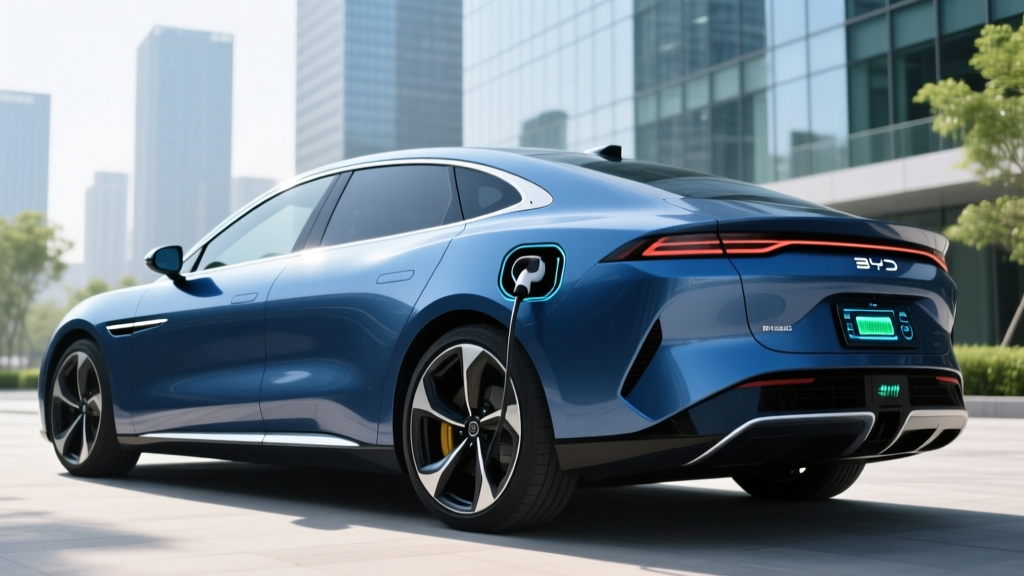
Type "BYD cheap car" into any search engine and you'll find headlines about $10,000 electric vehicles, record-breaking global sales, and a Chinese automaker that has overtaken Tesla in total EV production. The numbers are staggering: BYD sold over 3 million new energy vehicles in 2024 alone, with models like the Seagull starting at roughly $10,000 in China. But if you're reading this from the United States and hoping to drive one home from a local dealership, the reality is far more complicated.
As of early 2026, BYD does not sell passenger cars in the United States. The company has publicly stated its intention to enter the US market, but a combination of steep tariffs, geopolitical friction, and battery-sourcing regulations have kept its vehicles off American roads. This article breaks down exactly what BYD offers globally, what it would cost if it arrived stateside, why it isn't here yet, and which affordable EVs you can actually buy right now instead.
BYD's Global EV Lineup: The Models Making Headlines
BYD's current passenger vehicle portfolio spans from ultra-budget city cars to premium SUVs that compete directly with Tesla and BMW. Here are the models most frequently cited in "BYD cheap car" discussions, with their China-market pricing converted to approximate USD:
| Model | Body Style | Battery (kWh) | Chemistry | CLTC Range | China Price (approx. USD) |
|---|---|---|---|---|---|
| Seagull (Dolphin Mini) | Hatchback | 30.1 / 38.9 | LFP (Blade) | 190–252 mi | $10,000–$13,500 |
| Dolphin | Hatchback | 44.9 / 60.5 | LFP (Blade) | 260–360 mi | $15,000–$19,500 |
| Atto 3 (Yuan Plus) | Compact SUV | 49.9 / 60.5 | LFP (Blade) | 265–320 mi | $18,000–$22,000 |
| Seal | Sedan | 61.4 / 82.5 | LFP (Blade) | 340–435 mi | $26,000–$33,000 |
| Seal U | Mid-size SUV | 71.8 / 87.0 | LFP (Blade) | 310–375 mi | $28,000–$36,000 |
Two important caveats on these numbers. First, China uses the CLTC (China Light-Duty Vehicle Test Cycle) range standard, which is notably more optimistic than the US EPA test cycle. Expect EPA-equivalent range to be roughly 15–25% lower than the CLTC figures above. Second, these prices reflect the Chinese domestic market, where BYD benefits from local supply chains, government subsidies, and zero import duties.
Why You Can't Buy a BYD in the US (Yet)
BYD has been selling electric buses and commercial vehicles in the US for years, but passenger cars remain absent. Three primary barriers explain the gap:
1. The 100%+ Tariff Wall
In 2024, the US government raised tariffs on Chinese-made EVs to 100% under Section 301 trade provisions, effective August 2024 and continuing through 2026. This means a BYD Seagull that costs $10,000 to build would carry a $10,000 import duty before it reached a dealership floor, effectively doubling its price and eliminating the cost advantage that makes it newsworthy. Even BYD's higher-end models like the Seal would be pushed into price brackets where established competitors already have service networks and brand loyalty.
2. Federal Tax Credit Exclusion
Under IRS §30D rules, a vehicle is ineligible for the federal clean vehicle credit (up to $7,500) if its battery contains components or critical minerals from a "foreign entity of concern" (FEOC) — a category that includes Chinese manufacturers. Since BYD vertically integrates its own battery production through its Blade Battery division, every cell in a BYD vehicle would fail FEOC sourcing requirements. Even if BYD built a US assembly plant, the battery-sourcing rules would likely disqualify its vehicles from the credit for years.
3. Dealer Network and Homologation
Entering the US market requires federalizing vehicles to meet NHTSA safety standards (FMVSS), establishing a dealer and service network, and securing crash-test ratings from both NHTSA and the IIHS. BYD has signaled it is evaluating US market entry, potentially through a Mexico-based production facility to sidestep some tariffs under USMCA rules, but no timeline has been confirmed as of 2026.
What a BYD Would Cost in the US: Tariff-Adjusted Pricing
To make the thought exercise concrete, here's what BYD's most-discussed models would cost US buyers if imported directly from China under current 2026 tariff rules, before any dealer markups or destination charges:
| Model | China MSRP | 100% Tariff | Est. US Price | US Tax Credit | Effective Price |
|---|---|---|---|---|---|
| Seagull | ~$10,000 | +$10,000 | ~$20,000 | $0 (FEOC) | ~$20,000 |
| Dolphin | ~$15,000 | +$15,000 | ~$30,000 | $0 (FEOC) | ~$30,000 |
| Atto 3 | ~$18,000 | +$18,000 | ~$36,000 | $0 (FEOC) | ~$36,000 |
| Seal | ~$26,000 | +$26,000 | ~$52,000 | $0 (FEOC) | ~$52,000 |
At these tariff-inflated prices, the Seagull competes with used EVs and the base Nissan LEAF, while the Atto 3 lands squarely in Hyundai Kona Electric and Chevrolet Equinox EV territory — vehicles with established US service networks, EPA-certified range, and potential tax credit eligibility.
BYD Blade Battery Technology: What Makes It Different
The one area where BYD genuinely leads is battery technology. The company's proprietary Blade Battery uses lithium iron phosphate (LFP) chemistry arranged in long, thin cells that double as structural components within the pack. Key advantages include:
- Safety: LFP chemistry is inherently more thermally stable than NMC. BYD's nail-penetration test — where a steel nail is driven through a fully charged cell — shows no fire or smoke, a result most NMC cells cannot match.
- Longevity: LFP cells typically sustain 3,000+ charge cycles before reaching 80% capacity, compared to roughly 1,000–2,000 cycles for many NMC packs.
- Cost: LFP eliminates cobalt and nickel, reducing raw material costs by an estimated 20–30% versus equivalent NMC packs.
- Energy density trade-off: LFP is heavier and less energy-dense than NMC. This is why BYD vehicles tend to be slightly heavier than NMC-equipped competitors at similar range targets.
Notably, Tesla itself has adopted LFP batteries from BYD and CATL for standard-range Model 3 and Model Y vehicles sold globally — a tacit endorsement of the chemistry's viability.
Best US Alternatives to a BYD Cheap Car in 2026
If your goal is an affordable EV with low running costs, these 2026 models deliver the value proposition BYD promises — and you can actually buy, charge, and service them in the United States:
| Model | Base MSRP | EPA Range | Battery (kWh) | DC Fast Charge | Federal Credit |
|---|---|---|---|---|---|
| Chevrolet Equinox EV 2LT | $34,900 | 319 mi | 85 kWh (NMC) | 150 kW peak | Up to $7,500* |
| Hyundai Kona Electric SEL | $34,100 | 261 mi | 65 kWh (NMC) | 100 kW peak | Up to $7,500* |
| Nissan LEAF S | $29,235 | 149 mi | 40 kWh (LMO/NMC) | 50 kW (CHAdeMO) | Up to $7,500* |
| Tesla Model 3 RWD | $40,240 | 341 mi | 60 kWh (LFP) | 170 kW peak | Up to $7,500* |
| Volkswagen ID.4 S | $39,995 | 275 mi | 82 kWh (NMC) | 170 kW peak | Up to $7,500* |
*Federal tax credit eligibility depends on buyer income (AGI caps: $150K single / $300K joint), vehicle MSRP caps ($55K cars / $80K SUVs/trucks), and battery component/critical-mineral sourcing requirements. Verify current eligibility at IRS.gov and check the DOE's fueleconomy.gov credit lookup tool before purchasing.
Could BYD Enter the US Market by Building Locally?
BYD has explored manufacturing in Mexico, which could theoretically allow vehicles to enter the US under USMCA trade terms with reduced tariffs. However, several obstacles remain:
- USMCA rules of origin: At least 75% of vehicle content must be manufactured in North America to qualify for tariff-free import. BYD's supply chain is overwhelmingly China-based.
- FEOC battery sourcing: Even with North American assembly, if BYD's own Blade Battery cells are manufactured in China, the vehicle still fails §30D tax credit requirements.
- Political headwinds: Bipartisan concern over Chinese auto manufacturing in Mexico has prompted legislative proposals to close USMCA loopholes for Chinese-branded vehicles.
The most realistic path to BYD passenger vehicles on US roads would involve building a full manufacturing and battery plant within the United States — a multi-billion-dollar, multi-year commitment that BYD has not announced as of 2026.
Frequently Asked Questions
What is the cheapest BYD car available anywhere in the world?
The BYD Seagull (also called Dolphin Mini in some markets) starts at approximately 69,800 yuan, or roughly $10,000 USD, in China. It features a 30.1 kWh LFP Blade Battery with a CLTC-rated range of about 190 miles (expect roughly 145–155 miles on the EPA cycle). It is not available in the US.
Does BYD qualify for the $7,500 US federal EV tax credit?
No. Under current IRS §30D rules, any vehicle with battery components or critical minerals sourced from a Foreign Entity of Concern (FEOC) — which includes Chinese manufacturers — is disqualified from the federal clean vehicle credit. Since BYD manufactures its own batteries in China, its vehicles would not qualify even if sold in the US.
Is BYD planning to sell cars in the United States?
BYD executives have publicly discussed US market entry, and the company has evaluated potential manufacturing sites in Mexico. However, as of 2026, no US sales timeline, dealership network, or factory commitment has been confirmed. The 100% tariff on Chinese EVs and FEOC battery-sourcing restrictions remain significant barriers.
How does BYD's Blade Battery compare to batteries in US-market EVs?
BYD's Blade Battery uses LFP (lithium iron phosphate) chemistry, which offers superior thermal stability, longer cycle life (3,000+ cycles), and lower cost compared to the NMC (nickel manganese cobalt) chemistry used in many US-market EVs. The trade-off is lower energy density, meaning LFP packs are heavier for the same kWh capacity. Tesla, Ford, and others have begun adopting LFP for standard-range models, validating the chemistry.
What's the cheapest EV I can actually buy in the US in 2026?
The Nissan LEAF S starts at $29,235 and qualifies for the full $7,500 federal tax credit (subject to income and sourcing requirements), bringing the effective price to roughly $21,735. However, its 149-mile EPA range and CHAdeMO fast-charging connector (increasingly unsupported at new DC stations) are significant limitations. For a more practical package, the Chevrolet Equinox EV at $34,900 ($27,400 after credit) offers 319 miles of range and NACS Supercharger access.
Are BYD cars safe?
BYD vehicles sold in Europe and Australia have earned strong Euro NCAP and ANCAP safety ratings — the Atto 3 received a 5-star Euro NCAP rating. However, no BYD passenger vehicle has been crash-tested by NHTSA or IIHS for the US market, so American safety data does not currently exist.