The Short Answer: BYD Passenger Cars Are Not Sold in the US
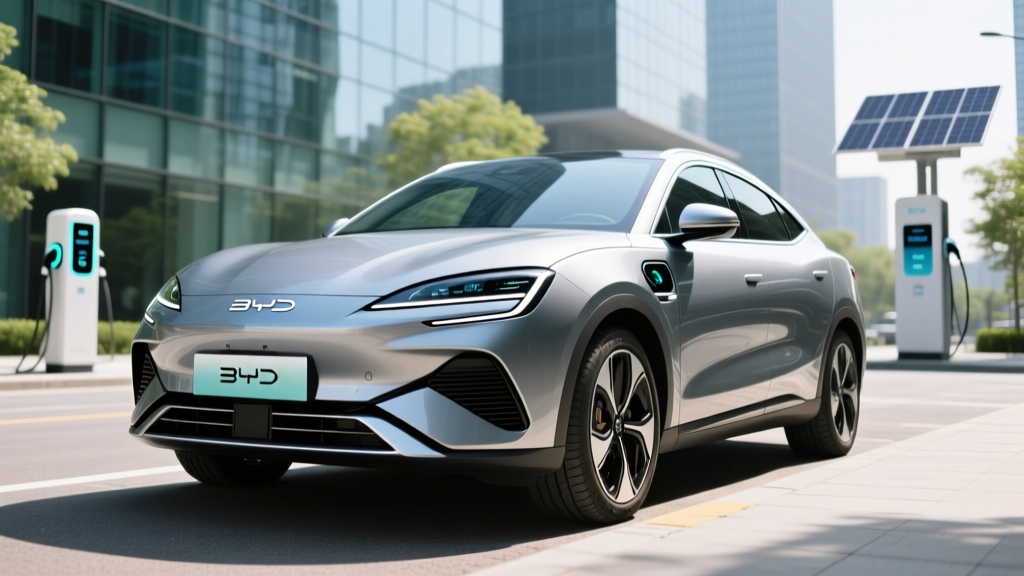
If you've been searching are BYD cars available in the US, the direct answer as of 2026 is no. BYD (Build Your Dreams), the world's largest electric vehicle manufacturer by volume, does not sell passenger cars or SUVs to American consumers. There are no BYD dealerships in the United States, no US-spec models listed on fueleconomy.gov, and no path to purchase a new BYD EV through any authorized channel.
However, the full picture is more nuanced. BYD operates a manufacturing facility in Lancaster, California, that builds commercial vehicles — specifically electric transit buses and heavy-duty trucks — for fleet operators. The company has also emerged as a global EV powerhouse, selling over 3 million new energy vehicles annually and competing head-to-head with Tesla in markets across Europe, Southeast Asia, Australia, and Latin America. So while you can't walk into a showroom and buy a BYD Seal or Atto 3 in the US today, understanding why — and whether that could change — matters for anyone tracking the EV landscape.
Why BYD Doesn't Sell Passenger Cars in America
Several interlocking barriers prevent BYD from entering the US passenger-vehicle market:
1. Steep Tariffs on Chinese-Made Vehicles
The most significant obstacle is economic. Under Section 301 tariffs and subsequent trade actions, Chinese-manufactured electric vehicles face a 100% tariff when imported into the United States as of 2024, a rate that remains in effect through 2026. This effectively doubles the price of any BYD model built in China, rendering even budget-friendly vehicles like the BYD Dolphin (starting around $10,000 in China) uncompetitive once duties, shipping, and compliance costs are added. A $30,000 BYD Seal becomes a $60,000+ vehicle before it reaches a dealer lot — eliminating the price advantage that defines BYD's global strategy.
2. National Security and Data Concerns
Modern EVs are data-gathering platforms. Connected vehicles from Chinese manufacturers face scrutiny under US regulations regarding data transmission, software supply chains, and potential remote access. In 2024, the US Commerce Department proposed rules that would effectively ban connected vehicles with Chinese-made hardware and software — a regulation targeting the broader ecosystem, not just BYD. These national-security concerns create a regulatory environment hostile to Chinese EV brands regardless of tariff policy.
3. No Dealer Network or Service Infrastructure
Even if tariffs were reduced, BYD would need to build a US dealer and service network from scratch. Tesla spent over a decade establishing its direct-sales model and service centers. Legacy automakers rely on franchise dealer networks that took generations to develop. BYD has neither, and the franchise-dealer laws in many US states make direct-to-consumer sales legally complex.
4. Federal Tax Credit Ineligibility
Under IRS §30D rules, vehicles containing battery components from a "foreign entity of concern" (FEOC) — which includes Chinese-state-linked companies — are disqualified from the $7,500 federal EV tax credit. Even if BYD somehow established US sales, buyers would be ineligible for this critical purchase incentive, putting BYD at a severe disadvantage against Tesla, Hyundai, Ford, and GM models that do qualify.
BYD's US Operations: What They Actually Build Here
BYD's Lancaster, California facility has operated since 2013 and employs several hundred workers. This factory produces:
- Electric transit buses — including the 40-foot and 60-foot articulated models used by transit agencies across North America
- Electric heavy-duty trucks — Class 6 and Class 8 vehicles for drayage, yard operations, and regional freight
- Electric forklifts and material-handling equipment
These are commercial products sold to fleet operators, municipalities, and logistics companies — not consumer vehicles. The Lancaster plant exists because commercial vehicles face different tariff structures and because "Buy America" provisions for federally funded transit projects require domestic assembly. BYD's US commercial footprint is real but entirely separate from the passenger-car conversation.
BYD Models Americans Can't Buy (But the World Can)
To understand what the US market is missing, here's a look at BYD's current global lineup — vehicles that compete directly with models available in America:
| Model | Segment | Battery (kWh) | Range (WLTP) | Max DC Charge | 0-62 mph | Global Price (approx.) |
|---|---|---|---|---|---|---|
| BYD Dolphin | Subcompact hatch | 60.4 (LFP Blade) | 265 mi | 88 kW | 7.0s | ~$30,000 |
| BYD Atto 3 (Yuan Plus) | Compact SUV | 60.5 (LFP Blade) | 260 mi | 88 kW | 7.3s | ~$38,000 |
| BYD Seal | Midsize sedan | 82.5 (LFP Blade) | 354 mi | 150 kW | 5.9s (AWD: 3.8s) | ~$45,000 |
| BYD Han EV | Full-size sedan | 85.4 (LFP Blade) | 320 mi | 120 kW | 7.9s | ~$50,000 |
| BYD Tang EV | 3-row SUV | 108.8 (LFP Blade) | 310 mi | 120 kW | 4.4s (AWD) | ~$55,000 |
| BYD Seal U | Midsize SUV | 87.0 (LFP Blade) | 310 mi | 140 kW | 7.7s | ~$42,000 |
Important note on range figures: BYD publishes WLTP (Worldwide Harmonized Light Vehicle Test Procedure) range estimates, which are used in Europe and other markets. WLTP figures typically run 10-15% higher than US EPA estimates for the same vehicle. If these models were EPA-certified, expect range numbers to be lower — a WLTP-rated 354-mile BYD Seal would likely earn an EPA rating closer to 300-315 miles.
BYD Blade Battery Technology
Every model above uses BYD's proprietary Blade Battery — a lithium iron phosphate (LFP) cell in a unique long, flat form factor that BYD claims passes nail-penetration tests without thermal runaway. LFP chemistry offers advantages in cycle life (3,000+ cycles), safety, and cost, but trades off some energy density compared to NMC (nickel manganese cobalt) cells used in many US-market EVs. This means BYD vehicles tend to be slightly heavier for a given range, but their batteries are engineered for longevity.
Could BYD Enter the US Passenger Market? The Realistic Outlook
Industry analysts have debated BYD's US ambitions for years. Here's a realistic assessment of the pathways and obstacles as of 2026:
Pathway 1: Local Manufacturing
BYD could theoretically build a US passenger-vehicle factory, similar to how Toyota, Hyundai, and BMW manufacture in the US. This would bypass import tariffs and potentially create political goodwill through job creation. However, a greenfield auto plant requires a $1.5-3 billion investment and 3-5 years to become operational. BYD has announced no such plans, and the current political environment makes the return on such an investment highly uncertain.
Pathway 2: Mexico Assembly
BYD has explored building a factory in Mexico, which could theoretically allow vehicles to enter the US under the USMCA trade agreement with reduced tariffs. However, US lawmakers have pushed back aggressively against this loophole, and the USMCA's rules of origin require substantial North American content — difficult for a company whose entire supply chain is China-based. As of 2026, no BYD Mexico plant is operational.
Pathway 3: Political Shift
A change in trade policy could reduce tariffs on Chinese EVs, but bipartisan support for protecting the domestic auto industry makes this unlikely in the near term. Both Republican and Democratic administrations have maintained or increased tariffs on Chinese goods, particularly in strategic sectors like EVs and batteries.
What US Buyers Should Consider Instead
If BYD's value proposition — affordable EVs with LFP battery durability — appeals to you, several US-market models deliver a similar formula:
| If You Wanted... | Consider Instead | EPA Range | Base MSRP | Tax Credit |
|---|---|---|---|---|
| BYD Dolphin (subcompact) | Chevrolet Bolt EV/EUV | 259 mi | ~$28,000 | $7,500* |
| BYD Atto 3 (compact SUV) | Hyundai Kona Electric | 261 mi | ~$33,000 | $7,500* |
| BYD Seal (midsize sedan) | Tesla Model 3 / Hyundai Ioniq 6 | 341 / 361 mi | ~$39,000 / ~$38,000 | $7,500* |
| BYD Tang (3-row SUV) | Kia EV9 | 304 mi | ~$55,000 | $7,500* |
| BYD Han (large sedan) | Tesla Model S / Lucid Air Pure | 402 / 419 mi | ~$75,000 / ~$70,000 | $7,500* |
*Federal tax credit eligibility under IRS §30D requires meeting MSRP caps ($55,000 for sedans, $80,000 for SUVs/trucks/vans), buyer income limits ($150K single / $300K joint AGI), and battery-component/critical-mineral sourcing rules that exclude FEOC-sourced materials. Verify eligibility at the point of sale — rules are subject to change.
BYD's Indirect Impact on Your EV Purchase
Even though you can't buy a BYD in the US, the company's global scale directly affects American EV buyers in several ways:
Price Pressure on Competitors
BYD's ability to produce a competitive EV for under $15,000 in China forces every global automaker to accelerate cost reduction. Tesla has cited BYD competition as a driver of its price cuts. When you see a Model 3 or Model Y price drop, BYD's manufacturing scale is partly responsible.
LFP Battery Adoption
BYD's success with LFP Blade Batteries helped convince Tesla, Ford, and others to adopt LFP chemistry in standard-range models. If your Tesla Model 3 RWD uses an LFP battery pack (which Tesla now recommends charging to 100% daily), you're benefiting from the chemistry validation that BYD's millions of vehicles provided.
Global Supply Chain Competition
BYD vertically integrates everything from lithium mining to semiconductor production. This vertical integration gives BYD cost advantages that Western automakers are racing to replicate through their own battery plants and supply agreements. The result: better batteries at lower prices are coming to US-market vehicles faster because BYD proved the model works.
Frequently Asked Questions
Can I import a BYD vehicle from another country?
Practically, no. The US requires all imported vehicles to meet Federal Motor Vehicle Safety Standards (FMVSS), and BYD's global models are not certified to these standards. Importing a non-compliant vehicle requires a costly and complex "show or display" petition or a 25-year age exemption. You would also still owe the 100% tariff. Importing a BYD from Europe or Australia is not a realistic path to ownership.
Does BYD make any vehicles I can buy in the US?
Only commercial vehicles — electric buses, heavy-duty trucks, and forklifts — sold to fleet operators and businesses. These are not available to individual consumers for personal use.
Will BYD ever sell cars in the US?
There is no announced plan for BYD to sell passenger vehicles in the US. Given the 100% tariff, FEOC tax-credit exclusion, data-security regulations, and the current political climate, a US passenger-vehicle launch before 2028-2030 appears unlikely. BYD's public statements have focused on expansion in Europe, Southeast Asia, Latin America, and Australia rather than the US market.
Are BYD batteries used in any US-market vehicles?
As of 2026, no mainstream US-market passenger vehicle uses BYD Blade Battery cells. Some commercial and energy-storage applications may use BYD cells, but consumer EVs from Tesla, Ford, GM, Hyundai, and others source batteries from CATL, Panasonic, LG Energy Solution, SK On, and Samsung SDI — or from their own manufacturing facilities. Under current FEOC rules, BYD battery components would disqualify a vehicle from the federal tax credit.
What's the cheapest EV I can actually buy in the US?
The most affordable new EVs available in the US market include the Chevrolet Bolt EV (approx. $28,000 MSRP before the $7,500 federal credit), the Nissan Leaf S (approx. $29,000), and the Hyundai Kona Electric (approx. $33,000). After the point-of-sale federal tax credit transfer, effective prices can drop significantly — but always verify your personal eligibility under current IRS §30D income and sourcing rules.
Is BYD bigger than Tesla?
By total new-energy vehicle sales (BEV + PHEV combined), BYD surpassed Tesla in volume in 2023. In pure battery-electric vehicle sales, the two companies trade the top position quarter to quarter. However, Tesla's revenue and profit margins remain higher due to its premium pricing and US/European market presence. BYD dominates in volume; Tesla leads in profitability per vehicle.