If you've been following electric vehicle news, you've likely seen headlines about BYD undercutting Tesla on price and expanding aggressively across Europe, Southeast Asia, and Latin America. That curiosity naturally leads to a search for BYD car costs — and the answer depends entirely on where you live. For US-based buyers in 2026, the picture is complicated: BYD does not sell passenger vehicles in the United States, and a wall of tariffs, regulatory requirements, and geopolitical friction keeps it that way.
This guide breaks down what BYD's global pricing actually looks like, why those numbers don't translate to American driveways, and what comparable EVs you can buy stateside stack up against on cost, range, and charging. If you're researching BYD because you want an affordable EV, we'll point you toward real alternatives available now.
BYD's Global Lineup: What These EVs Actually Cost Abroad
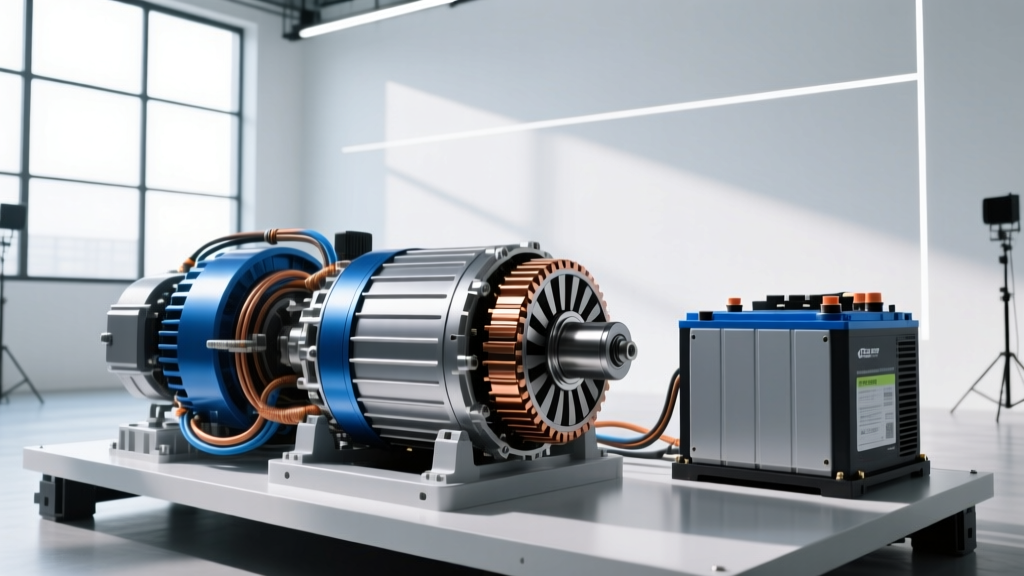
BYD (Build Your Dreams) manufactures a wide range of battery-electric and plug-in hybrid vehicles spanning budget city cars to premium SUVs. The company produces its own batteries — predominantly lithium iron phosphate (LFP) cells branded as the "Blade Battery" — which keeps costs down and avoids the cobalt supply-chain issues that affect NMC chemistries.
Here's a snapshot of BYD's key models and their approximate pricing in international markets as of early 2026. These figures are converted to USD and reflect base MSRPs before local taxes or incentives, which vary significantly by country.
| Model | Type | Battery (kWh) | WLTP Range | Approx. Base Price (USD) | Key Markets |
|---|---|---|---|---|---|
| Seagull (Dolphin Mini) | BEV Hatchback | 30 / 38 | 190–250 mi | $10,000–$14,000 | China, Latin America, SE Asia |
| Dolphin | BEV Hatchback | 44.9 / 60.5 | 210–265 mi | $18,000–$24,000 | Europe, Australia, SE Asia |
| Atto 3 (Yuan Plus) | BEV Crossover | 49.9 / 60.5 | 210–260 mi | $25,000–$32,000 | Europe, Australia, Japan, India |
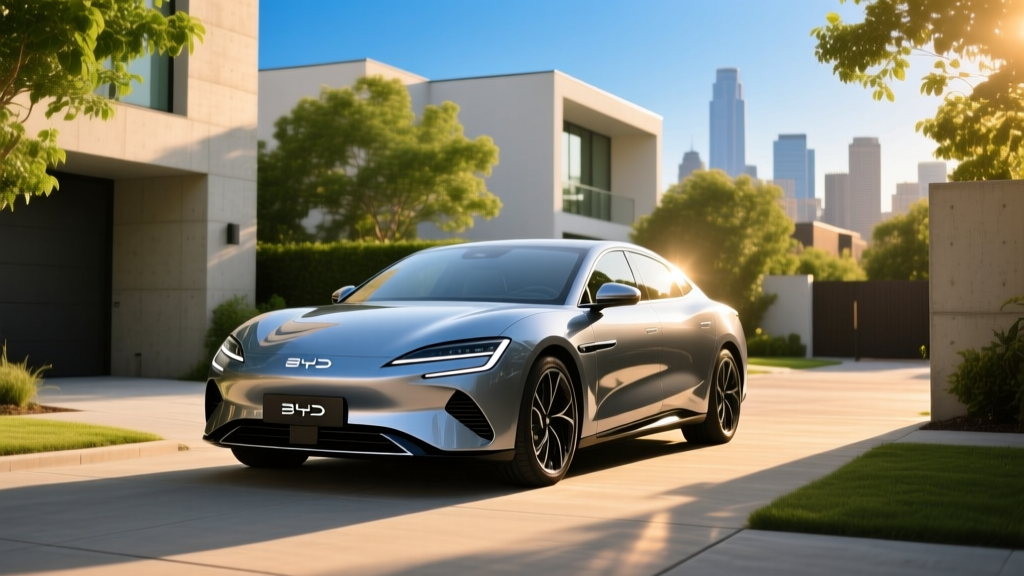
| Seal | BEV Sedan | 61.4 / 82.5 | 260–355 mi | $33,000–$42,000 | Europe, Australia, SE Asia |
| Seal U | BEV/PHEV SUV | 71.8 (BEV) | 260–310 mi | $35,000–$45,000 | Europe, UK |
| Tang | BEV 3-Row SUV | 108.8 | 280–335 mi | $50,000–$58,000 | Norway, limited EU |
Critical context: These are WLTP range figures, which tend to run 10–15% higher than EPA estimates used in the US. A BYD Seal rated at 355 miles WLTP would likely earn roughly 300–310 miles if EPA-tested. And these prices don't include the shipping, homologation, and compliance costs that would be added for a US launch.
Why BYD Isn't Sold in the US — and What Tariffs Have to Do With It
BYD has no passenger-vehicle dealer network in the United States as of 2026. The company sells electric buses and commercial vehicles in the US through separate divisions, but its consumer cars remain absent. Several factors explain this:
- Section 301 tariffs: Chinese-manufactured vehicles face a 100% tariff as of 2024, effectively doubling any BYD's landed cost. A $25,000 Atto 3 would arrive with a $25,000 tariff on top, destroying the price advantage.
- US safety and emissions homologation: BYD would need to crash-test and certify every model to NHTSA and EPA standards — a multi-year, multi-million-dollar process per vehicle.
- Dealer and service infrastructure: Establishing a US dealer network, parts supply chain, and warranty service footprint takes years of investment before the first car is sold.
- Federal tax credit exclusion: Even if sold here, BYD vehicles would not qualify for the IRS §30D clean vehicle credit. The credit requires final assembly in North America and compliance with battery-component and critical-minerals sourcing rules that Chinese-manufactured vehicles cannot meet.
- Political climate: Bipartisan concern about Chinese auto imports makes a near-term US launch unlikely regardless of BYD's business intentions.
BYD has explored building a factory in Mexico, which could theoretically circumvent some tariff barriers under USMCA trade rules. However, as of 2026, no confirmed production timeline or US-market vehicle announcement has materialized. The US government has also signaled scrutiny of Mexican-assembled Chinese-brand vehicles.
The Real BYD Car Cost If You Could Import One
Let's run a hypothetical exercise. Say you could legally import a BYD Seal (the model most comparable to a Tesla Model 3) into the US today. Here's what the actual cost would look like after tariffs and fees:
| Cost Component | Amount |
|---|---|
| Base MSRP (international) | $36,000 |
| Shipping & logistics | $2,500 |
| Section 301 tariff (100%) | $36,000 |
| Import duties & port fees | $1,200 |
| Homologation/compliance (amortized) | $3,000–$5,000 |
| Estimated landed cost | $78,700–$80,700 |
| Federal EV tax credit | $0 (ineligible) |
At roughly $80,000, a BYD Seal would compete against the BMW i4, Mercedes EQB, and higher-trim Tesla Model 3 Performance — vehicles with established US service networks and full EPA/NHTSA certification. The cost advantage vanishes entirely.
What You Can Buy Instead: US-Available EVs at Comparable Price Points
If BYD's value proposition attracted you — strong range, LFP battery durability, competitive pricing — here are the closest US-market alternatives across three price tiers. All prices reflect 2026 MSRPs before any applicable tax credits.
| BYD Equivalent | US Alternative | EPA Range | Battery (kWh) | Base MSRP | §30D Credit Eligible? |
|---|---|---|---|---|---|
| Seagull (~$12K) | Chevrolet Equinox EV 2LT | 319 mi | 85 (NMC) | $33,600 | Yes — up to $7,500 |
| Dolphin (~$20K) | Hyundai Kona Electric SEL | 261 mi | 64.8 (NMC) | $33,550 | No (Korea assembly) |
| Atto 3 (~$28K) | Volkswagen ID.4 Pro | 291 mi | 82 (NMC) | $39,735 | Yes — up to $7,500 |
| Seal (~$38K) | Tesla Model 3 Long Range RWD | 363 mi | 75 (LFP) | $42,630 | Yes — up to $7,500 |
| Seal U (~$40K) | Ford Mustang Mach-E Select | 250 mi | 75.7 (LFP) | $39,995 | Yes — up to $7,500 |
| Tang (~$54K) | Kia EV9 Land | 304 mi | 100 (NMC) | $55,900 | Yes — up to $7,500 |
BYD vs. Tesla: The Global Price War That Doesn't Reach America
BYD surpassed Tesla in global BEV sales volume during late 2023 and has traded the top spot back and forth since. The rivalry is real — but it plays out almost entirely outside the US.
In Europe, a BYD Seal undercuts a Tesla Model 3 by roughly €3,000–€5,000 depending on the market. In Australia, the Atto 3 competes directly with the Model Y on the lower end. But in the US, Tesla's Austin-built Model 3 starts at $38,630 and qualifies for the full $7,500 federal credit, bringing the effective price to roughly $31,130 — a figure no imported BYD could match even without tariffs.
The irony: tariffs designed to protect US consumers from cheap Chinese EVs actually mean Americans pay more for comparable vehicles than buyers in Europe or Southeast Asia. The Chevy Equinox EV and Tesla Model 3 are excellent vehicles, but neither approaches the $15,000–$20,000 price point that BYD occupies in other markets.
What BYD's LFP Blade Battery Means for Longevity
One genuine advantage BYD holds is vertical integration of its battery supply. The Blade Battery uses LFP (lithium iron phosphate) chemistry in a cell-to-pack design that eliminates module-level hardware, improving volumetric efficiency.
LFP batteries trade energy density for longevity and safety:
- Cycle life: LFP cells typically sustain 3,000–5,000 full charge cycles before degrading to 80% capacity — roughly double the cycle life of many NMC cells.
- Thermal stability: LFP chemistry is inherently more resistant to thermal runaway, reducing fire risk in crash scenarios.
- Charging to 100%: Unlike NMC batteries, LFP cells tolerate regular 100% charging without accelerated degradation, which simplifies daily use for owners without home Level 2 chargers who rely on public DC fast charging.
- Energy density trade-off: LFP packs are heavier per kWh than NMC, which limits range in smaller vehicle platforms. This is why the BYD Seagull (30–38 kWh) offers less range than comparably sized NMC-equipped competitors.
Several US-market vehicles now use LFP batteries, including base Tesla Model 3 variants and the Ford Mustang Mach-E Select with standard-range battery. If BYD's battery technology appeals to you, these models offer similar chemistry advantages with full US support.
The Bottom Line: Should US Buyers Wait for BYD?
Based on current trade policy, regulatory requirements, and BYD's own public statements, a US passenger-vehicle launch is not imminent. Even if BYD announced a US entry tomorrow, the timeline from announcement to first delivery would likely span 3–5 years for homologation, dealer buildout, and supply chain establishment.
For American EV shoppers in 2026, the practical takeaway is clear: BYD's global pricing is aspirational, not actionable. The US market offers strong EV options in the $30,000–$45,000 range — particularly the Tesla Model 3, Chevrolet Equinox EV, and Volkswagen ID.4 — many of which become significantly more affordable after the federal tax credit.
Frequently Asked Questions About BYD Car Costs
What is the cheapest BYD electric car?
The BYD Seagull (also called Dolphin Mini in some markets) starts at approximately $10,000 USD in China. It offers a 30 kWh LFP battery with roughly 190 miles of WLTP range. However, it is not sold in the US, and the 100% tariff would push its landed cost above $20,000 even if it could be imported — eliminating the price advantage over US-market alternatives like the Chevrolet Equinox EV.
Does BYD qualify for the US federal EV tax credit?
No. Even if BYD sold vehicles in the US, they would not qualify for the IRS §30D clean vehicle credit. The credit requires final assembly in North America and compliance with battery-component sourcing rules that exclude Chinese-manufactured battery cells and modules. BYD vehicles are assembled in China, Thailand, Brazil, and other non-US facilities.
How does BYD's range compare to Tesla?
On a model-by-model basis, Tesla generally holds a range advantage under EPA testing. The Tesla Model 3 Long Range achieves 363 miles EPA, while the comparable BYD Seal with its 82.5 kWh battery rates at roughly 355 miles WLTP — which would translate to approximately 300–310 miles under EPA methodology. Tesla's efficiency advantage comes from superior powertrain thermal management and aerodynamic optimization.
Is BYD planning to sell cars in the US?
BYD executives have acknowledged interest in the US market but have cited the current tariff environment and regulatory complexity as barriers. The company has invested in a potential Mexican manufacturing facility, but no confirmed timeline for US-market vehicle production has been announced as of early 2026. Industry analysts consider a US launch unlikely before 2028 at the earliest.
What US EV offers the best value compared to BYD pricing?
The Tesla Model 3 RWD at $38,630 (roughly $31,130 after the $7,500 federal credit) offers 363 miles of EPA range, LFP battery chemistry, Supercharger access, and a mature service network. The Chevrolet Equinox EV 2LT at $33,600 (roughly $26,100 after credit) provides 319 miles of range in a crossover form factor. Both deliver strong value within the US regulatory and incentive framework that BYD cannot access.