If you've been following the global EV market, you've likely seen BYD (Build Your Dreams) overtake Tesla in total plug-in vehicle sales and flood international markets with aggressively priced electric cars. Naturally, Canadian shoppers are asking: can you buy BYD in Canada?
The short answer as of 2026: No. You cannot purchase a new BYD passenger EV in Canada. The Canadian government imposed a 100% surtax on Chinese-made electric vehicles in October 2024, effectively doubling the price of any BYD model and killing the brand's business case for entering the Canadian market. BYD has no dealership network, no certified service centers, and no Transport Canada homologation for its passenger vehicles.
But BYD's global lineup is extensive, and understanding what's locked out — and what Canadian buyers should consider instead — is critical for anyone shopping for an EV in 2026. Below, we profile BYD's most popular global models with full specs, explain the tariff mechanics, and map each BYD to a purchasable Canadian alternative.
Why BYD Isn't Sold in Canada: The 100% Tariff Explained
In August 2024, Canada's Department of Finance announced a 100% surtax on all EVs manufactured in China, effective October 1, 2024. This policy, outlined on Canada.ca, was designed to counter what the government characterized as unfair trade practices and massive state subsidies funneled into China's EV sector.
Here's what the tariff means in practical terms:
- Applies to: All battery electric vehicles (BEVs) and certain plug-in hybrids assembled in China, regardless of brand (BYD, NIO, Xpeng, Polestar China-built models, etc.)
- Rate: 100% surtax on top of the existing 6.1% import duty
- Impact on pricing: A BYD Atto 3 with a factory export price of ~$30,000 CAD would face ~$31,800 in combined duties, pushing the landed cost above $61,000 before dealer markup, freight, or taxes
- No exemptions for vehicles imported by individuals or grey-market importers
Additionally, BYD has never completed the Transport Canada vehicle import compliance process for any passenger model. Without CMVSS (Canada Motor Vehicle Safety Standards) certification, a BYD cannot legally be registered for road use even if you somehow imported one privately.
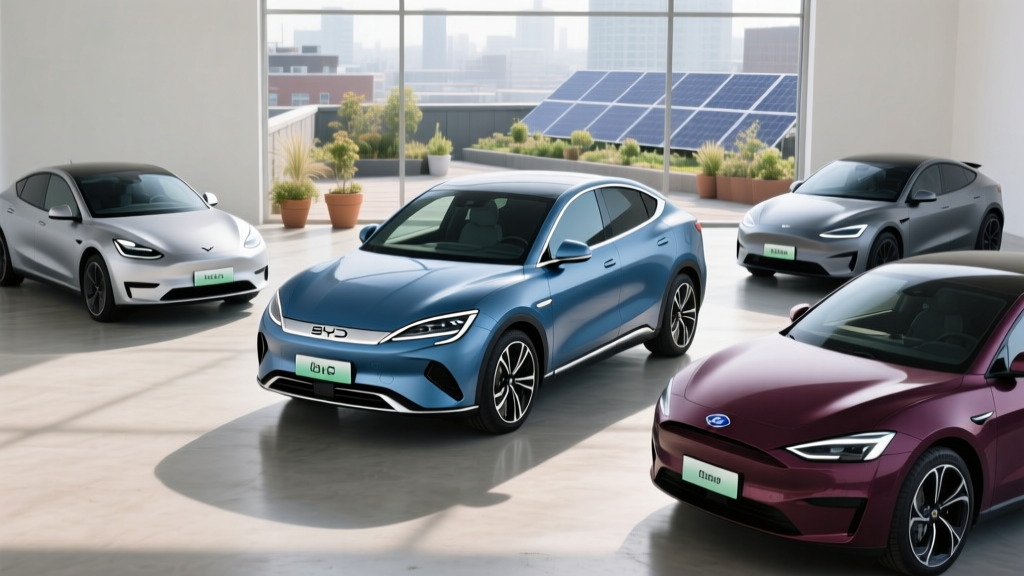
BYD's Global Lineup: Specs for Models Canadian Buyers Can't Get
BYD's 2026 global catalog includes several models that would compete directly with Canada's best-selling EVs. Below are the specs based on BYD's international (non-China) market data. Note that these vehicles use BYD's proprietary Blade Battery, which is LFP (lithium iron phosphate) chemistry — known for excellent thermal stability and long cycle life, though with slightly lower energy density than NMC.
| Spec | BYD Atto 3 | BYD Seal | BYD Dolphin | BYD Seal U |
|---|---|---|---|---|
| Vehicle Type | Compact SUV | Midsize Sedan | Subcompact Hatch | Midsize SUV |
| Battery (kWh, usable) | 60.5 kWh (LFP) | 82.5 kWh (LFP) | 60.4 kWh (LFP) | 87.0 kWh (LFP) |
| WLTP Range | 261 mi (420 km) | 354 mi (570 km) | 265 mi (427 km) | 311 mi (500 km) |
| Est. EPA Range* | ~220 mi | ~300 mi | ~225 mi | ~265 mi |
| Max DC Fast Charge | 88 kW | 150 kW | 88 kW | 140 kW |
| 10-80% DC Time | ~29 min | ~26 min | ~29 min | ~28 min |
| Level 2 Home Charge | 7 kW (~24 mi/hr) | 11 kW (~38 mi/hr) | 7 kW (~24 mi/hr) | 11 kW (~38 mi/hr) |
| 0-60 mph | 7.3 sec | 5.9 sec (RWD) | 7.0 sec | 7.9 sec |
| Horsepower | 201 hp | 313 hp (RWD) | 201 hp | 228 hp |
| Drivetrain | FWD | RWD / AWD | FWD | FWD / AWD |
| Global Price (approx.) | ~$38,000 CAD | ~$55,000 CAD | ~$32,000 CAD | ~$52,000 CAD |
*Estimated EPA range is calculated at approximately 85% of WLTP, consistent with typical EPA-to-WLTP conversion ratios. These vehicles have not been EPA-tested, as they are not sold in North America.
What Each BYD Competes Against — And What You Can Actually Buy
Since BYD is off the table, here's a direct mapping of each BYD model to the closest Canadian-market EV alternative, with real specs and 2026 pricing.
BYD Atto 3 → Hyundai Kona Electric (2026)
The Atto 3 is a compact electric SUV aimed at urban commuters. Its closest Canadian rival is the redesigned Hyundai Kona Electric.
| Spec | BYD Atto 3 (unavailable) | 2026 Hyundai Kona Electric |
|---|---|---|
| EPA Range | ~220 mi (est.) | 261 mi |
| Battery | 60.5 kWh (LFP) | 65.4 kWh (NMC) |
| Max DC Charge | 88 kW | ~100 kW |
| 0-60 mph | 7.3 sec | 7.4 sec |
| Canadian MSRP | N/A (tariff-blocked) | ~$44,000 CAD |
| Federal iZEV Rebate | N/A | Eligible ($5,000) |
The Kona Electric beats the Atto 3 on EPA range and is available with Canadian dealer support, winter-proven thermal management, and a NACS charging port (starting with the 2025 model year refresh). Source: Hyundai Canada.
BYD Seal → Tesla Model 3 (2026)
The BYD Seal is a sporty electric sedan that directly targets the Tesla Model 3. In Canada, the Model 3 remains the benchmark.
| Spec | BYD Seal (unavailable) | 2026 Tesla Model 3 Long Range |
|---|---|---|
| EPA Range | ~300 mi (est.) | 363 mi |
| Battery | 82.5 kWh (LFP) | 75 kWh (NMC) |
| Max DC Charge | 150 kW | 250 kW |
| 10-80% Time | ~26 min | ~18 min |
| 0-60 mph | 5.9 sec (RWD) | 4.2 sec (AWD) |
| Canadian MSRP | N/A | ~$59,990 CAD |
| Federal iZEV Rebate | N/A | Eligible ($5,000) |
The Model 3 wins decisively on charging speed, Supercharger network access (critical for Canadian road trips), and cold-weather range retention. The Seal would have competed on price, but with the 100% tariff, its theoretical Canadian price would exceed $110,000 CAD.
BYD Dolphin → Nissan LEAF or Chevrolet Bolt EV (Used)
The Dolphin is BYD's affordable subcompact hatch. Canada's new-EV market has a gap in this price tier. The closest new option is the Nissan LEAF (in its final model years), while the used market offers the Chevrolet Bolt EV (discontinued after 2023 but widely available pre-owned).
BYD Seal U → Tesla Model Y or Hyundai Ioniq 5
The Seal U is a midsize SUV that maps to Canada's hottest EV segment. The Tesla Model Y and Hyundai Ioniq 5 are the dominant choices here, both offering AWD, strong range, and Canadian iZEV eligibility.
Understanding LFP vs NMC: What BYD's Blade Battery Means
One reason BYD generates enthusiasm is its Blade Battery technology. Here's how BYD's LFP chemistry compares to the NMC batteries used in most Canadian-market EVs:
| Attribute | LFP (BYD Blade) | NMC (Tesla, Hyundai, Ford) |
|---|---|---|
| Energy Density | Lower (~160 Wh/kg cell) | Higher (~250 Wh/kg cell) |
| Cycle Life | 3,000-5,000+ cycles | 1,000-2,000 cycles |
| Thermal Stability | Excellent (very low thermal runaway risk) | Good (requires active BMS management) |
| Cold-Weather Performance | Weaker (more range loss below 0°C) | Better (less cold-weather degradation) |
| Recommended SoC | Can charge to 100% daily | 80% daily; 100% for trips only |
| Cost per kWh | Lower | Higher |
For Canadian winters, NMC has a practical edge: less range loss in cold weather and more predictable voltage behavior. LFP's advantage — cycle longevity and daily 100% charging — matters more in mild climates. This is one reason BYD's absence from Canada is less of a loss than it might seem.
Canada's Federal iZEV Program: What You Actually Get
While the U.S. has the IRS §30D Clean Vehicle Credit, Canada operates its own incentive: the iZEV (Incentives for Zero-Emission Vehicles) Program administered by Transport Canada.
- Rebate amount: $5,000 CAD for eligible BEVs and long-range PHEVs (base MSRP under $55,000 CAD for cars; $60,000 for SUVs/pickups; up to $70,000 for higher trims)
- Point of sale: Applied directly at the dealership, reducing the purchase price before tax
- Provincial stacking: Quebec offers up to $7,000 CAD additional; British Columbia offers up to $4,000 CAD (income-dependent) — these stack with the federal iZEV
- BYD exclusion: Even without the tariff, no BYD model is on the iZEV eligible vehicle list because none are Transport Canada certified
Best EVs Canadian Buyers Should Consider Instead of BYD
Based on 2026 Canadian market availability, iZEV eligibility, and cold-weather suitability, here are the top picks by use case:
🏆 Best Overall Value
Hyundai Kona Electric
- 261 mi EPA range
- ~$44,000 CAD before iZEV
- NACS port, heat pump standard
- Strong dealer network across Canada
🏆 Best for Road Trips
Tesla Model Y Long Range
- 320 mi EPA range (AWD)
- 250 kW Supercharger access
- ~$63,990 CAD before iZEV
- Best charging network in rural Canada
🏆 Best Sedan Alternative
Tesla Model 3 Long Range
- 363 mi EPA range
- 4.2 sec 0-60 (AWD)
- ~$59,990 CAD before iZEV
- Superior efficiency: 132 MPGe combined
🏆 Best Budget Option
Used Chevrolet Bolt EV (2022-2023)
- 259 mi EPA range
- ~$25,000-$30,000 CAD used
- Eligible for used-EV incentives in some provinces
- Proven battery durability
Could BYD Enter Canada in the Future?
BYD has expressed interest in multiple international markets, and the company is building or planning factories in Thailand, Brazil, Hungary, Indonesia, and Turkey. However, several factors make a Canadian entry unlikely before 2028-2029 at the earliest:
- Tariff persistence: The 100% surtax has broad political support in Canada and is aligned with similar U.S. and EU measures. Reversal is unlikely without significant geopolitical shifts.
- Manufacturing origin matters: Even if BYD builds a European factory (Hungary is expected to begin production in 2026), the tariff applies to China-manufactured vehicles. A Hungary-built BYD could theoretically bypass the tariff, but rules of origin and potential policy updates could close this loophole.
- Homologation timeline: Achieving CMVSS certification for even one model takes 12-24 months of testing and documentation.
- Dealer and service network: BYD would need to recruit Canadian dealers or build direct-sales infrastructure — a multi-year investment with uncertain returns given the tariff environment.
Frequently Asked Questions
Can I privately import a BYD from China or Europe to Canada?
Practically, no. Any vehicle imported to Canada must meet CMVSS standards through the Registrar of Imported Vehicles (RIV) program. BYD vehicles are not manufactured to these standards, and the modification cost to bring one into compliance would be prohibitive — likely exceeding the vehicle's value. The 100% surtax also applies to private imports.
Does BYD sell any vehicles in North America?
BYD sells electric buses and commercial trucks in the United States and has a small presence in Latin America for passenger vehicles (notably Brazil and Mexico). As of 2026, BYD has no passenger vehicle sales in either the U.S. or Canada. The U.S. imposes its own 100% tariff on Chinese EVs under Section 301 trade actions.
Are BYD's LFP Blade Batteries better than what Tesla or Hyundai use?
It depends on your priorities. BYD's Blade Battery excels in cycle life (3,000+ cycles to 80% capacity), thermal safety, and cost. However, NMC batteries used by Tesla and Hyundai offer higher energy density (more range per kg), better cold-weather performance, and faster charging speeds. For Canadian winters, NMC has a practical advantage.
What's the cheapest new EV I can buy in Canada in 2026?
The most affordable new EVs in Canada include the Hyundai Kona Electric (~$44,000 CAD before iZEV) and the Nissan LEAF (~$40,000 CAD before iZEV, though it uses the older CHAdeMO connector and has limited range). After the $5,000 federal iZEV rebate and potential provincial incentives, effective prices can drop into the mid-$30,000 range.
Will the BYD tariff be lifted if trade relations improve?
There is no indication of this as of 2026. The tariff is part of a coordinated Western response to Chinese EV overcapacity, with the U.S., EU, Canada, and Turkey all imposing similar measures. Any reversal would likely require demonstrated changes in Chinese industrial subsidy policy — a long-term prospect at best.