The BYD Question Every Canadian EV Shopper Is Asking
Search "BYD in Canada" and you'll find a tangled web of headlines about tariffs, factory announcements, and some of the world's most affordable electric vehicles. As of 2026, BYD — the Chinese automaker that briefly surpassed Tesla as the world's top BEV seller — does not sell passenger vehicles directly in Canada. But that doesn't mean the story ends there.
BYD has been actively exploring North American expansion, Canadian consumers are increasingly curious about sub-$40,000 CAD EVs, and the political and trade landscape continues to shift. This guide cuts through the noise with hard data on the models Canadians are most likely to see, what they'd cost under current tariff structures, and which established alternatives deliver similar value today.
Why BYD Isn't Sold in Canada (Yet)
Canada imposed a 100% surtax on Chinese-made electric vehicles effective October 2024, mirroring similar U.S. tariffs. This tariff effectively doubles the landed cost of any BYD vehicle manufactured in China, eliminating the price advantage that makes BYD disruptive in Europe, Southeast Asia, and Latin America.
BYD has discussed building manufacturing capacity outside China — including potential factory locations in Mexico and Europe — but as of early 2026, no BYD passenger vehicle production facility exists within a USMCA (Canada-United States-Mexico Agreement) zone that would bypass the tariff. BYD's Canadian presence remains limited to its commercial division: electric buses operated by transit agencies in cities like Toronto and Vancouver.
For passenger vehicles, Canadian buyers cannot walk into a dealership, configure a BYD, or access federal or provincial EV rebates for a BYD purchase. Let's examine what that means for the models generating the most search interest.
BYD Models Canadians Are Searching For: Specs & Estimated Pricing
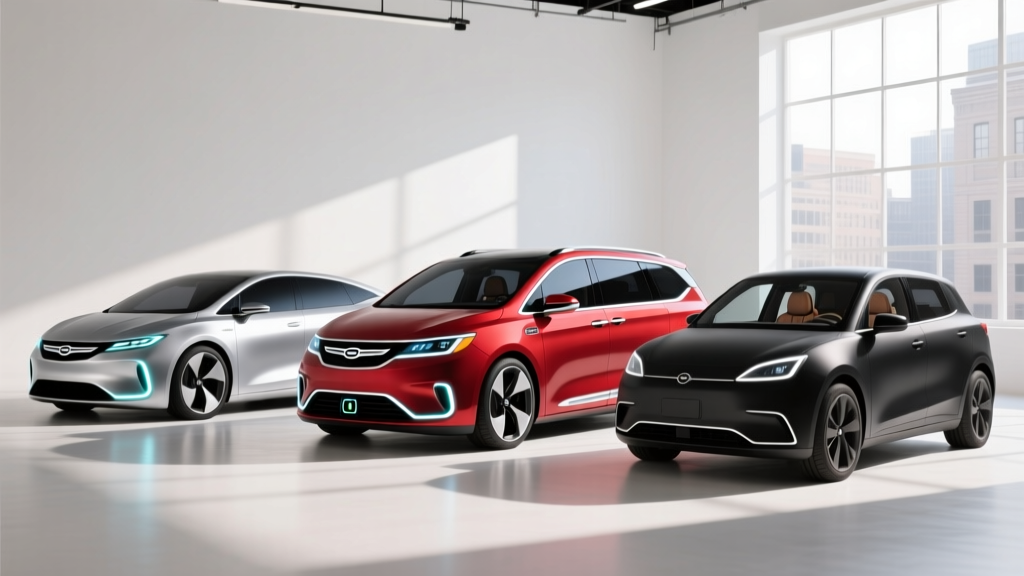
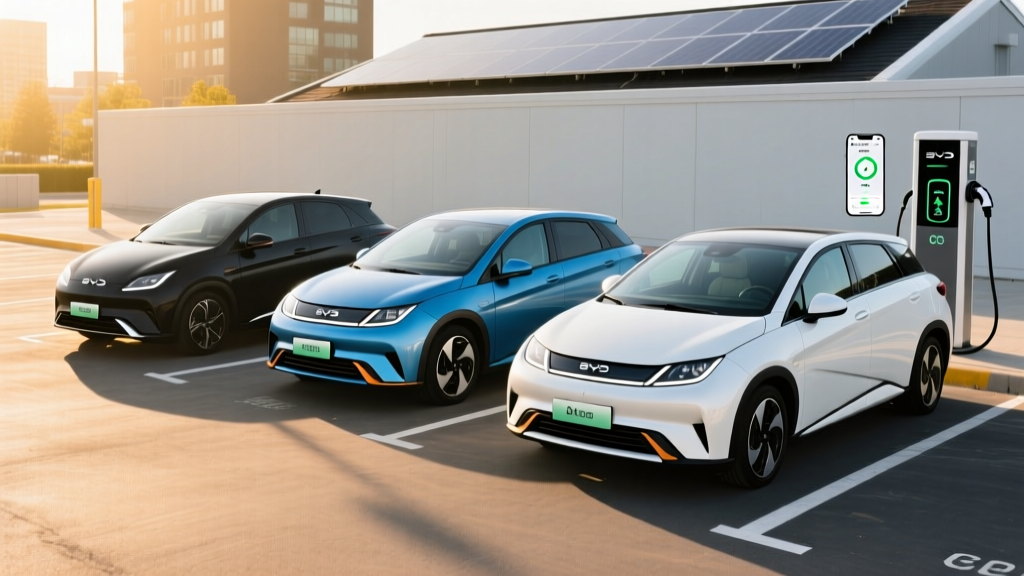
Based on global-market data and Canadian search trends, three BYD models dominate interest: the Seal (a Tesla Model 3 rival), the Atto 3 (a compact SUV also called the Yuan Plus in China), and the Dolphin (a budget hatchback). Here are their global specifications with estimated Canadian pricing under current tariff conditions.
| Spec | BYD Seal (RWD) | BYD Atto 3 | BYD Dolphin |
|---|---|---|---|
| Battery | 82.5 kWh (LFP Blade) | 60.48 kWh (LFP Blade) | 60.4 kWh (LFP Blade) |
| WLTP Range | 570 km (354 mi) | 420 km (261 mi) | 427 km (265 mi) |
| Est. EPA Range | ~320 mi | ~235 mi | ~240 mi |
| Power | 308 hp / 360 Nm | 201 hp / 310 Nm | 201 hp / 310 Nm |
| 0-100 km/h (0-62 mph) | 5.9 sec | 7.3 sec | 7.0 sec |
| Max DC Charge | 150 kW | 88 kW | 88 kW |
| 10-80% DC Time | ~26 min | ~41 min | ~41 min |
| Level 2 Charge | 11 kW (AC) | 7 kW (AC) | 7 kW (AC) |
| Global MSRP (approx.) | ~$45,000 CAD | ~$38,000 CAD | ~$32,000 CAD |
| Est. Canadian Price (with 100% tariff) | ~$90,000+ CAD | ~$76,000+ CAD | ~$64,000+ CAD |
| Federal iZEV Rebate Eligible? | Not available | Not available | Not available |
Note: WLTP range estimates are typically 10-15% higher than EPA equivalents. "Estimated Canadian Price" includes the 100% surtax but excludes freight, dealer fees, and provincial sales taxes. Global MSRPs reflect European/Asia-Pacific pricing converted to CAD as of early 2026.
BYD's Blade Battery: What Canadian Buyers Should Know
BYD's most compelling technology is its Blade Battery — a lithium iron phosphate (LFP) cell design that uses long, thin prismatic cells arranged in a structural pack. LFP chemistry offers distinct trade-offs compared to the nickel-manganese-cobalt (NMC) cells used in most North American EVs:
| Factor | LFP (BYD Blade) | NMC (Most NA EVs) |
|---|---|---|
| Energy Density | Lower (~150 Wh/kg cell) | Higher (~250 Wh/kg cell) |
| Cycle Life | 3,000-5,000+ cycles | 1,000-2,000 cycles |
| Cold-Weather Performance | More range loss (20-35% at -20°C) | Less range loss (15-25% at -20°C) |
| Thermal Stability | Excellent — resists thermal runaway | Good — requires more BMS management |
| Recommended Charge Habit | Can charge to 100% daily | Best kept 20-80% for daily use |
| Cost | Lower (no cobalt/nickel) | Higher (critical mineral exposure) |
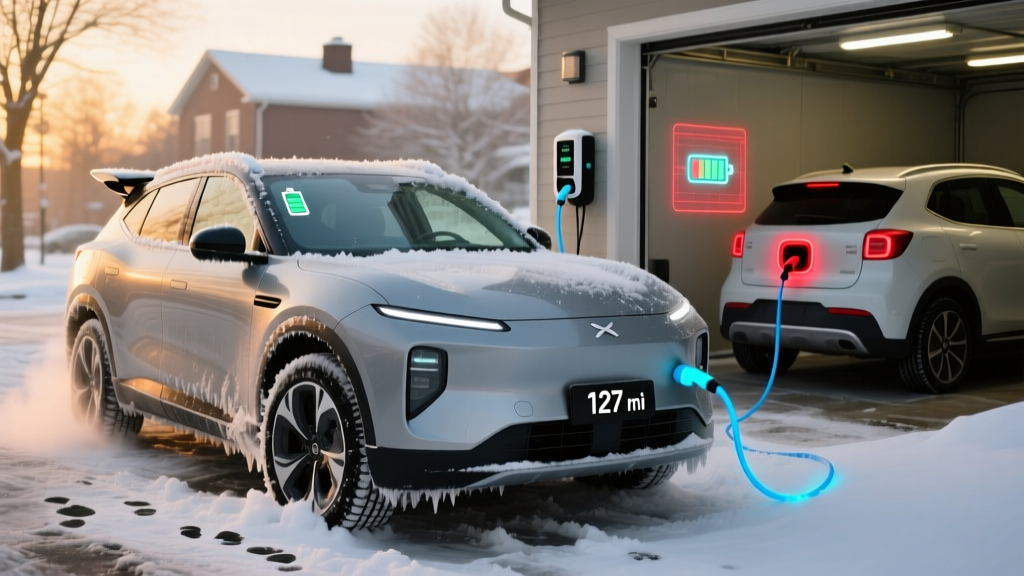
For Canadian winters, LFP's cold-weather sensitivity is a legitimate concern. BYD's Blade packs include active thermal management (liquid heating and cooling), but owners in Alberta, Manitoba, or Quebec should expect more winter range reduction than with an NMC-equipped Hyundai Ioniq 5 or Tesla Model Y. On the positive side, LFP's exceptional cycle life means the battery will likely outlast the vehicle itself, and BYD's global warranty typically covers 8 years/160,000 km with a 70% capacity retention threshold.
Real-World Range Expectations: What the WLTP Numbers Don't Tell You
BYD publishes WLTP range figures, which are measured on a less demanding cycle than North America's EPA standard. For Canadian buyers, the conversion and real-world adjustments matter significantly:
• WLTP: 570 km (354 mi)
• Estimated EPA equivalent: ~320 mi (515 km)
• Real-world highway (110 km/h, summer): ~280-300 mi (450-480 km)
• Real-world Canadian winter (-15°C, city/highway mix): ~200-230 mi (320-370 km)
• LFP cold-soak loss is steeper than NMC — preconditioning via the BYD app is essential
The Atto 3 and Dolphin face similar adjustments. The Atto 3's 420 km WLTP translates to roughly 235 mi EPA, dropping to approximately 150-170 mi in deep Canadian winter. The Dolphin, with a nearly identical battery but a more aerodynamic hatchback shape, performs similarly.
These numbers are adequate for daily commuting in most Canadian metros but fall short of the 300+ mi EPA range offered by competitors like the Tesla Model 3 Long Range (341 mi EPA) or Hyundai Ioniq 6 (361 mi EPA) — vehicles that are actually purchasable in Canada today.
Charging Speed: Where BYD Falls Behind
DC fast charging is where BYD's value proposition hits a practical wall for North American road trips. The Seal's 150 kW peak charge rate is competitive for its price class globally, but the Atto 3 and Dolphin are limited to 88 kW — noticeably slower than what Canadian buyers have come to expect.
| Vehicle | Peak DC kW | 10-80% Time | Level 2 (Home) | Connector |
|---|---|---|---|---|
| BYD Seal (RWD) | 150 kW | ~26 min | 11 kW | CCS2 (global) / NACS TBD |
| BYD Atto 3 | 88 kW | ~41 min | 7 kW | CCS2 (global) / NACS TBD |
| Tesla Model 3 (2026) | 250 kW | ~15 min | 11.5 kW | NACS |
| Hyundai Ioniq 5 (2026) | 240 kW (800V) | ~18 min | 10.9 kW | NACS |
| Chevrolet Equinox EV (2026) | 175 kW | ~24 min | 11.5 kW | NACS |
At 88 kW, the Atto 3 and Dolphin would take over 40 minutes to charge from 10-80% at a Petro-Canada EV station or Electrify Canada charger — nearly triple the time of an Ioniq 5 on an 800V architecture. For highway road trips along the Trans-Canada or the 401 corridor, this is a meaningful inconvenience.
There's also the connector question. BYD's global vehicles use CCS2 (the European standard). If BYD were to enter Canada, it would need to adopt the NACS (North American Charging Standard) connector now used by Tesla, Ford, GM, Hyundai, and most other brands. Without NACS, BYD owners would be locked out of Tesla's Supercharger network — the most reliable DC fast-charging infrastructure in Canada.
What Would It Take for BYD to Enter Canada?
Three scenarios could change BYD's Canadian availability:
- Tariff reduction or exemption: If Canada's 100% surtax were reduced or removed through trade negotiations, BYD's vehicles could re-enter at globally competitive prices. This is politically unlikely in the near term given bipartisan concerns about Chinese EV subsidies and overcapacity.
- Non-China manufacturing: BYD is building factories in Thailand, Brazil, Hungary, and Turkey. If a BYD plant were established in a USMCA-qualifying country (Mexico), vehicles produced there could potentially enter Canada tariff-free. However, Mexico's own EV trade policies remain uncertain, and BYD has not announced a Mexican passenger-vehicle plant as of 2026.
- Commercial-only expansion: BYD's electric buses already operate in Canadian transit fleets. The company could expand its Canadian commercial footprint (delivery vans, trucks) without entering the passenger market. This is the most likely near-term scenario.
What to Buy Instead: Canadian EVs That Match BYD's Promise
Canadians searching for BYD are typically looking for one thing: an affordable EV with solid range. Here are the vehicles actually available in Canada in 2026 that deliver on that promise, with federal iZEV program rebates (up to $5,000 CAD) where applicable:
→ Tesla Model 3 RWD — ~$54,000 CAD before rebates, 341 mi EPA (Long Range AWD), 250 kW Supercharging, full NACS access, iZEV eligible.
→ Hyundai Ioniq 6 Preferred — ~$50,000 CAD before rebates, 361 mi EPA (Long Range), 240 kW DC charging, iZEV eligible.
If you wanted the BYD Atto 3 (compact SUV, ~235 mi range):
→ Hyundai Kona Electric — ~$46,000 CAD before rebates, 261 mi EPA, 100 kW DC charging, iZEV eligible.
→ Chevrolet Equinox EV LT — ~$48,000 CAD before rebates, 319 mi EPA, 175 kW DC charging, iZEV eligible.
→ Nissan Ariya Engage — ~$52,000 CAD before rebates, 289 mi EPA, 130 kW DC charging, iZEV eligible.
If you wanted the BYD Dolphin (budget hatchback):
→ No direct Canadian equivalent exists at the $32,000 CAD price point. The closest option is the base Nissan Leaf S (~$40,000 CAD, 149 mi EPA, CHAdeMO connector — a dated standard) or a used EV.
The Bottom Line: Is Waiting for BYD Worth It?
For Canadian EV shoppers, the practical answer is no. BYD's passenger vehicles are not available, there is no confirmed timeline for market entry, and even if the tariff were lifted tomorrow, the vehicles would need NACS connector adoption, Transport Canada certification, and a dealer/service network build-out that would take years.
The Canadian EV market in 2026 already offers strong options between $45,000 and $55,000 CAD — many of which qualify for the $5,000 federal iZEV rebate and additional provincial incentives in Quebec (up to $7,000 CAD) and British Columbia. These vehicles come with established service networks, NACS charging access, and warranties backed by companies with decades of North American operations.
- Aggressive global pricing (if tariffs didn't exist)
- Blade Battery LFP longevity and safety
- Strong build quality in European-market reviews
- Competitive infotainment and interior materials
- 100% tariff eliminates price advantage entirely
- No NACS connector — locked out of Superchargers
- No Canadian dealer or service network
- Slower DC charging (88-150 kW) vs. competitors
- LFP cold-weather range loss in Canadian winters
- No iZEV or provincial rebate eligibility
Frequently Asked Questions
Can I import a BYD from the US or Europe to Canada?
Practically, no. Transport Canada requires vehicles to meet Canadian Motor Vehicle Safety Standards (CMVSS), and BYD's global-market vehicles are not CMVSS-certified. Even if you purchased a BYD in Europe, you could not legally register it for road use in Canada without a costly and uncertain homologation process. Additionally, the 100% tariff applies to Chinese-origin EVs regardless of the country of purchase.
Does BYD make any vehicles in North America?
BYD operates a bus manufacturing facility in Lancaster, California, producing electric transit buses for the U.S. market. However, this facility does not produce passenger vehicles, and its output would still be subject to trade rules if exported to Canada. BYD has not announced any North American passenger-vehicle factory.
Will the Canadian EV tariff on Chinese vehicles be removed?
As of 2026, there is no announced timeline for tariff reduction. Canada's 100% surtax on Chinese-made EVs was implemented in coordination with similar U.S. and EU measures and remains supported across major political parties. Any change would likely require a broader trade agreement or a significant shift in domestic manufacturing policy.
What is BYD's Blade Battery and is it safe?
The Blade Battery is BYD's proprietary LFP (lithium iron phosphate) cell design using long, blade-shaped prismatic cells that double as structural pack members. LFP chemistry is inherently more thermally stable than NMC and has demonstrated exceptional resistance to thermal runaway in nail-penetration tests. BYD claims the Blade Battery can withstand deformation, overcharge, and short-circuit without fire. Its cycle life (3,000-5,000+ cycles) far exceeds typical NMC cells, meaning degradation over a vehicle's lifetime should be minimal.
What's the cheapest EV I can actually buy in Canada in 2026?
The most affordable new EVs available in Canada include the Nissan Leaf S (~$40,000 CAD, 149 mi EPA range, CHAdeMO connector) and the Chevrolet Equinox EV LT (~$48,000 CAD, 319 mi EPA range, NACS). After the $5,000 federal iZEV rebate and applicable provincial incentives, effective prices can drop significantly. Quebec buyers, for instance, can stack the federal rebate with up to $7,000 in provincial incentives.
Does BYD qualify for Canada's federal iZEV rebate?
No. The iZEV program requires vehicles to be on Transport Canada's eligible list, which requires the vehicle to be sold new through a Canadian dealership. Since BYD does not sell passenger vehicles in Canada, no BYD model is iZEV-eligible.
Sources: Government of Canada — EV tariff announcement, Transport Canada iZEV Program, BYD global press specifications (2025-2026 model year).