Quick Verdict: BYD's Electric Bus Lineup for Fleet Buyers
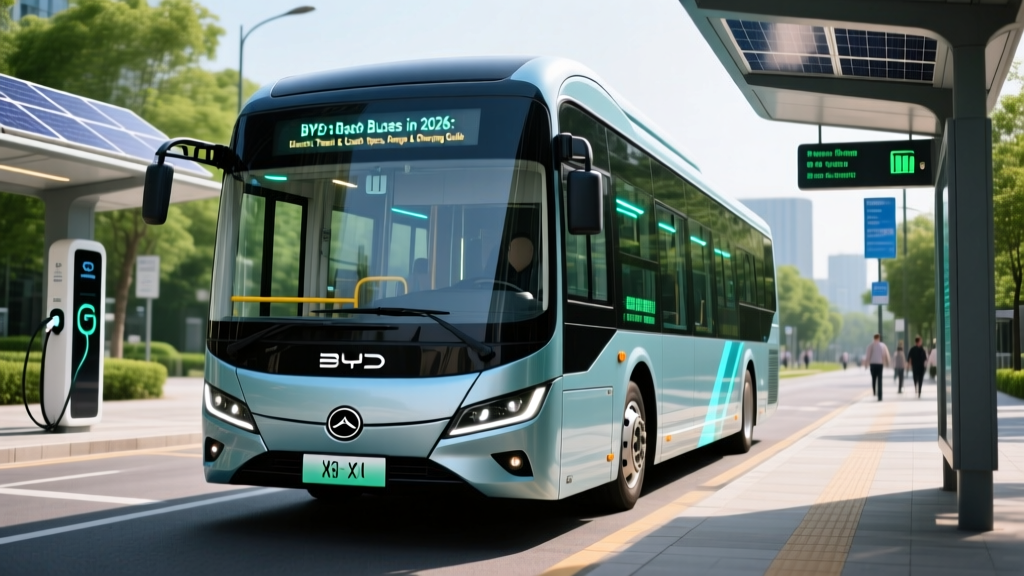
BYD (Build Your Dreams) is the world's largest manufacturer of battery-electric buses, with tens of thousands of units deployed across transit agencies, school districts, and charter operators globally. For US-based fleet buyers researching the BYD bus lineup, the company offers several purpose-built commercial models — from the 35-foot K8M low-floor transit bus to the 60-foot articulated K11M and the 45-foot C10MS intercity coach.
This guide profiles BYD's current bus platforms with the exact specifications fleet procurement teams need: battery capacity and chemistry, EPA-estimated and real-world range, DC fast-charging speeds, Level 2 depot charging rates, warranty terms, and pricing context. We also address federal tax credit eligibility under IRS §30D for commercial electric vehicles.
BYD Bus Model Lineup: Spec Comparison Table
| Specification | K8M (35 ft) | K9M (40 ft) | K11M (60 ft Artic) | C10MS (45 ft Coach) |
|---|---|---|---|---|
| Battery Capacity (usable) | 348 kWh | 450 kWh | 618 kWh | 450 kWh |
| Battery Chemistry | LFP (Lithium Iron Phosphate) | LFP | LFP | LFP |
| EPA-Estimated Range | ~220 mi | ~275 mi | ~250 mi | ~240 mi |
| Max DC Fast Charge | 150 kW | 180 kW | 200 kW | 180 kW |
| 10–80% DC Charge Time | ~110 min | ~120 min | ~140 min | ~120 min |
| Level 2 Depot Charge | 19.2 kW (AC) | 19.2 kW (AC) | 19.2 kW (AC) | 19.2 kW (AC) |
| Motor Power | 2 × 150 kW (402 hp combined) | 2 × 150 kW (402 hp combined) | 2 × 180 kW (483 hp combined) | 2 × 150 kW (402 hp combined) |
| Drivetrain | RWD (dual in-wheel motors) | RWD (dual in-wheel motors) | RWD (dual in-wheel + artic axle) | RWD (dual in-wheel motors) |
| Passenger Capacity | ~65 (seated + standing) | ~80 (seated + standing) | ~120 (seated + standing) | ~53 (seated, intercity) |
| Cargo Volume | N/A (low-floor transit) | N/A (low-floor transit) | N/A (low-floor transit) | ~350 cu ft (under-floor) |
| Battery Warranty | 12 yr / unlimited mi | 12 yr / unlimited mi | 12 yr / unlimited mi | 12 yr / unlimited mi |
| Estimated Base Price | ~$750,000 | ~$900,000 | ~$1,250,000 | ~$950,000 |
Sources: BYD USA commercial vehicle specifications, FTA transit procurement data. Pricing varies by procurement contract, options, and charging infrastructure bundling.
Range & Efficiency: EPA Estimates vs Real-World Operations
• Highway/intercity routes (C10MS coach): Sustained 65 mph highway driving reduces range by ~15–20% vs. EPA, yielding ~190–205 miles usable.
• Cold-weather impact (below 32°F): LFP chemistry loses ~20–30% range in freezing temperatures due to cabin heating demands and reduced charge acceptance. A K9M rated at 275 miles may deliver 190–220 miles in January in northern climates.
• Stop-and-go urban transit: Regenerative braking recovers significant energy; real-world range often matches or exceeds EPA estimates on dense urban routes.
• HVAC load: Full climate control in extreme heat or cold can draw 15–30 kW continuously, directly reducing range.
BYD buses use LFP (lithium iron phosphate) battery chemistry across the entire lineup. LFP offers distinct trade-offs compared to the NMC (nickel manganese cobalt) chemistry common in passenger EVs:
| LFP Advantages | LFP Trade-Offs |
|---|---|
| Superior cycle life (3,000–5,000+ cycles to 80% SoH) | Lower energy density → heavier packs for same kWh |
| No cobalt or nickel — lower supply-chain risk | Reduced cold-weather performance vs NMC |
| Excellent thermal stability (lower fire risk) | Flatter voltage curve makes SoC estimation harder |
| Can charge to 100% daily without accelerated degradation | Heavier vehicle → slightly higher tire wear |
For transit agencies running fixed routes under 200 miles daily, LFP's cycle-life advantage means the battery pack will likely outlast the bus chassis itself. BYD's 12-year battery warranty (with no mileage cap for commercial use) reflects this confidence. The industry standard capacity-retention threshold is 80% of original kWh at warranty expiration.
Charging Infrastructure: Depot & Opportunity Charging
BYD buses support two primary charging strategies: overnight depot charging (Level 2 AC) and opportunity charging (DC fast charge at route endpoints or mid-day layovers).
| Charging Level | Power (kW) | Connector | Miles Added/Hour | Full Charge Time |
|---|---|---|---|---|
| Level 2 (Depot AC) | 19.2 kW | SAE J1772 / CCS1 | ~8–12 mi/hr | 18–24 hours (0–100%) |
| DC Fast Charge | 150–200 kW peak | CCS1 (Combo) | ~60–80 mi/hr (peak) | 10–80% in ~110–140 min |
| Pantograph (Overhead) | Up to 300 kW | OppCharge / SAE J3105 | ~100+ mi/hr (peak) | 6–10 min top-up (opportunity) |
Understanding the Charge Curve
The peak DC charge rate (e.g., 180 kW on the K9M) is only sustained between roughly 10–50% State of Charge. Above 80% SoC, the charge rate tapers dramatically to protect LFP cell longevity — often dropping below 40 kW. This is why manufacturers quote 10–80% times rather than 0–100%. For fleet operators, the practical implication is clear: opportunity charging during 15-minute layovers (adding 30–50 miles) is highly efficient, but topping from 80–100% at a DC charger wastes time and money.
Depot Charging Infrastructure Costs
Fleet buyers should budget for charging infrastructure alongside vehicle procurement:
- Level 2 depot charger (19.2 kW): $8,000–$15,000 per unit (hardware) + $5,000–$25,000 electrical work per stall
- DC fast charger (150–180 kW): $80,000–$150,000 per unit + $30,000–$80,000 utility upgrade and installation
- Utility service upgrade: A depot with 10+ buses may require a new 1–2 MW transformer, adding $200,000–$500,000 and 12–24 months lead time
- Pantograph infrastructure: $150,000–$300,000 per overhead charging station
The Federal Transit Administration (FTA) Low-No Program provides grants covering up to 80% of electric bus and charging infrastructure costs for qualifying transit agencies.
Pricing, Procurement & Federal Tax Credits
BYD buses are not sold through consumer dealerships — they are procured through direct commercial contracts, often via competitive bid processes or cooperative purchasing agreements (such as Sourcewell or state piggyback contracts).
| Model | Est. Base Price | Typical Procurement Range | Federal Incentive Eligibility |
|---|---|---|---|
| K8M (35 ft) | ~$750,000 | $700K–$850K | §45W commercial credit / FTA Low-No |
| K9M (40 ft) | ~$900,000 | $850K–$1.1M | §45W commercial credit / FTA Low-No |
| K11M (60 ft) | ~$1,250,000 | $1.2M–$1.5M | §45W commercial credit / FTA Low-No |
| C10MS (45 ft Coach) | ~$950,000 | $900K–$1.15M | §45W commercial credit / FTA Low-No |
Federal Tax Credit: §45W (Commercial Clean Vehicle), Not §30D
Because BYD buses are commercial vehicles with a gross vehicle weight rating (GVWR) well above 14,000 lbs, they do not qualify for the consumer §30D tax credit (which caps at $7,500 for light-duty vehicles). Instead, fleet operators should evaluate:
- IRC §45W (Commercial Clean Vehicle Credit): Up to $40,000 per qualifying commercial EV (or 30% of cost basis, whichever is lower). Subject to battery-sourcing and critical-mineral requirements. Consult IRS §45W guidance and a tax professional for eligibility.
- FTA Low-No Grant Program: Covers up to 80% of bus + infrastructure costs for public transit agencies. Highly competitive but has funded hundreds of BYD deployments.
- EPA Clean School Bus Program: Up to $375,000 per electric school bus + $20,000 for charging infrastructure (applicable to BYD's S-series school bus variants).
- State/local incentives: Vary widely by jurisdiction. Check your state energy office and air quality management district for additional rebates.
Technology & Driver Assistance
BYD's eBus Platform Technology
BYD's electric buses feature several proprietary technologies:
- Iron-phosphate blade battery cells: BYD's proprietary cell format maximizes pack volume utilization and provides exceptional thermal runaway resistance — critical for passenger-carrying vehicles.
- In-wheel hub motors: Dual rear-axle wheel-hub motors eliminate the need for a transmission, differential, or drive shaft, reducing maintenance points and enabling a fully flat low floor.
- Regenerative braking: Multi-stage regen (adjustable by the driver) recovers kinetic energy during deceleration. On stop-and-go transit routes, regen can recover 25–35% of energy consumed.
- Thermal management: Liquid-cooled battery packs with active heating elements maintain optimal cell temperature (20–35°C) for both performance and longevity.
Driver Assistance & Safety Systems
BYD buses include SAE Level 1 driver-assistance features (the driver remains fully responsible for vehicle operation at all times):
- Automatic Emergency Braking (AEB) with pedestrian detection
- Lane Departure Warning (LDW)
- Adaptive Cruise Control (ACC) — available on C10MS coach
- Blind-spot monitoring with rear cross-traffic alert
- 360° surround-view camera system
- Driver fatigue monitoring (camera-based eye tracking)
Fleet Management & Telematics
BYD provides an integrated fleet management platform offering:
- Real-time State of Charge (SoC) and State of Health (SoH) monitoring per vehicle
- Route efficiency analytics and energy consumption per mile
- Remote preconditioning scheduling (warm/cool the cabin while plugged in to preserve range)
- Charging session logging and electricity cost tracking
- Predictive maintenance alerts based on motor temperature, brake wear, and battery cell balance data
BYD Bus vs. Competitors: North American Market
BYD competes in the North American electric transit bus market against several established players:
| Attribute | BYD K9M | New Flyer Xcelsior CHARGE NG | Proterra ZX5 | Gillig Battery Electric |
|---|---|---|---|---|
| Battery (kWh) | 450 kWh (LFP) | 320–520 kWh (NMC) | 440–660 kWh (NMC) | 346–466 kWh (NMC) |
| EPA Range (mi) | ~275 | ~200–320 | ~250–375 | ~200–280 |
| Battery Warranty | 12 yr | 12 yr | 12 yr | 12 yr |
| US Manufacturing | Lancaster, CA | Multiple US plants | Greenville, SC / Joliet, IL | Hayward, CA |
| Global Fleet Size | 70,000+ (largest globally) | Thousands (NA leader) | ~1,000+ deployed | Hundreds deployed |
Who Should Buy a BYD Bus?
✅ Choose BYD If:
- Your agency operates fixed routes under 220 miles daily (matching the K9M's realistic urban range)
- You prioritize battery longevity and want LFP chemistry's 3,000+ cycle life for 12+ year service
- You want the lowest per-mile energy cost: BYD's in-wheel motors and large battery deliver ~2.0–2.5 kWh/mile
- You value a proven global track record (70,000+ electric buses in revenue service worldwide)
- Your procurement qualifies for FTA Low-No grants and §45W commercial tax credits
❌ Look Elsewhere If:
- You need Buy America compliance for FTA-funded routes and the specific model/year lacks current certification
- Your routes regularly exceed 250 miles in cold climates (consider NMC-equipped competitors with better cold-weather performance or opportunity-charging pantograph setups)
- You require extensive North American dealer/service network support — New Flyer and Gillig have deeper NA parts networks
- Your agency has political or procurement restrictions on Chinese-headquartered manufacturers
Total Cost of Ownership: Diesel vs. BYD Electric Bus
The business case for electric buses rests on total cost of ownership (TCO), not sticker price. Here's a 12-year TCO comparison for a 40-foot transit bus running 45,000 miles/year:
| Cost Category | Diesel Bus | BYD K9M Electric | Difference |
|---|---|---|---|
| Vehicle Purchase | $550,000 | $900,000 | +$350,000 |
| Charging Infrastructure (amortized) | $0 | $80,000 | +$80,000 |
| Federal Tax Credit (§45W) | $0 | −$40,000 | −$40,000 |
| Fuel / Electricity (12 yr) | $486,000 (diesel @ $3.50/gal, 4.5 mpg) | $162,000 (elec @ $0.12/kWh, 2.2 kWh/mi) | −$324,000 |
| Maintenance (12 yr) | $360,000 | $180,000 | −$180,000 |
| 12-Year TCO | $1,396,000 | $1,282,000 | −$114,000 savings |
Assumptions: 45,000 mi/yr × 12 years = 540,000 total miles. Diesel price and electricity rate are national averages; actual costs vary by utility tariff and fuel contract. Maintenance savings reflect elimination of oil changes, transmission service, exhaust system repairs, and reduced brake wear from regenerative braking.
Frequently Asked Questions
What is the real-world range of a BYD electric bus?
The BYD K9M (40-foot) carries an EPA-estimated range of approximately 275 miles. In real-world urban transit operations with frequent stops and regenerative braking, agencies commonly report 240–280 miles. Highway-heavy routes or cold-weather operations (below 32°F) may see range drop to 190–220 miles due to HVAC loads and LFP chemistry's cold-temperature limitations.
How fast does a BYD bus charge at DC fast chargers and at the depot?
At a DC fast charger (CCS1 connector), the K9M peaks at 180 kW and charges from 10–80% in approximately 120 minutes. At a depot Level 2 charger (19.2 kW AC), a full 0–100% charge takes 18–24 hours — suitable for overnight turnaround. Note that the peak 180 kW rate is only sustained between ~10–50% SoC; charging slows significantly above 80% to protect battery health.
How much does a BYD bus cost after federal incentives?
A BYD K9M (40-foot transit bus) lists at approximately $900,000. After the §45W commercial clean vehicle credit (up to $40,000), the net vehicle cost drops to ~$860,000. For public transit agencies using FTA Low-No grants (covering up to 80% of vehicle + infrastructure), the effective out-of-pocket cost can be as low as $180,000–$250,000 per bus, depending on grant structure.
Does the BYD bus qualify for the federal EV tax credit?
BYD buses do not qualify for the consumer §30D tax credit (limited to light-duty vehicles under 14,000 lbs GVWR). They may qualify for the IRC §45W Commercial Clean Vehicle Credit — up to $40,000 per vehicle (30% of cost basis for vehicles under $40,000, but capped at $40,000 for heavy commercial). Eligibility depends on battery component sourcing and critical mineral requirements. Always consult the IRS §45W guidance and a qualified tax professional.
Is a BYD bus worth buying vs. New Flyer or Proterra?
BYD offers the strongest global track record (70,000+ buses deployed) and LFP battery chemistry with superior cycle life. However, New Flyer and Gillig have deeper North American service networks and more established Buy America compliance records. If your procurement is FTA-funded, verify current Buy America certification for the specific BYD model. For privately funded operations (charter, airport shuttles, university transit), BYD's Lancaster, CA production and competitive pricing make it a strong contender.
What is the battery warranty on BYD buses?
BYD provides a 12-year battery warranty with no mileage limitation for commercial bus applications. The warranty guarantees the battery pack will retain at least 80% of its original usable kWh capacity over the warranty period. Given LFP chemistry's 3,000–5,000 cycle life, many fleet operators expect the battery to outlast the 12-year typical transit bus lifecycle.
How does cold weather affect BYD bus range?
LFP batteries experience greater capacity loss in freezing temperatures than NMC chemistry. Below 32°F, expect 20–30% range reduction on BYD buses, primarily driven by cabin heating demands (electric resistance or heat pump HVAC draws 15–30 kW continuously) and reduced charge acceptance during regenerative braking. Preconditioning the battery and cabin while the bus is still plugged in at the depot can recover 10–15 miles of range.
For the latest BYD bus specifications and procurement information, consult BYD USA's official commercial vehicle page. Federal incentive rules change frequently — verify current eligibility at irs.gov and transit.dot.gov before finalizing procurement decisions.