The Short Answer: BYD Is Not Sold in the USA (Yet)
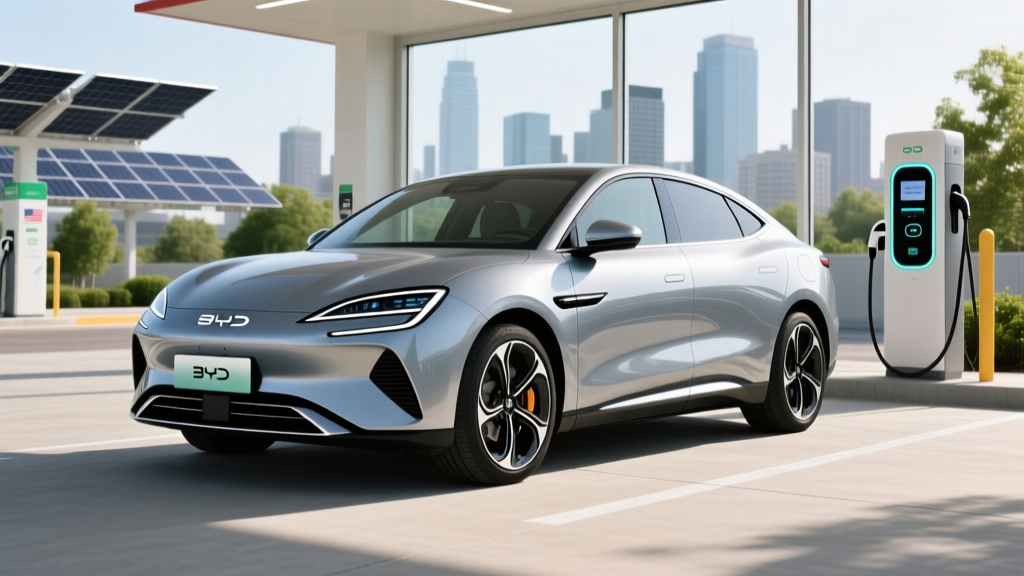
If you've been searching for BYD available in USA, the reality as of early 2026 is straightforward: BYD does not sell passenger cars or SUVs to American consumers. The world's largest plug-in vehicle manufacturer — which sold over 3 million new-energy vehicles globally in 2023 alone — has no dealership network, no EPA-certified models, and no announced timeline for entering the US passenger-vehicle market.
That doesn't mean BYD is absent from American roads entirely. The company sells electric transit buses and heavy-duty commercial trucks in the US through its Lancaster, California facility. But the affordable, tech-heavy sedans and crossovers making headlines in Europe, Southeast Asia, and Latin America? Those remain off-limits to US buyers — and the barriers are as much political and regulatory as they are logistical.
This guide breaks down exactly where BYD stands in the US market in 2026, what models could arrive if trade policy shifts, realistic specs based on global-market vehicles, and what you should buy instead if you need an EV today.
Why BYD Passenger Cars Aren't Sold in the United States
Three major obstacles prevent BYD from selling consumer vehicles in the US:
1. The 100% Tariff Wall
In May 2024, the Biden administration announced a tariff increase on Chinese-made electric vehicles from 25% to 100% under Section 301 of the Trade Act. This tariff took effect in August 2024 and remains in force as of 2026. A BYD Seal that might otherwise retail for $38,000 would carry an additional $38,000 in import duties, doubling its effective price and eliminating the value proposition that makes BYD competitive globally.
Even BYD's more affordable models — like the Dolphin hatchback or Atto 3 (Yuan Plus) compact SUV — would be priced out of their natural market segments by the tariff, making US launch economically unviable.
2. Federal Tax Credit Exclusion
Under IRS §30D clean vehicle credit rules, any vehicle containing battery components manufactured by a "foreign entity of concern" (FEOC) — which includes Chinese-headquartered companies — is disqualified from the up-to-$7,500 federal tax credit. Even if BYD built a US assembly plant, its battery supply chain ties to China would likely disqualify its vehicles from any purchase incentive, a critical disadvantage against competitors like Tesla, Hyundai, and GM.
3. EPA Certification and Safety Homologation
Every vehicle sold in the US must meet EPA emissions (and EV efficiency) certification, NHTSA Federal Motor Vehicle Safety Standards (FMVSS), and California Air Resources Board (CARB) requirements where applicable. BYD's current global models are engineered to UN-ECE and Chinese GB standards, which differ in crash-test protocols, lighting requirements, and software regulations. Retooling models for US compliance is a multi-year, multi-hundred-million-dollar undertaking that makes little sense while the tariff wall stands.
BYD Models That Could Come to the US — Global Specs Breakdown
If trade policy were to shift — or if BYD established manufacturing in a tariff-exempt country like Mexico (a move the company has reportedly explored but not committed to) — these are the models most likely to target American buyers. Specs below reflect current global-market versions.
| Spec | BYD Seal (Sedan) | BYD Atto 3 (Compact SUV) | BYD Dolphin (Hatchback) |
|---|---|---|---|
| Global Price (approx.) | ~$38,000 (pre-tariff) | ~$35,000 (pre-tariff) | ~$28,000 (pre-tariff) |
| Battery Capacity | 82.5 kWh (LFP Blade) | 60.5 kWh (LFP Blade) | 60.4 kWh (LFP Blade) |
| WLTP Range | ~354 mi (570 km) | ~260 mi (420 km) | ~264 mi (427 km) |
| Est. EPA Range* | ~290–310 mi | ~215–235 mi | ~220–240 mi |
| Max DC Fast Charge | 150 kW | 88 kW | 88 kW |
| 10–80% DC Time (est.) | ~26 min | ~29 min | ~29 min |
| Level 2 AC Charge | 11 kW (~37 mi/hr) | 7 kW (~24 mi/hr) | 7 kW (~24 mi/hr) |
| Drivetrain | RWD or AWD | FWD | FWD |
| 0–60 mph | 5.9s (RWD) / 3.8s (AWD) | 7.3s | 7.0s |
| Horsepower | 230 hp (RWD) / 523 hp (AWD) | 201 hp | 201 hp |
| Battery Chemistry | LFP (Blade Battery) | LFP (Blade Battery) | LFP (Blade Battery) |
*Estimated EPA range based on typical WLTP-to-EPA conversion factor of ~0.82–0.88. Official EPA figures would require US certification testing.
BYD Blade Battery: LFP Chemistry Explained
Every model above uses BYD's proprietary Blade Battery, which is lithium iron phosphate (LFP) chemistry arranged in a unique cell-to-pack structural design. Here's what that means for a potential US buyer:
- Longevity: LFP cells typically sustain 3,000+ full charge cycles before reaching 80% capacity — significantly more than NMC cells. In real-world terms, that's well over 500,000 miles of equivalent driving before notable degradation.
- Safety: LFP chemistry is inherently more thermally stable than NMC/NCA, with a higher thermal runaway threshold. BYD's nail-penetration tests show the Blade Battery does not ignite or emit smoke when punctured.
- Energy density trade-off: LFP is ~15–20% less energy-dense than NMC, which is why the Seal needs an 82.5 kWh pack to achieve ranges that NMC competitors hit with smaller batteries.
- Cold-weather performance: LFP batteries lose range more aggressively in freezing temperatures — expect 25–35% range reduction at 20°F, versus 20–30% for NMC. BYD mitigates this with a standard heat pump on most global models, which helps cabin heating efficiency but doesn't fully eliminate the cold-weather penalty.
- Charging habit: Unlike NMC batteries, which benefit from staying between 20–80% SoC, LFP batteries can (and should) be charged to 100% regularly to maintain cell-balancing accuracy.
Charging Performance: What to Expect From BYD's Platform
BYD's charging architecture lags behind the class leaders. While the Hyundai Ioniq 5 and Tesla Model 3 can sustain 250+ kW peak rates, BYD's current e-Platform 3.0 tops out at 150 kW on the Seal and just 88 kW on the Atto 3 and Dolphin.
| Charging Level | BYD Seal | BYD Atto 3 | BYD Dolphin |
|---|---|---|---|
| Level 1 (120V, 12A) | ~1.4 kW / ~4 mi/hr | ~1.4 kW / ~4 mi/hr | ~1.4 kW / ~4 mi/hr |
| Level 2 (240V, 48A) | 11 kW / ~37 mi/hr | 7 kW / ~24 mi/hr | 7 kW / ~24 mi/hr |
| DC Fast Charge (peak) | 150 kW | 88 kW | 88 kW |
| 10–80% DCFC Time | ~26 min | ~29 min | ~29 min |
| Connector (Global) | CCS2 / GB/T | CCS2 / GB/T | CCS2 / GB/T |
Charging curve reality: The 150 kW peak on the Seal is not sustained across the full 10–80% window. Based on independent testing of global-market vehicles, the Seal holds ~130–150 kW from roughly 10–40% SoC, then tapers to ~90 kW through 60%, and drops below 50 kW above 75%. The 26-minute 10–80% time reflects this taper. If you frequently road-trip, plan for 30–35 minute stops at 150+ kW stations to account for the curve.
A US-spec BYD would almost certainly adopt the NACS (Tesla) connector, as the industry has standardized on it for 2025+ models. Whether BYD's charge electronics would support native NACS or require an adapter remains unknown.
Real-World Range vs. Sticker Numbers
BYD publishes WLTP range figures for its global models, but the US uses the more conservative EPA test cycle. Based on WLTP-to-EPA conversion patterns observed with other Chinese-market EVs (like the Polestar 2, which is manufactured in China), here's what US buyers could realistically expect:
EPA (projected): ~290–310 miles
Real-world highway (70 mph, 75°F): ~250–270 miles
Real-world highway (70 mph, 20°F): ~190–220 miles
City / mixed driving (moderate climate): ~280–300 miles
BYD Atto 3 Estimated Range:
EPA (projected): ~215–235 miles
Real-world highway (70 mph, 75°F): ~180–200 miles
Real-world highway (70 mph, 20°F): ~140–160 miles
The Atto 3's sub-200-mile real-world highway range would put it at a significant disadvantage against the Hyundai Kona Electric (EPA 261 mi), Chevrolet Equinox EV (EPA 319 mi), and Tesla Model Y (EPA 310 mi) — all available today with full EPA certification, US dealer support, and tax-credit eligibility.
What Would a BYD Cost in the US — With and Without Tariffs?
To illustrate the tariff impact, here's a pricing exercise for the BYD Seal, the model most likely to compete with the Tesla Model 3 and Hyundai Ioniq 6:
| Cost Factor | BYD Seal (Hypothetical US) | Tesla Model 3 LR (Actual US) |
|---|---|---|
| Global MSRP (pre-tariff) | ~$38,000 | $47,740 (2026 base) |
| 100% Section 301 Tariff | +$38,000 | $0 (US-assembled) |
| Effective US Price | ~$76,000 | $47,740 |
| Federal Tax Credit (§30D) | $0 (FEOC disqualified) | Up to $7,500 (if eligible) |
| Net Cost to Buyer | ~$76,000 | ~$40,240 (after max credit) |
At ~$76,000, a tariff-burdened BYD Seal would compete with the BMW i4 and Mercedes EQB — a positioning that makes zero sense for a brand with no US dealer network or service infrastructure. This arithmetic is precisely why BYD has not entered the US passenger market.
Federal Tax Credit: Why BYD Would Be Disqualified
Under current IRS §30D rules, a vehicle is ineligible for the clean vehicle credit if its battery contains components manufactured by a foreign entity of concern (FEOC). Chinese-headquartered battery manufacturers — including BYD, CATL, and Gotion — fall squarely in this category. Even if BYD assembled vehicles in the US, the FEOC battery-component restriction (effective 2024) and critical-minerals restriction (effective 2025) would almost certainly disqualify them.
Additional §30D requirements that would apply to any BYD model:
- MSRP cap: $55,000 for sedans; $80,000 for SUVs/pickups
- Buyer income cap: AGI ≤ $150,000 (single) / $300,000 (joint)
- Final assembly: Must occur in North America
- Battery sourcing: Increasingly strict critical-mineral and component requirements through 2029
What to Buy Instead: US-Available Competitors
If you were drawn to BYD's value proposition — affordable pricing, LFP battery longevity, and practical EV transportation — here are US-market alternatives that deliver similar (or better) value today:
- Tesla Model 3 RWD — $38,990 (after est. credit), EPA 272 mi, 250 kW DCFC, NACS native
- Hyundai Ioniq 6 SE — ~$37,500 (after credit), EPA 361 mi, 233 kW DCFC, 10–80% in 18 min
- Chevrolet Bolt EUV (if still available) — Budget option, EPA 247 mi, slower DCFC
- Hyundai Kona Electric — ~$32,975, EPA 261 mi, 100 kW DCFC
- Chevrolet Equinox EV LT — ~$33,000 (after credit), EPA 319 mi, 150 kW DCFC
- Kia EV6 Light — ~$37,000 (after credit), EPA 232 mi, 233 kW DCFC
- Nissan Leaf S Plus — ~$33,000, EPA 212 mi, CHAdeMO (limited DCFC network)
- Mini Cooper SE — ~$30,900, EPA 114 mi (short range, but fun and affordable)
- Used EV market — A 2023–2024 Chevy Bolt or Nissan Leaf offers BYD-Dolphin-level pricing with US support
Every vehicle listed above qualifies for at least partial §30D credit eligibility (verify your specific situation via the fueleconomy.gov tax credit tool), has an established US service network, and carries EPA-certified range figures you can trust.
The Bottom Line: Should You Wait for BYD?
No. There is no credible scenario in which BYD passenger vehicles become available to US consumers before 2028 at the earliest — and even that would require a dramatic shift in US-China trade policy, a multi-billion-dollar US manufacturing investment, and a complete FEOC exemption from Congress. BYD's leadership has publicly stated that the US market is "not a priority" given current conditions.
If you're in the market for an affordable EV in 2026, the US market has never been more competitive. The $30,000–$40,000 segment now includes the Chevrolet Equinox EV, Hyundai Kona Electric, Tesla Model 3, and a growing roster of qualifying vehicles — all with EPA-certified range, US dealer support, and available federal incentives.
BYD makes excellent vehicles for the markets they serve. But for American buyers, the practical answer is clear: buy what's available, certified, and warrantied in your market today.
Frequently Asked Questions
Can I import a BYD vehicle to the US myself?
Practically, no. The vehicle would need to pass EPA and NHTSA import certification, which requires manufacturer cooperation for crash-test data and emissions compliance. Additionally, the 100% tariff would apply to any imported Chinese-made EV regardless of the import method. The cost and legal barriers make private importation unfeasible.
Does BYD sell any vehicles in the US at all?
Yes — but only commercial vehicles. BYD manufactures electric transit buses and Class 6–8 heavy-duty trucks at its Lancaster, California facility. These are sold to transit agencies and fleet operators, not individual consumers. BYD's US commercial operations are separate from its passenger-vehicle division.
Will BYD ever build a factory in the US or Mexico?
BYD has explored the possibility of a Mexican assembly plant, which could theoretically serve the US market under USMCA trade rules. However, even a Mexico-built BYD would likely face the FEOC battery-component restriction for tax-credit purposes, and the 100% tariff could be extended to Mexican-assembled Chinese-brand EVs through future trade actions. No factory announcement has been made as of early 2026.
What is BYD's Blade Battery, and is it better than other EV batteries?
The Blade Battery is BYD's proprietary LFP (lithium iron phosphate) cell design, arranged in long, thin "blade" cells that double as structural pack members. LFP offers superior cycle life (3,000+ cycles) and thermal safety compared to NMC, but trades off energy density and cold-weather performance. It's an excellent battery for daily commuting and longevity, but not ideal for maximum range or extreme-cold climates.
How does BYD's charging speed compare to Tesla and Hyundai?
BYD's 150 kW peak (Seal) and 88 kW peak (Atto 3/Dolphin) lag behind competitors. The Tesla Model 3 Long Range peaks at 250 kW, and the Hyundai Ioniq 5/6 peaks at 233 kW with a faster 10–80% time (~18 minutes vs. BYD's ~26–29 minutes). On a road trip, BYD owners would spend 8–12 more minutes per charging stop.
If BYD entered the US, would their cars qualify for the $7,500 tax credit?
Almost certainly not. Under current IRS §30D rules, vehicles with battery components from a foreign entity of concern (FEOC) — which includes Chinese manufacturers — are disqualified from the federal clean vehicle credit regardless of where the vehicle is assembled. This is one of the biggest structural barriers to BYD's US entry.