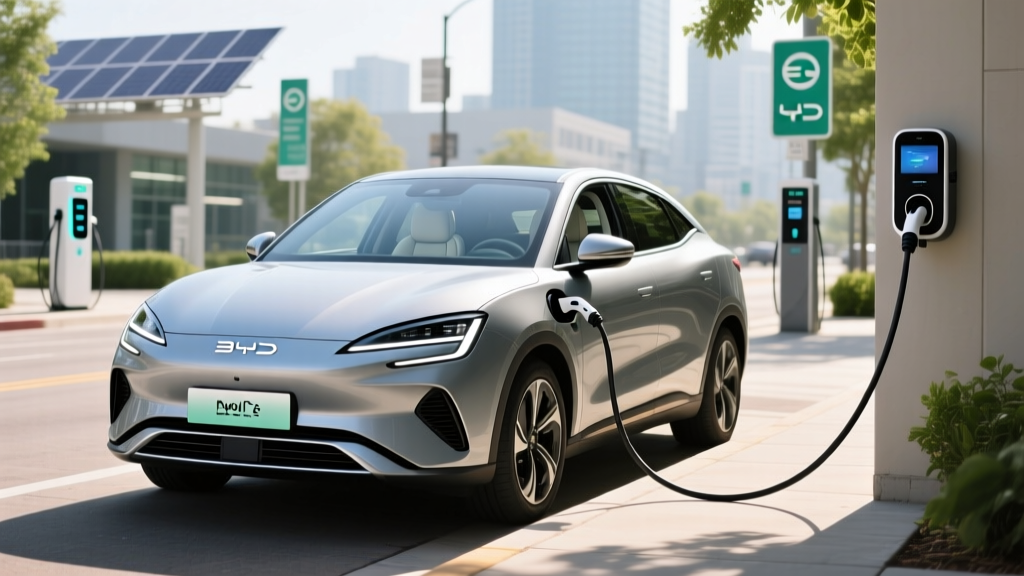
The BYD Atto 3 EV at a Glance
BYD's compact crossover has become one of the best-selling electric vehicles globally, racking up hundreds of thousands of units across Europe, Southeast Asia, Australia, and Latin America. But for US-based shoppers searching for the BYD Atto 3 EV, the story is more complicated. As of early 2026, BYD has not officially launched the Atto 3 (sold as the Yuan Plus in China) in the United States, and no EPA certification or US MSRP has been published. What follows is a comprehensive, data-driven profile based on confirmed international specifications, independent testing, and our analysis of what a US launch would require — including realistic tax credit implications under current IRS §30D rules.
| Spec | Value |
|---|---|
| WLTP Range | 261 mi (420 km) — Extended Battery |
| Est. EPA-Equivalent Range | ~220–230 mi (projected) |
| Battery (Usable) | 60.48 kWh — LFP Blade |
| Max DC Fast Charge | 88 kW (CCS2/GB-T; market-dependent) |
| 10–80% DC Charge Time | ~29 minutes |
| Level 2 AC Charge | 7 kW (single-phase); ~25 mi/hr |
| Motor Output | 150 kW (201 hp) / 229 lb-ft torque |
| 0–60 mph | ~7.3 seconds |
| Drivetrain | FWD (single front motor) |
| Cargo Volume | 15.6 cu ft (rear seats up) / 46.1 cu ft (folded) |
| Int'l Price Range | €38,000–€42,000 / £33,000–£37,000 / A$48,000–A$52,000 |
Range, Efficiency, and Real-World Expectations
The Atto 3 Extended Battery carries BYD's 60.48 kWh Blade battery pack, which uses lithium iron phosphate (LFP) chemistry. LFP cells trade some energy density for superior thermal stability, longer cycle life (often 3,000+ full cycles before 80% capacity retention), and the absence of cobalt or nickel. For daily drivers who charge at home nightly, LFP is increasingly the preferred chemistry — and BYD pioneered its "Blade" cell format, which packs prismatic LFP cells directly into the structural battery tray without modules, improving volume utilization.
WLTP Sticker: 261 miles (420 km)
Estimated EPA Equivalent: ~220–230 miles
Real-World Highway (65–75 mph): ~185–205 miles
Cold Weather (below 32°F / 0°C): ~155–175 miles (est. 25–30% reduction)
Independent European testing by outlets like What Car? and Bjørn Nyland's range tests have recorded 200–220 miles in mixed driving at moderate temperatures. Highway-only driving at 75 mph and cold weather will push consumption to roughly 3.5–4.0 mi/kWh, significantly cutting effective range. The Atto 3 does not come standard with a heat pump in all markets — confirm availability in your region, as resistive cabin heating can add 15–20% energy consumption in winter.
Efficiency sits around 3.2–3.5 mi/kWh in mixed driving (roughly 15.5–16.5 kWh/100 km WLTP), which is competitive for the compact crossover segment but trails the Tesla Model Y RWD and Hyundai Ioniq 5 on highway efficiency. Without an EPA test cycle, an official MPGe figure is unavailable for the US market.
Charging Speed: DC Fast and Home Level 2
The Atto 3's charging performance is adequate but not class-leading — a common trait for LFP-based vehicles in this price bracket. The 88 kW peak DC fast-charge rate means you'll spend roughly 29 minutes at a fast charger going from 10% to 80% State of Charge (SoC).
| Level | Power | Speed / Time | Connector |
|---|---|---|---|
| Level 1 (120V) | ~1.4 kW | ~4–5 mi/hr | Standard outlet (adapter) |
| Level 2 (240V) | 7 kW (onboard limit) | ~25 mi/hr; 0–100% in ~9 hrs | Type 2 / J1772 |
| DC Fast Charge | 88 kW peak | 10–80% in ~29 min | CCS2 (EU) / GB-T (China) |
Charging curve reality: The Atto 3 sustains near-peak rates (80–88 kW) from roughly 10% to 50% SoC, then tapers progressively. From 50% to 80%, expect 55–65 kW, and above 80% the rate drops below 30 kW. This taper is typical of LFP packs, which have a flatter voltage curve and require careful current management at higher SoC. For a 300-mile road trip, plan one 30-minute DC stop — but know that 350 kW Electrify America or Tesla Supercharger stalls won't deliver any speed advantage here.
The 7 kW onboard AC charger is a notable limitation for US buyers accustomed to 11.5 kW Level 2 charging on vehicles like the Ford Mustang Mach-E or Hyundai Ioniq 5. A full overnight charge still works fine (9 hours covers most sleep cycles), but a quick 2-hour top-up before a road trip adds only ~50 miles rather than the 80–90 miles you'd get with an 11 kW onboard charger.
Performance, Ride, and Driving Dynamics
The Atto 3 is tuned for comfort and urban efficiency rather than performance. Its single front-mounted permanent magnet synchronous motor delivers 201 horsepower and 229 lb-ft of torque, routing all power to the front wheels. The 0–60 mph time of approximately 7.3 seconds is perfectly adequate for merging and passing but won't challenge the Tesla Model Y (5.0 sec RWD) or the dual-motor Ioniq 5 (5.1 sec AWD).
Ride quality is a genuine strength. The Atto 3 uses a MacPherson strut front suspension and multi-link rear, delivering a compliant, well-damped ride over rough pavement — an area where it outperforms the firmer-sprung Tesla Model Y. Cabin insulation is good for the class, with minimal wind noise at highway speeds, though tire noise from the standard 215/55R18 tires becomes noticeable above 70 mph.
Regenerative braking offers two levels (Standard and High) selectable via the infotainment screen, but the Atto 3 does not offer true one-pedal driving to a complete stop. You'll still need the friction brake pedal for final stops — a minor annoyance for drivers accustomed to the Nissan Leaf or Chevrolet Bolt's one-pedal modes.
Interior, Technology, and Cargo Practicality
The Atto 3's cabin is where BYD makes its strongest design statement. The "muscle fiber" textured dashboard, dumbbell-shaped air vents, and guitar-string door pocket stitching give the interior a distinctive, playful character that stands apart from the minimalist approach of Tesla or Volkswagen. Build quality is solid for the price point, with soft-touch materials on the upper dash and door panels, though some lower trim pieces feel hard and hollow.
Infotainment: A 12.8-inch rotating touchscreen (it flips between portrait and landscape orientation) runs BYD's custom OS. It supports wireless Apple CarPlay and Android Auto, over-the-air updates, and voice control. The system is responsive but the menu structure can be unintuitive — climate controls buried in submenus is a common complaint. A 5-inch digital instrument cluster sits behind the steering wheel, supplemented by a head-up display on higher trims.
Driver Assistance: The Atto 3 comes equipped with BYD's ADAS suite including adaptive cruise control with stop-and-go, lane-keeping assist, automatic emergency braking (with pedestrian and cyclist detection), blind-spot monitoring, and rear cross-traffic alert. This is SAE Level 2 driver assistance — meaning the driver must remain fully attentive with hands on the wheel at all times. It is not autonomous driving.
Cargo and Passenger Space:
- Rear cargo (seats up): 15.6 cu ft — adequate for groceries and two carry-on bags but trails the Tesla Model Y (30.2 cu ft) and Hyundai Ioniq 5 (27.2 cu ft)
- Rear cargo (seats folded): 46.1 cu ft
- Rear legroom: ~37.4 inches — generous for the class and comfortable for adults on longer trips
- Front headroom: ~40.0 inches
- No front trunk (frunk) — the motor compartment is fully enclosed
Pricing, Tax Credits, and US Market Outlook
Since the Atto 3 is not sold in the US, there is no official MSRP. However, international pricing provides a useful benchmark:
| Market | Price (Local) | Approx. USD |
|---|---|---|
| China (as Yuan Plus) | ¥135,800–¥165,800 | $18,800–$23,000 |
| Europe (Germany) | €38,000–€42,000 | $41,000–$45,500 |
| United Kingdom | £33,000–£37,000 | $41,500–$46,500 |
| Australia | A$48,000–A$52,000 | $30,500–$33,000 |
| Thailand | ฿1,199,900 | $33,500 |
The wide price variance reflects local tariffs, shipping costs, VAT/GST, and market positioning. China's domestic price is dramatically lower due to local production, supply-chain proximity, and intense price competition. In Western markets, the Atto 3 is positioned as a mid-tier option — undercutting premium EVs but not the bargain it appears to be in China.
US Tax Credit (§30D) Outlook: Even if BYD launched the Atto 3 in the US, federal tax credit eligibility would face steep hurdles. Under current IRS §30D rules, the $7,500 credit requires:
- MSRP cap: ≤$80,000 for SUVs/crossovers — the Atto 3 would likely clear this
- Buyer income cap: AGI ≤$150,000 (single) / $300,000 (joint)
- Battery sourcing: Critical minerals and battery components must meet escalating domestic/free-trade-partner thresholds — BYD's vertically integrated Chinese supply chain would almost certainly fail this requirement
- Foreign Entity of Concern (FEOC): Vehicles with battery components from a FEOC (which includes most Chinese manufacturers) are disqualified from the credit entirely as of 2024–2025 phase-in rules
In short: the BYD Atto 3 would almost certainly not qualify for the $7,500 federal EV tax credit under current law, even if sold in the US. This is the same barrier facing all Chinese-manufactured EVs, including the Volvo EX30 (which shifted production to Belgium to partially address this).
How the BYD Atto 3 Compares to Key Rivals
For US buyers considering the compact electric crossover segment, here's how the Atto 3's specifications compare to vehicles actually available stateside:
| Spec | BYD Atto 3 | Tesla Model Y RWD | Hyundai Ioniq 5 RWD |
|---|---|---|---|
| EPA Range | ~220–230 mi (est.) | 260 mi | 220 mi (Std Range) |
| Battery | 60.48 kWh LFP | ~60 kWh LFP | 58 kWh NMC |
| DC Fast Charge | 88 kW | 170 kW | 240 kW |
| 10–80% Time | ~29 min | ~25 min | ~18 min |
| 0–60 mph | 7.3 sec | 5.0 sec | 7.4 sec |
| Cargo (rear up) | 15.6 cu ft | 30.2 cu ft | 27.2 cu ft |
| US MSRP (base) | Not available | ~$44,990 | ~$42,600 |
| Federal Tax Credit | Not eligible (FEOC) | Partial/Full* | Full $7,500* |
*Tax credit eligibility depends on buyer income, battery sourcing compliance, and point-of-sale transfer. Verify current status at fueleconomy.gov.
Pros, Cons, and Final Verdict
- LFP Blade battery offers excellent longevity and thermal safety
- Comfortable, well-damped ride quality
- Distinctive, well-built interior with quality materials
- Competitive pricing in international markets
- Comprehensive ADAS suite standard
- Strong rear-seat legroom for the class
- Not available in the US; no EPA certification
- 88 kW DC charging is slow for 2026 standards
- 7 kW AC onboard charger limits Level 2 flexibility
- Modest cargo space vs. Model Y and Ioniq 5
- No frunk (front trunk)
- No one-pedal driving to a full stop
- Would not qualify for US federal tax credit due to FEOC rules
Who the BYD Atto 3 suits best: Urban and suburban commuters in international markets who prioritize ride comfort, battery longevity, and distinctive design over outright range or charging speed. It's a strong daily driver for those with reliable home charging and commutes under 60 miles round-trip. For US buyers, the Atto 3 remains a "what if" — compelling on paper but unavailable and likely ineligible for incentives even if it arrived.
Who should look elsewhere: Road-trip-heavy drivers who need 300+ mile range and sub-20-minute charging; families needing maximum cargo volume; US buyers who want to leverage the $7,500 federal tax credit. The Hyundai Ioniq 5, Tesla Model Y, and Chevrolet Equinox EV all offer superior charging speed, cargo practicality, and — critically — US availability with potential tax credit eligibility.
Warranty Coverage
BYD's international warranty structure varies by market but generally includes:
- Vehicle warranty: 6 years / 150,000 km (~93,000 miles)
- Battery warranty: 8 years / 200,000 km (~124,000 miles), with a capacity retention threshold of 70%
- Drive unit warranty: 8 years / 150,000 km
The 70% capacity retention threshold is standard for the industry (Tesla and Hyundai use similar benchmarks). However, BYD's LFP Blade cells have demonstrated strong longevity in fleet data — many taxis and ride-hail vehicles in China using earlier Blade packs have exceeded 300,000 km with less than 10% degradation, suggesting real-world battery life may substantially exceed the warranty terms.
Frequently Asked Questions
What is the real-world range of the BYD Atto 3 EV?
Independent testing shows 200–220 miles in mixed driving at moderate temperatures. Highway-only driving at 75 mph reduces this to roughly 185–205 miles. In cold weather (below freezing), expect 155–175 miles due to battery resistance and cabin heating demands. These figures are estimates — the Atto 3 has not been EPA-tested.
How fast does the BYD Atto 3 charge?
DC fast charging peaks at 88 kW, delivering a 10–80% charge in approximately 29 minutes. Home Level 2 charging is limited to 7 kW (adding about 25 miles of range per hour), meaning a full charge takes roughly 9 hours. The Atto 3 cannot take advantage of 150+ kW or 350 kW public chargers at full speed.
Does the BYD Atto 3 qualify for the US federal EV tax credit?
No — even if BYD launched the Atto 3 in the US, it would almost certainly be ineligible for the $7,500 §30D credit. The vehicle's Chinese-manufactured battery components trigger the Foreign Entity of Concern (FEOC) disqualification, and BYD's vertically integrated supply chain does not meet critical-mineral sourcing thresholds. Always verify current rules at irs.gov.
Is the BYD Atto 3 worth buying over a Tesla Model Y or Hyundai Ioniq 5?
In markets where it's sold, the Atto 3 is a strong value proposition — particularly for buyers who prioritize ride comfort and battery longevity over charging speed and cargo space. For US buyers, it's not an option. The Model Y offers more range, faster charging, and Supercharger network access; the Ioniq 5 charges at 240 kW and qualifies for the full $7,500 credit, making it significantly cheaper after incentives.
Will BYD sell the Atto 3 in the United States?
As of early 2026, BYD has not announced US retail plans for passenger vehicles. The company has focused on commercial vehicles (buses, trucks) in the US market. Geopolitical tensions, tariff structures (27.5% tariff on Chinese-built cars, with additional potential increases), and FEOC tax-credit barriers make a near-term US passenger-vehicle launch unlikely. BYD is building factories in Mexico, Brazil, Hungary, and Thailand, which could theoretically serve as export hubs — but US market entry remains speculative.
What battery chemistry does the BYD Atto 3 use?
The Atto 3 uses BYD's proprietary Blade battery with lithium iron phosphate (LFP) chemistry. LFP offers excellent cycle life (3,000+ cycles), superior thermal stability (reduced fire risk vs. NMC), and no cobalt or nickel. The trade-off is lower energy density, which contributes to the Atto 3's modest range relative to its physical size.