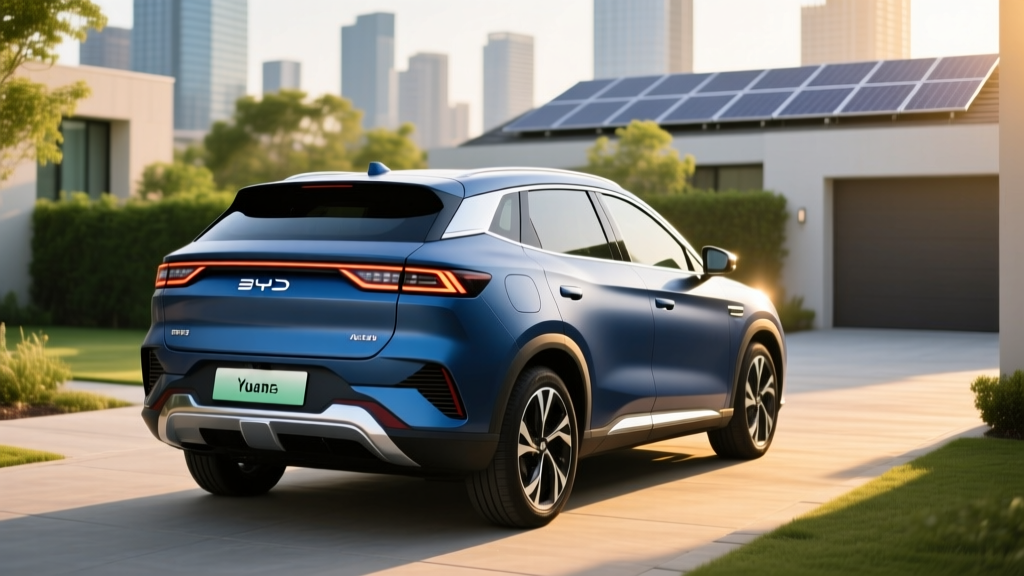
BYD has become the world's largest plug-in vehicle manufacturer, and its compact crossover — sold globally as the Atto 3 and in China as the Yuan Plus — is one of the best-selling electric SUVs outside the United States. But for American shoppers searching for a BYD electric SUV, the picture in 2026 is complicated: this vehicle is not sold in the US market, carries no EPA certification, and qualifies for no federal incentives. This review breaks down the global-spec Atto 3's verified specifications, real-world performance data from international testers, and what US buyers should know before considering a grey-market import or waiting for a potential future US launch.
US Availability and Import Reality
As of 2026, BYD does not sell any passenger vehicles in the United States. The company has publicly stated it is evaluating a US entry but has cited tariff barriers — including a 100% tariff on Chinese-made EVs enacted in 2024 — as a significant obstacle. The Atto 3 is manufactured in China, Thailand, Brazil, and India, but none of these production sources circumvent the current tariff structure for US import.
For US-based buyers, this means:
- No authorized dealer network or warranty support in the US
- No EPA certification or official EPA range/efficiency figures
- No eligibility for the IRS §30D federal tax credit regardless of battery sourcing
- No NHTSA crash-test ratings or IIHS evaluation
- Potential parts and service challenges for grey-market imports
This review uses manufacturer-published specs and independent testing from European and Australian outlets (where the Atto 3 is widely sold) to project what US-equivalent figures would look like. Treat all range and efficiency numbers as WLTP-based estimates, not EPA-certified values.
Range, Battery, and Efficiency
The 2026 BYD Atto 3 uses BYD's proprietary Blade Battery, a lithium iron phosphate (LFP) cell in a cell-to-pack configuration. LFP chemistry trades some energy density for superior thermal stability, longer cycle life, and lower cost compared to nickel-manganese-cobalt (NMC) packs used in competitors like the Hyundai Ioniq 5 and Volkswagen ID.4.
| Specification | Standard Range | Extended Range |
|---|---|---|
| Battery Chemistry | LFP (Blade Battery) | LFP (Blade Battery) |
| Usable Capacity | 49.92 kWh | 60.48 kWh |
| WLTP Range | 345 km (214 mi) | 420 km (261 mi) |
| Estimated EPA-Equivalent Range | ~180–195 mi | ~220–235 mi |
| Efficiency (WLTP) | 15.6 kWh/100 km | 15.6 kWh/100 km |
The LFP chemistry does offer one practical advantage: BYD recommends regular 100% charging for Blade Battery longevity, unlike NMC packs where daily charging to 80% is preferred. This means the full rated capacity is usable in daily driving, partially offsetting the lower energy density.
Charging Speed: DC Fast and Level 2
Charging performance is where the Atto 3 reveals its most significant limitation compared to rivals built on 800V architectures. The Atto 3 uses a 400V electrical system, which caps peak DC fast-charging power well below competitors like the Hyundai Ioniq 5 (which peaks at 240 kW on 800V).
| Charging Method | Power / Rate | Time / Recovery |
|---|---|---|
| DC Fast Charge (Peak) | 88 kW max | 10–80% in ~38 minutes |
| DC Fast Charge (Sustained Avg) | ~60–65 kW | ~150 miles/hour at peak |
| Level 2 AC (Home/Public) | 7 kW (single-phase) / 11 kW (3-phase) | 0–100% in ~9 hours (7 kW) |
| Level 1 AC (120V US equivalent) | ~1.4 kW | ~3–4 miles per hour |
| Connector (Global) | CCS2 (Europe) / GB/T (China) | Would require CCS1 adapter for US |
The 88 kW peak DC rate is modest for 2026. The charge curve is relatively flat — the Atto 3 sustains close to peak rate from 10% to about 60% state of charge (SoC), then tapers gradually. A 10–80% session takes roughly 38 minutes at a sufficiently powerful charger. This is acceptable for overnight hotel stops but noticeably slower than the 18–25 minute 10–80% sessions possible in competitors like the Ioniq 5, Kia EV6, or Tesla Model Y.
For home Level 2 charging, the 7 kW onboard charger adds approximately 25–28 miles of range per hour. A full charge from near-empty takes about 9 hours on a standard 32-amp Level 2 home charger — easily achievable with overnight charging.
Performance and Drivetrain
The Atto 3 is a front-wheel-drive-only crossover with a single permanent-magnet synchronous motor. There is no AWD or dual-motor variant available in any global market.
| Metric | Value |
|---|---|
| Motor Output | 150 kW (201 hp) / 310 Nm (229 lb-ft torque) |
| Drivetrain | Front-wheel drive (FWD) |
| 0–100 km/h (0–62 mph) | 7.3 seconds |
| Top Speed | 160 km/h (99 mph, electronically limited) |
| Curb Weight (Extended Range) | ~1,750 kg (3,858 lbs) |
| Regenerative Braking | Two modes (Standard / High); no true one-pedal driving |
The 7.3-second 0–62 mph time is adequate for daily driving and highway merging but unremarkable against sportier rivals. The Tesla Model Y RWD does 0–60 in 5.0 seconds; the Hyundai Ioniq 5 RWD manages 5.2 seconds. The Atto 3 prioritizes efficiency and comfort over acceleration.
Ride quality is a relative strength. The Atto 3 uses a torsion-beam rear axle (not independent rear suspension), which saves cost and weight but transmits more impact over sharp bumps than multi-link setups found in pricier competitors. Steering is light and numb — tuned for city comfort, not engagement.
Interior, Cargo, and Technology
The Atto 3's cabin is its most polarizing feature. BYD's "Sport Fitness" design theme includes muscle-fiber-textured door panels, guitar-string-style door pocket cords, and a dumbbell-shaped air vent motif. It's distinctive, though material quality leans hard-plastic in places where rivals use soft-touch surfaces.
| Dimension | Measurement |
|---|---|
| Wheelbase | 2,720 mm (107.1 in) |
| Rear Legroom | ~890 mm (35.0 in) |
| Cargo Volume (rear seats up) | 440 liters (15.5 cu ft) |
| Cargo Volume (rear seats folded) | 1,340 liters (47.3 cu ft) |
| Frunk | None |
Cargo capacity is competitive with the Kia Niro EV (15.5 cu ft behind rear seats) but trails the larger Hyundai Ioniq 5 (27.2 cu ft) and Tesla Model Y (30.2 cu ft). The absence of a frunk is a missed opportunity given the FWD-only layout, which frees up front-axle space.
Technology highlights include:
- 12.8-inch rotating center touchscreen (landscape or portrait orientation)
- 5.0-inch digital instrument cluster (small by 2026 standards)
- Wireless Apple CarPlay and Android Auto
- BYD DiLink connected services with OTA updates
- 360-degree camera system with transparent chassis view
- Vehicle-to-load (V2L) adapter — powers external devices at up to 2.2 kW
The V2L feature is a standout: you can power laptops, camping gear, or small appliances directly from the traction battery using a plug adapter — a feature also found in Hyundai/Kia E-GMP vehicles but absent from Tesla and most legacy-brand EVs.
Driver Assistance and Safety
The Atto 3 comes equipped with BYD's DiPilot ADAS suite, which includes:
- Adaptive cruise control with stop-and-go
- Lane-keeping assist and lane-centering
- Automatic emergency braking with pedestrian detection
- Blind-spot monitoring and rear cross-traffic alert
- Traffic-sign recognition
European NCAP awarded the Atto 3 a 5-star safety rating in 2022 testing, with strong scores for adult occupant protection (91%) and safety assist (74%). However, this rating predates Euro NCAP's 2023 protocol updates — a retest under current standards may yield different results. There are no NHTSA or IIHS ratings, as the vehicle is not sold in the US.
Pricing and Tax Credit Eligibility
Because the Atto 3 is not sold in the US, there is no MSRP in dollars. Global pricing provides context for what the vehicle might cost if it were imported, though tariffs would significantly inflate the price.
| Market | Trim | Local Price | Approx. USD Equivalent |
|---|---|---|---|
| United Kingdom | Design (Extended Range) | £37,695 | ~$47,500 |
| Australia | Superior (Extended Range) | A$47,300 | ~$30,200 |
| Germany | Comfort (Extended Range) | €37,990 | ~$41,000 |
| China (as Yuan Plus) | 510 km Flagship | ¥149,800 | ~$20,600 |
The massive price variance between China (domestic market) and export markets illustrates the tariff, logistics, and compliance cost layers. Were BYD to sell the Atto 3 in the US, the likely starting price would fall between $35,000 and $42,000 before incentives — but the 100% tariff on Chinese-made EVs would push the actual price far higher, making it non-competitive without a US or Mexico-based assembly plant.
- ❌ Vehicle not sold by an authorized dealer in the US
- ❌ No EPA certification on file
- ❌ Battery sourcing and critical minerals not evaluated against IRS requirements
- ❌ BYD has no US dealer network to process point-of-sale credit transfers
- ⚠️ Even if sold in the US, Chinese-manufactured battery components would likely disqualify it under current §30D foreign-entity-of-concern (FEOC) rules
How It Compares: US-Available Alternatives
Since the Atto 3 isn't available in the US, here's how it stacks up on paper against compact electric SUVs you can actually buy:
| Spec | BYD Atto 3 (ER) | Hyundai Ioniq 5 (Std RWD) | Tesla Model Y (LR) | Kia Niro EV |
|---|---|---|---|---|
| EPA Range | ~220–235 mi (est.) | 245 mi | 320 mi | 239 mi |
| Battery | 60.48 kWh LFP | 63.0 kWh NMC | 78.1 kWh NMC | 64.8 kWh NMC |
| DC Fast Charge Peak | 88 kW | 185 kW | 250 kW | 85 kW |
| 10–80% DCFC Time | ~38 min | ~20 min | ~25 min | ~44 min |
| 0–60 mph | ~7.0 sec | 5.2 sec | 4.8 sec | 7.2 sec |
| Base MSRP | Not sold in US | $42,600 | $46,630 | $39,600 |
| Federal Tax Credit | Not eligible | Up to $7,500* | Up to $7,500* | Up to $7,500* |
| Battery Warranty | 8 yr / 160,000 km | 10 yr / 100,000 mi | 8 yr / 120,000 mi | 10 yr / 100,000 mi |
*Tax credit eligibility subject to IRS §30D income caps, MSRP caps, and battery-sourcing requirements. Verify at irs.gov before purchase.
The Atto 3's closest US-market rival on paper is the Kia Niro EV — similar in size, range, and charging speed. However, the Niro EV comes with full US warranty support, EPA certification, dealer service access, and potential tax credit eligibility. The Ioniq 5 and Model Y are larger and more expensive but offer dramatically faster charging and longer range.
Warranty and Ownership Considerations
In global markets, BYD offers a competitive warranty package:
- Battery: 8 years / 160,000 km (~100,000 miles), with a capacity retention threshold of 70%
- Vehicle: 6 years / 150,000 km (~93,000 miles)
- Roadside Assistance: Varies by market
The LFP Blade Battery's projected longevity is a genuine strength. LFP cells typically sustain 2,000–3,000+ full charge cycles before reaching 80% capacity, compared to 1,000–2,000 cycles for NMC. In practical terms, this means the battery could outlast the rest of the vehicle — a meaningful advantage for high-mileage drivers and second owners.
However, for any hypothetical US owner of a grey-market Atto 3, this warranty would be effectively void. No US-authorized service centers exist, and BYD-specific diagnostic tools, replacement body panels, and high-voltage components would need to be sourced internationally.
Pros
- LFP Blade Battery offers exceptional cycle life and thermal safety
- V2L capability for camping, tailgating, and emergency power
- Competitive cargo space for its footprint
- 100% daily charging recommended — full usable capacity
- Low starting price in export markets
- Euro NCAP 5-star safety rating
Cons
- Not available in the US — no dealer, warranty, or EPA certification
- Slow 88 kW DC fast charging vs 185–250 kW rivals
- No AWD option; FWD only
- No heat pump in most trims — poor cold-weather efficiency
- No frunk despite FWD layout
- Small 5.0-inch instrument cluster feels dated
- 100% tariff on Chinese EVs makes US import economically unviable
Who This EV Suits (If You Could Buy It)
The Atto 3 is best suited for urban and suburban drivers in markets where it's sold — commuters covering 40–80 miles daily with reliable home Level 2 charging. Its LFP battery excels in warm climates where cold-weather range loss isn't a factor. It's not a road-trip EV; the 88 kW charge rate and ~220-mile real-world range make long highway stretches tedious compared to 300+ mile, 200+ kW competitors.
For US buyers, the Atto 3 remains a "what if" vehicle. If BYD establishes a North American production facility (as it has done in Hungary for Europe), a future US-spec model could be compelling at the right price. Until then, the Kia Niro EV, Hyundai Ioniq 5, Chevrolet Equinox EV, and Tesla Model Y all serve the compact electric SUV segment with full US support.
Frequently Asked Questions
Can I buy a BYD electric SUV in the United States in 2026?
No. BYD does not sell passenger vehicles in the US as of 2026. The 100% tariff on Chinese-made EVs, combined with the lack of a US dealer network and EPA certification, makes legal retail sale impractical. BYD sells electric buses and commercial vehicles in the US, but not consumer cars or SUVs.
What is the real-world range of the BYD Atto 3?
The Extended Range model (60.48 kWh) delivers approximately 220–235 miles under EPA-equivalent conditions, dropping to about 185–200 miles at sustained highway speeds and 150–170 miles in freezing temperatures. The Standard Range model (49.92 kWh) yields roughly 180–195 miles EPA-equivalent.
How fast does the BYD Atto 3 charge?
DC fast charging peaks at 88 kW, achieving a 10–80% charge in approximately 38 minutes. Home Level 2 charging at 7 kW takes about 9 hours for a full charge from near-empty. This is slower than most 2026 competitors.
Does the BYD Atto 3 qualify for the federal EV tax credit?
No. The Atto 3 is not sold in the US, has no EPA certification, and would likely fail the §30D battery-sourcing and foreign-entity-of-concern (FEOC) requirements even if it were. Always verify credit rules at irs.gov.
Is the BYD Blade Battery better than NMC?
It depends on your priority. LFP Blade Batteries offer longer cycle life (2,000–3,000+ cycles), superior thermal stability (resistant to thermal runaway), and lower cost. NMC batteries offer higher energy density (more range per kg) and better cold-weather performance. For daily commuting in moderate climates, LFP is arguably the better choice. For maximum range and road-trip flexibility, NMC wins.
Will BYD ever sell cars in the US?
BYD executives have acknowledged interest in the US market but have not announced concrete plans. The 100% tariff and FEOC battery-sourcing rules in the §30D credit make entry extremely difficult without local manufacturing. A US or Mexico assembly plant would be a prerequisite for competitive pricing. No timeline has been announced.