Quick Verdict: BYD's Entry-Level EV Gambit
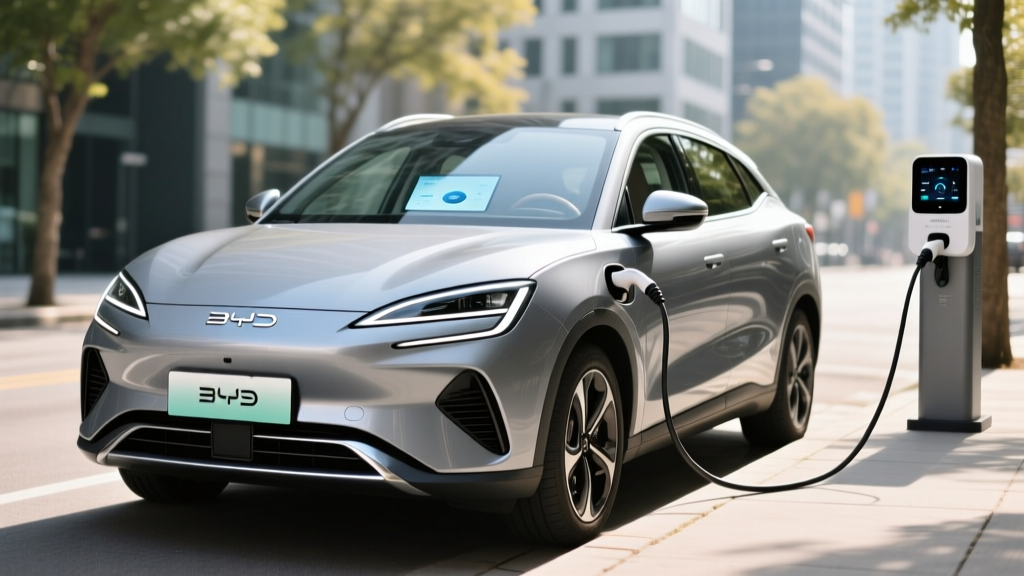
The BYD Atto 1 (also known as the Yuan Up in some markets) represents the Chinese automaker's push into the ultra-competitive sub-$30,000 compact electric crossover segment. As of early 2026, the Atto 1 is available in select international markets but not yet officially sold in the United States. This review covers confirmed global specifications and projected US pricing based on BYD's international launch strategy and current trade conditions.
Range, Battery & Efficiency
| Spec | Value |
|---|---|
| Battery Capacity | 49.92 kWh (usable ~47 kWh) |
| Battery Chemistry | LFP (Lithium Iron Phosphate) — BYD Blade |
| CLTC Range | 401 km (~249 miles) |
| Estimated EPA Range | 205-220 miles (projected) |
| Efficiency | ~28-30 kWh/100mi (estimated) |
| Motor Output | 95 kW (127 hp) / 160 Nm torque |
| 0-100 km/h (0-62 mph) | ~11.0 seconds |
| Drivetrain | FWD (single front motor) |
| Top Speed | 160 km/h (99 mph) |
The BYD Blade LFP battery is the Atto 1's strongest technical asset. LFP chemistry trades energy density for exceptional thermal stability and cycle life — BYD rates the Blade pack for 3,000+ charge cycles before 80% capacity retention. This translates to well over 300,000 miles of driving before significant degradation. The trade-off: LFP packs perform worse in extreme cold. Without active battery preconditioning (which BYD includes via the infotainment navigation-to-charger feature), expect 25-30% range loss in sub-freezing temperatures.
Efficiency-wise, the Atto 1's relatively modest 127 hp motor and lightweight platform (~1,640 kg / 3,615 lbs) keep consumption reasonable. However, the aerodynamic profile (boxy crossover styling) and lack of a heat pump in base trims hurt highway and cold-weather efficiency compared to rivals like the Hyundai Kona Electric.
Charging Speed & Infrastructure
| Level | Power | Time / Rate |
|---|---|---|
| Level 1 (120V) | ~1.4 kW | ~3-4 miles/hour |
| Level 2 (240V AC) | 7 kW (onboard charger) | ~22 miles/hour; full charge ~7 hours |
| DC Fast Charge | Peak 65 kW | 10-80% in ~35 minutes |
The 65 kW peak DC fast-charging rate is the Atto 1's most significant limitation for US buyers accustomed to 150+ kW charging on vehicles like the Ioniq 5 or Model 3. On a 150 kW charger, the Atto 1 will still only pull 65 kW max — and like all EVs, it sustains peak rate only in the 10-50% SoC window before tapering. Expect the 50-80% portion to add another 15 minutes.
For home charging, the 7 kW onboard charger is adequate: plug in overnight and you'll recover a full 220-mile battery in roughly 7 hours. This is perfectly fine for daily commuting but slower than the 11 kW onboard chargers found in many 2026 competitors.
Connector note: International Atto 1 models ship with GB/T (China) or CCS2 (Europe/Australia). A US-spec model would require CCS1 (or NACS, if BYD adopts the Tesla standard for the American market). This remains speculative pending official US launch.
Performance & Driving Dynamics
With 127 horsepower and an 11-second 0-62 mph time, the Atto 1 is firmly a city commuter, not a performance EV. The single-speed reduction gear and instant electric torque make it peppy off the line (0-30 mph feels brisk), but highway passing requires planning. Top speed is electronically limited to 99 mph.
The FWD-only layout and modest power mean this isn't a candidate for snowy mountain passes or towing. Cargo capacity is rated at approximately 14.5 cu ft behind the rear seats (expanding to ~40 cu ft with seats folded), which is competitive with the Chevrolet Bolt EUV but trails the Kona Electric's 25.5 cu ft.
Ride quality benefits from the low center of gravity inherent to the e-Platform 3.0 architecture. Regenerative braking offers two levels (standard and high) but does not achieve true one-pedal driving — you'll still use the brake pedal for complete stops.
Pricing, Trims & Tax Credit Eligibility
| Trim | Int'l Price (AUD/CNY) | Est. US MSRP |
|---|---|---|
| Standard Range (Base) | ~A$39,990 / ¥96,800 | $24,000-$26,000 |
| Extended/Premium | ~A$44,990 / ¥119,800 | $28,000-$30,000 |
Federal Tax Credit (IRS §30D): Even if BYD launches the Atto 1 in the US, it would almost certainly not qualify for the $7,500 federal EV tax credit. Under current 2026 rules, the credit requires battery components and critical minerals to be sourced from the US or free-trade-agreement partners — not China. Additionally, the 100% Section 301 tariff on Chinese EVs would add roughly $24,000-$30,000 to the import cost, making the Atto 1 economically non-viable without localized production. See IRS §30D guidelines for current eligibility rules.
Interior, Tech & Driver Assistance
The Atto 1 features BYD's signature rotating 12.8-inch infotainment screen (landscape for navigation, portrait for media) running the DiLink system. Wireless Apple CarPlay and Android Auto are standard. A 5-inch digital instrument cluster sits behind the steering wheel.
Driver assistance is SAE Level 2 (driver must remain engaged):
- Adaptive cruise control with stop-and-go
- Lane-keeping assist
- Automatic emergency braking with pedestrian detection
- 360-degree camera (Premium trim)
Notable tech omissions: no over-the-air updates in some markets, no advanced semi-autonomous highway driving comparable to GM Super Cruise or Ford BlueCruise.
- Exceptional LFP battery longevity (3,000+ cycles)
- Low projected price point (~$24k-$30k)
- Strong thermal safety (Blade cell design)
- Spacious rear legroom for segment (~38 inches)
- Slow DC charging (65 kW peak)
- Not available in US market (2026)
- No federal tax credit eligibility
- Modest highway performance (11s 0-60)
- No heat pump on base trim
Who Should Buy the BYD Atto 1?
The Atto 1 suits urban commuters in markets where it's available (Australia, Southeast Asia, parts of Europe) who prioritize low purchase price and battery longevity over fast charging or highway performance. It's a strong second-car or city-only EV.
US buyers: Wait for BYD to announce localized production (rumored Mexico or Brazil plants that could supply North America) or consider the Chevrolet Equinox EV (315-mile range, ~$33k, tax-credit eligible) or Hyundai Kona Electric (261-mile range, ~$32k) as currently available alternatives.
Frequently Asked Questions
What is the real-world range of the BYD Atto 1?
Expect 175-190 miles in warm-weather highway driving and 150-165 miles in cold weather. City driving with regenerative braking can approach the 205-220 mile estimated EPA rating.
How fast does the BYD Atto 1 charge?
DC fast charging peaks at 65 kW, achieving 10-80% in approximately 35 minutes. Home Level 2 charging at 7 kW adds about 22 miles per hour.
Does the BYD Atto 1 qualify for the US federal EV tax credit?
No. Chinese-manufactured batteries do not meet §30D critical-mineral or component-sourcing requirements, and 100% tariffs make US import economically unfeasible as of 2026.
Is the BYD Atto 1 available in the United States?
Not as of Q1 2026. BYD has not announced US sales plans for this model. International versions are sold in Australia, Thailand, Singapore, and select European markets.
How does the Atto 1 compare to the Chevrolet Bolt or Nissan LEAF?
The Atto 1 offers comparable range (~220 mi EPA est.) and more interior space than the discontinued Bolt, but slower charging. Versus the LEAF, it has a more modern thermal management system (liquid-cooled vs air-cooled) and better battery longevity.