Before You Order: Which Tesla Model Actually Fits Your Life?
Buying a Tesla is less like shopping for a traditional car and more like choosing a software platform that happens to have wheels. The 2026 lineup—Model 3, Model Y, Model S, Model X, and the Cybertruck—spans from a $38,990 commuter sedan to a $90,000-plus electric pickup. The single biggest mistake first-time buyers make is picking a trim based on headline range or 0-60 times without understanding battery chemistry, charging curves, or how the federal tax credit actually works in 2026.
This guide distills the tips that matter after years of driving, charging, and tracking Tesla's shifting specs. We'll use the highest-volume model—the 2026 Tesla Model Y Long Range AWD—as our primary example, with callouts to the rest of the lineup where the advice changes.
Real-World Range Is Not the EPA Sticker
The 2026 Model Y Long Range AWD carries an EPA-estimated 320 miles of range from its 78.1 kWh (usable) NMC battery pack. That number is a laboratory blend of city, highway, and temperature-controlled driving. In practice, expect:
- Mild-weather city/commute: ~310-330 mi (regen-heavy driving can exceed EPA)
- 70-mph highway road trip: ~260-280 mi (aerodynamic drag dominates above 65 mph)
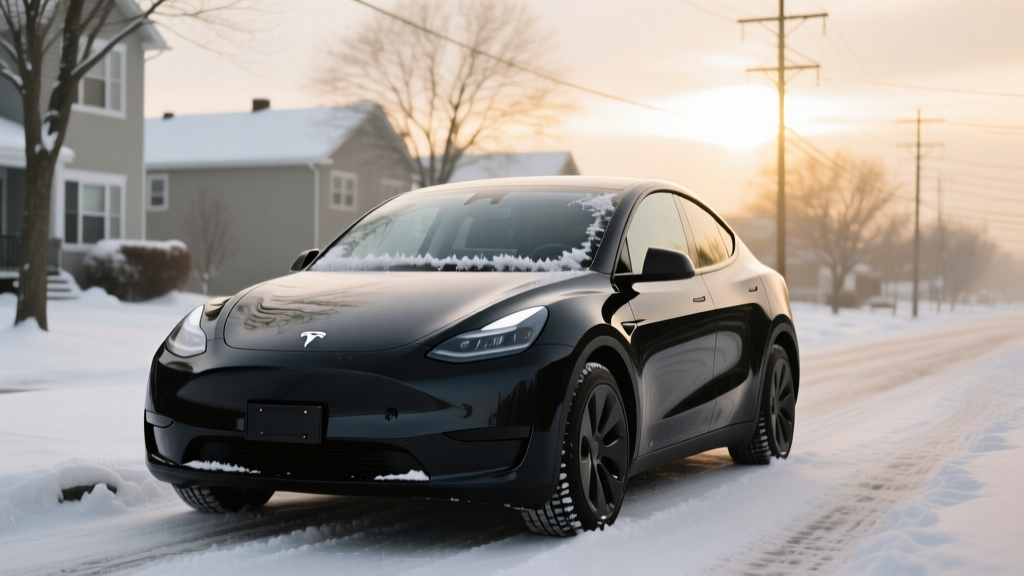
- Cold weather (below 32°F): ~220-250 mi (cabin heating + battery resistance)
- Towing (with tow package, ~3,500 lbs): ~170-200 mi
If your commute is 40 miles round-trip and you can charge at home, even the worst-case winter range is a non-issue. If you regularly drive 250+ miles one-way in January, you'll want to plan Supercharger stops—and that's where charge speed matters more than pack size.
Charging Speed: Peak kW vs. Sustained Reality
Tesla lists the 2026 Model Y Long Range at a peak 250 kW DC fast-charge rate on V3 and V4 Superchargers. Peak is not sustained. The charge curve tapers sharply above ~50% state of charge (SoC) to protect the NMC cells. A realistic 10-80% session takes roughly 25-28 minutes at a 250 kW stall, adding about 200 miles in the first 15 minutes.
| Charge Level | Power (kW) | Rate / Time | Notes |
|---|---|---|---|
| Level 1 (120V household) | ~1.4 kW | ~3-4 mi/hr | Emergency/trickle only |
| Level 2 (240V, Wall Connector) | 11.5 kW | ~37 mi/hr | Full charge in ~8 hrs |
| DC Fast (250 kW V3/V4 Supercharger) | Peak 250 kW | 10-80% in ~25-28 min | Taper above 50% SoC |
| DC Fast (CCS adapter at EA/others) | Peak ~150-170 kW | 10-80% in ~35-40 min | Station-dependent |
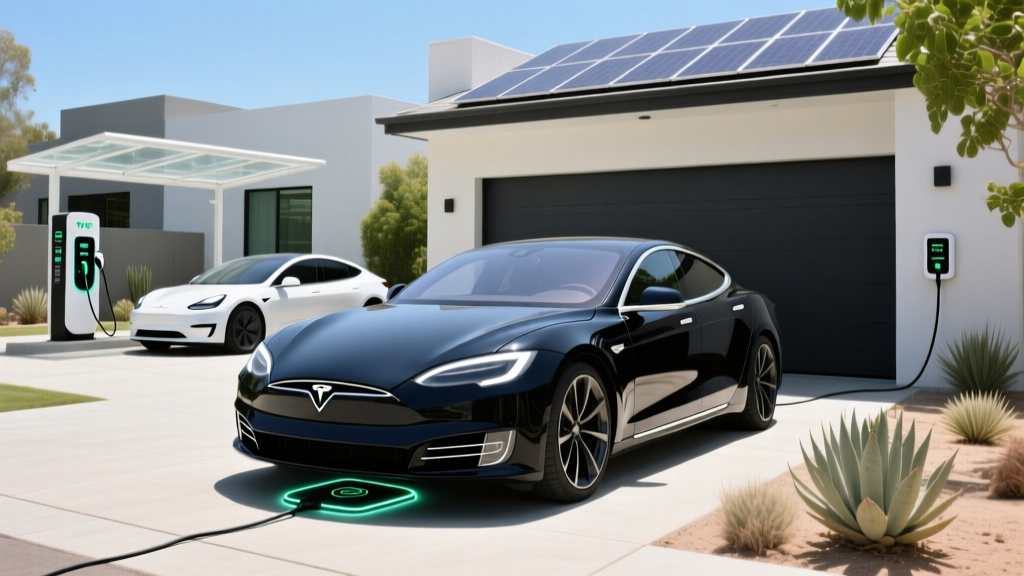
Home Level 2 charging on a Tesla Wall Connector (48A, hardwired to a 60A circuit) is the backbone of ownership. Expect $500-$1,200 for a licensed electrician to install a 60A circuit if your panel has capacity; older homes with 100A service may need a $2,000-$4,000 panel upgrade. Always precondition the battery via the Tesla app or nav-routed Supercharger stop—cold batteries charge dramatically slower.
LFP vs. NMC: The Battery Chemistry Tip Most Buyers Miss
Tesla sells the Model 3 and Model Y in two battery flavors, and the choice has daily ownership consequences:
- NMC (nickel manganese cobalt) — Used in Long Range and Performance trims. Higher energy density, better cold-weather performance, but Tesla recommends charging to 80% daily for longevity (100% only for trips).
- LFP (lithium iron phosphate) — Used in the base RWD trims. Slightly lower range, heavier, worse in extreme cold, but Tesla recommends charging to 100% at least weekly. LFP degrades more slowly over thousands of cycles and avoids cobalt sourcing concerns.
If you want the simplest ownership experience—plug in every night to 100%, no range-capping math—LFP on a base RWD Model 3 or Y is the pragmatic tip. If you need 300+ miles of range or tow regularly, NMC Long Range is the answer; just respect the 80% daily limit.
Performance and Efficiency by the Numbers
| Model / Trim | Drivetrain | 0-60 mph | HP | EPA Range | MPGe (combined) | kWh/100 mi |
|---|---|---|---|---|---|---|
| Model 3 RWD (LFP) | RWD | 5.8 sec | 271 | 272 mi | 132 MPGe | 25 |
| Model 3 Long Range AWD | Dual-motor AWD | 4.2 sec | 346 | 341 mi | 134 MPGe | 25 |
| Model Y RWD (LFP) | RWD | 6.6 sec | 271 | 277 mi | 123 MPGe | 27 |
| Model Y Long Range AWD | Dual-motor AWD | 4.8 sec | 384 | 320 mi | 122 MPGe | 28 |
| Model S LR / Plaid | Dual/Tri-motor AWD | 3.1 / 1.99 sec | 670 / 1,020 | 402 / 396 mi | 124 / 116 MPGe | 27 / 29 |
| Cybertruck AWD | Dual-motor AWD | 4.1 sec | 600 | 340 mi | ~70 MPGe | ~48 |
Efficiency is where Tesla still leads most rivals. The Model 3 Long Range squeezes 341 miles from a ~75 kWh usable pack—that's 4.5 mi/kWh, roughly 15-20% better than comparable dual-motor crossovers from Hyundai or Ford. That efficiency translates directly into lower charging costs and more miles per Supercharger stop.
Pricing, Trims, and the 2026 Federal Tax Credit
Tesla adjusts MSRPs frequently—sometimes weekly—so treat these as baseline figures and verify on tesla.com before ordering.
| Model / Trim | Base MSRP | As-Tested Typical | §30D Credit | Effective Price |
|---|---|---|---|---|
| Model 3 RWD | $38,990 | $39,990 | $7,500 (if eligible) | ~$31,490 |
| Model 3 Long Range AWD | $45,740 | $47,240 | $7,500 (if eligible) | ~$38,240 |
| Model Y RWD | $39,990 | $41,490 | $7,500 (if eligible) | ~$32,490 |
| Model Y Long Range AWD | $44,990 | $47,490 | $7,500 (if eligible) | ~$37,490 |
| Model S Long Range | $79,990 | $84,990 | $0 (exceeds MSRP cap) | $79,990+ |
| Cybertruck AWD | $79,990 | $84,990 | $0 (exceeds MSRP cap) | $79,990+ |
The IRS §30D clean vehicle credit in 2026 remains up to $7,500, but eligibility is a three-part test:
- MSRP cap: SUVs/pickups/vans must be ≤$80,000; sedans ≤$55,000. This eliminates Model S, Model X, and most Cybertruck configs.
- Buyer income cap: Modified AGI ≤$150,000 single / ≤$300,000 married filing jointly.
- Battery sourcing: Critical minerals and battery components must meet escalating North American / free-trade-partner thresholds. Tesla's US-built LFP cells have improved compliance, but NMC Long Range packs with Asian-sourced cathode materials may qualify for only $3,750 or $0 depending on the model year's exact rules. Verify the specific VIN on fueleconomy.gov before purchasing.
Since 2024, the credit can be transferred to the dealer as a point-of-sale discount, reducing your drive-off price directly. Tesla participates in this transfer process.
Cargo, Passenger Space, and Daily Practicality
The Model Y's crossover shape is why it outsells the Model 3 roughly 3-to-1 in the US:
- Cargo (rear seats up): 30.2 cu ft — more than a Toyota RAV4
- Cargo (rear seats folded): 72.1 cu ft
- Frunk (front trunk): 4.1 cu ft — fits a charging cable bag and groceries
- Rear legroom: 41.6 inches — genuinely comfortable for adults on long trips
- Optional 7-seat (third row): Available on Model Y, but best for children under 5'4"
The Model 3 sedan offers 23 cu ft of trunk space and a tighter rear seat. It's the better driver's car, but the Model Y wins for families and Costco runs.
Tech, Driver Assistance, and What Tesla Still Doesn't Include
Every 2026 Tesla ships with:
- 15.4-inch center touchscreen (Model 3/Y) running Tesla's in-house OS — no Apple CarPlay or Android Auto
- Over-the-air updates that add features monthly
- Basic Autopilot (lane centering + adaptive cruise) — SAE Level 2, driver must remain engaged
- Sentry Mode dashcam recording, phone-as-key, Tesla app preconditioning
Notable drawbacks: Tesla has removed ultrasonic parking sensors and relies on camera-based "Tesla Vision" for parking aids, which is less reliable in heavy rain or low light. Panel-gap quality has improved but still trails BMW and Hyundai. There is no heads-up display, no physical instrument cluster, and no spare tire on any model.
Warranty and Long-Term Battery Health
- Basic vehicle: 4 years / 50,000 miles
- Battery & drive unit: 8 years / 120,000 miles (Model 3/Y RWD) or 8 years / 120,000 miles (Long Range/Performance); Model S/X get 8 years / 150,000 miles
- Capacity retention threshold: Tesla warrants that the battery will retain at least 70% of original capacity during the warranty period
Real-world degradation data from fleet trackers shows NMC packs losing ~8-10% over 100,000 miles, while LFP packs often show <5% loss over the same distance thanks to the chemistry's cycle-life advantage. Out-of-warranty battery replacement runs $12,000-$16,000 for a Model 3/Y pack at a Tesla Service Center.
Pros, Cons, and Who Should Buy a Tesla in 2026
- Best-in-class Supercharger network (20,000+ US stalls, 98%+ uptime)
- Industry-leading energy efficiency (mi/kWh)
- Continuous OTA updates add real features post-purchase
- Strong resale value relative to non-Tesla EVs
- Lowest charging cost per mile on home Level 2
- No Apple CarPlay / Android Auto — dealbreaker for some
- Camera-only parking assists less reliable than ultrasonic sensors
- Service center wait times can stretch weeks in smaller metros
- FSD (Supervised) costs $8,000 or $99/mo — value is debated
- Model S/X/Cybertruck excluded from §30D credit by MSRP cap
Look at Hyundai Ioniq 5, Ford Mustang Mach-E, or BMW iX if: You need CarPlay, prefer traditional dealer service, want 800V ultra-fast charging (Hyundai/Kia), or value a luxury interior over software features.
Frequently Asked Questions
What is the real-world range of a 2026 Tesla Model Y Long Range?
The EPA rates it at 320 miles. Expect 260-280 miles on a 70-mph highway trip in mild weather, and as low as 220-250 miles in sub-freezing temperatures with cabin heat running.
How fast does a Tesla charge on a road trip?
On a 250 kW V3/V4 Supercharger, a Model Y Long Range charges 10-80% in roughly 25-28 minutes. The first 15 minutes add ~200 miles; the curve tapers significantly above 50% SoC.
How much does a 2026 Tesla Model Y cost after the federal tax credit?
A Model Y Long Range AWD starts at $44,990. If you meet all §30D requirements (income, MSRP cap, battery sourcing), the $7,500 point-of-sale credit brings the effective price to roughly $37,490 before destination and state fees.
Is a Tesla worth buying vs. competitors in 2026?
For charging convenience and software, Tesla still leads. For interior quality and CarPlay, Hyundai's Ioniq 5 and Kia's EV6 with 800V charging are strong alternatives. For families needing space, the Model Y's 30+ cu ft of cargo remains hard to beat at its price point.
Does every 2026 Tesla qualify for the $7,500 federal EV tax credit?
No. Model S, Model X, and most Cybertruck configurations exceed the §30D MSRP cap ($55,000 for sedans, $80,000 for SUVs/trucks). Even eligible Model 3/Y trims depend on your income and the battery's critical-mineral sourcing for the specific build month. Always verify the VIN on fueleconomy.gov.
Should I buy LFP (RWD) or NMC (Long Range)?
Choose LFP if you want to charge to 100% daily without worry and your trips rarely exceed 200 miles. Choose NMC Long Range if you need 300+ miles of range, tow, or frequently drive in extreme cold.
Is Tesla's FSD (Supervised) worth $8,000?
For most buyers, no. Basic Autopilot handles highway commuting well. FSD (Supervised) is a Level 2 system that still requires full driver attention—treat it as a convenience feature, not a replacement for driving. The $99/month subscription is a lower-risk way to try it.