If you've been following electric vehicle news, you've almost certainly seen BYD mentioned as the world's largest EV manufacturer — a Chinese automaker that has surpassed Tesla in global battery-electric sales volume. Naturally, American shoppers are asking: can you buy a BYD car in the USA?
The short answer as of 2026: No, BYD does not sell passenger vehicles in the United States. There are no BYD dealerships, no BYD models listed on fueleconomy.gov, and no path to purchase one through any authorized US channel. But the full picture — why BYD isn't here, whether that will change, and what American buyers should consider instead — is worth understanding before you write the brand off or wait indefinitely.
Why BYD Passenger Cars Aren't Sold in the USA
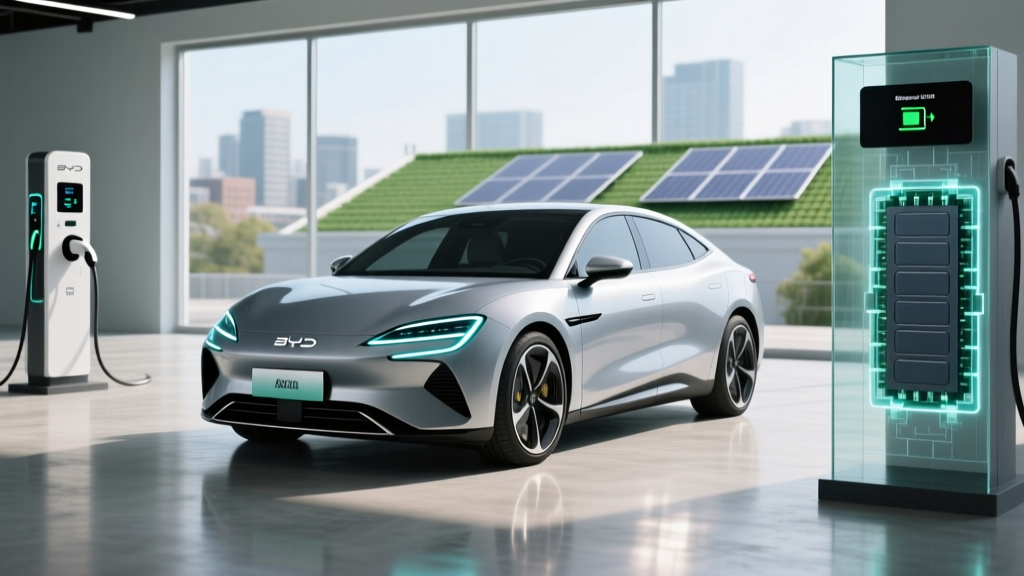
BYD (Build Your Dreams) is headquartered in Shenzhen, China, and manufactures a wide lineup of battery-electric and plug-in hybrid vehicles sold across China, Europe, Southeast Asia, Australia, Latin America, and the Middle East. Models like the BYD Atto 3 (known as the Yuan Plus in China), BYD Seal, BYD Dolphin, and BYD Han have earned strong reviews internationally for competitive pricing, solid range, and BYD's proprietary Blade Battery technology.
However, several structural barriers prevent BYD from entering the US passenger vehicle market:
- Tariffs: The US imposes a 100% tariff on Chinese-made electric vehicles as of 2024, effectively doubling the landed cost of any BYD model imported from China. This tariff, enacted under Section 301 trade provisions and reinforced in 2024, makes it economically impossible for BYD to compete on price in the US market.
- No US dealership network: BYD has made no public announcements about establishing a US retail presence for passenger vehicles. Building a dealer and service network from scratch takes years and billions of dollars.
- Regulatory and safety homologation: Vehicles sold in the US must meet NHTSA Federal Motor Vehicle Safety Standards (FMVSS), which differ from the UN-ECE standards used in most other markets. BYD would need to engineer US-specific variants of its vehicles — a significant investment for a market where tariffs already destroy the price advantage.
- Geopolitical climate: Ongoing US-China trade tensions, data-security concerns around connected vehicles, and bipartisan political opposition to Chinese EV imports make a near-term policy reversal unlikely.
BYD Models Americans Are Searching For (And Their Global Specs)
Even though you can't buy a BYD car in the USA, American interest centers on a handful of globally available models. Here's what they offer in markets where they're sold — using WLTP figures, since no EPA testing exists for these vehicles.
| Model | Type | Battery (kWh) | WLTP Range | 0-62 mph | Max DC Charge | Approx. Global Price |
|---|---|---|---|---|---|---|
| BYD Atto 3 (Yuan Plus) | Compact SUV / BEV | 60.5 (LFP Blade) | ~260 mi (WLTP) | 7.3 sec | 88 kW | ~$35,000 (EU/AU) |
| BYD Seal | Sedan / BEV | 82.5 (LFP Blade) | ~354 mi (WLTP) | 3.8 sec (AWD) | 150 kW | ~$48,000 (EU) |
| BYD Dolphin | Subcompact / BEV | 60.4 (LFP Blade) | ~265 mi (WLTP) | 7.0 sec | 88 kW | ~$32,000 (EU/AU) |
| BYD Han | Full-size Sedan / BEV | 85.4 (LFP Blade) | ~324 mi (WLTP) | 3.9 sec (AWD) | 120 kW | ~$55,000 (EU) |
| BYD Seagull | City Car / BEV | 38.9 (LFP Blade) | ~190 mi (WLTP) | ~11.0 sec | 40 kW | ~$12,000 (China) |
BYD's Blade Battery: The Technology Worth Understanding
The most compelling technology BYD brings to the table is its Blade Battery — a lithium iron phosphate (LFP) cell design that uses a unique long, thin form factor resembling a blade. This architecture delivers several advantages:
- Safety: LFP chemistry is inherently more thermally stable than nickel-manganese-cobalt (NMC) cells. BYD's Blade Battery has passed nail-penetration tests without thermal runaway — a benchmark few NMC batteries can match.
- Longevity: LFP cells typically sustain 3,000+ charge cycles before reaching 80% capacity, compared to roughly 1,500–2,000 cycles for many NMC cells. In practice, this means a Blade Battery could outlast the vehicle itself.
- Cost: LFP chemistry eliminates expensive cobalt and nickel, reducing per-kWh manufacturing costs. This is a key reason BYD vehicles undercut competitors globally.
The trade-off is lower energy density. LFP batteries are heavier and bulkier per kWh than NMC, which limits range in smaller vehicle platforms. For the BYD Seagull's city-car use case, this is acceptable. For long-range highway cruisers, it's a constraint.
What It Would Cost to Buy a BYD in the USA (If You Could)
Let's run the hypothetical math. If the 100% tariff were not in place, a BYD Atto 3 with a global price around $35,000 could theoretically compete with the Chevrolet Equinox EV or Hyundai Kona Electric in the US. With the tariff, that same vehicle would land at roughly $70,000 before shipping, dealer markup, and homologation costs — completely uncompetitive.
| Cost Factor | Amount |
|---|---|
| Factory MSRP (global) | ~$35,000 |
| 100% US tariff on Chinese EVs | +$35,000 |
| Shipping & logistics | +$2,000–$3,500 |
| FMVSS homologation costs (amortized) | +$1,500–$3,000 |
| Dealer margin | +$3,000–$5,000 |
| Estimated US sticker price | ~$76,500–$81,500 |
At that price, the Atto 3 — a compact crossover — would compete with the BMW iX and Mercedes EQB. It's not happening.
Federal Tax Credit Eligibility (§30D)
Even if BYD sold cars in the US, no BYD vehicle would qualify for the federal EV tax credit under IRS §30D rules. The credit requires that battery components and critical minerals be sourced from the US or free-trade-agreement partners — explicitly excluding Chinese-manufactured battery cells and minerals after 2024. Since BYD vertically integrates its own battery production in China, this exclusion is absolute.
Best US-Market Alternatives to BYD Models
If you're drawn to what BYD offers globally — competitive pricing, LFP battery durability, practical range — here are the closest US-market equivalents you can actually buy in 2026:
| BYD Model | US Alternative | EPA Range | Starting MSRP | §30D Credit |
|---|---|---|---|---|
| Atto 3 (Compact SUV) | Hyundai Kona Electric | 261 mi | ~$33,000 | No (Korea-built) |
| Atto 3 | Chevrolet Equinox EV | 319 mi | ~$33,600 | Up to $7,500* |
| Seal (Sedan) | Tesla Model 3 RWD | 272 mi (LFP) | ~$38,990 | Up to $7,500* |
| Dolphin (Subcompact) | Nissan Leaf (if available) / Chevy Bolt EUV successor | ~240 mi | ~$30,000 | Varies* |
| Seagull (City Car) | No direct US equivalent | N/A | N/A | N/A |
*§30D credit eligibility depends on MSRP caps ($55,000 for sedans, $80,000 for SUVs/trucks/vans), buyer income limits ($150K single / $300K joint for new vehicles), battery component sourcing, and critical-mineral requirements. Verify current eligibility at irs.gov and confirm with a tax professional before purchasing. Point-of-sale transfer is available at participating dealers.
Will BYD Ever Sell Cars in the US?
As of 2026, BYD executives have publicly stated that the US market is not a near-term priority. The company is focused on expanding in Europe (where it faces EU tariffs of up to 38% but still sees viable margins), Southeast Asia, Latin America, and the Middle East. BYD is also building manufacturing plants in Thailand, Brazil, Hungary, and Indonesia.
For BYD to enter the US passenger vehicle market, at least one of the following would need to happen:
- Tariff reduction or exemption: A significant shift in US trade policy — unlikely in the current political environment regardless of administration.
- Non-China manufacturing for US export: If BYD built a plant in Mexico, that could theoretically bypass some tariffs under USMCA rules, but political opposition and additional legislative action make this uncertain at best.
- US-based manufacturing: Building a factory in the US would eliminate tariffs but requires massive capital investment in a market where BYD has zero brand recognition and no dealer network.
Realistically, do not plan your next vehicle purchase around waiting for BYD to arrive in the US. The timeline, if it ever happens, is measured in years, not months.
Key Takeaways for US Buyers
✓ Pros of BYD (Global Context)
- Industry-leading LFP Blade Battery safety and longevity
- Aggressive pricing undercuts most global competitors
- Vertically integrated supply chain (batteries, motors, semiconductors)
- Broad model range from $12K city cars to $55K premium sedans
- Strong build quality in recent-generation vehicles
✗ Cons (US Buyer Reality)
- Not available in the US — no purchase path exists
- 100% tariff makes import economically impossible
- No US dealer or service network
- No federal tax credit eligibility due to Chinese battery sourcing
- No NHTSA/IIHS crash-test data for US consumers
- Charging speeds (88–150 kW DC) lag behind Hyundai/Kia/Tesla platforms
Frequently Asked Questions
Can I import a BYD from another country for personal use?
Technically, the EPA and NHTSA allow limited importation of vehicles not originally built for the US market under specific exemptions (show or display, vehicles over 25 years old, etc.). A new BYD would not qualify for any of these exemptions. You would need to bring the vehicle into full FMVSS compliance at your own expense — a process costing tens of thousands of dollars with no guarantee of approval. This is not a practical path.
Does BYD's Blade Battery outperform US-market LFP batteries?
BYD's Blade Battery is a well-engineered LFP cell with excellent thermal safety characteristics, but it's not a generation ahead of LFP cells from CATL (used in some Tesla Model 3 vehicles) or other suppliers. The primary advantage is BYD's vertical integration and cost structure, not a fundamental chemistry breakthrough. Tesla's LFP Model 3 offers comparable longevity.
What's the cheapest EV I can actually buy in the US with similar value?
In 2026, the Chevrolet Equinox EV (starting ~$33,600, 319 miles EPA) and the Hyundai Kona Electric (~$33,000, 261 miles EPA) offer the closest value proposition to what BYD delivers globally. If the Equinox EV qualifies for the full $7,500 §30D credit at point of sale, the effective price drops to roughly $26,100 — a figure BYD cannot match in the US even without tariffs.
Is BYD coming to the US in 2026 or 2027?
There are no confirmed plans, announcements, or timelines from BYD regarding US passenger vehicle sales. Do not delay a purchase decision waiting for BYD's US debut. If trade policy shifts substantially, a timeline of 3–5 years from announcement to first delivery would be typical for establishing a dealer network and achieving regulatory compliance.
Are BYD electric buses available in the US?
Yes — BYD manufactures battery-electric transit buses at its Lancaster, California facility, and these are in service with multiple US transit agencies. However, BYD's US bus operations have faced political scrutiny and Buy America compliance challenges. This is strictly a commercial/procurement market and has no bearing on passenger vehicle availability.