Quick Answer: Is It Time to Buy an Acura EV?
If you're considering whether to buy an Acura EV, the current answer centers on one model: the Acura ZDX. For the 2026 model year, the ZDX offers up to 313 miles of EPA-estimated range (Rear-Wheel Drive A-Spec trim), starts around $59,900 before incentives, and supports DC fast charging at up to 190 kW (10–80% in roughly 28 minutes). However, it is built on GM's Ultium platform, and federal §30D tax credit eligibility depends on battery-sourcing rules that have tightened significantly. Buyers who want luxury-brand electric motoring with access to Honda's dealer network will find the ZDX compelling — but those prioritizing maximum tax-credit savings or the fastest charging speeds should cross-shop the Tesla Model Y, Genesis Electrified GV70, and BMW iX carefully before committing.
The 2026 Acura ZDX: What You're Actually Buying
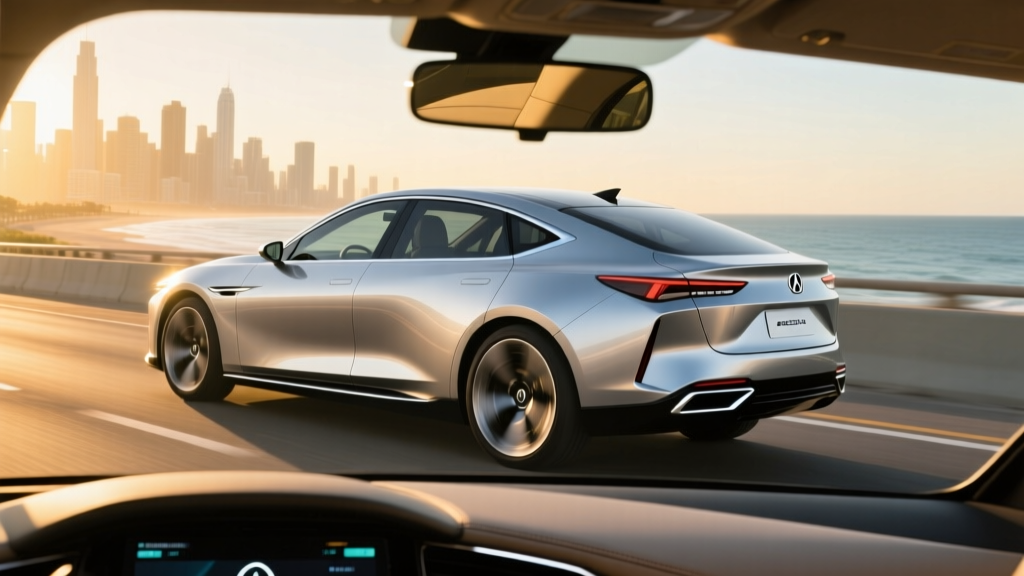
Acura's first production EV is a midsize luxury crossover developed in partnership with General Motors. It shares the Ultium battery platform with the Cadillac Lyriq but wears Acura styling, tunes its suspension for sportier handling, and integrates Google Built-in infotainment. For 2026, the lineup has consolidated into clearer trim tiers:
| Spec | A-Spec RWD | A-Spec AWD | Type S AWD |
|---|---|---|---|
| Base MSRP | $59,900 | $63,900 | $73,900 |
| EPA Range | 313 mi | 290 mi | 278 mi |
| Battery (usable) | 102 kWh (NMC) | 102 kWh (NMC) | 102 kWh (NMC) |
| Horsepower | 358 hp | 490 hp | 500 hp |
| 0–60 mph | ~6.0 sec | ~4.7 sec | ~4.3 sec |
| Max DC Fast Charge | 190 kW | 190 kW | 190 kW |
| 10–80% DC Time | ~28 min | ~28 min | ~28 min |
| Level 2 (AC) Rate | 11.5 kW | 11.5 kW | 11.5 kW |
| MPGe (combined) | 92 MPGe | 86 MPGe | 82 MPGe |
| Battery Warranty | 8 yr / 100,000 mi | 8 yr / 100,000 mi | 8 yr / 100,000 mi |
Real-World Range Expectations
The 313-mile EPA figure applies to the RWD A-Spec under ideal test cycles. Expect 260–280 miles on sustained highway driving at 70+ mph, and 220–250 miles in sub-freezing winter conditions where battery chemistry and cabin heating draw extra energy. The Type S's performance tuning and larger wheels reduce range further — plan for 230–250 miles in mixed real-world use.
Acura ZDX vs. Gas and Hybrid Alternatives
Many Acura shoppers cross-shop the MDX (gas) and MDX Sport Hybrid. Here's how the ZDX stacks up on the numbers that matter over five years of ownership, assuming 12,000 miles/year and a national-average electricity rate of $0.16/kWh versus $3.60/gallon for premium unleaded:
| Factor | ZDX A-Spec AWD | MDX A-Spec (Gas) | MDX Sport Hybrid |
|---|---|---|---|
| Base MSRP | $63,900 | $58,750 | $61,450 |
| Fuel/Energy Cost (5 yr) | ~$5,500 | ~$13,800 | ~$9,900 |
| Maintenance (5 yr est.) | ~$2,200 | ~$4,800 | ~$4,200 |
| Federal Tax Credit | Up to $7,500* | $0 | $0 |
| Est. 5-Year Total | ~$66,600 | ~$77,350 | ~$75,550 |
*§30D credit eligibility depends on battery critical-mineral and component sourcing, buyer AGI caps ($150K single / $300K joint), and MSRP limits ($80K for SUVs). Verify current status on fueleconomy.gov before purchasing. Point-of-sale transfer is available at participating dealers.
The ZDX's energy cost advantage is substantial — roughly $8,300 in fuel savings over five years versus the gas MDX. Maintenance savings add another ~$2,600 since there are no oil changes, spark plugs, or transmission fluid services. However, insurance premiums for the ZDX tend to run 15–25% higher than the MDX due to EV repair cost structures, so factor in an extra $600–$1,000/year depending on your state and driving record.
Charging the ZDX: Home and Public Realities
The ZDX uses the CCS1 connector for DC fast charging and the J1772 connector for Level 2 AC. (Acura has signaled future NACS adoption, but 2026 models ship with CCS1; a NACS adapter may be available through GM's network.)
| Level | Power | Miles Added/Hour | Use Case |
|---|---|---|---|
| Level 1 (120V) | ~1.4 kW | ~4 mi/hr | Emergency/top-up only |
| Level 2 (240V, 48A) | 11.5 kW | ~35 mi/hr | Home overnight — full charge in ~9 hrs |
| DC Fast Charge | Peak 190 kW | ~200 mi in 15 min | Road trips; tapers sharply above 80% SoC |
Home Charging Installation Costs
Most ZDX buyers will want a Level 2 home charger. Budget for the following:
| Component | Cost Range |
|---|---|
| Level 2 EVSE (hardwired, 48A) | $500–$800 |
| Electrician labor (240V/50A circuit) | $800–$2,500 |
| Permit and inspection | $100–$300 |
| Panel upgrade (if needed, 200A service) | $1,500–$4,000 |
| Total (no panel upgrade) | $1,400–$3,600 |
| Total (with panel upgrade) | $2,900–$7,600 |
If you live in an apartment or lack dedicated parking, public charging becomes your primary strategy. Electrify America, EVgo, and ChargePoint all support CCS1, but reliability varies by station. Plan routes using A Better Routeplanner or the in-dash Google Maps EV routing, and always have a backup station identified.
The Charging Curve Reality
Acura's 190 kW peak rate applies only between roughly 10–40% State of Charge. Above 60%, the rate tapers to ~80 kW, and above 80% it drops below 40 kW to protect the NMC cells. A 10–80% session takes ~28 minutes, but a 10–100% session can exceed 55 minutes. For road trips, plan stops around the 10–80% window and move on rather than waiting for a full charge.
Tax Credits, Incentives, and What You'll Actually Pay
The federal §30D clean vehicle credit offers up to $7,500, split into two halves: $3,750 for battery-component sourcing and $3,750 for critical-minerals sourcing. Because the ZDX uses GM's Ultium platform with evolving supply chains, the exact credit amount has fluctuated. As of early 2026, buyers should verify the current sourcing status on fueleconomy.gov before signing a purchase agreement.
§30D Eligibility Checklist
- MSRP cap: Vehicle must be ≤$80,000 (SUV classification — ZDX qualifies on all trims)
- Buyer income cap: Modified AGI ≤$150,000 (single) / $225,000 (head of household) / $300,000 (joint)
- Battery sourcing: Must meet critical-mineral and component requirements per current IRS guidance
- Assembly: Final assembly must be in North America (ZDX is assembled in Spring Hill, TN — qualifies)
- Transfer option: Credit can be transferred to the dealer at point of sale for an immediate price reduction
Beyond federal incentives, many states and utilities offer additional rebates — check AFDC's state incentive database for your specific location. California's CVRP, Colorado's innovative motor vehicle credit, and various utility off-peak charging rebates can stack meaningfully.
Common Misconceptions About Buying an Acura EV
| Myth | Fact |
|---|---|
| "The battery will need replacing in 5 years" | NMC batteries in the Ultium platform are warrantied for 8 years/100,000 miles at ≥70% capacity. Industry data shows typical degradation of 8–12% over 100K miles. |
| "I can charge anywhere in 15 minutes" | Peak 190 kW only applies at low SoC. Real stops take 25–35 min for 10–80%, and station availability varies regionally. |
| "The $7,500 credit is guaranteed" | Eligibility depends on battery sourcing, your income, and MSRP — all subject to IRS rule changes. Verify before purchasing. |
| "EVs cost more to insure always" | Premiums are 15–25% higher on average for the ZDX vs. MDX, but vary by insurer. Some companies now offer EV-specific policies. |
| "I need a Tesla to use Superchargers" | GM (and by extension Acura) has negotiated Supercharger access via adapter for CCS-equipped vehicles. Confirm adapter availability with your dealer. |
Decision Framework: Should You Buy an Acura EV?
Choose the Acura ZDX If:
- You want a luxury EV crossover with 280+ real-world miles of range and value Acura's dealer/service network
- You have (or can install) Level 2 home charging — this is where 80%+ of your charging will happen
- You qualify for the §30D credit and can capture it at point of sale, bringing effective pricing below $57K
- You prefer Google Built-in infotainment and want seamless Google Maps EV routing
- Your typical daily driving is under 80 miles, making overnight home charging effortless
Look Elsewhere If:
- You need the fastest DC charging available — the Hyundai Ioniq 5 and Kia EV6 charge at 350 kW (10–80% in ~18 min)
- You regularly drive in extreme cold (below 10°F) and need maximum range buffer — consider a larger-battery option or a PHEV like the BMW X5 xDrive50e
- You lack any home or workplace charging access and live in a charging-desert area
- Tax credit eligibility is the primary driver of your purchase — verify ZDX sourcing status vs. competitors that may have more stable credit qualification
- You want a third row — the ZDX is strictly a two-row, five-passenger vehicle
What First-Time EV Buyers Should Know Before Signing
If the ZDX is your first EV, prepare for these ownership shifts:
- Preconditioning matters. Use the ZDX's scheduled departure feature to warm the battery while plugged in. This preserves range in cold weather and enables faster DC charging.
- Regen braking changes your driving. The ZDX offers one-pedal driving mode. Expect a 1–2 week adaptation period, then you'll rarely touch the brake pedal in city driving.
- Tire wear increases. EVs are heavier and deliver instant torque. Budget for tire replacement every 25,000–35,000 miles rather than the 50,000+ miles typical on gas cars.
- Plan road trips differently. Use A Better Routeplanner or the ZDX's built-in Google Maps to identify CCS chargers along your route. Add a 15-minute buffer per stop for real-world charging variability.
- Your electric bill goes up; your gas bill disappears. At $0.16/kWh, a full ZDX charge costs ~$16.30 for 313 miles. That same distance in a gas MDX at 21 MPG combined costs ~$53.40 on premium.
Frequently Asked Questions
Is the Acura ZDX reliable for a first EV?
The ZDX uses GM's proven Ultium platform, which underpins the well-reviewed Cadillac Lyriq. First-year model quirks are possible (software glitches, minor build issues), but the powertrain and battery architecture are mature. Acura's 4-year/50,000-mile bumper-to-bumper and 8-year/100,000-mile battery warranty provide solid coverage.
Can I use Tesla Superchargers with the Acura ZDX?
GM has an agreement for Supercharger access, and a NACS adapter is expected to enable CCS1-equipped vehicles like the ZDX to use Tesla's network. Confirm adapter availability and any associated costs with your Acura dealer at purchase time.
How does the ZDX compare to the Cadillac Lyriq?
Both share the Ultium platform and 102 kWh battery, but the ZDX has unique suspension tuning, Acura-specific styling, and a slightly different interior layout. The Lyriq starts ~$2,000 lower and offers a similar range. Cross-shop both — your preference will come down to brand affinity, dealer experience, and available incentives.
What happens if the battery degrades significantly?
Acura's battery warranty guarantees ≥70% capacity retention for 8 years or 100,000 miles. If degradation exceeds that threshold, the battery modules can be serviced or replaced under warranty. Out-of-warranty Ultium battery replacement costs are estimated at $12,000–$18,000 based on current GM service data, though costs are expected to decline as the supply chain matures.
Should I lease or buy the ZDX?
Leasing can be advantageous if you want to hedge against EV depreciation uncertainty and technology obsolescence. Some leases also pass through the §30D credit as a capitalized-cost reduction even when purchase credit eligibility is uncertain — ask the dealer about the lease credit structure. Buying makes more sense if you plan to keep the vehicle 6+ years and want to build equity.
Does the ZDX qualify for HOV lane access?
In most states that offer HOV stickers for zero-emission vehicles (California, Colorado, Maryland, etc.), the ZDX qualifies. Check your state's DMV for application requirements and sticker availability, as some programs have caps or income restrictions.