Quick Verdict: The Armor Adds Weight, and Weight Costs Range
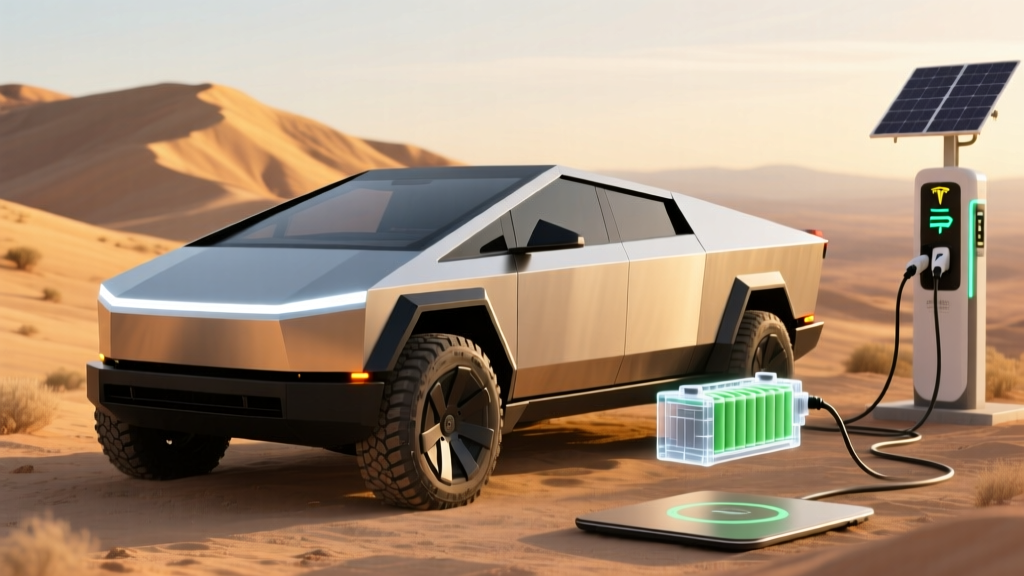
The Tesla Cybertruck has always been a polarizing vehicle. Its angular stainless-steel exoskeleton promised a level of durability unseen in the pickup segment. But when buyers search for a "bulletproof Cybertruck," they're usually asking two things: Is the body genuinely armored, and does the truck hold up under real-world abuse? The 2026 Cybertruck lineup — available in Dual Motor All-Wheel Drive and the tri-motor Cyberbeast — delivers impressive performance and tech, but the stainless-steel skin is far from bulletproof in the military sense. What it does offer is exceptional dent resistance, a rigid structural shell, and Tesla's optional armor-glass upgrade that pushes the truck closer to ballistic protection than any mainstream competitor.
This review breaks down exactly what the 2026 Cybertruck can and can't do, with hard numbers on range, charging speed, pricing, and the federal tax credit landscape that every buyer needs to understand before signing a purchase agreement.
2026 Cybertruck Specifications at a Glance
| Specification | Dual Motor AWD | Cyberbeast (Tri-Motor) |
|---|---|---|
| EPA Range | 340 miles | 320 miles |
| Battery Capacity (usable) | ~123 kWh (NMC) | ~123 kWh (NMC) |
| Horsepower | 600 hp | 845 hp |
| 0-60 mph | 3.9 seconds | 2.6 seconds |
| Drivetrain | Dual Motor AWD | Tri-Motor AWD |
| Max DC Fast Charge | 250 kW | 250 kW |
| 10-80% DC Charge Time | ~28 minutes | ~28 minutes |
| Level 2 Home Charging | 11.5 kW (~37 mi/hr) | 11.5 kW (~37 mi/hr) |
| MPGe (combined) | 72 MPGe | 68 MPGe |
| Efficiency | 47 kWh/100 mi | 50 kWh/100 mi |
| Towing Capacity | 11,000 lbs | 11,000 lbs |
| Base MSRP | $79,990 | $99,990 |
| Warranty (Battery/Drive) | 8 yr / 120,000 mi | 8 yr / 120,000 mi |
Range Reality: What the EPA Sticker Doesn't Tell You
Dual Motor AWD: EPA 340 miles — expect ~280-300 miles on highway trips at 70-75 mph; ~240-260 miles in sustained cold weather (below 30°F) with cabin heating.
Cyberbeast: EPA 320 miles — expect ~260-280 miles highway; ~220-240 miles in cold conditions.
Towing at max capacity can cut range by 40-50%, dropping real-world figures to ~170 miles for the Dual Motor.
The Cybertruck's stainless-steel body and angular design create more aerodynamic drag than a rounded, optimized shape. At highway speeds, this matters significantly. The truck's efficiency rating of 47 kWh per 100 miles (Dual Motor) means it consumes more energy per mile than a lighter, more aerodynamic EV like the Rivian R1T (42 kWh/100 mi) or the Ford F-150 Lightning Extended Range (48 kWh/100 mi, but with a larger 131 kWh pack).
Cold weather compounds the issue. The NMC battery chemistry performs adequately in low temperatures, but Tesla's thermal management system still draws meaningful energy to keep the pack warm. If you live in northern climates and commute more than 80 miles round-trip in winter, plan your charging around a realistic 240-mile range, not the 340-mile sticker. According to fueleconomy.gov, the Dual Motor AWD carries an EPA combined rating of 72 MPGe — respectable for a 6,800-pound truck, but not class-leading.
Charging Speed: 250 kW Peak, but Watch the Curve
The 2026 Cybertruck supports up to 250 kW DC fast charging on Tesla's V3 and V4 Supercharger network. That peak rate is impressive on paper, but sustained charging speed is what actually determines your road-trip downtime.
| Charging Method | Power / Rate | Time / Miles Added |
|---|---|---|
| DC Fast Charge (V3/V4 Supercharger) | Peak 250 kW | 10-80% in ~28 min; ~180 mi in 15 min (preconditioned) |
| DC Fast Charge (CCS adapter, Electrify America) | Peak ~150-200 kW (station dependent) | 10-80% in ~35-40 min |
| Level 2 Home (Tesla Wall Connector, 48A) | 11.5 kW | ~37 miles per hour; full charge in ~11 hours |
| Level 1 (120V outlet) | ~1.4 kW | ~4 miles per hour; emergency use only |
Here's the charging-curve reality: the Cybertruck holds near peak 250 kW from roughly 10% to 35% State of Charge, then tapers progressively. By 60% SoC, you're looking at approximately 150 kW, and above 80%, speeds drop below 60 kW to protect the battery. This is standard for NMC chemistry — if you regularly need the full 340 miles, the last 20% of charging will add significant time. Tesla's navigation system handles this well by preconditioning the battery when you route to a Supercharger, which is essential for hitting advertised speeds.
For home charging, a Tesla Wall Connector on a 60-amp circuit (48 amps continuous) delivers 11.5 kW, adding about 37 miles of range per hour. Most owners charging overnight from 20% to 80% will wake up with ample range. Budget roughly $800-$1,500 for professional installation of a 240V/60A circuit if your electrical panel supports it; older homes may need a panel upgrade adding $1,500-$3,000.
The "Bulletproof" Question: Stainless Steel, Armor Glass, and Real Durability
Let's address the keyword directly. The Cybertruck's body is made from ultra-hard 30X cold-rolled stainless steel, which Tesla claims is resistant to dents and corrosion far beyond conventional aluminum or stamped-steel truck bodies. In practice, this material genuinely resists door dings, minor impacts, and the kind of cosmetic damage that plagues traditional pickups. You will not dent this truck with a shopping cart or a stray baseball.
However, "bulletproof" is a specific ballistic standard (NIJ Level IIIA or higher), and the Cybertruck's standard body panels do not meet certified ballistic ratings. The stainless steel is approximately 1.8mm thick — enough to defeat some low-caliber rounds at oblique angles, but not a certified armor system. Tesla's optional Armor Glass package (a laminated, polymer-reinforced glass composite) improves impact resistance over the original 2019 demonstration, but it is not rated to any published NIJ ballistic standard either.
What the Cybertruck does offer is exceptional structural rigidity. The exoskeleton design means the body itself is load-bearing, contributing to crash safety and torsional stiffness. For buyers who want genuine ballistic protection, aftermarket upfitters like AddArmor and Alpine Armoring offer certified packages starting around $30,000-$70,000 on top of the vehicle price — but these add 500-1,500 pounds, further reducing range.
Performance, Cargo, and Daily Usability
The Cyberbeast's 2.6-second 0-60 mph time is absurd for a vehicle weighing nearly 7,000 pounds. Even the Dual Motor's 3.9-second run puts it in sports-car territory. The tri-motor setup provides torque vectoring across the rear axle, giving the Cyberbeast genuinely surprising cornering composure for its size.
Cargo dimensions are practical but not class-leading:
- Bed length: 6 feet (with tailgate closed); extends to ~8 feet with tailgate down
- Bed volume: ~67 cubic feet
- Front trunk (frunk): ~7 cubic feet — useful for groceries or a charging cable kit
- Rear seat legroom: ~38 inches — adequate for adults on shorter trips, tight for long hauls
- Seating: 5 passengers (3-across rear bench)
The 11,000-pound towing capacity matches the F-150 Lightning and exceeds the Rivian R1T (11,000 lbs for the dual-motor R1T). However, towing at max capacity devastates range — expect roughly 150-180 real-world miles before needing a charge, which limits the Cybertruck's viability as a long-distance tow rig without careful route planning around Superchargers.
Tech highlights include the 18.5-inch center touchscreen running Tesla's latest UI, a rear-seat 9.4-inch display, Tesla's Premium Connectivity with satellite maps and streaming, and the company's steer-by-wire system. Steer-by-wire eliminates the mechanical connection between the yoke and the wheels, enabling a variable steering ratio that requires less than one full turn lock-to-lock. It takes roughly 30 minutes of driving to build muscle memory, after which it feels intuitive — but some drivers never adapt, and this is worth a thorough test drive before committing.
Pricing, Trims, and Federal Tax Credit Eligibility
| Trim | Base MSRP | Est. As-Tested (with options) | §30D Federal Credit Eligibility |
|---|---|---|---|
| Dual Motor AWD | $79,990 | $82,000-$86,000 | Not eligible — exceeds MSRP cap |
| Cyberbeast (Tri-Motor) | $99,990 | $102,000-$110,000 | Not eligible — exceeds MSRP cap |
Here's the critical tax-credit reality: under current IRS §30D rules, new clean vehicle credits are capped at $80,000 MSRP for trucks, SUVs, and vans. The Cybertruck Dual Motor AWD at $79,990 sits at the absolute threshold — but once you add any factory options, destination fees, or packages that push the MSRP above $80,000, the vehicle loses eligibility entirely. In practice, most Cybertruck configurations will not qualify for the $7,500 federal credit.
Even if the base Dual Motor technically qualifies, buyers must also meet income caps: modified adjusted gross income cannot exceed $300,000 (joint filers), $225,000 (head of household), or $150,000 (single). Additionally, the vehicle must meet critical-mineral and battery-component sourcing requirements that shift annually. As of 2026, these sourcing rules have become more restrictive, and buyers should verify eligibility on the IRS clean vehicle portal before relying on the credit.
The point-of-sale transfer option — where the dealer applies the credit as an immediate price reduction — is available if eligibility is confirmed, but Tesla's direct-sales model requires you to handle this at delivery. Consult a tax professional before assuming credit eligibility.
Who Should Buy the Cybertruck (and Who Shouldn't)
- You want a durable, dent-resistant truck body for job sites or tight urban parking
- You value extreme acceleration and tech-forward features like steer-by-wire
- You have reliable home charging and mostly drive within 200 miles of home
- You're a Tesla ecosystem loyalist who uses Superchargers regularly
- You need genuine ballistic armor (seek a certified upfitter instead)
- You tow heavy loads over long distances frequently (range while towing is limiting)
- You need a traditional truck bed with a 6.5- or 8-foot length for construction materials
- You're counting on the $7,500 federal tax credit to make the math work
Compared to the Rivian R1T (starting ~$71,700, EPA range up to 410 miles with the Max pack), the Cybertruck sacrifices range and conventional usability for style, acceleration, and durability. The Ford F-150 Lightning remains the pragmatic choice for fleet buyers and traditional truck users, with its familiar form factor, Pro Power Onboard, and available $7,500 credit on qualifying trims.
Frequently Asked Questions
Is the Cybertruck actually bulletproof?
No. The 30X stainless-steel body resists dents, scratches, and minor impacts far better than conventional truck bodies, but it is not certified to any NIJ ballistic standard. The optional Armor Glass improves impact resistance but is also not ballistically rated. For genuine ballistic protection, you would need an aftermarket armor upfit costing $30,000-$70,000+.
What is the real-world range of the Cybertruck?
The Dual Motor AWD carries an EPA rating of 340 miles, but expect 280-300 miles on highway road trips and 240-260 miles in cold weather. The Cyberbeast's 320-mile EPA rating translates to roughly 260-280 real-world highway miles. Towing at maximum capacity cuts range by 40-50%.
How fast does the Cybertruck charge?
On a Tesla V3/V4 Supercharger, the Cybertruck peaks at 250 kW and charges from 10-80% in approximately 28 minutes when the battery is preconditioned. At home on a Level 2 Wall Connector (11.5 kW), it adds about 37 miles of range per hour.
Does the Cybertruck qualify for the $7,500 federal EV tax credit?
Most likely not. The §30D credit caps truck MSRP at $80,000. The base Dual Motor at $79,990 is at the threshold, but any options or destination charges push it above the cap. Income limits ($150K-$300K depending on filing status) and battery-sourcing rules further restrict eligibility. Verify on the IRS clean vehicle portal and consult a tax professional.
Is the Cybertruck worth buying over the Rivian R1T or F-150 Lightning?
It depends on your priorities. The Cybertruck wins on acceleration, body durability, and tech novelty. The Rivian R1T wins on range (up to 410 miles), conventional usability, and tax-credit eligibility on lower trims. The F-150 Lightning wins on practicality, familiarity, fleet support, and credit availability. If you want the most durable body and the fastest truck in the segment, the Cybertruck has no equal. If you need range and practicality, look at the R1T.
What is the Cybertruck's battery warranty?
Tesla covers the battery and drive unit for 8 years or 120,000 miles, whichever comes first, with a minimum 70% capacity retention threshold. This is competitive with the segment; Rivian offers 8 years/175,000 miles, and Ford covers the Lightning battery for 8 years/100,000 miles at 70% retention.