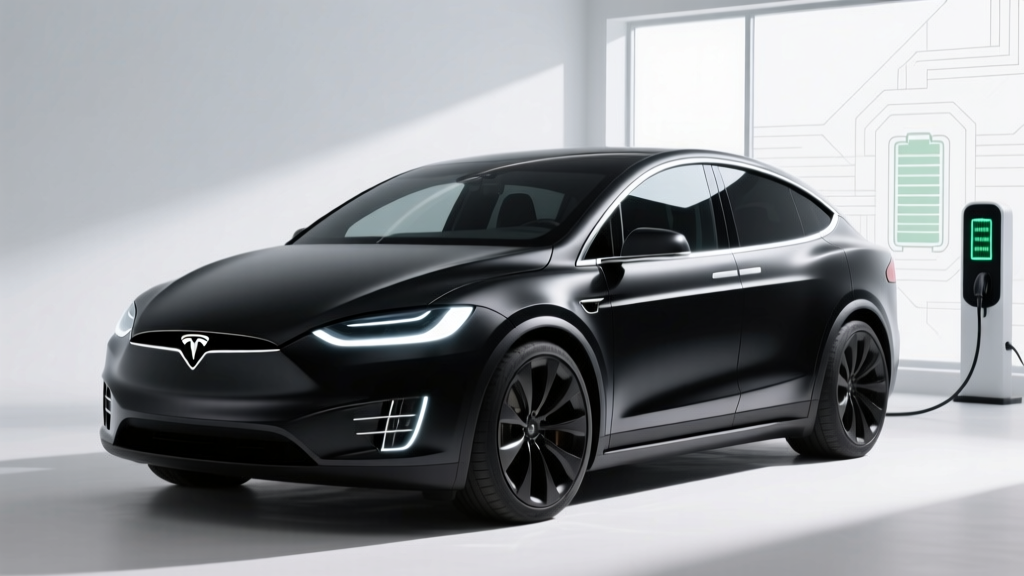
The 2026 Tesla Model X at a Glance: What You're Actually Building
If you're about to build a Tesla Model X in Tesla's online configurator, you're looking at one of the most capable — and most expensive — three-row electric SUVs on the market. The 2026 Model X continues with two primary trims (Long Range AWD and Plaid), a 100 kWh battery pack, and access to the Supercharger network that remains a decisive advantage for road-trippers. But before you lock in your configuration, you need to understand what the EPA sticker doesn't tell you: real-world highway range falls short of the label, cold weather cuts it further, and federal tax-credit eligibility for the Model X is far from guaranteed.
This guide walks through every spec, price point, and ownership reality you need to configure wisely — based on EPA data, Tesla's published specs, and real-world driving patterns.
| Spec | Long Range AWD | Plaid |
|---|---|---|
| EPA Range | 348 mi | 320 mi |
| Battery (usable) | ~100 kWh (NMC) | ~100 kWh (NMC) |
| Drivetrain | Dual-Motor AWD | Tri-Motor AWD |
| Horsepower | 670 hp | 1,020 hp |
| 0–60 mph | 3.8 sec | 2.5 sec |
| Top Speed | 155 mph | 163 mph |
| DC Fast Charge (peak) | 250 kW | 250 kW |
| 10–80% DCFC Time | ~31 min | ~31 min |
| Level 2 (11.5 kW) | ~36 mi/hr | ~36 mi/hr |
| MPGe (combined) | 102 MPGe | 98 MPGe |
| Efficiency | 33 kWh/100 mi | 34 kWh/100 mi |
| Towing Capacity | 5,000 lbs | 5,000 lbs |
| Seating | 5, 6, or 7 | 5, 6, or 7 |
| Base MSRP | $74,990 | $89,990 |
Range Reality Check: EPA Sticker vs. What You'll Actually Get
EPA Long Range AWD: 348 miles | EPA Plaid: 320 miles
Real-world highway (70 mph, moderate weather): Expect ~280–310 mi (Long Range) and ~260–285 mi (Plaid)
Cold-weather (below 32°F): Plan for 20–30% reduction — roughly 220–260 mi usable in Long Range
Why the gap? EPA tests include low-speed city driving where regenerative braking recovers energy. Sustained highway speeds and cold temperatures (which increase battery resistance and cabin heating load) reduce efficiency significantly.
The Model X Long Range AWD's 348-mile EPA figure is competitive among three-row EVs, but the SUV's large frontal area and ~5,100-lb curb weight work against it at highway speeds. According to fueleconomy.gov, the Long Range achieves 102 MPGe combined, translating to 33 kWh per 100 miles — meaning you'll draw roughly 33 kWh from the battery (or charger) for every 100 miles of mixed driving.
The Plaid's tri-motor setup adds weight and mechanical drag, dropping efficiency to 34 kWh/100 mi and EPA range to 320 miles. In real-world highway testing, Plaid owners frequently report 260–285 miles before needing a charge stop — adequate for most commutes but requiring planning on 400+ mile road trips.
The 100 kWh battery pack uses NMC (nickel manganese cobalt) chemistry, which offers higher energy density than LFP but degrades slightly faster over time. Tesla recommends daily charging to 80–90% for NMC packs, reserving 100% for trips — a practice that meaningfully extends long-term battery health.
Charging Speed: DC Fast Charging and Home Level 2
When you build your Tesla Model X, charging capability comes standard — but understanding the curve matters for road-trip planning.
| Level | Power | Speed (miles added/hr) | Notes |
|---|---|---|---|
| Level 1 (120V) | ~1.4 kW | ~4 mi/hr | Emergency/trickle only |
| Level 2 (240V, 48A) | 11.5 kW | ~36 mi/hr | Full overnight charge in ~9–10 hrs |
| DC Fast Charge | Peak 250 kW | Up to ~175 mi in 15 min | 10–80% in ~31 min |
| Supercharger V4 | Up to 250 kW | Same as above | Model X limited to 250 kW architecture |
The Model X peaks at 250 kW on V3/V4 Superchargers, but like all EVs, it doesn't sustain that rate. The charge curve tapers significantly above 50% SoC, and especially above 80%. A 10–80% session takes approximately 31 minutes. Charging from 80–100% can add another 20+ minutes — so for road trips, the optimal strategy is shorter, more frequent stops between 10–80% rather than waiting for a full charge.
At home, the onboard charger accepts up to 11.5 kW on a 240V/48A circuit (requiring a 60A breaker). A full 0–100% charge takes roughly 9–10 hours. Tesla's Wall Connector is the recommended home unit, and most owners wake up to a full battery every morning with this setup. Installation typically runs $800–$2,000 depending on panel proximity and whether your home's electrical panel needs upgrading to 200A service.
The Model X uses the NACS (North American Charging Standard) connector natively — the same plug used across the entire Supercharger network. With adapters, CCS compatibility is available at non-Tesla DC fast chargers, though Tesla's proprietary network remains the most reliable option in the U.S.
Performance and Drivetrain: Long Range vs. Plaid
The Long Range AWD uses a dual-motor setup producing 670 hp and hitting 0–60 mph in 3.8 seconds — already faster than most sports sedans from a decade ago. The dual-motor system provides full-time all-wheel drive with torque vectoring, giving the Model X confident traction in rain and light snow.
The Plaid adds a third rear motor for 1,020 hp and a 2.5-second 0–60 time, making it one of the quickest production SUVs ever built. The tri-motor system also enables torque vectoring across the rear axle, improving cornering dynamics. However, the Plaid's extra motor adds roughly 100 lbs and costs 28 miles of EPA range plus $15,000 in MSRP.
Both trims feature adaptive air suspension that adjusts ride height based on speed and terrain, providing up to 8.2 inches of ground clearance in the highest setting — useful for steep driveways and light off-pavement use. The suspension also lowers at highway speeds to reduce drag and improve efficiency.
Pricing, Configuration Options, and Federal Tax Credit Eligibility
| Item | Long Range AWD | Plaid |
|---|---|---|
| Base MSRP | $74,990 | $89,990 |
| 6-Seat Interior | +$6,500 | +$6,500 |
| 7-Seat Interior | +$4,000 | +$4,000 |
| FSD (Supervised) | +$8,000 | +$8,000 |
| Premium Paint (e.g., Ultra Red) | +$2,500 | +$2,500 |
| 22" Turbine Wheels | +$5,500 | Included |
| Typical As-Tested (6-seat, FSD) | ~$91,990 | ~$106,990 |
Now for the tax-credit question that affects every Model X build: the 2026 Tesla Model X does NOT qualify for the §30D federal new EV tax credit. The reason is the MSRP cap. Under current IRS rules (irs.gov), SUVs must have an MSRP at or below $80,000 to be eligible. The Model X Long Range starts at $74,990 — but once you add any single option (paint color beyond free white, 6-seat config, tow package), the vehicle MSRP crosses the $80,000 threshold. Even a base Long Range in white with no options and 5-seat configuration technically qualifies on price alone, but you must also meet all of the following:
- Income caps: Modified AGI ≤ $300,000 (joint), $225,000 (head of household), $150,000 (single)
- Battery sourcing: Critical minerals and battery components must meet phased-in domestic/free-trade-agreement sourcing percentages that increase annually
- Point-of-sale transfer: You can elect to transfer the credit to the dealer for an upfront price reduction, or claim it on your tax return (Form 8936)
In practice, most Model X buyers exceed the income cap or configure the vehicle above $80,000. Always consult a tax professional and verify current-year rules on IRS.gov before counting on the credit in your purchase math.
Interior, Cargo, and Technology
The Model X offers three seating configurations: 5-seat (standard bench second row), 6-seat (captain's chairs with center aisle), and 7-seat (bench second row plus small third row). The 6-seat layout is the most popular for families, providing easy walk-through access to the third row and more comfortable second-row seating.
Cargo volume:
- Behind third row: ~37.1 cu ft (with 5-seat config, behind second row: ~85.1 cu ft)
- Total with seats folded: up to ~91.6 cu ft (Long Range, 5-seat)
- Front trunk (frunk): ~6.5 cu ft — useful for charging cables and small bags
Legroom: 41.2 inches front / 40.9 inches second row / 32.7 inches third row. The third row is best suited for children or short-trip adult passengers.
The 17-inch center touchscreen runs Tesla's latest software with a yoke-style steering wheel standard (conventional round wheel available at no cost). The infotainment system includes streaming services, gaming, navigation with real-time Supercharger routing, and over-the-air updates. The rear passengers get a dedicated 8-inch screen for climate control and entertainment.
The signature Falcon Wing rear doors use ultrasonic sensors to detect overhead obstacles and open in tight spaces — a genuine advantage in rain when loading children into car seats. However, they add mechanical complexity, and some owners report occasional sensor quirks in heavy rain or with roof racks.
Driver assistance: Basic Autopilot (adaptive cruise, lane centering) is standard. Full Self-Driving (Supervised) is an $8,000 option that adds automatic lane changes, intersection handling, and Navigate on Autopilot. This is an SAE Level 2 system — the driver must remain fully engaged, monitor the road, and keep hands ready to take over at all times. It is not autonomous driving.
These are SAE Level 2 driver-assist systems, not self-driving. The driver is legally and operationally responsible for the vehicle at all times. FSD (Supervised) requires active monitoring — it can misread construction zones, fail to detect certain obstacles, and disengage without warning. Never treat it as a Level 4 autonomous system.
Warranty and Long-Term Ownership
Tesla's warranty coverage for the 2026 Model X:
- Basic Vehicle: 4 years / 50,000 miles
- Battery & Drive Units: 8 years / 150,000 miles (Long Range) with minimum 70% capacity retention
- Battery & Drive Units (Plaid): 8 years / 150,000 miles with minimum 70% capacity retention
The 8-year/150,000-mile battery warranty is competitive, though some rivals offer slightly longer coverage. NMC chemistry in the Model X typically shows 8–12% degradation over the first 100,000 miles based on fleet data — meaning a 348-mile EPA vehicle might realistically offer ~305–320 miles when new and ~280–295 miles after 100,000 miles of mixed use. Keeping daily charge levels between 20–80% and avoiding frequent DC fast charging can slow degradation further.
Out-of-warranty battery replacement for the Model X currently ranges from $18,000 to $25,000 depending on pack configuration and service center labor — a figure worth factoring into long-term ownership cost projections for high-mileage drivers.
Pros and Cons of the 2026 Model X
- 348 mi EPA range (Long Range) is among the best in 3-row EVs
- Supercharger network access — the most reliable DCFC ecosystem in the U.S.
- Falcon Wing doors genuinely help in tight parking and car-seat loading
- 5,000-lb towing capacity covers most boat and small trailer needs
- Tri-motor Plaid offers supercar-level acceleration in a family SUV
- OTA updates continuously add features post-purchase
- Air suspension standard with adjustable ride height
- MSRP crosses $80K quickly — eliminates most §30D tax-credit eligibility
- 250 kW peak DC charge rate trails rivals with 800V architectures (350 kW)
- Third row is tight for adults (32.7" legroom)
- Falcon Wing doors add repair complexity and sensor sensitivity
- Yoke steering has a learning curve (round wheel available)
- Panel gaps and build-quality inconsistencies still reported by some owners
- Insurance premiums 20–35% higher than comparable ICE SUVs
Who Should Build a Tesla Model X — And Who Shouldn't
- Choose the Model X Long Range if: You need 3 rows, want 300+ mile range, rely on Supercharger road-trip infrastructure, and your configured MSRP can stay near $80K for potential credit eligibility.
- Choose the Model X Plaid if: Performance is a priority, you want tri-motor AWD traction, and budget is secondary to capability.
- Consider the Kia EV9 instead if: You need a more affordable 3-row EV (~$55K–$70K), want 800V fast charging, and prioritize conventional styling and dealer service.
- Consider the Rivian R1S instead if: You need serious off-road capability, prefer a truck-based platform, and want a more rugged interior for outdoor lifestyles.
- Skip the Model X if: Your budget is under $70K, you need adult-friendly third-row space, or you live in an area with limited Supercharger coverage and no home charging access.
Frequently Asked Questions
What is the real-world range of the Tesla Model X?
The Long Range AWD is EPA-rated at 348 miles, but real-world highway driving at 70 mph typically yields 280–310 miles. In cold weather (below freezing), expect 220–260 miles due to battery resistance and cabin heating demands. The Plaid delivers 260–285 miles in real-world highway conditions.
How fast does the Model X charge at home and on the road?
On a Level 2 home charger (11.5 kW), the Model X adds roughly 36 miles of range per hour, achieving a full charge in 9–10 hours. On DC fast chargers, it peaks at 250 kW and charges from 10–80% in approximately 31 minutes. The charge curve tapers above 80%, so plan road-trip stops around the 10–80% window for efficiency.
Does the 2026 Model X qualify for the $7,500 federal EV tax credit?
It depends on your exact configuration and income. The §30D credit requires SUV MSRP at or below $80,000, buyer AGI within caps ($300K joint / $150K single), and compliant battery sourcing. A base Long Range in white with 5 seats technically falls under the cap, but most real-world configurations exceed it. Consult a tax professional and verify rules at IRS.gov.
Is the Model X worth buying vs. the Kia EV9 or Rivian R1S?
The Model X wins on range, Supercharger access, and performance. The Kia EV9 wins on price ($20K+ less), 800V charging speed, and practicality. The Rivian R1S wins on off-road capability and build quality. Your priority — budget, road-trip charging, or adventure capability — determines the best fit.
How long will the Model X battery last?
Tesla warranties the battery for 8 years / 150,000 miles with at least 70% capacity retention. Real-world fleet data suggests NMC packs in the Model X lose roughly 8–12% capacity over 100,000 miles. With proper care (20–80% daily charging, minimized DCFC), many packs last 200,000+ miles before approaching the warranty threshold.
Can I tow with the Tesla Model X?
Yes. Both trims are rated for 5,000 lbs of towing capacity with the optional tow package. Keep in mind that towing reduces range by approximately 30–50% depending on trailer weight, aerodynamics, and terrain. Plan charging stops accordingly.