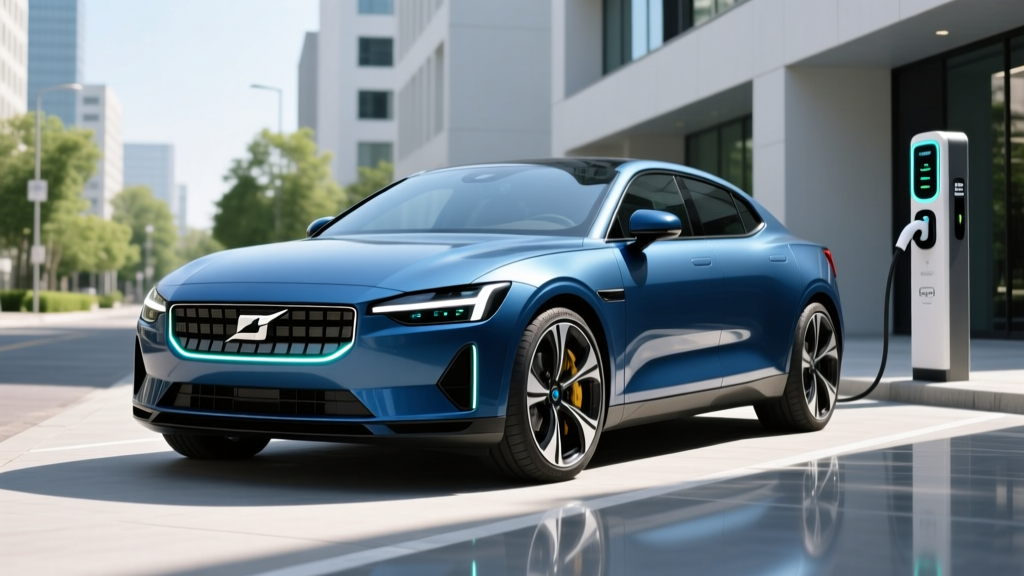
Head to Polestar's online configurator and you'll face a deceptively simple decision tree: two battery sizes, two drivetrains, and a handful of option packages. But the gap between a $49,900 base model and a $65,000-plus Performance build is substantial — and the real-world range, charging speed, and tax-credit implications shift with each click. This guide walks through exactly what you get when you build a Polestar 2 for the 2026 model year, with the hard numbers that matter once the car leaves the showroom.
Polestar 2 at a Glance: 2026 Specs by Trim
The 2026 Polestar 2 continues with the refreshed architecture introduced for 2024, including the switch to rear-wheel drive for the base model and the availability of a larger 82 kWh battery pack. Here's the spec matrix across the core configurations:
| Specification | Standard Range (RWD) | Long Range Single Motor | Long Range Dual Motor | Long Range DM w/ Performance Pack |
|---|---|---|---|---|
| Base MSRP | $49,900 | $53,400 | $57,900 | $63,400 |
| Battery (usable) | 69 kWh (LFP) | 82 kWh (NMC) | 82 kWh (NMC) | 82 kWh (NMC) |
| EPA Range | 276 mi | 320 mi | 298 mi | 276 mi |
| Horsepower | 299 hp | 299 hp | 421 hp | 476 hp |
| 0–60 mph | 5.9 sec | 5.9 sec | 4.3 sec | 4.0 sec |
| Drivetrain | RWD | RWD | AWD | AWD |
| Max DC Fast Charge | 135 kW | 200 kW | 200 kW | 200 kW |
| 10–80% DC Time | ~34 min | ~26 min | ~26 min | ~26 min |
| MPGe (combined) | 107 MPGe | 111 MPGe | 100 MPGe | 92 MPGe |
Source: fueleconomy.gov and Polestar USA specifications.
Real-World Range: What the EPA Sticker Doesn't Tell You
The Long Range Single Motor carries a 320-mile EPA estimate — strong for the segment. But expect ~265–285 miles on sustained highway driving at 70–75 mph, and ~220–240 miles in sub-freezing winter conditions with cabin heat active. The Standard Range (LFP) model's 276-mile sticker translates to roughly 230 highway miles and under 200 in cold weather.
The Long Range Dual Motor sacrifices 22 miles of EPA range versus the single-motor variant due to the added weight and friction of the front motor. The Performance Pack drops range further to 276 miles, largely because of the Öhlins dampers, larger 20-inch wheels, and stickier Continental SportContact tires that increase rolling resistance.
Efficiency varies noticeably by driving style. The Long Range Single Motor achieves 111 MPGe combined (30 kWh/100 mi) per the EPA, but aggressive acceleration and sustained high speeds push consumption toward 35–38 kWh/100 mi. The heat pump — standard on all trims — helps limit winter range loss compared to resistive heating, but physics still applies: lithium-ion cells lose efficiency below 32°F, and cabin heating draws real energy.
Charging Speeds: DC Fast Charging and Home Level 2
This is where the battery chemistry split matters most. The Standard Range model uses a 69 kWh lithium iron phosphate (LFP) pack, which caps at 135 kW peak DC charging. The Long Range models use an 82 kWh nickel-manganese-cobalt (NMC) pack capable of 200 kW peak.
| Charging Level | Power / Rate | Standard Range (69 kWh LFP) | Long Range (82 kWh NMC) |
|---|---|---|---|
| Level 1 (120V household) | ~1.4 kW | ~3 mi/hr | ~3 mi/hr |
| Level 2 (240V, 48A) | 11 kW | ~32 mi/hr (7 hrs full) | ~32 mi/hr (9 hrs full) |
| DC Fast Charge (peak) | 135 kW / 200 kW | 10–80% in ~34 min | 10–80% in ~26 min |
A critical nuance: peak kW is not sustained kW. The Long Range models hit 200 kW only briefly between roughly 15–30% state of charge, then taper progressively. From 60–80%, expect rates closer to 80–100 kW. The 26-minute 10–80% figure assumes preconditioning is active and ambient temperatures are moderate (above 50°F). In cold weather without preconditioning, that same session can stretch past 40 minutes.
On Level 2, the onboard charger accepts up to 11 kW. A home wallbox on a 60-amp circuit (48 amps continuous) delivers a practical overnight fill. Installation costs for a Level 2 home setup typically run $800–$2,500 including equipment and electrician labor, depending on panel proximity and whether a 200-amp service upgrade is needed.
Battery Chemistry: LFP vs. NMC in the Polestar 2
Polestar made a deliberate chemistry choice for 2026: the Standard Range model gets an LFP (lithium iron phosphate) battery, while Long Range models use NMC (nickel manganese cobalt). Each has trade-offs worth understanding before you configure:
| Factor | LFP (Standard Range) | NMC (Long Range) |
|---|---|---|
| Energy Density | Lower (heavier per kWh) | Higher (more range in similar space) |
| Cycle Life | 3,000+ cycles to 80% SoH | 1,500–2,000 cycles to 80% SoH |
| Charging to 100% | Recommended regularly for calibration | 80% daily; 100% only for trips |
| Cold-Weather Performance | Weaker in extreme cold | Better low-temp efficiency |
| Cobalt Content | None (ethical sourcing advantage) | Contains cobalt |
| Max DC Charge Rate | 135 kW | 200 kW |
If you're a daily commuter who can charge at home every night and rarely road-trips beyond 200 miles, the LFP pack's superior cycle life and cobalt-free chemistry make it a compelling, lower-cost option. If you regularly drive in freezing weather or take frequent long highway trips, the NMC Long Range pack's higher energy density and faster charging justify the premium.
Pricing, Trims, and Federal Tax Credit Eligibility
Building a Polestar 2 starts at $49,900 for the Standard Range RWD and climbs to $63,400 for the Long Range Dual Motor with the Performance Pack. Key option packages include:
- Plus Pack ($4,000): Harman Kardon audio, panoramic roof, heated steering wheel, 360° cameras
- Pilot Pack ($3,500): Pilot Assist with adaptive cruise and lane centering, Pixel LED headlights
- Performance Pack ($5,500, Dual Motor only): Öhlins dampers, Brembo brakes, 20" forged wheels, software power boost to 476 hp
| Configuration | Base MSRP | As-Tested (w/ Plus + Pilot) | Est. After §30D Credit |
|---|---|---|---|
| Standard Range RWD | $49,900 | $57,400 | $49,900–$57,400* |
| Long Range Single Motor | $53,400 | $60,900 | $45,900–$53,400* |
| Long Range Dual Motor | $57,900 | $65,400 | $50,400–$57,900* |
| LR DM + Performance Pack | $63,400 | $70,900 | $55,900–$63,400* |
*Credit eligibility depends on buyer income, battery sourcing, and point-of-sale transfer. See details below.
Does the Polestar 2 Qualify for the Federal EV Tax Credit?
Under IRS §30D rules, the Polestar 2's eligibility for the full $7,500 federal tax credit depends on three moving targets that shift with battery-sourcing compliance. As of the 2026 model year, the Long Range configurations with NMC batteries assembled in qualifying facilities may qualify for the full amount, while the Standard Range LFP model's eligibility depends on critical-mineral sourcing that Polestar has been actively re-shoring. Always verify current eligibility on the fueleconomy.gov tax credit page before purchasing.
- MSRP Cap: Sedans/wagons must be under $55,000 — the Standard Range and Long Range Single Motor base MSRPs qualify; Dual Motor and Performance Pack base MSRPs exceed the cap unless the point-of-sale transfer applies differently
- Buyer Income Cap: AGI ≤ $150,000 (single), $225,000 (head of household), $300,000 (joint)
- Battery Sourcing: Critical minerals and battery components must meet escalating domestic/free-trade-ally percentages — verify per VIN
- Point-of-Sale Transfer: Buyers can transfer the credit to the dealer for an immediate price reduction at purchase, subject to income attestation
- Assembly: Vehicle must undergo final assembly in North America — Polestar 2 is built in Luqiao, China, which disqualifies it from §30D for new purchases unless sourcing rules are met through specific battery supply chain provisions
Critical caveat: The Polestar 2 is manufactured in China. Under current §30D rules requiring North American final assembly, new Polestar 2 purchases may not qualify for the federal credit. However, the used EV credit (§25E) of up to $4,000 applies to pre-owned Polestar 2 models purchased from a dealer for $25,000 or less, subject to lower income caps ($75,000 single / $150,000 joint). Check the IRS used-vehicle credit page for current rules.
Interior, Cargo, and Daily Practicality
The Polestar 2 is a fastback sedan with a liftback tailgate — a practical compromise between a traditional trunk and an SUV hatch. Cargo volume measures 14.4 cu ft behind the rear seats and 38.7 cu ft with the 60/40 split rear seats folded. The front trunk (frunk) adds 1.4 cu ft — enough for charging cables and a small bag.
Passenger space is competitive with compact luxury sedans:
- Front legroom: 42.2 inches
- Rear legroom: 34.0 inches (tight for tall passengers on long trips)
- Front headroom: 40.1 inches (panoramic roof reduces this slightly)
The interior materials lean sustainable: standard bio-based "WeaveTech" vegan upholstery replaces leather, with Nappa leather available in the Plus Pack. Build quality is excellent — Volvo-adjacent panel gaps, solid switchgear, and a minimalist design anchored by an 11.2-inch portrait touchscreen running Google built-in (Google Maps, Google Assistant, and the Play Store).
Notable tech: the Polestar 2 was one of the first EVs to ship with Android Automotive OS natively, and the 2026 model continues to benefit from over-the-air updates, Apple CarPlay wireless connectivity, and the Polestar app for remote preconditioning, charge scheduling, and cabin climate control.
Driving Impressions and Standout Features
The base RWD model's 299 hp and 5.9-second 0–60 time feel brisk in daily driving — the single rear motor provides natural weight distribution and a more engaging steering feel than the AWD variants. The Dual Motor's 421 hp (476 with the Performance Pack) delivers genuine sports-sedan acceleration, and the Performance Pack's manually adjustable Öhlins dampers let you dial in ride compliance for daily driving or stiffen them for canyon runs.
Regenerative braking offers two modes (standard and low) but not true one-pedal driving — Polestar intentionally avoids the aggressive regen creep some competitors use, favoring a more natural coasting feel. This is a love-it-or-hate-it choice; if you're accustomed to Nissan Leaf or Chevy Bolt one-pedal behavior, the Polestar 2 will require occasional brake-pedal use at stops.
The Pilot Pack's Pilot Assist system provides SAE Level 2 driver assistance with adaptive cruise control and lane centering. It performs reliably on well-marked highways but requires hands-on-wheel engagement and does not support hands-free driving like GM's Super Cruise or Ford's BlueCruise. This is not autonomous driving — full attention is required at all times.
- Requires hands on the steering wheel at all times (SAE Level 2)
- Lane centering can hunt on faded or construction-zone markings
- No automatic lane change or navigate-on-autopilot functionality
- Performance degrades in heavy rain, snow, or low-visibility conditions
Warranty and Ownership Costs
Polestar provides competitive warranty coverage:
- Battery: 8 years / 100,000 miles (whichever comes first), covering defects and capacity loss below 70% of original capacity
- Powertrain: 8 years / 100,000 miles
- Bumper-to-Bumper: 4 years / 50,000 miles
- Corrosion: 12 years, unlimited miles
- Roadside Assistance: 4 years / 50,000 miles
The 70% battery capacity retention threshold is the industry standard, matching Tesla, Hyundai, and BMW. Real-world degradation data from early 2021–2023 Polestar 2 owners suggests NMC packs lose approximately 8–12% capacity over the first 60,000 miles before stabilizing — well within warranty coverage. LFP long-term data is still maturing but laboratory cycle testing suggests slower degradation curves.
Insurance costs run higher than segment average. Expect annual premiums of $2,200–$3,100 depending on state, driving record, and trim. Maintenance is minimal — no oil changes, and brake pad life extends well past 80,000 miles thanks to regenerative braking. Polestar offers included scheduled maintenance for the first 3 years or 36,000 miles.
Who Should Build a Polestar 2 — and Who Should Look Elsewhere?
- You want a design-forward electric sedan that stands apart from the ubiquitous Tesla Model 3
- You value Scandinavian interior design and sustainable materials
- You prefer Google Automotive OS for seamless Maps/Assistant integration
- Your daily commute is under 60 miles and you have reliable home charging
- You want a manual-adjustable performance suspension (Performance Pack Öhlins)
- You need maximum range for frequent 300+ mile road trips (Tesla Model 3 Long Range offers 358 mi)
- You need more than 34 inches of rear legroom for adult passengers (consider Hyundai Ioniq 6 or BMW i4)
- Federal tax credit eligibility is a dealbreaker (the China-assembly issue affects §30D for new purchases)
- You want hands-free highway driving (GM Super Cruise or Ford BlueCruise models)
- You need towing capability (Polestar 2 is not rated for towing in the US market)
- Striking fastback design with premium build quality
- Google Automotive OS is genuinely excellent for navigation and voice commands
- RWD base model offers engaging driving dynamics
- Performance Pack Öhlins dampers are a rarity at this price point
- LFP battery option with superior cycle life and no cobalt
- Strong 8-year/100,000-mile battery and powertrain warranty
- China assembly limits federal tax credit eligibility for new purchases
- Rear seat legroom is tight at 34.0 inches
- No one-pedal driving mode — deliberate but divisive
- Charging speed trails Hyundai/Kia E-GMP models (200 kW vs. 240+ kW)
- Pilot Assist is competent but not class-leading among Level 2 systems
- Cargo space (14.4 cu ft) trails hatchback competitors like the Model 3
Frequently Asked Questions
What is the real-world range of the Polestar 2?
The EPA rates the Long Range Single Motor at 320 miles, but real-world highway driving at 70–75 mph yields approximately 265–285 miles. In freezing temperatures (below 32°F), expect 220–240 miles with cabin heating. The Standard Range LFP model's 276-mile EPA rating translates to roughly 230 highway miles and under 200 in deep cold.
How fast does the Polestar 2 charge at home and on the road?
On a Level 2 home charger (240V, 48 amps / 11 kW), a full charge takes approximately 7 hours for the Standard Range and 9 hours for the Long Range. DC fast charging peaks at 135 kW (Standard Range) or 200 kW (Long Range), achieving 10–80% in roughly 34 minutes or 26 minutes respectively under optimal conditions with preconditioning active.
Does the Polestar 2 qualify for the $7,500 federal EV tax credit?
New Polestar 2 purchases face a significant hurdle: the vehicle is assembled in Luqiao, China, and current §30D rules require North American final assembly. This likely disqualifies new purchases from the $7,500 credit. However, the used EV credit (§25E) of up to $4,000 may apply to pre-owned models priced at $25,000 or less. Always verify on irs.gov before purchasing.
Is the Polestar 2 worth buying versus the Tesla Model 3 or Hyundai Ioniq 6?
The Polestar 2 occupies a niche: premium Scandinavian design, Google-native infotainment, and a more distinctive presence than the ubiquitous Model 3. However, the Tesla Model 3 Long Range offers 358 miles of EPA range, faster Supercharger access, and North American assembly (tax credit eligible). The Hyundai Ioniq 6 SE Long Range delivers 361 miles and 800V-class charging at a lower price. The Polestar 2 wins on design differentiation, interior material quality, and driving refinement — but loses on range-per-dollar and tax-credit access.
What's the biggest drawback of the Polestar 2?
The most impactful limitation for most buyers is the China-assembly issue affecting federal tax credit eligibility, which can add $7,500 to the effective purchase price versus a domestically assembled competitor. Secondary concerns include tight rear-seat legroom, the absence of one-pedal driving, and DC fast-charge speeds that trail the latest 800V platforms from Hyundai/Kia and Porsche.
Does the Polestar 2 support Apple CarPlay?
Yes. Wireless Apple CarPlay is standard on all 2026 Polestar 2 trims, running alongside Google Automotive OS. You can use CarPlay for Apple Maps, Music, and Messages while retaining Google Assistant for voice commands when CarPlay is not active.
Can I tow with the Polestar 2?
No. The US-market Polestar 2 is not rated for towing. If you need EV towing capability, consider the Rivian R1S, Ford F-150 Lightning, or Hyundai Ioniq 5 (up to 2,300 lbs with the tow package).
Specs and pricing reflect 2026 model year information available at time of publication. Federal tax credit rules under §30D and §25E are subject to change. Verify all eligibility with the IRS and a qualified tax professional before purchasing.