If you're researching how to build a BMW i4 that fits your driving needs and budget, you've found the right guide. The i4 remains BMW's electric answer to the 3 Series Gran Coupe — a sporty, five-door liftback that trades SUV practicality for a lower center of gravity and sharper handling. For 2026, BMW continues to offer the i4 in three distinct configurations: the single-motor eDrive40, the all-wheel-drive xDrive40, and the dual-motor M50 performance model. Each one delivers a meaningfully different ownership experience, and the trim you choose affects everything from real-world range to federal tax credit eligibility.
This guide walks through every spec that matters when you configure your i4 — range and efficiency, charging speeds (home and DC fast), performance, interior space, pricing, and the current §30D tax credit rules — so you can build the right car without surprises at delivery.
2026 BMW i4: Trim Lineup at a Glance
Before you start selecting paint and wheels, the foundational decision is which powertrain suits you. BMW offers three i4 variants for 2026, each built on the same CLAR-derived platform but with distinct motor counts, battery tuning, and character.
| Spec | eDrive40 | xDrive40 | M50 |
|---|---|---|---|
| Drivetrain | RWD (single motor) | AWD (dual motor) | AWD (dual motor) |
| Horsepower | 335 hp | 396 hp | 536 hp (Sport Boost) |
| 0–60 mph | 5.5 sec | 4.6 sec | 3.7 sec |
| Battery (usable) | 81.5 kWh, NMC | 81.5 kWh, NMC | 81.5 kWh, NMC |
| EPA Range | 307 mi | 279 mi | 245–270 mi |
| MPGe (combined) | 97 MPGe | 91 MPGe | 82–87 MPGe |
| kWh/100 mi | 35 | 37 | 39–42 |
| Base MSRP | $57,900 | $61,900 | $69,900 |
| §30D Tax Credit | Eligible (up to $7,500) | Eligible (up to $7,500) | Eligible (up to $7,500) |
All three trims share the same 81.5 kWh usable battery pack (gross capacity approximately 83.9 kWh) using NMC (nickel manganese cobalt) cell chemistry. BMW does not offer an LFP variant of the i4. NMC packs deliver higher energy density, which is why the i4 achieves over 300 miles in its most efficient trim, but they require more careful charge management to maximize longevity — more on that below.
Real-World Range: What to Expect Beyond the EPA Sticker
The eDrive40's EPA rating of 307 miles is achievable in mixed suburban driving at moderate temperatures. On a sustained 75 mph highway run, expect roughly 260–280 miles. In freezing conditions (below 30°F), range can drop to 210–240 miles due to cabin heating demands and reduced battery efficiency — even with the i4's standard heat pump. The xDrive40 and M50 see proportionally larger real-world reductions due to their higher baseline consumption.
The eDrive40 is the clear efficiency champion in the lineup. Its single rear motor and lower curb weight translate directly to fewer kilowatt-hours consumed per mile. According to fueleconomy.gov, the eDrive40 achieves 97 MPGe combined, which is competitive with rivals like the Tesla Model 3 Long Range and the Polestar 2 single-motor.
The M50 is a different story. Its 536 hp Sport Boost mode is thrilling for sprints, but aggressive driving can push consumption above 45 kWh/100 mi, cutting effective range to well under 200 miles on a spirited canyon run. If you build an M50, budget your expectations around 220–240 miles of real-world daily range and plan road trips with charging stops every 180–200 miles to stay comfortable.
Charging Speeds: DC Fast Charging and Home Level 2
Charging speed is where i4 buyers should pay close attention — BMW's DC fast-charge performance is competent but not class-leading.
| Charging Level | Power / Rate | Time / Recovery |
|---|---|---|
| Level 1 (120V household) | ~1.4 kW | ~3–4 mi/hr; full charge in 60+ hours |
| Level 2 (240V home/public) | 11 kW (onboard charger) | ~33 mi/hr; 0–100% in ~8.5 hours |
| DC Fast Charge (peak) | 205 kW (CCS1/NACS adapter) | 10–80% in ~31 minutes |
| DC Fast Charge (sustained avg) | ~130–150 kW (10–80%) | ~170 mi recovered in 30 min |
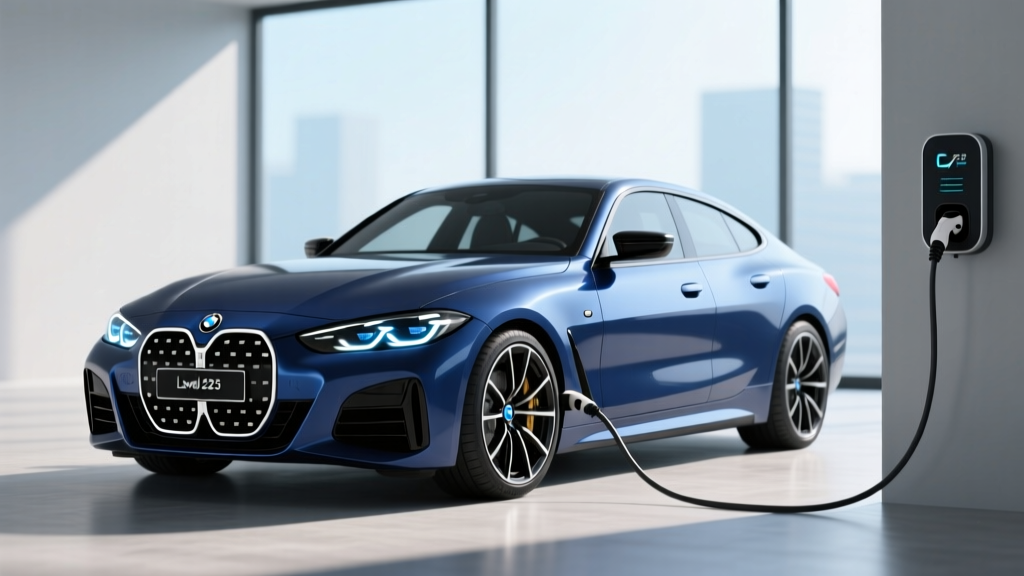
The i4's 11 kW onboard AC charger is a genuine advantage over competitors stuck at 7.2 or 9.6 kW. If you install a 48-amp Level 2 home charger on a 60-amp circuit, you'll wake up to a full battery every morning — roughly 8.5 hours for a complete 0–100% charge. That's meaningfully faster overnight than a Ford Mustang Mach-E or a base Hyundai Ioniq 5 on standard Level 2.
On DC fast charging, the i4 peaks at 205 kW under ideal conditions (low state of charge, preconditioned battery, moderate ambient temperature). However, like most NMC batteries, the charge curve tapers noticeably above 60% SoC and more aggressively above 80%. The 10–80% time of roughly 31 minutes is acceptable for road trips but trails the Hyundai Ioniq 5 and Kia EV6 (which can do 10–80% in ~18 minutes on their 800V architectures).
Preconditioning tip: Always use the i4's navigation-based battery preconditioning when routing to a DC fast charger. Navigate to the charger as your destination, and the car will warm the battery to optimal temperature, potentially shaving 5–10 minutes off your charge session. Without preconditioning, especially in cold weather, peak charge rates can be cut in half.
For connector compatibility, the 2026 i4 ships with a CCS1 port in North America. BMW provides a NACS adapter (or one can be purchased separately) to access the Tesla Supercharger network, which is critical for road-trip charging infrastructure. Confirm adapter availability with your dealer at the time of purchase.
Performance and Driving Dynamics
The i4's CLAR architecture — shared with the ICE 4 Series Gran Coupe — gives it a structural rigidity and weight distribution advantage over EVs built on dedicated skateboard platforms. The battery sits low, and BMW's chassis tuning is evident in every trim.
The eDrive40 (335 hp, RWD) is the driver's choice for daily engagement. Rear-wheel drive and a 5.5-second 0–60 time make it quick enough for any merge, while the lighter front end gives it sharper turn-in than the AWD models. It's the trim that feels most like a traditional BMW sports sedan.
The xDrive40 (396 hp, AWD) adds all-weather confidence with only a modest range penalty. For buyers in snow-belt states, this is often the smart build — you gain traction security without stepping into M50 pricing or range compromise.
The M50 (536 hp, AWD) is BMW's electric M Performance entry. It's genuinely fast — 3.7 seconds to 60 mph — with M-tuned adaptive suspension, M Sport brakes, and an available electronic limited-slip differential. The trade-off is weight (nearly 5,000 lbs), higher tire wear, and the range reduction noted above. Build this if performance is non-negotiable and you have reliable home charging.
Interior Space, Cargo, and Practicality
The i4 is a Gran Coupe, which means sleek rooflines at the cost of rear headroom. Here's what you're working with:
- Cargo volume: 16.6 cu ft (rear seats up) / 45.2 cu ft (rear seats folded)
- Rear legroom: 34.5 inches — adequate for adults on shorter trips, tight for tall passengers on long drives
- Front headroom: 39.3 inches (without moonroof); subtract ~1 inch with the standard panoramic roof
- Frunk: None — the i4 uses its front compartment for power electronics, unlike dedicated EV platforms
The liftback hatch is a practical advantage over traditional sedans, making it easy to load bulky items. However, the absence of a frunk means all charging cables and accessories live in the rear cargo area. If you regularly carry four adults, the BMW i4 will feel snug in the back seat compared to a Tesla Model 3 or Hyundai Ioniq 6.
Pricing, Trims, and Federal Tax Credit Eligibility
Configuring your i4 involves balancing performance, range, and budget — and the federal tax credit can shift the equation significantly.
| Trim | Base MSRP | Typical As-Tested | §30D Credit (max) | Effective Price (after credit) |
|---|---|---|---|---|
| eDrive40 | $57,900 | $62,000–$67,000 | Up to $7,500 | ~$50,400–$59,500 |
| xDrive40 | $61,900 | $66,000–$72,000 | Up to $7,500 | ~$54,400–$64,500 |
| M50 | $69,900 | $74,000–$82,000 | Up to $7,500 | ~$62,400–$74,500 |
Federal tax credit rules (§30D) — current as of 2026:
- MSRP cap: The i4 qualifies as a sedan (not an SUV), so the MSRP cap is $55,000. This is a critical issue: the eDrive40's base MSRP of $57,900 exceeds this cap, which means the i4 may NOT qualify for the full §30D new-vehicle credit depending on final IRS guidance and how BMW structures destination fees. Check the latest eligibility on irs.gov before committing to a build.
- Buyer income limits: AGI must not exceed $150,000 (single), $225,000 (head of household), or $300,000 (joint filing).
- Battery sourcing: The credit is split into two halves — $3,750 for critical minerals and $3,750 for battery component sourcing. BMW's supply chain has been progressively meeting these requirements, but exact eligibility can vary by production batch. Verify with your dealer at time of order.
- Point-of-sale transfer: If eligible, you can transfer the credit to the dealer at purchase, reducing your out-of-pocket cost immediately rather than waiting for a tax refund.
Because the i4 is classified as a sedan (not an SUV/truck), the §30D MSRP cap is $55,000. All three i4 trims exceed this threshold at base MSRP. Before building your i4, confirm current credit eligibility on the IRS Clean Vehicle Credit list. If the i4 does not qualify for the new-vehicle credit, you may want to consider a certified pre-owned i4 (which has a separate $4,000 used-EV credit with a $25,000 price cap) or a competing model that falls under the sedan cap.
Tech, Driver Assists, and Standout Features
The 2026 i4 runs BMW's iDrive 8.5 infotainment system on a curved display (12.3-inch instrument cluster + 14.9-inch central touchscreen). It's one of the better luxury-EV interfaces — responsive, logically structured, and supportive of wireless Apple CarPlay and Android Auto.
Standard driver-assist features (SAE Level 2):
- Active Cruise Control with Stop & Go
- Lane Keeping Assistant with side-collision avoidance
- Parking Assistant with surround-view cameras
- Frontal Collision Warning with automatic braking
Available upgrades:
- Driving Assistance Professional (adds hands-off highway assist at up to 85 mph — still requires driver supervision per SAE Level 2)
- Parking Assistant Professional with Remote Parking
- Head-Up Display with AR navigation overlay
BMW's Driving Assistance Professional is an SAE Level 2 system. You must keep your hands on or near the wheel and remain fully engaged at all times. It is not autonomous. Only Level 4 services like Waymo operate without a driver — the i4 does not offer this capability.
Notable drawbacks:
- No front trunk (frunk) — a miss at this price point
- Regenerative braking is not truly one-pedal in the default driving mode; you must select B mode for maximum regen, and even then, the car creeps at very low speeds
- Rear-seat headroom is compromised by the coupe roofline
- DC fast-charge speeds trail 800V competitors by 10–15 minutes on a 10–80% session
Pros, Cons, and Who Should Build the BMW i4
- Class-leading 11 kW Level 2 onboard charger
- Excellent driving dynamics — feels like a real BMW
- Strong 307-mi EPA range (eDrive40)
- Premium interior materials and iDrive 8.5
- Liftback hatch practicality
- Available hands-off Level 2 highway assist
- MSRP exceeds §30D sedan cap — tax credit uncertain
- No frunk
- Tight rear headroom and legroom
- DC fast-charge times trail 800V rivals
- M50 range drops significantly with spirited driving
- Starting price above $57K before options
Who the i4 is best for:
- Commuters who value driving engagement and have home Level 2 charging — the eDrive40 is an ideal daily driver with 307 miles of range.
- Luxury sedan loyalists transitioning from a 3 or 4 Series who want EV running costs without sacrificing interior quality or chassis dynamics.
- All-weather drivers in northern states — the xDrive40 offers AWD security with acceptable range.
Who should look elsewhere:
- Families needing frequent rear-seat passenger space — consider a BMW iX or Tesla Model Y instead.
- Road-trip enthusiasts who want the fastest possible DC charging — the Ioniq 5 or EV6 will get you back on the road 10+ minutes faster per stop.
- Budget-conscious buyers counting on the full $7,500 federal credit — the MSRP cap issue makes the i4's credit eligibility uncertain.
Build Recommendations by Use Case
- Choose the eDrive40 if: You prioritize maximum range, lowest cost, and engaging RWD dynamics. Best for warm-climate commuters with home charging. Build with the Premium Package and 19-inch wheels (avoid 20s — they cut range by ~10 miles).
- Choose the xDrive40 if: You need AWD for snow/rain and want a balanced build. The 279-mile EPA range is enough for most daily needs with home charging. Add the Driving Assistance Professional package for highway comfort.
- Choose the M50 if: Performance is your priority, you accept the range trade-off, and you have reliable home charging. Add the M Carbon exterior package and 20-inch M wheels for maximum presence — but know that combined range will realistically sit around 220–240 miles.
Frequently Asked Questions
What is the real-world range of the BMW i4?
The eDrive40 achieves an EPA-estimated 307 miles, but expect 260–280 miles on highway trips and 210–240 miles in freezing weather. The xDrive40 delivers roughly 240–260 real-world miles, and the M50 ranges from 200–240 miles depending on driving style.
How fast does the BMW i4 charge at home and on the road?
At home on Level 2 (240V), the i4 charges at up to 11 kW — adding roughly 33 miles per hour and reaching a full charge in about 8.5 hours. On DC fast chargers, it peaks at 205 kW and reaches 10–80% in approximately 31 minutes under ideal conditions.
Does the BMW i4 qualify for the $7,500 federal EV tax credit?
Eligibility is uncertain. The i4 is classified as a sedan with a $55,000 MSRP cap under §30D, and all trims start above $57,900. Check the current IRS Clean Vehicle Credit list before purchasing. Buyer income limits and battery-sourcing requirements also apply.
Is the BMW i4 worth buying over the Tesla Model 3 or Hyundai Ioniq 5?
If you prioritize luxury interior quality, traditional BMW driving dynamics, and a premium dealership experience, the i4 is worth the premium. If you prioritize the fastest DC charging (Ioniq 5) or the most extensive Supercharger access (Model 3), those rivals have advantages. The i4 wins on build quality and onboard charging speed (11 kW).
What is the BMW i4 battery warranty?
BMW covers the i4's high-voltage battery for 8 years or 100,000 miles, whichever comes first, against defects and capacity loss below 70% of original capacity. The powertrain is covered for the same period. This is standard for the luxury EV segment.
Does the BMW i4 have a frunk?
No. The i4 does not have a front trunk. The front compartment houses power electronics, and all cargo space (16.6 cu ft) is in the rear liftback area.