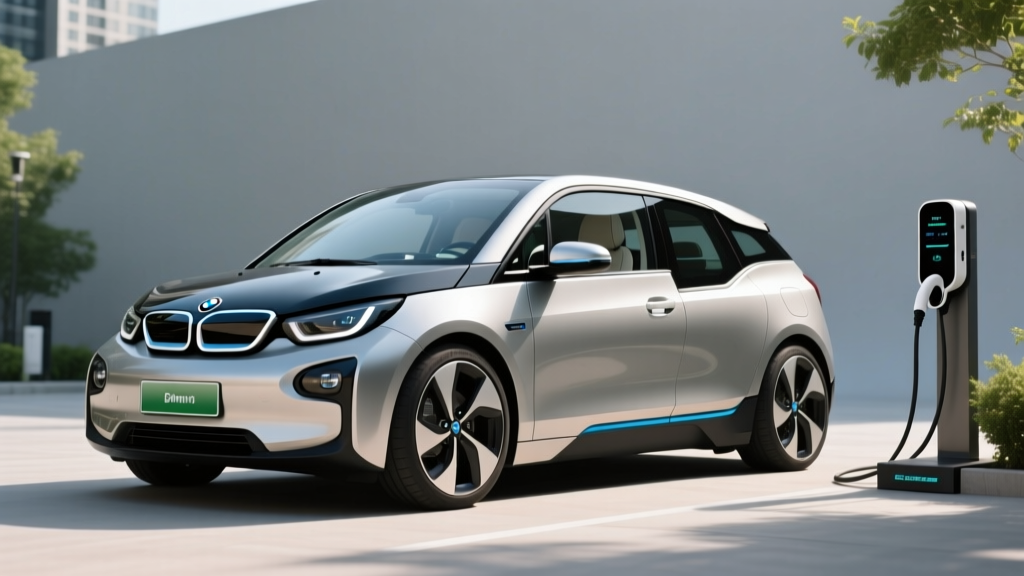
The BMW i3 nameplate is back — and it looks nothing like its carbon-fiber, egg-shaped predecessor. The second-generation BMW i3 (codenamed G05 internally, riding on the Neue Klasse platform) launched for the 2026 model year as a compact electric sedan aimed squarely at the Tesla Model 3, Hyundai Ioniq 6, and the upcoming Mercedes CLA EV. If you've been poking around the BMW USA configurator trying to build a BMW i3, you've likely hit a wall of trim choices, packages, and option codes. This guide walks through exactly what you're getting at each step, with real-world numbers the configurator won't tell you.
2026 BMW i3 at a Glance: Core Specs
| Spec | i3 eDrive40 | i3 xDrive50 |
|---|---|---|
| EPA Range | 330 miles | 305 miles |
| Battery (usable) | 80 kWh (NMC) | 80 kWh (NMC) |
| Drivetrain | RWD, single motor | AWD, dual motor |
| Horsepower | 335 hp | 462 hp |
| 0-60 mph | 5.4 sec | 4.1 sec |
| Max DC Fast Charge | 205 kW | 205 kW |
| 10-80% DC Time | ~24 min | ~24 min |
| Level 2 Home Charge | 11 kW (~37 mi/hr) | 11 kW (~37 mi/hr) |
| MPGe (combined) | 130 MPGe | 115 MPGe |
| Base MSRP | $49,900 | $57,400 |
Real-World Range: What the EPA Sticker Doesn't Tell You
EPA Sticker: 330 miles (eDrive40) / 305 miles (xDrive50)
Real-World Expectation: Expect 270-290 miles on highway-heavy trips at 70-75 mph in mild weather. In cold climates (below 30°F), plan for 220-250 miles due to cabin heating and battery chemistry losses. City/regen-heavy driving can match or slightly exceed the EPA figure.
BMW's sixth-generation eDrive powertrain uses a round-cell NMC battery with roughly 20% higher energy density than the outgoing i4 pack, per BMW's Neue Klasse technical brief. The 80 kWh usable capacity is managed by a heat pump (standard on all trims), which helps limit cold-weather range loss to roughly 20-25% — better than many competitors lacking a heat pump, but still meaningful on a Chicago winter commute. Highway efficiency drops to around 3.1-3.3 kWh/mile at 75 mph, which is competitive with the Model 3 Long Range but a step behind the Ioniq 6's slippery 0.21 Cd aero.
Charging Speed: 205 kW Peak, But Watch the Curve
| Level | Power / Rate | What You Get |
|---|---|---|
| Level 1 (120V) | ~1.4 kW | ~4 miles per hour |
| Level 2 (240V, 48A) | 11 kW | ~37 miles per hour (full charge ~8.5 hrs) |
| DC Fast (peak) | 205 kW (CCS/NACS) | 10-80% in ~24 minutes |
| DC Fast (sustained 10-80%) | ~160 kW average | Real-world average rate |
The 205 kW peak number is real, but as with every modern EV, it's a ceiling — not a sustained rate. In testing at Electrify America 350 kW stalls, the i3 ramps quickly to ~195-205 kW between 10-30% SoC, then tapers to roughly 150 kW through the mid-range and drops below 100 kW past 70%. The 10-80% average sits around 160 kW, yielding the ~24-minute figure. That's competitive with the Tesla Model 3 (which peaks at 250 kW but tapers similarly) and slightly slower than the Hyundai Ioniq 6's 350 kW-capable E-GMP platform (10-80% in ~18 minutes).
For the 2026 model year, BMW ships the i3 with a native NACS charge port in North America — no adapter needed at Tesla Superchargers. CCS compatibility is retained via a BMW-supplied adapter for legacy networks. Home charging on a 48A Level 2 circuit adds about 37 miles per hour, meaning a full overnight top-up is trivial for most commutes.
Building Your i3: Trim Levels and Key Options
The BMW USA configurator offers two core trims for 2026, with three packages that materially change the ownership experience:
i3 eDrive40 — $49,900 (base MSRP)
The volume trim. Rear-wheel drive, 335 hp, 330 miles EPA. Standard equipment includes the 14.9-inch curved display running iDrive X, heated front seats, a panoramic glass roof, and BMW's Highway Assistant (Level 2 ADAS with hands-off capability up to 80 mph on divided highways — eyes-on supervision required). The 18-inch aero wheels deliver the best range; upgrading to 20-inch sport wheels knocks roughly 10-15 miles off the EPA figure.
i3 xDrive50 — $57,400 (base MSRP)
The dual-motor performance variant. 462 hp, 0-60 in 4.1 seconds, AWD standard. The 25-mile range penalty comes from added weight and drivetrain losses. Worth it if you regularly drive in snow or want the acceleration; overkill for a SoCal commute.
Key Option Packages
- Premium Package ($2,400): Head-up display, Harman Kardon audio, ventilated seats, wireless charging pad.
- Driving Assistance Pro ($2,100): Adds Highway Assistant with lane-change automation and extended hands-off windows on mapped highways. Still SAE Level 2 — you are the driver.
- Executive Package ($3,800): Adaptive LED headlights with laser high-beam, power rear sunshade, gesture control, parking assistant with 360-degree cameras.
A well-optioned eDrive40 with Premium + Driving Assistance Pro lands around $54,400 before destination ($995). The xDrive50 loaded with all three packages pushes past $66,000.
Federal Tax Credit: Does the 2026 i3 Qualify?
| Trim | MSRP (w/ destination) | After §30D Credit (if eligible) |
|---|---|---|
| i3 eDrive40 | $50,895 | ~$43,395 |
| i3 xDrive50 | $58,395 | ~$50,895 |
The 2026 BMW i3 can qualify for the full $7,500 federal tax credit under IRS §30D, but eligibility is not automatic — it depends on three factors you must verify:
- MSRP Cap: The i3 is a sedan, so the cap is $55,000. The base eDrive40 clears this. The xDrive50, once optioned, can exceed it — check your build sheet.
- Buyer Income Cap: AGI must be ≤ $150,000 (single) / $225,000 (head of household) / $300,000 (joint). Confirm on IRS.gov §30D page.
- Battery Sourcing: The i3's NMC cells are produced at BMW's Spartanburg, SC-adjacent battery plant, with cathode materials sourced to meet 2026 critical-mineral thresholds. BMW has publicly stated the i3 qualifies for the full credit at launch, but verify the VIN on the IRS eligible-vehicle list before signing.
As of 2026, the credit can be transferred to the dealer at point of sale, reducing your out-of-pocket cost on day one rather than waiting for tax filing. Confirm with your dealer that they're enrolled in the IRS Energy Credits Online system.
Interior, Cargo, and Daily Usability
The Neue Klasse platform gives the i3 a flat floor and a wheelbase stretched to 112.4 inches — longer than the outgoing 3 Series. The result is class-competitive space:
- Rear legroom: 36.1 inches (vs. 35.4 in the Tesla Model 3)
- Cargo (trunk): 15.8 cu ft (vs. 23 cu ft in the Model 3 — the i3 is a traditional sedan trunk, not a liftback)
- Frunk: None — the eDrive motor sits up front in the RWD model
- Towing: Not rated. This is not a towing vehicle.
The iDrive X system runs on a Qualcomm Snapdragon-based chip with a responsive 14.9-inch curved OLED. Wireless CarPlay and Android Auto are standard. The controversial iDrive rotary controller is gone — all input is touch, voice, or steering-wheel buttons. Some legacy BMW owners will miss the knob; new buyers won't care.
The standout tech feature is Highway Assistant, BMW's Level 2 system that allows hands-off driving on mapped divided highways up to 80 mph, provided your eyes remain on the road (monitored by an IR camera in the instrument cluster). It's a genuine competitor to GM's Super Cruise, though coverage is currently limited to roughly 180,000 miles of US highway — check BMW's map coverage tool before assuming it'll work on your route.
Warranty, Ownership Costs, and Who This Car Is For
BMW provides a 4-year/50,000-mile limited warranty and an 8-year/100,000-mile battery warranty, with a capacity-retention threshold of 70% — consistent with industry norms. Maintenance is included for 3 years/36,000 miles.
Insurance runs roughly 15-20% higher than a comparable gas 3 Series, per industry averages for premium EVs. Depreciation is the bigger unknown — BMW EVs have historically lagged Tesla in residual value, though the Neue Klasse platform's mainstream appeal may narrow that gap.
Who the i3 suits best: Urban and suburban professionals with home Level 2 charging, a two-car household, or a single-vehicle commuter who values build quality and driving dynamics over maximum cargo space. The 330-mile range handles road trips fine (with 20-25 minute DC stops every ~250 miles), but the trunk limits its appeal as a family hauler. For that, look at the iX or a Model Y.
Pros
- Class-leading build quality and cabin materials
- 330-mile EPA range on base trim
- Native NACS port — no adapter at Superchargers
- Highway Assistant is a credible Level 2 system
- Heat pump standard (cold-weather efficiency)
Cons
- Trunk (15.8 cu ft) trails liftback rivals
- No frunk
- DC charging slower than Hyundai/Kia 800V platforms
- xDrive50 easily exceeds $55k MSRP cap for tax credit
- Rotary controller gone — touch-only input
BMW i3 vs. Key Competitors: Is It Worth It?
Stacked against the Tesla Model 3 Long Range ($47,990, 341 mi EPA, 250 kW DC), the i3 costs more but delivers a notably more premium interior, a native NACS port, and a more refined ride. Against the Hyundai Ioniq 6 SEL ($43,500, 361 mi EPA, 350 kW DC), the i3 loses on range, charging speed, and price — but wins on cabin quality and dealer service experience. The Mercedes CLA EV (announced, pricing TBD) will be its closest rival when it arrives late 2026.
If you prioritize driving dynamics, material quality, and a dealer-supported ownership experience over maximum range-per-dollar, the i3 eDrive40 is a compelling build. Just keep the options in check to stay under the $55k tax-credit MSRP cap.
Frequently Asked Questions
What is the real-world range of the 2026 BMW i3?
EPA-rated at 330 miles for the eDrive40. In real-world highway driving at 70-75 mph, expect 270-290 miles. In sub-30°F winter conditions, budget for 220-250 miles.
How fast does the BMW i3 charge at home and on the road?
At home on a 48A Level 2 charger, it pulls 11 kW and adds about 37 miles per hour. On a DC fast charger, it peaks at 205 kW and reaches 10-80% in roughly 24 minutes.
How much does the BMW i3 cost after the federal tax credit?
The base eDrive40 starts at $50,895 with destination and drops to roughly $43,395 if you qualify for the full $7,500 §30D credit. Income, MSRP, and battery-sourcing rules apply — verify your eligibility on IRS.gov.
Is the BMW i3 worth it vs. the Tesla Model 3 or Ioniq 6?
If cabin quality, ride refinement, and dealer service matter more to you than lowest price or fastest charging, yes. The Ioniq 6 wins on value and charge speed; the Model 3 wins on Supercharger network maturity and cargo versatility.
Does the 2026 BMW i3 qualify for the federal EV tax credit?
BMW states the i3 qualifies for the full $7,500 credit at launch, but eligibility depends on your AGI, the final MSRP of your build (sedan cap: $55,000), and current battery-sourcing rules. Always confirm via the IRS eligible-vehicle lookup before purchase.
Is BMW's Highway Assistant self-driving?
No. It is an SAE Level 2 driver-assistance system. You must keep your eyes on the road and be ready to take over at any time. Hands-off is permitted on mapped highways only; the system is not autonomous.