Quick Answer: Does a Buick Enclave EV Exist Yet?
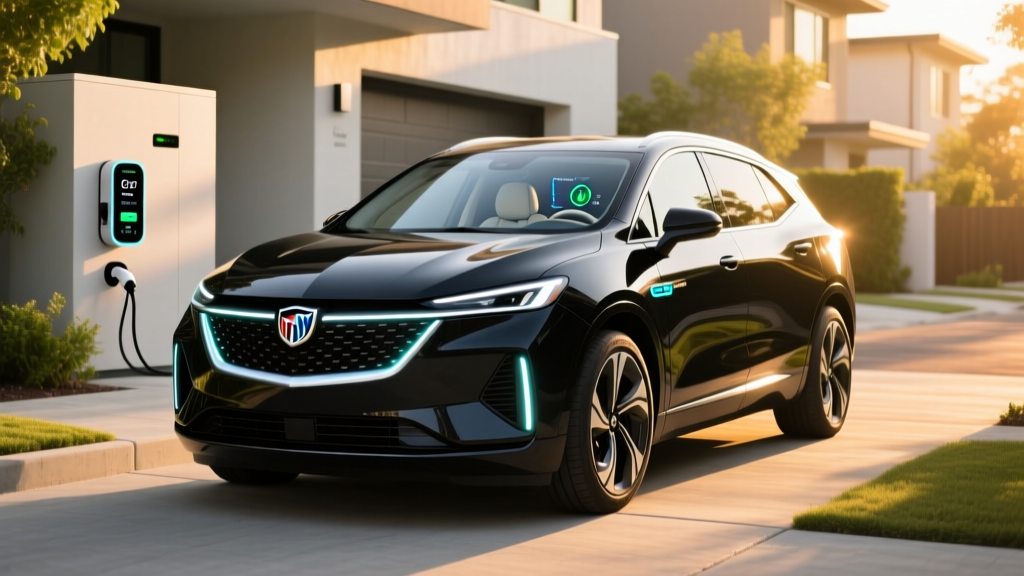
As of mid-2026, there is no officially announced Buick Enclave EV. Buick has confirmed it is transitioning to an all-electric lineup by the end of the decade, and the current third-generation gas-only Enclave continues through the 2026 model year. However, an Enclave EV built on GM's Ultium platform is widely expected to be part of Buick's electrified future — likely as a 2027 or 2028 model. Below, we break down what's known, what's projected based on sibling Ultium vehicles (the Chevrolet Traverse EV and GMC Acadia EV), and whether you should wait or consider alternatives now.
Buick's EV Roadmap: Where the Enclave Fits
Buick launched its first Ultium-based EV, the Electra E5, in China for the 2024 model year. In the U.S., Buick's EV portfolio has been limited so far, but GM has stated publicly that every Buick nameplate will offer an electric variant by approximately 2030. The Enclave — Buick's three-row flagship crossover — is a logical candidate for electrification given its premium positioning and the competitive pressure from the Kia EV9, Hyundai Ioniq 9, and upcoming three-row electric SUVs from other legacy brands.
The current 2026 Buick Enclave is powered by a 2.5-liter turbocharged four-cylinder producing 228 hp and 243 lb-ft of torque, paired with an 8-speed automatic transmission. EPA fuel economy sits at approximately 22 mpg combined for FWD and 21 mpg combined for AWD. A future Enclave EV would replace this powertrain entirely with GM's Ultium battery and drive-unit architecture.
Projected Specs: What an Enclave EV Could Look Like
Because GM has not released official Enclave EV specifications, the following projections are based on the Chevrolet Traverse EV and GMC Acadia EV — both built on the same Ultium platform that an Enclave EV would likely share. All figures below are estimates and subject to change.
| Specification | Projected Enclave EV | CHEVROLET Traverse EV (Reference) | 2026 Buick Enclave (Gas) |
|---|---|---|---|
| Platform | GM Ultium (estimated) | GM Ultium (BEV3) | C1XX (ICE) |
| Battery Capacity | ~102 kWh usable (est.) | 102 kWh usable | N/A (18.5-gal tank) |
| Battery Chemistry | NMC (est.) | NMC | N/A |
| EPA Range | ~290–320 mi (est.) | 314 mi (FWD) | ~410 mi (gas, 22 mpg × 18.5 gal) |
| Drivetrain | FWD / AWD (est.) | FWD / eAWD | FWD / AWD |
| Horsepower | ~288–340 hp (est.) | 288 hp (FWD) / 340 hp (AWD) | 228 hp |
| 0-60 mph | ~6.5–7.5 sec (est.) | ~7.0 sec (FWD) | ~8.2 sec |
| DC Fast Charge (Peak) | ~170–190 kW (est.) | 170 kW peak | N/A |
| 10–80% DCFC Time | ~28–32 min (est.) | ~30 min | ~5 min (refuel) |
| Level 2 Charge Rate | ~11.5 kW (est.) | 11.5 kW | N/A |
| Seating | 3 rows / 7–8 passengers | 3 rows / 7–8 passengers | 3 rows / 7 passengers |
| Estimated Base MSRP | $58,000–$65,000 (est.) | $52,000–$58,000 | $47,100–$58,000 |
| Battery Warranty | 8 yr / 100,000 mi (est.) | 8 yr / 100,000 mi | 5 yr / 60,000 mi (powertrain) |
Real-World Range Reality Check
If the Enclave EV mirrors the Traverse EV's 314-mile EPA rating, expect approximately 260–280 miles on the highway at 70+ mph, and as low as 220–240 miles in sub-freezing temperatures (32°F and below) due to battery resistance and cabin heating demands. The Traverse EV's real-world highway tests by independent reviewers have shown 10–15% below EPA figures. Plan trips conservatively around 250 miles between charges until you learn the vehicle's behavior in your climate.
Charging at Home and on the Road
One of the biggest ownership factors for any EV — including a future Enclave EV — is your charging setup. Here's what to expect based on the Ultium platform's known charging architecture:
| Charging Level | Power (kW) | Miles Added per Hour | Typical Use Case |
|---|---|---|---|
| Level 1 (120V) | ~1.4 kW | ~4–5 mi/hr | Overnight trickle; emergency top-up |
| Level 2 (240V, 48A) | ~11.5 kW | ~32–36 mi/hr | Home daily charging; full charge in ~9–10 hrs |
| DC Fast Charge | Up to ~170–190 kW peak | ~180+ mi in 15 min (peak) | Road trips; 10–80% in ~28–32 min |
Home charging installation for a Level 2 charger typically costs between $800 and $2,500 depending on your electrical panel's capacity. If your home has a 200-amp panel with spare capacity, a straightforward NEMA 14-50 outlet or hardwired wallbox install runs $800–$1,400 including the electrician, permit, and a quality Level 2 unit ($350–$600). If you need a panel upgrade to 200A, add $1,500–$3,000.
Important note: GM has adopted the North American Charging Standard (NACS) for its new EVs. A future Enclave EV will almost certainly use a NACS connector, giving it native access to Tesla Superchargers (now open to non-Tesla EVs via NACS) as well as Electrify America, EVgo, and other networks. This is a significant advantage over vehicles still using CCS1 connectors, as NACS infrastructure is expanding rapidly.
Cost of Ownership: EV vs. Gas Enclave
Let's compare the projected costs of a future Enclave EV against the current gas-powered Enclave over a 5-year / 75,000-mile ownership period. These figures use national averages and will vary by state and utility rate.
| Cost Category | Projected Enclave EV | 2026 Enclave (Gas, AWD) |
|---|---|---|
| Purchase Price (est. base MSRP) | $60,000 | $49,500 |
| Federal Tax Credit (§30D) | Up to $7,500 (if eligible) | $0 |
| Effective Purchase Price | $52,500 (with credit) | $49,500 |
| Fuel / Energy (5 yr, 75k mi) | $3,750 (home charging, $0.15/kWh avg) | $11,700 (gas, $3.50/gal, 21 mpg) |
| Maintenance (5 yr) | ~$1,500 (tires, cabin filter, wipers, fluid top-ups) | ~$3,800 (oil changes, brakes, filters, spark plugs) |
| Insurance (5 yr avg) | ~$9,500 (EVs typically 15–20% higher) | ~$8,000 |
| Estimated Depreciation (5 yr) | ~$26,000 (EV depreciation improving but still steep) | ~$22,000 |
| Total 5-Year Cost | ~$93,250 | ~$95,000 |
Key takeaway: Even with a higher sticker price, the Enclave EV could break even or save modestly over five years, primarily through fuel and maintenance savings. The advantage grows significantly if you have access to low-cost home electricity (under $0.12/kWh) or solar panels. However, if you do not qualify for the federal tax credit due to income limits or battery-sourcing requirements, the EV's cost advantage shrinks considerably.
Federal Tax Credit: §30D Eligibility
The IRS §30D Clean Vehicle Credit offers up to $7,500 for qualifying new EVs, but eligibility depends on several factors that may or may not apply to a future Enclave EV:
- MSRP Cap: SUVs must have an MSRP at or below $80,000. A base Enclave EV should clear this, but a fully loaded Avenir trim might push close to the limit.
- Buyer Income Cap: Modified adjusted gross income must not exceed $150,000 (single), $225,000 (head of household), or $300,000 (joint filing).
- Battery Sourcing: At least a specified percentage of critical minerals and battery components must be sourced from the U.S. or free-trade-agreement countries. GM has been aggressively reshoring its Ultium supply chain, but exact compliance varies by model year and production batch.
- Point-of-Sale Transfer: Eligible buyers can transfer the credit to the dealer at purchase, reducing the out-of-pocket cost immediately rather than waiting for a tax refund.
- Final Assembly: The vehicle must undergo final assembly in North America. GM's U.S. plants make this highly likely for an Enclave EV.
Always verify eligibility at the time of purchase using the IRS's official vehicle eligibility list and consult a tax professional. Rules have changed multiple times since 2023, and future legislative action could alter or extend them.
Real-World Ownership Considerations
Home Charging Access
The economics of EV ownership tilt heavily in your favor if you can charge at home. Without home charging, you'll rely on public DC fast chargers, where costs range from $0.30 to $0.50+ per kWh — potentially making fueling more expensive than gasoline. If you live in an apartment, condo, or street-parking situation without charging access, a PHEV or the current gas Enclave may be more practical until public infrastructure matures in your area.
Climate Impact
If you live in a region with harsh winters (sustained temperatures below 32°F), plan for 20–30% range reduction. An Enclave EV with a projected 310-mile EPA range could deliver as little as 220 miles in deep cold. Heat pumps — standard on many newer Ultium vehicles — help mitigate cabin-heating energy draw, but they don't eliminate cold-weather range loss entirely. Preconditioning the battery while plugged in before a trip recovers some of that range.
Driving Patterns
For daily commutes under 50 miles round-trip with home charging, any modern EV is essentially a "fill up at home every night" experience — more convenient than gas. For frequent road trips over 300 miles, you'll need to plan charging stops. A 10–80% DC fast charge taking ~30 minutes adds 15–20 minutes to a trip compared to a gas stop, though most drivers find this acceptable when combined with a meal or rest break.
Should You Wait for the Enclave EV or Buy Now?
Decision Framework
Wait for the Enclave EV if:
- Your current vehicle has 1–2+ years of useful life remaining
- You have reliable home charging access (garage or driveway with a 240V circuit)
- You want a premium three-row electric SUV and prefer Buick's design language over competitors
- You're eligible for the full $7,500 federal tax credit based on income
- You're comfortable with projected specs that may shift before official announcement
Buy the gas Enclave or a competitor EV now if:
- You need a three-row SUV immediately and can't wait 12–24 months
- You lack home charging access and live in an area with sparse public DCFC infrastructure
- You frequently tow (the gas Enclave offers 5,000 lbs towing; EV towing capacity and range impact while towing are significant concerns)
- You want proven, real-world data rather than projections — consider the Kia EV9 (EPA 279–304 mi, starting ~$55,000) or Chevrolet Traverse EV (EPA 295–314 mi, starting ~$52,000) as available alternatives
Common Misconceptions
| Myth | Fact |
|---|---|
| "The Enclave EV is already available to order." | It has not been officially announced by Buick as of mid-2026. Any listing or configurator you see is speculative. |
| "EVs always cost less to own than gas cars." | It depends on your electricity rate, mileage, tax credit eligibility, insurance costs, and depreciation. High-mileage drivers with cheap home electricity benefit most. |
| "The battery will need replacing in 5 years." | GM's Ultium batteries carry an 8-year/100,000-mile warranty against excessive degradation (typically below 70% capacity). Real-world data shows most modern EV batteries retain 85–90%+ capacity after 100,000 miles. |
| "You'll get the full $7,500 tax credit automatically." | Credit eligibility depends on your income, the vehicle's MSRP, battery sourcing compliance, and final assembly location. Not every buyer or every trim qualifies. |
| "DC fast charging is always fast." | Peak charge rates (e.g., 170 kW) are sustained only between roughly 10–40% SoC. Above 80%, charging slows dramatically to protect the battery — a 80–100% top-off can take as long as the 10–80% session. |
Frequently Asked Questions
Will Buick make an electric Enclave?
Buick has not officially announced an Enclave EV as of mid-2026, but GM's commitment to an all-electric Buick lineup by ~2030 makes it highly likely. The Enclave is Buick's top-selling nameplate in the U.S., and a three-row electric SUV would compete directly with the Kia EV9 and Hyundai Ioniq 9.
What platform would the Enclave EV use?
It would almost certainly ride on GM's Ultium (BEV3) platform, sharing architecture with the Chevrolet Traverse EV and GMC Acadia EV. This means a ~102 kWh NMC battery, NACS charging connector, and estimated 290–320 miles of EPA range.
How much will the Buick Enclave EV cost?
Based on the Traverse EV's pricing ($52,000–$58,000) and Buick's premium positioning, expect a base MSRP in the $58,000–$65,000 range, with higher trims (Avenir) potentially approaching $70,000–$75,000. The §30D credit could reduce the effective price by up to $7,500 for eligible buyers.
Can I charge a future Enclave EV at Tesla Superchargers?
Very likely, yes. GM has adopted NACS as its charging standard for new EVs. A NACS-equipped Enclave EV would have native access to Tesla's Supercharger network without an adapter, as well as other NACS-equipped public chargers.
What's the best three-row electric SUV I can buy right now?
As of 2026, the Kia EV9 (EPA up to 304 mi, ~$55,000 base) and Chevrolet Traverse EV (EPA up to 314 mi, ~$52,000 base) are the most established options. The Hyundai Ioniq 9 is also entering the market. If you prefer a Buick badge and can wait, holding out for an Enclave EV is reasonable — but don't expect it before the 2027 model year at the earliest.