Quick Answer: Does Buick Have an Electric Car?
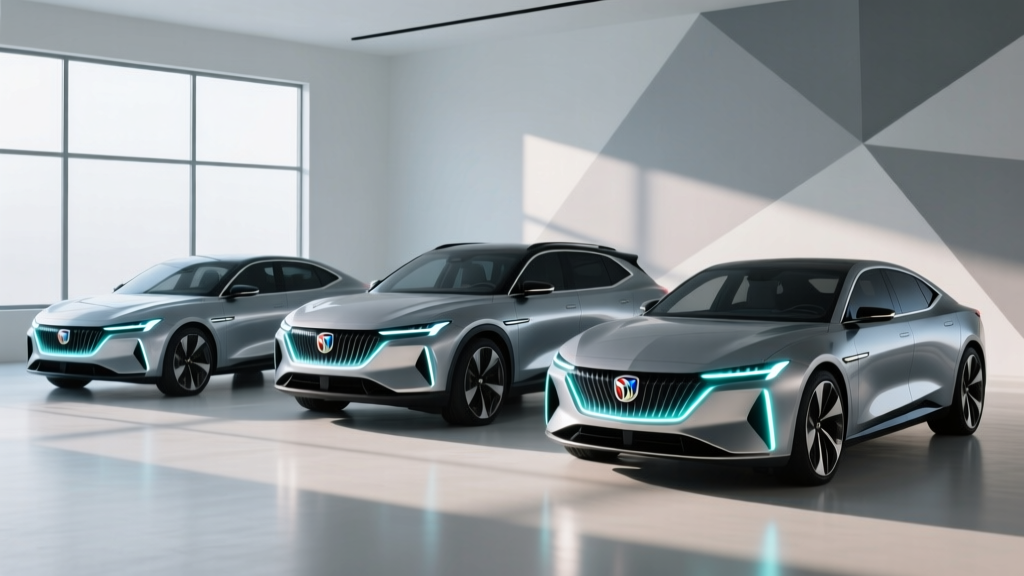
Yes. Buick sells the 2026 Electra E5, a midsize electric crossover built on GM's Ultium platform. It offers an EPA-estimated range of up to 303 miles, DC fast charging up to 150 kW (10–80% in approximately 28 minutes), and a starting MSRP around $43,900. Buick has also confirmed a smaller Electra E4 and additional Ultium-based EVs through 2027. The Electra E5 qualifies for a partial or full federal tax credit under IRS §30D depending on battery sourcing and buyer income — check current rules before purchasing.
If you've driven past a Buick dealership recently and wondered whether the brand has joined the electric vehicle market, the answer is a definitive yes. Buick's EV transition began with the Electra E5, and the brand is now firmly positioned within GM's broader Ultium electrification strategy. But knowing that Buick makes an EV and knowing whether it's the right EV for your life are two very different things.
This guide breaks down exactly what Buick offers in the electric space for 2026, how the Electra E5 stacks up against gas and hybrid alternatives, what ownership actually costs, and how to decide if a Buick EV fits your driving patterns, budget, and charging situation.
2026 Buick Electra E5: Specs, Range, and Charging
The Electra E5 is Buick's first dedicated battery-electric vehicle for the North American market. It rides on GM's BEV3 architecture with an Ultium battery pack, placing it mechanically alongside the Chevrolet Equinox EV and Cadillac Lyriq but with Buick's signature emphasis on ride comfort and cabin quietness.
| Spec | Value |
|---|---|
| EPA Range (Preferred trim, FWD) | 303 miles |
| EPA Range (Sport Touring / Avenir AWD) | ~275–288 miles |
| Battery (usable capacity) | ~85 kWh, NMC (nickel manganese cobalt) chemistry |
| Horsepower | 201 hp (FWD) / 283 hp (AWD) |
| 0–60 mph | ~7.5 sec (FWD) / ~6.3 sec (AWD) |
| Efficiency (MPGe combined) | ~96 MPGe (FWD) |
| DC Fast Charge (peak) | 150 kW (CCS1); 10–80% in ~28 min |
| Level 2 Charge Rate | 11.5 kW (~37 mi/hr added) |
| Connector | CCS1 (NACS adapter available for Tesla Supercharger access) |
| Battery/Powertrain Warranty | 8 years / 100,000 miles |
| Starting MSRP | ~$43,900 (Preferred FWD) |
Charging Curve and What to Expect at Public Chargers
The Electra E5's 150 kW peak DC fast-charge rate is competitive but not class-leading. The key detail is the charge curve: the vehicle sustains its peak rate from roughly 10% to 40% State of Charge (SoC), then tapers progressively. From 80% to 100%, charging slows dramatically to protect battery longevity — a common pattern across all lithium-ion EVs. On a road trip, plan your stops around the 10–80% window for the fastest turnaround. Charging from 80–100% at a DC fast charger can take nearly as long as the 10–80% session, so it's rarely worth the wait unless you need every mile for the next leg.
At home on a Level 2 (240V) charger, the 11.5 kW onboard charger replenishes the battery at roughly 37 miles of range per hour. A full overnight charge from 20% to 100% takes approximately 7–8 hours — well within a typical overnight window.
Buick Electra E5 vs. Gas and Hybrid Alternatives
The Electra E5 competes in the midsize crossover segment, where buyers traditionally cross-shop vehicles like the Buick Enclave, Honda Passport, Toyota Highlander Hybrid, and Hyundai Santa Fe Hybrid. Here's how the numbers compare.
| Metric | Buick Electra E5 (EV) | Buick Enclave (Gas) | Toyota Highlander Hybrid |
|---|---|---|---|
| Starting MSRP | ~$43,900 | ~$45,600 | ~$42,100 |
| Fuel/Energy Cost per Mile | ~$0.04–0.06 (home charging) | ~$0.14–0.17 (gas) | ~$0.10–0.12 (gas) |
| Efficiency | 96 MPGe / 35 kWh/100mi | 22 MPG combined | 36 MPG combined |
| Annual "Fuel" Cost (15k mi) | ~$525–$900 | ~$2,100–$2,550 | ~$1,500–$1,800 |
| Maintenance (annual avg) | ~$300–$500 | ~$700–$1,000 | ~$600–$850 |
| Federal Tax Credit (§30D) | Up to $7,500 (eligibility varies) | None | None |
The cost-per-mile advantage of home charging is stark. At the US average residential electricity rate of approximately $0.16/kWh (per the EIA), the Electra E5's ~35 kWh/100mi consumption translates to roughly $0.056 per mile. Compare that to the Enclave at 22 MPG and $3.40/gallon gas — about $0.155 per mile. Over 15,000 annual miles, that's an energy savings of approximately $1,500–$1,800 per year driving the EV.
The hybrid Highlander narrows the gap but still costs roughly double the Electra E5 on a per-mile energy basis. However, hybrids have an advantage for drivers who lack reliable home charging or frequently drive in areas with sparse DC fast-charging infrastructure.
Full Cost of Ownership: What a Buick EV Actually Costs
Purchase price tells only part of the story. Here's a five-year ownership cost projection comparing the Electra E5 to its gas-powered stablemate, the Buick Enclave, assuming 15,000 miles per year and home Level 2 charging.
| Category | Buick Electra E5 | Buick Enclave (Gas) |
|---|---|---|
| Purchase Price (base MSRP) | $43,900 | $45,600 |
| Federal Tax Credit (§30D) | −$3,750 to −$7,500* | $0 |
| Home Charger Install (Level 2) | +$800–$2,000 | $0 |
| Energy/Fuel (5 years, 75k mi) | $2,625–$4,500 | $10,500–$12,750 |
| Maintenance (5 years) | $1,500–$2,500 | $3,500–$5,000 |
| Insurance (5 years, avg) | $7,500–$9,500 | $6,500–$8,000 |
| Estimated 5-Year Net Cost | ~$48,825–$58,900 | ~$66,100–$71,850 |
*Tax credit eligibility under IRS §30D depends on buyer income limits (AGI ≤ $150k single / $300k joint), vehicle MSRP caps ($80k for SUVs), and battery component/critical mineral sourcing requirements. The credit amount can range from $3,750 to $7,500 depending on whether the vehicle meets one or both sourcing thresholds. As of 2026, point-of-sale transfer is available, reducing your out-of-pocket cost at the dealer. Consult a tax professional for your specific eligibility.
Key takeaways from this breakdown:
- Energy savings are substantial. Five years of home charging saves $6,000–$9,000 vs. gas at current prices.
- Maintenance is lower. No oil changes, no spark plugs, no transmission fluid. EVs still need tire rotations, cabin air filters, brake fluid checks, and wiper blades — but the regenerative braking system significantly extends brake pad life.
- Insurance tends to be higher for EVs. Collision repair costs and battery replacement risk drive premiums 10–20% higher on average. Get a quote before committing.
- Home charger installation is a one-time cost. Most Electra E5 buyers will need a 240V/50A circuit installed by a licensed electrician. If your electrical panel needs upgrading (e.g., from 100A to 200A service), add $1,500–$3,000 to the installation budget.
What First-Time EV Buyers Must Know Before Choosing a Buick
If the Electra E5 is your first EV, several ownership realities deserve attention before you sign the paperwork.
Home Charging Is the Foundation
Approximately 80–90% of EV charging happens at home. If you have a garage or dedicated parking spot with access to a 240V outlet (or can have one installed), the Electra E5 will wake up every morning with a full battery — effectively eliminating "range anxiety" for daily driving. Without home charging, you'll rely on public Level 2 chargers (slower, less predictable) or DC fast chargers (more expensive, not ideal for daily battery health).
Before buying, have a licensed electrician assess your panel capacity. A 50A circuit for an 11.5 kW Level 2 charger requires adequate headroom on your service panel. Homes with older 100A panels may need an upgrade.
Public Charging: Know the Networks
The Electra E5 ships with a CCS1 connector. GM has partnered with multiple networks, and Buick provides access through the myBuick app. Additionally, GM's NACS adapter allows access to Tesla's Supercharger network — a significant advantage for road trips, as Tesla's network remains the most reliable and geographically comprehensive in the US.
For DC fast charging on road trips, plan stops using apps like PlugShare or A Better Routeplanner. Expect to pay $0.30–$0.50/kWh at public DC chargers, making public charging roughly 5–8× more expensive than home charging on a per-kWh basis.
Cold Weather and Range Loss
Battery chemistry is temperature-sensitive. In sustained sub-freezing conditions, expect 20–30% range reduction due to both cabin heating demands and reduced battery efficiency. The Electra E5's available heat pump (standard on Sport Touring and Avenir trims) recovers waste heat from the powertrain to warm the cabin more efficiently than resistive heating — a worthwhile feature if you live in the upper Midwest or Northeast.
Preconditioning the battery before arriving at a DC fast charger (activated via the navigation system) warms the pack to its optimal charging temperature, significantly improving charge speed in cold weather. Skipping preconditioning in freezing temperatures can cut your peak charge rate in half.
Common EV Misconceptions — Fact-Checked for Buick Buyers
| Myth | Fact |
|---|---|
| "The battery will need replacing in a few years and costs $20,000." | GM's Ultium battery is warranted for 8 years/100,000 miles with a capacity retention threshold (typically ≥60–70% of original capacity). Industry data from Geotab shows average degradation of ~2.3% per year across modern EVs. A full battery replacement outside warranty would cost $12,000–$18,000, but is rarely needed within the vehicle's useful life. |
| "EVs are worse in the cold — they can barely drive." | EVs start instantly in cold weather (no cold-start issues like gas engines). Range decreases 20–30%, but 303 EPA miles minus 25% still yields ~227 miles — more than sufficient for most daily needs and many road-trip legs. |
| "Charging takes forever." | Home Level 2 charging adds ~37 miles per hour overnight. On road trips, 10–80% at a 150 kW DC charger takes ~28 minutes — about the length of a rest stop with food and a bathroom break. |
| "I need the full $7,500 tax credit or it's not worth it." | Even without the federal credit, the Electra E5's fuel and maintenance savings over 5 years can total $8,000–$13,000 vs. a comparable gas SUV. The credit is a bonus, not the sole economic justification. |
| "EVs have no towing capacity." | The Electra E5 AWD is rated for up to 1,500 lbs of towing — adequate for a small utility trailer or a pair of dirt bikes. It's not a heavy-duty hauler, but neither is most of its crossover segment. |
Decision Framework: Is the Buick Electra E5 the Right EV for You?
Choose the Buick Electra E5 If:
- You have home charging access (garage or driveway with 240V circuit capability)
- Your daily commute is under 100 miles round-trip (the E5 covers this easily for 3+ days between charges)
- You value a quiet, comfortable ride over sporty acceleration
- You want a midsize crossover with 303 miles of EPA range without paying luxury-brand prices
- You road-trip 2–4 times per year and can plan DC fast-charging stops
- You want access to the Tesla Supercharger network via GM's NACS adapter
Consider a Hybrid (or Wait) If:
- You live in an apartment or condo without charging access and cannot install a home charger
- You regularly drive 400+ miles in a single day through areas with limited DC charging infrastructure (rural routes, parts of the Mountain West)
- You need three-row seating for 7+ passengers (the E5 is a two-row crossover; the Enclave or a PHEV minivan may fit better)
- Your budget is under $35,000 — the E5 starts near $44k, and while the tax credit helps, the upfront cost is still significant
Consider a Different EV If:
- You want faster DC charging (the Hyundai Ioniq 5 peaks at 240 kW, 10–80% in ~18 minutes)
- You need over 350 miles of EPA range (the Tesla Model Y Long Range offers 330+ miles; the Lucid Air exceeds 500)
- You want a truck or three-row SUV — Buick doesn't offer these as EVs yet
Buick's EV Roadmap: What's Coming Next
Buick has committed to a fully electric lineup by the end of the decade in North America. Beyond the Electra E5, the brand has announced additional Ultium-based models including a more compact crossover expected to slot below the E5 in both size and price. These upcoming models are currently in the announced/preliminary stage — final EPA range, pricing, and availability are subject to change.
If you're not ready to buy today, Buick's expanding EV portfolio may offer a more affordable or differently sized option within the next 12–24 months. However, tax credit rules under §30D are subject to legislative change, so waiting carries its own financial risk.
Frequently Asked Questions
Does Buick currently sell a fully electric vehicle?
Yes. The 2026 Buick Electra E5 is a fully electric midsize crossover available now at Buick dealerships. It is built on GM's Ultium battery platform and offers up to 303 miles of EPA-estimated range.
Is the Buick Electra E5 eligible for the $7,500 federal tax credit?
Eligibility under IRS §30D depends on several factors: your adjusted gross income must not exceed $150,000 (single) or $300,000 (married filing jointly); the vehicle MSRP must be under $80,000 (SUV threshold); and the battery must meet critical mineral and component sourcing requirements. The credit can range from $3,750 to $7,500 depending on how many sourcing thresholds the vehicle meets. Point-of-sale transfer is available as of 2026. Always verify current eligibility on the IRS website or with a tax professional before purchasing.
How much does it cost to charge the Electra E5 at home?
At the US average residential electricity rate of ~$0.16/kWh, a full charge of the ~85 kWh battery costs approximately $13.60. A typical daily commute consuming 30% of the battery costs about $4. Over a year of 15,000 miles, home charging costs roughly $525–$900, compared to $2,100–$2,550 for a comparable gas SUV.
Can I charge the Buick Electra E5 at Tesla Superchargers?
Yes. GM provides a NACS (North American Charging Standard) adapter that allows CCS-equipped vehicles like the Electra E5 to access Tesla's Supercharger network. This significantly expands your road-trip charging options, as Tesla operates the largest and most reliable fast-charging network in the US.
What is the battery warranty on the Buick Electra E5?
GM covers the Ultium battery pack and electric powertrain for 8 years or 100,000 miles, whichever comes first. The warranty guarantees a minimum capacity retention level (typically 60–70% of original capacity). If the battery degrades below the threshold within the warranty period, GM will repair or replace it at no cost.
How does the Electra E5 compare to the Chevrolet Equinox EV?
Both ride on GM's BEV3/Ultium platform and share similar battery technology. The Equinox EV starts at a lower price point (~$33,000 base) but offers slightly less range in base trims and a less premium interior. The Electra E5 emphasizes Buick's traditional strengths: a quieter cabin, softer ride tuning, and more upscale materials. If budget is the priority, the Equinox EV is compelling. If refinement and comfort matter more, the E5 justifies its premium.
Is the Buick Electra E5 a good first EV?
For buyers with home charging access, yes. The 303-mile EPA range provides a comfortable buffer for daily driving and most road trips. The CCS1 connector plus NACS adapter gives access to the widest possible charging network. The main considerations are the ~$44k starting price and the need for a Level 2 home charger installation ($800–$2,000). If you lack home charging, a PHEV like the Toyota RAV4 Prime may be a more practical entry point into electrification.