The Short Answer on Buick's Electric SUV
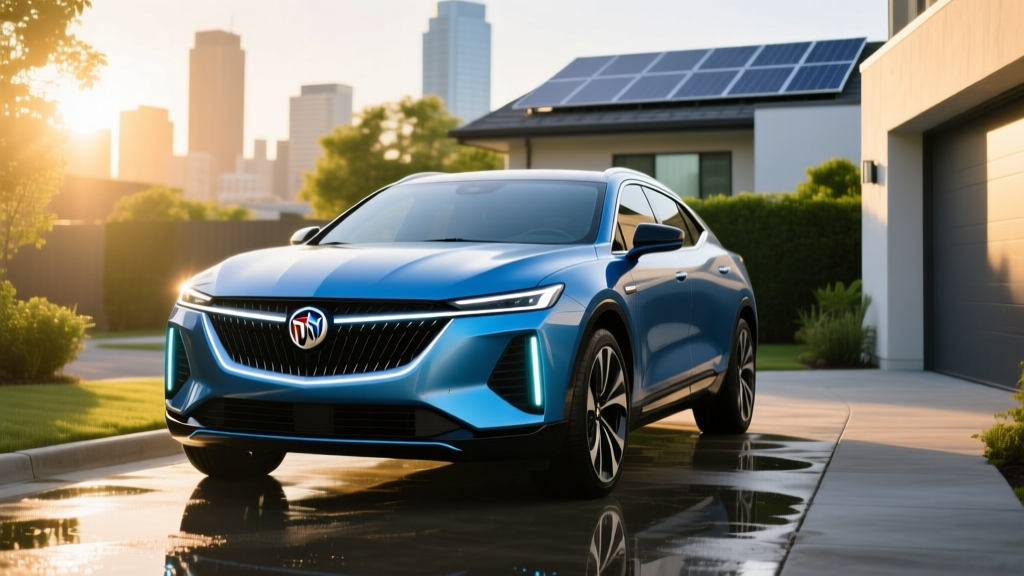
As of the 2026 model year, Buick's primary electric SUV offering in the U.S. is the Electra E5, a midsize two-row crossover built on GM's Ultium (BEV3) platform. It delivers an EPA-estimated up to 303 miles of range, DC fast charging at up to 190 kW, and a starting MSRP near $41,900 before destination. It qualifies as a strong value play in the midsize electric SUV segment — undercutting rivals like the Hyundai Ioniq 5 and Ford Mustang Mach-E on price per mile of range — but prospective buyers should verify §30D federal tax credit eligibility, as battery-sourcing rules have tightened significantly for 2026.
What Is the Buick Electra E5? Platform, Trims, and Specs
The Buick Electra E5 shares its bones with the Chevrolet Equinox EV and Cadillac Lyriq, riding on General Motors' dedicated battery-electric architecture. Unlike the gas Buick Encore GX or Envista, this is a ground-up EV — not a converted ICE chassis — which gives it a flat floor, low center of gravity, and packaging advantages that translate into competitive interior volume.
Buick positions the Electra E5 as a premium-but-accessible electric SUV, slotting between mainstream brands and Cadillac in both price and material quality. The 2026 lineup carries forward with two primary trims: the well-equipped Preferred and the more luxurious Sport Touring (ST), with an optional long-range battery package on select configurations.
| Spec | Preferred (Standard Range) | ST (Long Range) |
|---|---|---|
| EPA Range | ~260 mi | ~303 mi |
| Battery (usable) | ~85 kWh, NMC | ~102 kWh, NMC |
| Drivetrain | FWD (AWD optional) | AWD |
| Motor Output | ~241 hp / 320 lb-ft | ~288 hp / 345 lb-ft |
| 0–60 mph | ~7.0 sec | ~6.2 sec |
| Peak DC Fast Charge | 190 kW | 190 kW |
| 10–80% DC Charge Time | ~28 min | ~33 min |
| Level 2 (240V) Rate | 11.5 kW (~37 mi/hr) | 11.5 kW (~37 mi/hr) |
| Base MSRP | $41,900 | $48,500 |
| Battery/Powertrain Warranty | 8 years / 100,000 mi | |
Note: Specs reflect announced 2026 model-year figures. Always confirm final numbers with Buick's official spec sheets before purchasing.
Real-World Range: What the EPA Sticker Doesn't Tell You
The 303-mile EPA estimate for the long-range Electra E5 is achievable in moderate conditions — think 55–65 mph on level ground in 65–75°F weather. But real-world driving rarely stays that tidy.
Range Reality Check
EPA sticker: 303 mi (long-range AWD)
Highway (75 mph sustained): expect ~250–270 mi
Cold weather (below 30°F): expect ~210–240 mi (20–30% reduction from cabin heating and increased battery resistance)
Combined real-world average: ~265–285 mi for most drivers in temperate climates
The Electra E5's NMC (nickel-manganese-cobalt) battery chemistry delivers strong energy density, which is why the long-range pack hits 303 miles in a midsize package. However, NMC batteries are more sensitive to sustained high-State-of-Charge storage and extreme heat than LFP (lithium iron phosphate) alternatives found in some competitors. For daily driving, GM recommends setting charge limits to 80–90% and only charging to 100% before long road trips — a practice that meaningfully extends long-term battery health.
The Ultium platform's thermal management system is robust, with active liquid cooling and heating. In our experience with Ultium-based vehicles, preconditioning the battery before DC fast charging (either via the navigation system routing to a charger or manually through the app) is essential to hitting that 190 kW peak. Without preconditioning, initial charge rates can start as low as 50–80 kW in cold conditions, adding significant time to your stop.
Charging at Home and on the Road
Charging access is the single biggest variable in EV satisfaction. The Electra E5 supports three charging tiers:
| Level | Power (kW) | Miles Added per Hour | Best For |
|---|---|---|---|
| Level 1 (120V household) | ~1.4 kW | ~4–5 mi/hr | Overnight top-offs, emergencies |
| Level 2 (240V home/public) | 11.5 kW | ~37 mi/hr | Daily home charging, workplace |
| DC Fast Charge (CCS/NACS) | Up to 190 kW | ~500+ mi/hr (peak) | Road trips, quick stops |
Home charging reality: A full Level 2 home installation (240V, 48-amp circuit) typically costs $800–$2,500 depending on panel capacity and run length. If your electrical panel needs an upgrade to 200 amps — common in older homes — add $1,500–$3,500. At 11.5 kW, the long-range E5 replenishes from 10% to 80% overnight in roughly 6–7 hours, which covers virtually all daily driving needs.
For road trips, GM's agreement with Tesla gives Electra E5 owners access to Tesla Supercharger stations (via NACS adapter or native NACS port on newer builds). This dramatically improves long-distance practicality compared to relying solely on Electrify America or EVgo. At a 150+ kW Supercharger or comparable CCS station, expect a 10–80% session in roughly 28–33 minutes, with the charge curve tapering significantly above 80% — a normal characteristic of NMC chemistry. Plan to charge to 80% and move on rather than waiting for a full top-off.
Electra E5 vs. Gas SUV vs. Hybrid: Cost Comparison
The most common question from Buick shoppers: does going electric actually save money? The answer depends heavily on your electricity rate, annual mileage, and how long you keep the vehicle. Here's a five-year comparison against the gas Buick Encore GX and a comparable midsize hybrid SUV:
| Category | Buick Electra E5 (EV) | Buick Encore GX (Gas) | Midsize Hybrid SUV |
|---|---|---|---|
| Purchase Price (base) | $41,900 | $27,500 | $35,000 |
| Fed. Tax Credit (§30D) | Up to $7,500* | $0 | Up to $3,750* |
| Effective Purchase | $34,400 | $27,500 | $31,250 |
| Fuel/Energy (5 yr) | $3,200 (home charging) | $7,800 (28 MPG, $3.65/gal) | $5,100 (42 MPG) |
| Maintenance (5 yr) | $1,800 | $3,600 | $3,200 |
| Insurance (5 yr est.) | $9,500 | $7,200 | $7,800 |
| Estimated 5-Yr Total | $48,900 | $46,100 | $47,350 |
* §30D tax credit eligibility depends on MSRP caps, buyer income limits, and battery critical-mineral/component sourcing requirements that change annually. Verify current-year rules at IRS.gov or consult a tax professional. Point-of-sale transfer is available at participating dealers.
The Electra E5's higher insurance premiums (typically 15–30% above gas equivalents due to repair cost structures) partially offset its fuel and maintenance savings. Where the EV wins decisively is in energy cost per mile: at a national average of $0.16/kWh, the E5 costs roughly $0.053/mile to fuel at home versus $0.13/mile for the gas Encore GX. If you drive 15,000+ miles annually or have access to cheap overnight electricity rates ($0.08–0.10/kWh), the EV's advantage widens significantly.
Federal Tax Credit and Incentives: What You Actually Qualify For
The §30D Clean Vehicle Credit can reduce your effective purchase price by up to $7,500, but qualifying in 2026 requires navigating several requirements:
- MSRP cap: SUVs must be priced at or below $80,000 — the Electra E5 clears this easily.
- Buyer income cap: Modified AGI must not exceed $150,000 (single), $225,000 (head of household), or $300,000 (joint).
- Battery sourcing: A percentage of critical minerals and battery components must be sourced from the U.S. or free-trade-agreement countries. These thresholds increase annually, and some configurations may qualify for only $3,750 (half credit) or no credit depending on supply-chain compliance.
- Point-of-sale transfer: You can transfer the credit to the dealer at purchase for an immediate price reduction, rather than waiting to claim it on your tax return.
Beyond the federal credit, many states and utilities offer additional rebates — check fueleconomy.gov and your local utility for current programs. These stack independently of federal rules.
Common Misconceptions About the Buick Electra E5
| Myth | Fact |
|---|---|
| "Buick doesn't make real EVs — it's just a rebadged Chevy." | The E5 shares the Ultium platform but has unique body panels, interior materials, suspension tuning, and noise isolation. It's a distinct product, not a badge swap. |
| "I'll never find a charger on road trips." | GM's Supercharger access agreement gives E5 owners the largest fast-charging network in North America. Route planning via the myBuick app or Apple CarPlay/Android Auto shows available stations along your route. |
| "The battery will need replacing in 5 years and cost $20,000." | GM warranties the battery for 8 years/100,000 miles against degradation below 70% capacity. Ultium packs are designed for 15+ years of service. Full replacement (rare) costs roughly $12,000–$18,000, but most packs never need it. |
| "EVs are worse in cold weather." | Range drops 20–30% in sub-freezing conditions — real, but manageable with preconditioning and the E5's heat pump (standard on AWD trims). Remote start via app warms the cabin on grid power, not battery. |
| "I need a $5,000 home charger installation." | Most Level 2 installations with an adequate 200A panel cost $800–$2,000. Only older homes needing panel upgrades approach $5,000. A licensed electrician can assess your situation for $100–$200. |
Who Should Buy the Buick Electra E5 — And Who Shouldn't
Decision Framework
Choose the Electra E5 if:
- You have access to Level 2 home or workplace charging (this is non-negotiable for cost-effective ownership).
- You want a quiet, comfortable midsize SUV with 260–303 miles of range and don't want to pay Cadillac or Tesla premiums.
- Your daily commute is under 80 miles round-trip, with occasional road trips of 200–400 miles.
- You qualify for the §30D tax credit and can bring the effective price below $38,000.
- You value GM's Supercharger network access for road-trip confidence.
Look elsewhere if:
- You live in an apartment or condo without charging access and have no workplace charging. Public-only charging will cost $0.30–$0.50/kWh, erasing most fuel savings.
- You regularly tow heavy loads (the E5 is rated for ~1,500 lbs — adequate for a small trailer, not a boat or camper).
- You need three rows of seating — the E5 is strictly a two-row SUV.
- You drive 400+ miles between stops regularly and can't tolerate 25–30 minute charging breaks.
- Your budget is firmly under $30,000 and you cannot wait for the used-EV market to produce inventory.
First-Time EV Buyer Checklist
If the Electra E5 is your first electric vehicle, here's what to prepare before signing:
- Assess your charging situation. Can you install a 240V outlet or hardwired Level 2 charger where you park? If not, map public chargers near your home and workplace and calculate their per-kWh cost.
- Get an electrician quote. A licensed electrician should evaluate your panel capacity (100A panels may need upgrading to 200A) and the run distance from panel to garage. Budget $800–$2,500 for most installs.
- Verify tax credit eligibility. Use the IRS VIN-check tool and confirm the specific E5 configuration you're buying qualifies. Credits vary by battery sourcing and can change mid-year.
- Compare insurance quotes. EV insurance runs 15–30% higher on average. Get quotes from your current carrier and at least two competitors before committing.
- Download the myBuick app. You'll use it for charge scheduling, preconditioning, remote start, and locating chargers. Familiarize yourself before delivery day.
- Set your charge limit. For daily driving, set the max charge to 80–90%. Only charge to 100% when you need the full range for a trip.
Frequently Asked Questions
Does the Buick Electra E5 qualify for the $7,500 federal tax credit?
It may qualify for the full $7,500, a partial $3,750, or no credit, depending on battery-sourcing compliance and your personal income. The MSRP cap for SUVs is $80,000 (the E5 clears this). Check the current eligibility list at IRS.gov and verify the specific VIN with your dealer before purchase.
How long does it take to charge the Electra E5 at home?
On a Level 2 (240V, 11.5 kW) home charger, the long-range 102 kWh battery charges from 10% to 80% in roughly 6–7 hours. A standard 120V outlet (Level 1) adds only about 4–5 miles of range per hour — suitable only for overnight top-offs if you drive less than 40 miles daily.
What happens if the battery degrades over time?
GM warranties the Ultium battery for 8 years or 100,000 miles, guaranteeing it will retain at least 70% of original capacity. Real-world data from Ultium-based vehicles suggests most packs retain 85–92% capacity after 100,000 miles under normal use. Complete battery replacement is rare and costs approximately $12,000–$18,000 if out of warranty.
Is the Buick Electra E5 good in snow and cold weather?
Yes, with caveats. The AWD configuration provides solid traction, and the heat pump (on AWD trims) efficiently warms the cabin. Expect a 20–30% range reduction in sustained sub-30°F temperatures. Preconditioning the battery and cabin while plugged in mitigates much of this loss.
Can I use Tesla Superchargers with the Buick Electra E5?
Yes. GM vehicles with factory NACS ports can access Tesla Superchargers directly. Earlier builds with CCS ports can use a GM-approved NACS adapter. This gives E5 owners access to over 20,000 Supercharger stalls across North America, which is currently the most reliable fast-charging network available.
How does the Electra E5 compare to the Cadillac Lyriq?
Both ride on the Ultium platform, but the Lyriq is larger, more powerful, and priced $15,000–$20,000 higher. The E5 offers 85–90% of the Lyriq's refinement and range at a substantially lower price point, making it the better value for buyers who don't need the Cadillac badge or extra cargo space.