The Short Answer on Buick Electric Cars
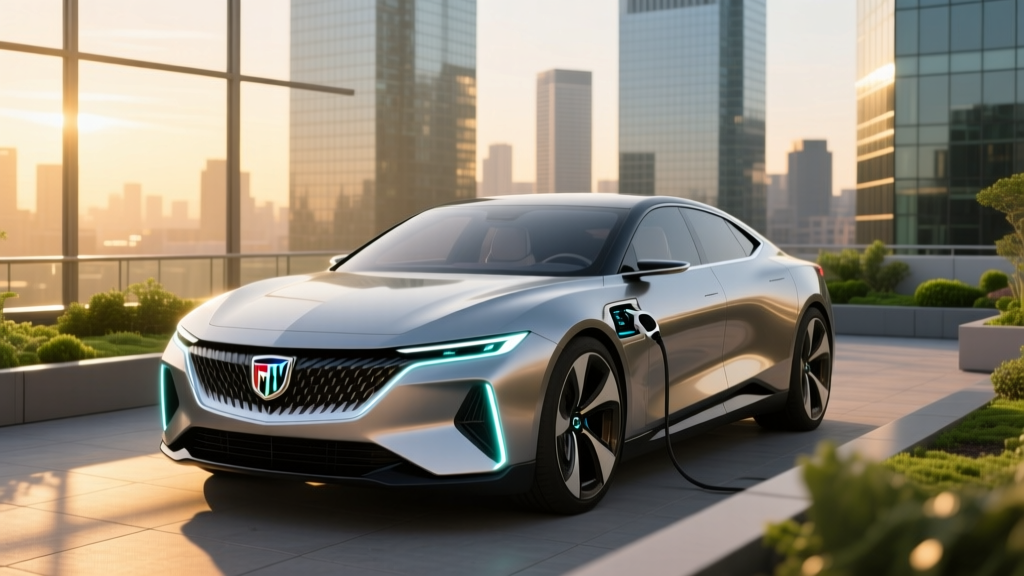
Buick's electric lineup in 2026 centers on the Electra E5, a midsize electric SUV built on GM's Ultium platform. It offers an EPA-estimated range of up to 300 miles, DC fast charging up to 150 kW, and a starting MSRP around $43,000. Buick does not currently sell a fully electric sedan or compact — the Electra E5 is the brand's sole battery-electric vehicle (BEV) available in the U.S. market. Federal tax credit eligibility under IRS §30D depends on battery sourcing, your income, and the vehicle's MSRP cap status, which buyers should verify at purchase time.
Buick's Electric Strategy: From Quiet Luxury to Quiet Powertrains
Buick has historically been the brand American buyers turn to for refined, understated comfort. The shift to electric vehicles is no different — the Electra E5 carries that same ethos but swaps the turbocharged four-cylinder for GM's Ultium battery platform. Unlike Cadillac's high-performance EV push or Chevrolet's volume-first approach, Buick's electric strategy targets buyers who want a premium feel without the premium badge price tag.
For 2026, the Electra E5 is Buick's only fully electric offering in the United States. The brand has signaled future electric models are in development, but as of this writing, no additional BEVs have been formally announced with U.S. pricing or availability dates. If you're shopping Buick electric cars today, the E5 is where your decision lives.
2026 Buick Electra E5: Range, Battery, and Charging Specs
The Electra E5 uses GM's Ultium platform with a lithium-ion battery pack using NMC (nickel manganese cobalt) chemistry. Here are the numbers that matter:
| Specification | Preferred Trim (FWD) | Avenir Trim (AWD) |
|---|---|---|
| Usable Battery Capacity | ~85 kWh (NMC) | ~85 kWh (NMC) |
| EPA-Estimated Range | ~300 miles | ~280 miles |
| Real-World Highway Range* | ~250–270 miles | ~235–250 miles |
| Cold-Weather Range (20°F) | ~225–250 miles | ~210–230 miles |
| Peak DC Fast Charge Rate | 150 kW | 150 kW |
| 10–80% DC Fast Charge Time | ~30 minutes | ~30 minutes |
| Level 2 AC Charging (240V) | 11.5 kW (~34 mi/hr) | 11.5 kW (~34 mi/hr) |
| Motor Output | 241 hp / 236 lb-ft | 283 hp / 346 lb-ft (dual motor) |
| 0–60 mph | ~7.2 seconds | ~6.0 seconds |
| Connector | NACS (Tesla Supercharger compatible) | NACS |
| Battery/Powertrain Warranty | 8 years / 100,000 miles | 8 years / 100,000 miles |
*Real-world range estimates based on typical highway driving at 70–75 mph. Cold-weather figures assume 20°F ambient with cabin heating active. Actual results vary by driving style, terrain, and climate control usage.
Real-World Range Reality Check
The EPA sticker says ~300 miles for the FWD Preferred trim. Plan for 250–270 miles on a highway road trip in moderate weather, and 225–250 miles in freezing conditions. The E5's 150 kW peak charge rate is adequate but not class-leading — competitors like the Hyundai Ioniq 5 (peak 240 kW) add range faster at DC chargers. Expect the charge curve to taper significantly above 80% SoC, adding 10–15 minutes for the final 20%.
Buick Electra E5 vs. Gas Equivalents: Cost and Efficiency Compared
How does the E5 stack up against a similarly sized gas-powered SUV like the Buick Enclave or competing midsize crossovers? Let's look at the data.
| Metric | Electra E5 (FWD) | Buick Enclave (Gas, FWD) |
|---|---|---|
| Starting MSRP | ~$43,000 | ~$44,400 |
| Fuel/Energy Cost per Mile | ~$0.04–$0.06 (home charging) | ~$0.14–$0.17 (25 MPG combined, $3.50/gal) |
| Annual Fuel/Energy Cost (12,000 mi) | ~$480–$720 | ~$1,680–$2,040 |
| MPGe (Combined) | ~95 MPGe | 25 MPG combined |
| Scheduled Maintenance (Annual Avg) | ~$100–$200 | ~$400–$600 |
| Federal Tax Credit (§30D) | Up to $7,500 (eligibility varies) | $0 |
| Estimated 5-Year Fuel Savings | $5,000–$7,500 (E5 vs. Enclave, home charging) | |
The Electra E5's starting price is competitive with the gas Enclave, and the fuel-cost advantage is substantial if you charge at home. According to fueleconomy.gov, electricity costs vary by region, but most homeowners paying $0.12–$0.18/kWh will see per-mile costs well below gasoline. Public DC fast charging at $0.35–$0.50/kWh narrows the gap considerably — frequent road-trippers relying on public chargers may save less than the table suggests.
Total Ownership Cost Breakdown: What You'll Actually Spend
| Cost Category | Electra E5 (5-Year Estimate) | Gas Midsize SUV (5-Year Estimate) |
|---|---|---|
| Purchase Price (after tax credit) | ~$35,500–$43,000 | ~$44,000–$48,000 |
| Energy/Fuel (60,000 miles) | ~$2,400–$3,600 | ~$8,400–$10,200 |
| Maintenance | ~$600–$1,000 | ~$2,000–$3,000 |
| Insurance (avg annual premium) | ~$1,800–$2,400/yr | ~$1,500–$2,000/yr |
| Home Charger Installation | ~$800–$2,000 (one-time) | $0 |
| Estimated Depreciation | ~45–55% over 5 years | ~40–50% over 5 years |
| Total Approx. 5-Year Cost | ~$48,000–$58,000 | ~$58,000–$68,000 |
Key takeaways: The E5 wins on fuel and maintenance, but EV insurance premiums tend to run 15–25% higher than comparable gas vehicles. Depreciation remains a wildcard — EV resale values have been volatile, and the rapid pace of new model introductions can pressure used prices. If you qualify for the full $7,500 federal tax credit (applied at point of sale under current IRS §30D rules), the purchase-price advantage is significant.
Federal Tax Credit Eligibility Checklist
The §30D credit is not automatic. For 2026, verify these requirements before purchase:
- MSRP Cap: SUVs must be under $80,000 MSRP (E5 qualifies).
- Income Limits: Modified AGI must not exceed $150,000 (single), $225,000 (head of household), or $300,000 (joint).
- Battery Sourcing: Critical minerals and battery components must meet escalating domestic/free-trade sourcing thresholds — confirm with the dealer at purchase.
- Point-of-Sale Transfer: You can transfer the credit to the dealer for an immediate price reduction, or claim it on your tax return.
- Final Assembly: Vehicle must undergo final assembly in North America.
Rules change and battery sourcing requirements tighten annually. Always confirm eligibility with your dealer and consult a tax professional.
Charging at Home and on the Road: What First-Time EV Buyers Must Know
If this is your first EV purchase, the charging learning curve is real. Here's the practical framework:
Home Charging (Where 80%+ of Charging Happens)
The E5 accepts up to 11.5 kW on Level 2 AC power. That translates to roughly 34 miles of range added per hour of charging. A full overnight charge (8–10 hours on a 48-amp Level 2 circuit) replenishes the battery completely. Budget $800–$2,000 for a quality Level 2 home charger and professional installation by a licensed electrician — the exact cost depends on your electrical panel's capacity and the distance from panel to charging location. Older homes may require a 200-amp panel upgrade ($1,500–$3,000 additional).
Public DC Fast Charging
The E5's NACS connector gives you access to Tesla Supercharger stations (via adapter or native NACS port, depending on model year configuration) in addition to Electrify America, EVgo, and other networks. At 150 kW peak, you'll add roughly 150–180 miles in a 30-minute session (10–80% SoC). This is adequate for road trips but slower than the 200–350 kW peak rates some competitors support.
What If You Can't Charge at Home?
This is the most important question for apartment dwellers and street-parkers. If you lack reliable home or workplace charging, an EV like the E5 becomes significantly less convenient and more expensive to operate (relying entirely on public DC charging at $0.35–$0.50/kWh). In that scenario, a plug-in hybrid (PHEV) or conventional hybrid may be a more practical choice until your charging access improves.
Common Misconceptions About Buick Electric Cars
| Myth | Fact |
|---|---|
| "Buick doesn't make electric cars." | The Electra E5 is a fully electric SUV available in the U.S. for 2026. |
| "The battery will need replacing in a few years." | GM's Ultium battery warranty covers 8 years/100,000 miles against capacity loss below 70%. Industry data shows modern NMC packs typically retain 85–90% capacity at 100,000 miles under normal use. |
| "I'll get 300 miles no matter how I drive." | EPA range is a lab estimate. Highway speeds, cold weather, and aggressive driving reduce real-world range by 15–30%. |
| "Charging takes hours on road trips." | A 10–80% DC fast charge takes approximately 30 minutes at a 150 kW station — comparable to a meal break. |
| "The $7,500 tax credit applies to everyone." | Eligibility depends on your income, the vehicle's battery sourcing compliance, and MSRP caps. Not all buyers qualify. |
| "Electric SUVs can't handle winter." | The E5's battery thermal management system and available AWD provide solid winter capability. Range drops 20–30% in extreme cold — plan accordingly but the vehicle functions reliably. |
Decision Framework: Is the Buick Electra E5 the Right EV for You?
Choose the Buick Electra E5 If:
- You want a midsize electric SUV with a quiet, premium cabin at a mainstream price point (~$43,000–$52,000 depending on trim).
- You have home charging access (garage or driveway with a 240V circuit).
- Your typical daily driving is under 80 miles, with occasional 200–250 mile road trips.
- You value GM's Ultium platform reliability and the NACS connector for Supercharger access.
- You prefer Buick's understated luxury aesthetic over sportier competitors.
Look Elsewhere If:
- You need faster DC charging for frequent long road trips (consider Hyundai Ioniq 5 or Kia EV6 at 240+ kW peak).
- You want a third row — the E5 is a two-row midsize SUV (the gas Enclave offers three rows).
- You can't charge at home or at work — a PHEV like the Toyota RAV4 Prime may suit you better.
- You need maximum cargo space — the E5's ~26 cu ft behind the rear seats trails some competitors.
- You're seeking Level 4 autonomous driving — the E5 offers Level 2 driver assistance (hands-on-wheel supervision required at all times).
How the Electra E5 Compares to Key Competitors
| Spec | Buick Electra E5 (FWD) | Hyundai Ioniq 5 (RWD) | Ford Mustang Mach-E (RWD) |
|---|---|---|---|
| EPA Range | ~300 mi | ~303 mi | ~250 mi (Std) / ~320 mi (Ext) |
| Battery (usable) | ~85 kWh | ~77.4 kWh | ~70 / 91 kWh |
| Peak DC Charge | 150 kW | 240 kW | 150 kW |
| 10–80% Time | ~30 min | ~18 min | ~38 min (Std) / ~45 min (Ext) |
| Starting MSRP | ~$43,000 | ~$42,600 | ~$42,000 |
| Horsepower | 241 hp | 168 hp | 266 hp |
| Connector | NACS | NACS (2025+) | NACS (adapter/2025+) |
The E5 holds its own on range and price but trails the Ioniq 5 on charging speed — a meaningful difference if you take multiple road trips per year. The Mach-E's extended-range battery offers more range but at a higher price and slower charging. The E5's advantage is its cabin refinement and Buick's reputation for ride comfort, which may matter more to its target buyer than peak charge rates.
Frequently Asked Questions
Does Buick make any other electric cars besides the Electra E5?
As of 2026, the Electra E5 is Buick's only battery-electric vehicle sold in the United States. GM has indicated additional Buick EVs are planned, but no models have been formally announced with U.S. pricing or release dates. Buick sold the Electra E4 in China, but it has not been confirmed for the U.S. market.
Is the Buick Electra E5 eligible for the $7,500 federal tax credit?
Eligibility depends on current IRS §30D rules, which include buyer income limits, vehicle MSRP caps, and battery component/critical mineral sourcing requirements that tighten annually. The E5's MSRP falls under the $80,000 SUV cap. However, battery sourcing compliance must be confirmed at the time of purchase. Check the latest rules at irs.gov and verify with your dealer.
How long does it take to charge the Electra E5 at home?
On a Level 2 home charger (11.5 kW / 48 amps), the E5 adds approximately 34 miles of range per hour. A full charge from near-empty takes roughly 8–9 hours — easily accomplished overnight. On a standard 120V household outlet (Level 1, ~1.4 kW), expect about 4 miles of range per hour, which is practical only for emergency top-ups or very low daily mileage.
How does the E5 perform in cold weather?
Expect a 20–30% range reduction in temperatures below 30°F, primarily due to battery chemistry limitations and cabin heating demand. The E5's battery thermal management system helps mitigate this, and preconditioning the battery while plugged in (using grid power rather than battery) improves both range and charging speed in cold conditions. AWD models gain traction confidence but sacrifice ~20 miles of EPA range.
What maintenance does the Electra E5 require compared to a gas car?
EVs eliminate oil changes, spark plugs, transmission fluid, and exhaust system maintenance. The E5's primary recurring costs are tire rotation/replacement (EVs are heavier and can wear tires faster — budget $800–$1,200 for a set of four), cabin air filter replacement, brake fluid checks (regen braking reduces pad wear significantly), and windshield washer fluid. Annual maintenance typically runs $100–$200 versus $400–$600 for a comparable gas SUV.
Can I use Tesla Superchargers with the Buick Electra E5?
Yes. The E5 uses the NACS (North American Charging Standard) connector, which is the native connector at Tesla Supercharger stations. This gives E5 owners access to Tesla's extensive Supercharger network — the largest and most reliable DC fast-charging network in North America — in addition to Electrify America, EVgo, and other public networks.